
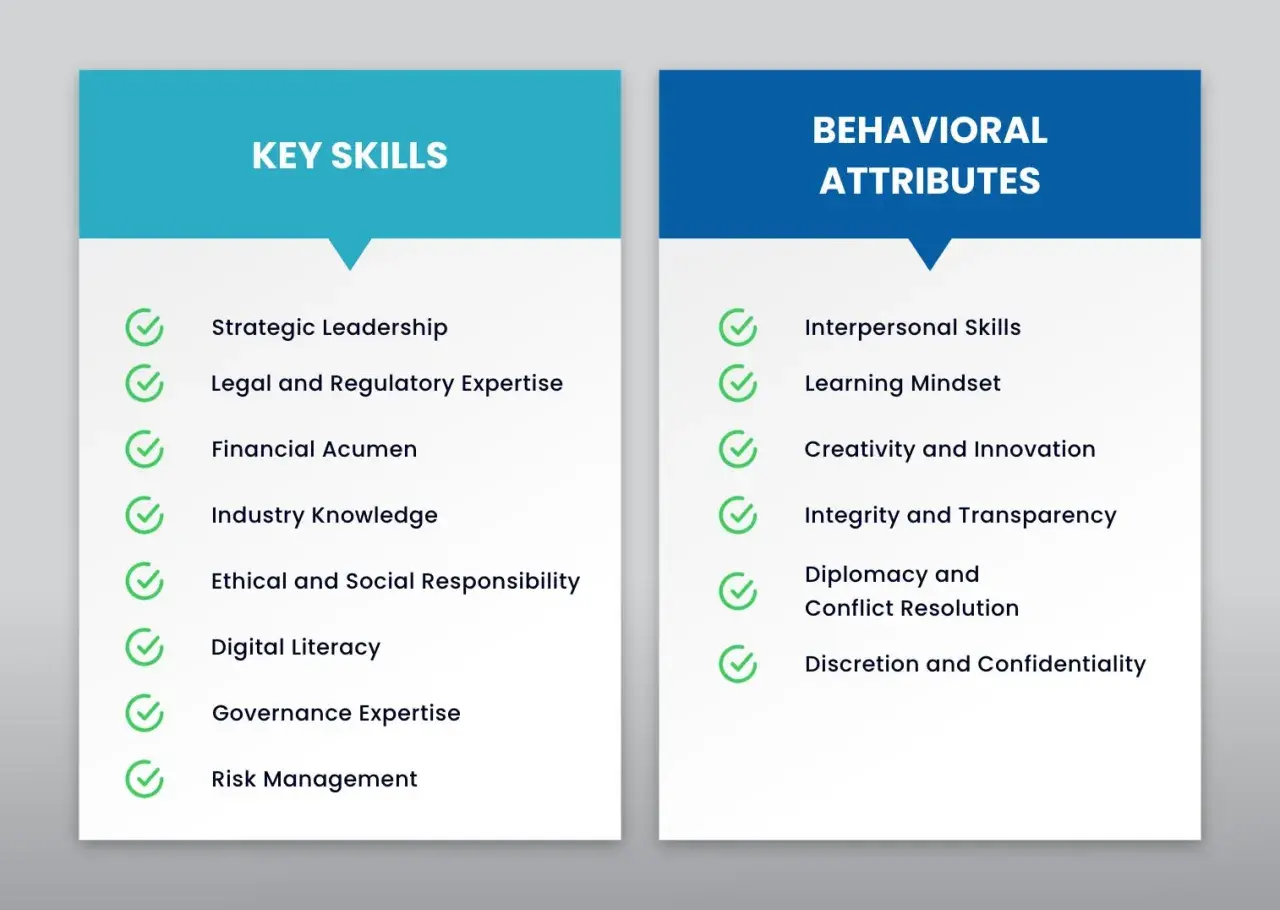
Strong boards are built on more than good intentions. The real issue behind board member requirements is whether a person can exercise judgment, protect the mission, and handle money, people, and reputation with discipline. In the U.S., that means looking at state law, bylaws, independence, fiduciary duties, and the practical skills that keep a board from becoming ceremonial.
The essentials at a glance
- Legal eligibility comes first, but it is only the starting point; state law and bylaws control who can serve and how the board operates.
- Nonprofit directors owe three core duties: care, loyalty, and obedience.
- Independent judgment matters because boards are supposed to oversee the organization, not simply echo insiders.
- Skills and time commitment matter; a board needs finance, governance, fundraising, and strategic thinking across the whole group.
- Conflicts, poor attendance, and weak preparation are the most common reasons a qualified-looking candidate fails in practice.
- Onboarding is part of the requirement; a well-oriented director is far more useful than a merely appointed one.
The legal floor for serving on a U.S. board
I start with the legal floor because a board seat is not just an honorific. For U.S. nonprofit boards, the baseline is usually set by state nonprofit law, the organization’s bylaws, and the duty of care, loyalty, and obedience. The IRS also asks whether a governing body has independent voting members, so independence is not a decorative concept; it is part of how the board is judged.
That does not mean every board uses the same template. A public charity should have informed, active directors who can oversee operations and finances, and the right mix depends on size, risk, and mission. If the organization is a nonprofit corporation, a mutual benefit entity, or a for-profit company, the rulebook changes again, which is why I never treat board eligibility as a one-size-fits-all checklist. Once that legal baseline is clear, the harder question is whether the person can actually govern well.
What makes someone effective once they are in the seat
Good governance depends on fit, not just eligibility. I look for people who can read a budget, ask useful questions, tolerate ambiguity, and stay engaged when the work becomes tedious. A board can survive a missing title; it cannot survive a room full of passive directors.
| Criterion | What strong boards look for | Why it matters |
|---|---|---|
| Mission alignment | Real commitment to the cause, not just a vague willingness to help | Boards make harder decisions when values are aligned |
| Judgment | The ability to weigh tradeoffs, not just react to the loudest voice | Board decisions are usually made with incomplete information |
| Financial literacy | Comfort with budgets, cash flow, audit summaries, and variance reports | Many governance failures start as financial blind spots |
| Time availability | Enough room for meetings, preparation, committee work, and follow-up | Without time, oversight becomes a formality |
| Independence | Willingness to question staff, peers, and personal assumptions | Independent thinking protects trust and reduces rubber-stamping |
| Community credibility | Relationships, reputation, or lived experience that help the organization stay grounded | Mission-driven boards need more than technical expertise alone |
I also care about balance. Not every director needs to be a finance expert or a fundraiser, but the board as a whole should cover both. A healthy board blends lived experience, operational skill, and enough diversity of perspective to avoid groupthink. Once the right mix is clear, the board has to define the duties that come with the seat.
The fiduciary duties that actually drive board behavior
When people talk about board service, they often jump to titles or committees. I think the more useful lens is fiduciary duty, because that is where board behavior becomes concrete. In practice, these duties answer a simple question: is this person acting like a steward of the organization or like a spectator?Duty of care
The duty of care means directors must pay attention, prepare, and make informed decisions. That includes reading board materials, attending meetings, asking clarifying questions, and understanding enough about finances and operations to notice when something is off. A board member who never opens the packet is not exercising care, even if they are polite in the room.
Duty of loyalty
The duty of loyalty means putting the organization’s interests ahead of personal interests. This is where conflicts of interest matter most. If a board member, a family member, or a business partner stands to gain from a board decision, that relationship must be disclosed and handled correctly. The real test is not whether conflicts exist; it is whether the board knows how to surface them, document them, and recuse properly when needed.Read Also: Board Meeting Meaning - What Nonprofits Need to Know
Duty of obedience
The duty of obedience means following the mission, bylaws, policies, donor intent, and applicable law. It keeps boards from drifting into pet projects that feel good but do not match the organization’s purpose. If the mission says one thing and the board keeps approving another, the problem is not strategy; it is governance failure.When those duties are taken seriously, routine tasks like reviewing financial statements, approving policies, and recording minutes stop being paperwork and start being protection. That is the standard I use when I evaluate candidates before they ever get a vote.

How boards vet candidates without turning it into theater
A real selection process is closer to due diligence than a popularity contest. I prefer a process that checks skills, conflicts, availability, and expectations before the vote, not after the first missed meeting. Good boards do not just ask whether a person is impressive; they ask whether the person is usable in the actual work of governance.
- Define the gap first. Decide what the board is missing right now, such as finance, legal insight, community trust, fundraising, or program expertise.
- Use a skills matrix. Map current directors against the competencies the board needs so you can see what the next seat should really solve.
- Screen for conflicts and independence. Ask about business ties, family relationships, vendor links, and any role that could weaken objective judgment.
- Set expectations in writing. Make attendance, preparation, committee work, fundraising, and any personal giving expectation explicit before the appointment.
- Interview for behavior, not only biography. A good interview asks how the candidate handles disagreement, budget stress, unpopular decisions, and missed targets.
BoardSource is blunt on two points I think are often underrated: attendance matters, and term limits help boards avoid stagnation. One common pattern is two consecutive three-year terms, though boards can structure service differently if the bylaws allow it and the organization has a reason to do so. That process makes the red flags easier to spot before they become governance problems.
Red flags that should slow down an appointment
Some candidates look strong on paper but create trouble the moment the work gets real. When I see a few of these patterns together, I slow the process down instead of hoping enthusiasm will fix them.
- Hidden conflicts or discomfort talking about outside relationships
- Chronic overcommitment, especially if the candidate already serves on several boards
- Interest in status over stewardship, which usually shows up as a desire for the title but not the work
- Weak financial discipline, such as avoiding budget documents or dismissing audits as “for staff”
- Automatic agreement with everyone, because a board that never challenges anything is not governing
- Mission mismatch, especially when the candidate’s agenda is louder than the organization’s purpose
I am also cautious when a candidate talks a lot about influence but very little about preparation. Boards need people who will read, ask, and show up, not people who only appear when a photo or gala is involved. The best boards do not stop at screening; they prepare new directors to succeed.
What good onboarding changes in the first 90 days
Selection is only half the job. A strong onboarding plan turns an acceptable candidate into a useful director within the first 90 days. Without that handoff, even smart people miss context and make avoidable mistakes.
- Mission, programs, and the current strategic plan
- Bylaws, committee structure, and decision rights
- Recent financial statements, budget assumptions, and any audit or review findings
- Conflict-of-interest, whistleblower, document retention, and fundraising policies
- Meeting calendar, attendance expectations, and committee assignments
- The board’s self-evaluation process and how success is measured
I also like assigning a mentor board member for the first cycle of meetings. That gives a new director a place to ask practical questions they might not want to raise in the full boardroom, like who prepares what, what matters most in the packet, and which issues tend to come back every quarter. There is no substitute for giving people the actual tools they need to govern instead of expecting instinct to cover the gap.
The standard I would use before saying yes to a new director
When I strip away the labels, I end up with four questions. Can this person serve the mission rather than themselves? Can they understand and challenge the numbers? Will they show up with time, attention, and follow-through? Do they strengthen the board’s mix of skills and independence?
- If the answer to all four is yes, I usually feel confident moving forward.
- If one area is weak, I want the board to fix that gap before making an appointment.
- If several areas are weak, the honest answer is probably no, even if the candidate is well liked.
A board seat is easiest to offer and hardest to unwind, so I prefer to be strict at the front end. The right director should make the board more thoughtful, more accountable, and more useful to the community it serves, because that is what governance is supposed to do.
