
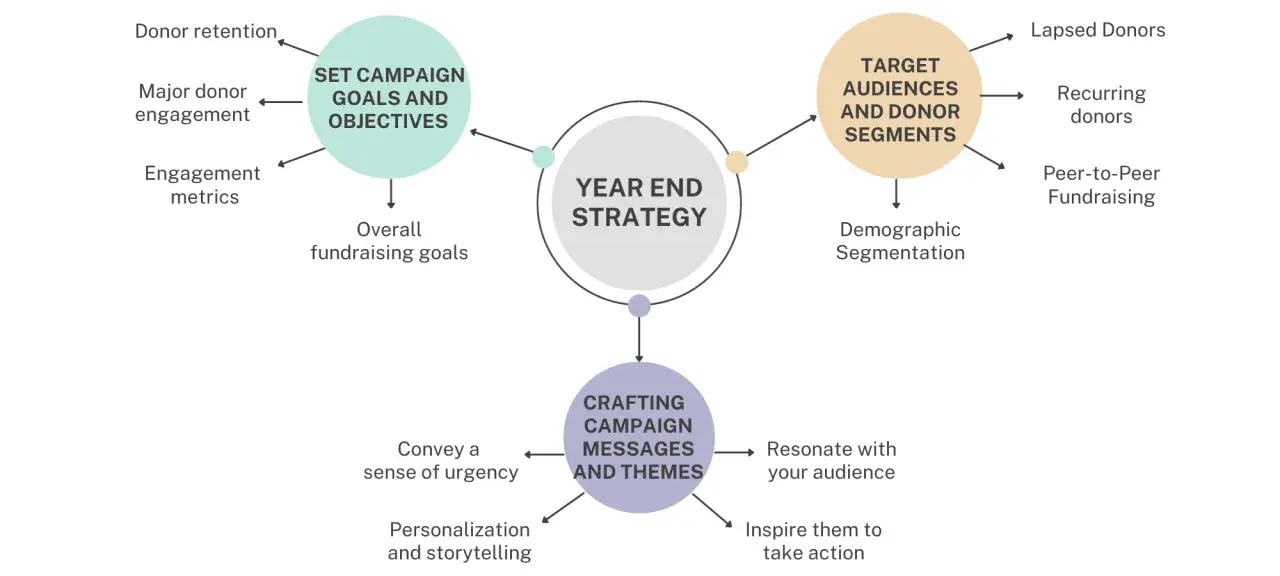
Email fundraising works best when it feels like a conversation, not a blast. A strong appeal gives readers one clear reason to care, one clear action to take, and one clear sense of why the moment matters now. In this article I break down the parts that actually move donations: list quality, message structure, campaign timing, compliance, and the metrics worth watching.
What matters most before you send
- The list matters as much as the copy, because relevance and engagement shape both response and inbox placement.
- One email rarely carries the full job, so a short sequence usually performs better than a single appeal.
- Specific impact language beats vague urgency, especially when donors can see exactly what their gift changes.
- Subject lines should be short, honest, and human, with a clear reason to open now.
- For U.S. campaigns, transparent sender details and an easy opt-out are part of basic trust, not an afterthought.
What donors are really looking for in the inbox
People do not open donation emails because they enjoy being asked for money. They open when the message feels relevant, believable, and easy to act on. Recent 2026 nonprofit benchmark data from M+R puts average open rates at 28.59% and click rates at 3.29%, which tells me the real challenge is not just getting attention, but earning it quickly enough to justify the ask.
When I look at a fundraising appeal, I want it to answer four questions fast:
- Why should I care about this now?
- Why should I trust this organization with my gift?
- What exactly will my donation do?
- How hard is it to give right now?
If those answers are fuzzy, the email will usually underperform no matter how polished it looks. That is why I start with audience fit and clarity before I worry about clever wording. Once that foundation is in place, the list itself becomes the next lever.
Build a list that can actually give
A broad list is not the same thing as a useful list. The fastest way to improve response is usually not to send more aggressively, but to segment more intelligently. I treat the audience as a set of relationships, not one undifferentiated crowd.
| Segment | What they need | Best ask |
|---|---|---|
| Recent donors | Proof their last gift mattered | A specific follow-up gift or upgrade |
| Recurring donors | Reassurance that their habit still has impact | A monthly increase or special campaign gift |
| Lapsed donors | A reason to reconnect without guilt | A low-friction re-entry gift |
| Highly engaged non-donors | A clear bridge from interest to action | A first-time gift or match-supported ask |
| Warm event or volunteer contacts | A reminder that participation and giving are connected | A modest first gift tied to the cause they already know |
I would rather send to 2,000 well-matched supporters than 10,000 people who have barely engaged in months. The smaller list usually produces better revenue, fewer complaints, and cleaner data for the next campaign. Once the audience is right, the copy has a much better chance of doing its job.

Write one email that makes the ask impossible to miss
The best fundraising emails are not the longest ones. They are the ones that make the ask obvious without making the reader work for it. I like to keep the subject line short, usually 6 to 10 words or under about 50 characters, because mobile inboxes cut off anything lazy or padded.For the body, I usually think in five parts:
- Subject line that names the need, the moment, or the result you want.
- Opening sentence that gives the reader a reason to stay in the first two lines.
- One concrete story or example that shows the human effect of the work.
- One clear donation ask with a specific amount or impact statement.
- One visible call to action that does not ask the reader to hunt for the next step.
Examples that usually work better than vague lines include “Help fund 100 winter kits,” “Your gift closes this gap,” or “We can still reach this neighborhood.” Those are not magic phrases. They work because they are specific, concrete, and easy to decode in a crowded inbox.
I also keep the body tight. Two to four short paragraphs are often enough. If I need more room, I use it to sharpen the case, not to explain the organization from scratch. A good appeal should feel like a clear invitation, not a brochure.
Use urgency and proof without sounding manipulative
Urgency only works when it is real. If the deadline is fake or the pressure feels inflated, donors notice. I use urgency in three ways: a real deadline, a real need, or a real moment of momentum.
- Deadline urgency works when a match expires, a campaign ends, or a public event is approaching.
- Need urgency works when you can name the actual gap, such as $18,000 to finish a program or 300 meals still unfunded.
- Progress urgency works when donors can see that their gift moves the total closer to a visible target.
Proof matters just as much. A sentence that explains what $25, $50, or $100 accomplishes often beats a page of general praise for the mission. If a gift covers bus passes for a week, school supplies for a class, or dinner for a family, say that plainly. Specificity makes the request feel honest, and honesty is what keeps people reading.
The mistake I see most often is emotional pressure without enough detail. That usually creates suspicion instead of action. The better move is to let the facts carry the urgency, then keep the tone calm and direct.
Send as a sequence, not a single shot
A short sequence almost always outperforms one isolated appeal. My default for a small campaign is three touches: launch, reminder, and last chance. For a year-end drive or a Giving Tuesday window, I may stretch that to four or five messages if each one adds something new instead of repeating the same pitch.| Stage | Timing | Goal | What to include |
|---|---|---|---|
| Launch | Day 1 | Introduce the need | Story, one ask, one clear link |
| Reminder | Day 3 or 4 | Reopen attention | A fresh angle, one update, one ask |
| Last chance | Final 24 hours | Create action now | Deadline, short copy, direct CTA |
| Thank-you follow-up | After the campaign | Reinforce trust | Result, gratitude, next step |
The mistake I see most often is sending a reminder that merely repeats the first email. If the first message led with story, the reminder should lead with urgency or a concrete update. If the first message led with urgency, the reminder should answer the donor’s next question: why this cause, why now, and why this gift size.
Measure the numbers that predict donations
I care about revenue first, then the metrics that explain it. Open rate still helps me spot a weak subject line, but I do not treat it as the final score. Click-through rate, donation conversion rate, and revenue per recipient tell me whether the message, the landing page, and the ask are working together.
| Metric | What it tells me | What a weak result often means |
|---|---|---|
| Revenue per recipient | The clearest sign of campaign efficiency | The audience, ask, or page is not aligned |
| Click-through rate | Whether the message creates enough interest | The offer or structure is too flat |
| Donation conversion rate | How well clicks turn into actual gifts | The donation page has friction or confusion |
| Unsubscribe and complaint rate | Whether the audience feels mismatched | The list is stale or the frequency is off |
| Open rate | A rough subject line signal | The inbox entry point needs work |
One habit I rely on is testing a single variable at a time. If I change the subject line, the preview text, the CTA, and the offer all at once, I do not learn much. I would rather improve one part of the funnel, send again, and compare the result with some confidence. That is how a campaign gets better instead of just busier.
Keep deliverability and compliance boring on purpose
Inbox placement is not glamorous, but it protects everything else. I use a real sender name, keep the subject line honest, authenticate the sending domain, and remove bad addresses quickly. The FTC's CAN-SPAM guide is the baseline I keep in mind: truthful headers, no deceptive subject lines, and a functioning opt-out path are not optional if the message is commercial in nature.
- Use a recognizable sender name instead of a generic inbox label.
- Authenticate with SPF, DKIM, and DMARC so inbox providers can verify the message.
- Clean hard bounces immediately and review soft bounces after repeated sends.
- Run a re-engagement flow after 60 to 90 days of no interaction.
- Honor opt-outs fast and without friction.
- Keep images, links, and text balanced so the email still reads well if images are blocked.
Deliverability problems often look like weak fundraising when they are really list-hygiene problems. I prefer to fix the invisible plumbing first, because better inboxing makes every later campaign easier to measure and easier to trust. That is especially important for smaller teams that cannot afford to waste a warm audience.
What I would launch first if I had a small team
If I were starting from scratch, I would keep the first campaign simple and disciplined.
- One segmented donor list instead of one mass send.
- One story tied to one real budget gap or program need.
- Three emails over 7 to 10 days: launch, reminder, last chance.
- One donation page that works cleanly on mobile.
- One thank-you message that shows what the gifts made possible.
