
In this guide, I focus on what actually works for schools, nonprofits, churches, and neighborhood groups in the United States: which formats bring in the most people, how to choose one that fits your budget, where extra revenue really comes from, and how to keep the event welcoming rather than overwhelming.
The fastest path to a profitable Halloween event
- Pick one main attraction and one simple donation mechanic instead of trying to build a full festival from scratch.
- Family-friendly formats such as trunk-or-treats, pumpkin contests, and costume nights usually draw the broadest turnout.
- Pre-sold tickets, sponsor tiers, and small add-ons like raffles or photo booths often matter more than the headline admission price.
- Keep the event short, visible, and easy to navigate. One to two hours is enough for many community events.
- Build in accessibility: non-food prizes, clear pathways, quiet corners, and allergy-aware labeling help more families participate.
Why Halloween works so well for community fundraising
Halloween already has momentum. People expect to spend money on costumes, candy, décor, games, and school events, so a fundraiser does not have to create the energy from zero. The National Retail Federation’s 2025 survey put U.S. Halloween spending at a record $13.1 billion, which tells you something practical: the season is already emotionally and financially active.
That matters because fundraising is easier when the audience is already in a buying mindset. A parent who would hesitate to donate on a random Tuesday may happily pay for a costume contest entry, a pumpkin vote, or a wristband for a fall festival if the event feels seasonal and useful. I also like Halloween fundraisers because they can be scaled up or down without losing the theme. A classroom contest, a church trunk-or-treat, and a neighborhood haunted walk all tap into the same seasonal behavior, just at different price points.
The other advantage is visual. Halloween gives you an immediate design language: orange lights, black signage, carved pumpkins, candy tables, and costume photos. That makes promotion easier, especially on social media, because the event looks like an event before anyone reads the details. From here, the real question is not whether Halloween can work. It is which format fits your audience and your volunteer capacity.
Match the fundraiser to the crowd and the budget
I usually start with the audience, not the activity. A fundraiser can be clever and still flop if it asks too much of the wrong crowd. A school community, for example, often responds best to family-friendly, early-evening formats. A youth group may have more success with game-based events. A nonprofit with a strong donor base can push harder on sponsorships and auctions.
| Format | Upfront cost | Volunteer load | Best fit | How it earns |
|---|---|---|---|---|
| Trunk-or-treat | Low to moderate | Moderate | Schools, churches, family groups | Entry fee, trunk sponsorships, concessions, activity tickets |
| Pumpkin carving or decorating contest | Low | Low | Classrooms, offices, online communities | Entry fees, voting donations, sponsor prizes |
| Haunted house or haunted hallway | Moderate to high | High | Groups with strong volunteers and a safe venue | Timed tickets, fast passes, concessions, merch |
| Costume contest and dance | Low to moderate | Low | Teen groups, clubs, community centers | Ticket sales, raffle, donation voting, photo add-ons |
| Movie night or spooky bingo | Low | Low | Small teams, churches, libraries | Tickets, concessions, bundle pricing, sponsor shoutouts |
| Halloween scavenger hunt or walk | Low to moderate | Moderate | Neighborhood associations, parks, downtown districts | Registration, clue packages, local business sponsorships |
If you want the simplest choice, I would lean toward a trunk-or-treat or a pumpkin contest. If you want the most dramatic revenue ceiling, the haunted house can outperform the others, but only when the venue, volunteers, and safety setup are already in place. That tradeoff is where a lot of groups misread the problem: the flashiest idea is not always the best money-maker.
Crowd-pleasing ideas that work well for families and schools
These are the formats I come back to most often because they are easy to explain, easy to decorate, and easy to monetize without making the event feel pushy.
Trunk-or-treat with a ticketed experience
Trunk-or-treats work because they solve several problems at once. They are safer-feeling than loose neighborhood trick-or-treating, they are manageable in a parking lot or school yard, and they naturally attract families with young children. I usually see the strongest results when organizers charge either a small admission fee per child or a family pass, then add sponsor signage on each decorated trunk.
For a community group, this format is strongest when you keep it short. Aim for about 90 minutes to 2 hours, and avoid overcomplicating the schedule. A craft station, a photo corner, and one simple game table are enough. If you try to turn it into a full carnival, volunteer fatigue sets in fast.
Pumpkin carving or decorating contest
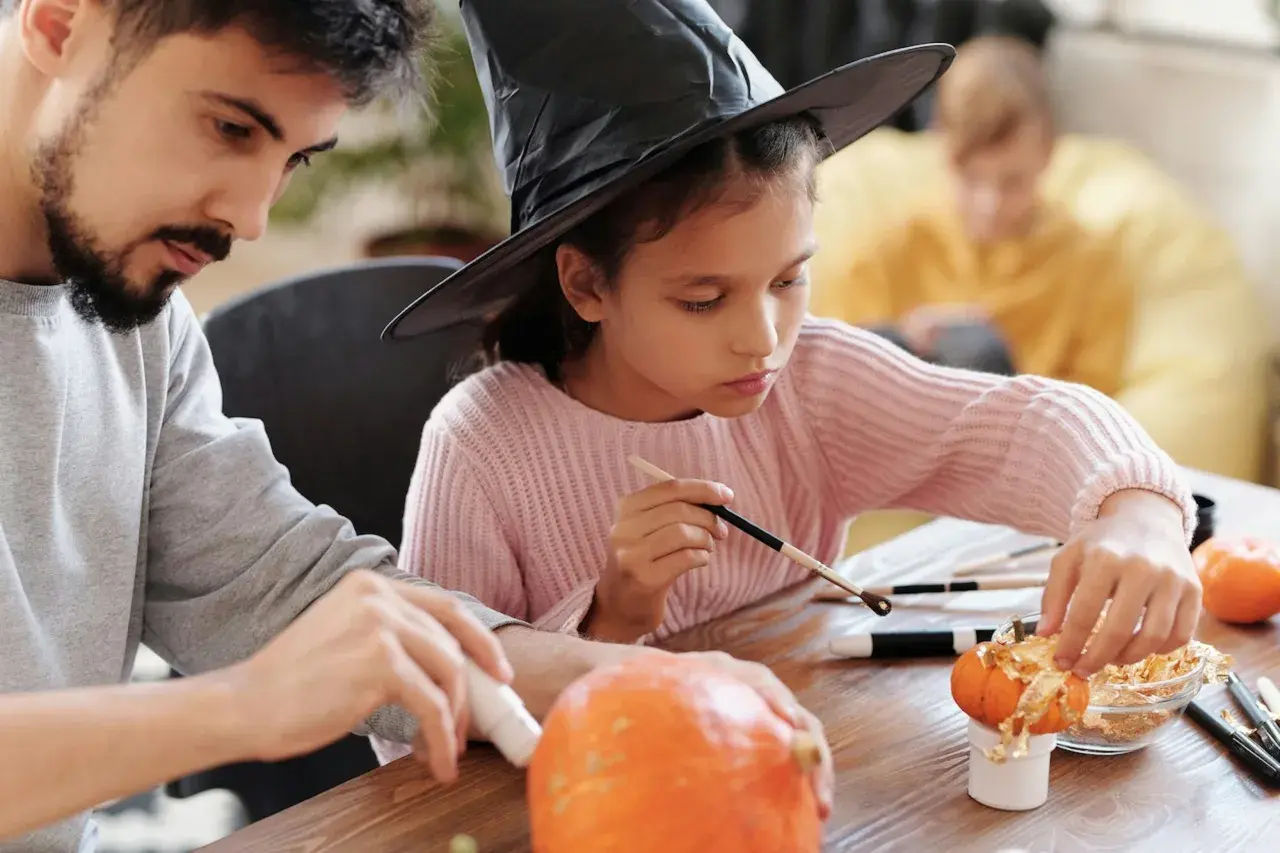
A pumpkin contest is one of the cleanest fundraising mechanics on the board. Participants pay an entry fee, sponsors donate prizes, and attendees cast votes with dollars. That voting step matters because it turns admiration into action. People are much more willing to spend $1 or $5 to support a pumpkin they love than to make an open-ended donation with no visual anchor.
When I use this format in planning, I think in tiers. A small classroom or office contest can run on a $5 to $10 entry fee. A larger community contest can support $15 to $25 entries if the prizes and display are strong enough. If you can photograph the entries well, you also get easy social content before and after the event.
Costume contest with music and photo stations
This is the easiest route if you want broad participation without buying a lot of supplies. Charge a modest entry fee, sell voting tokens, and give people reasons to stay after they arrive. A good photo station can quietly become one of the highest-value parts of the night because it keeps families on-site longer, which increases concession and raffle sales.
One detail I would not skip: offer categories beyond “best costume.” Add funniest, most creative, best family costume, best group costume, and best DIY look. That spreads the prizes out and reduces the feeling that only polished costumes matter.
Ideas that fit smaller teams or older audiences
When the crowd is less kid-focused or the volunteer pool is thin, I tend to favor formats that feel festive without needing a lot of moving parts. These ideas are easier to stage indoors, they are less weather-sensitive, and they can still raise real money if the pricing is clear.
Movie night, bingo, or trivia with a Halloween twist
These are not the flashiest fundraisers, and that is exactly why they work. They are inexpensive to stage, easier to staff, and comfortable for mixed-age audiences. A spooky movie night with popcorn and hot chocolate can be a reliable school fundraiser. Halloween bingo or trivia can work just as well for adults, especially if you attach sponsor donations to each round.
I like these formats when the weather is unpredictable or the venue is small. If your team cannot handle outdoor setup, parking, or decoration-heavy logistics, an indoor game night will often produce a better return on effort.
Scavenger hunt or trick-or-treat trail
A clue-based event gives you movement, structure, and a reason for families or teams to participate together. It also creates a natural partnership model with local businesses, since each stop can double as a sponsorship placement. This is one of the better options if you want the fundraiser to feel like a community tour rather than a single crowded room.
For children, keep the clues simple and the route short. For teens or adults, you can make the hunt competitive and price it accordingly. The more effort you ask from participants, the more important it is to make the reward feel tangible, whether that is a prize basket, a medal, or free admission to the next event.
Read Also: Board Fundraising - Engage Your Board Effectively
Haunted house or haunted hallway
This is the biggest theatrical option, but it is also the one with the highest operational risk. Haunted attractions can raise serious money because they create urgency and a clear reason to buy timed tickets or a fast pass. They also let you stack revenue: ticket sales, concessions, premium scare times, and sponsor walls all fit naturally.
The catch is that haunted events need more planning than people expect. You need crowd flow, emergency exits, age-appropriate scare levels, and enough volunteers to keep the experience consistent. If your group does not already have event-management muscle, I would build a haunted hallway before I built a full haunted house. The hallway version gives you the atmosphere without the same staffing burden.
Ways to raise more money without making the night bigger
The fastest way to improve a Halloween fundraiser is usually not to add more activities. It is to monetize the activities you already have. I have seen groups leave money on the table because they priced admission too low and then relied on goodwill to cover the rest. Goodwill is useful, but it is not a revenue model.
- Sponsor tiers work well at $100, $250, and $500 levels. Name a station, a prize, or a photo wall after the sponsor so the value is visible.
- Pre-sold tickets reduce uncertainty and help you estimate food, candy, and staffing. A family pass at $20 to $40 is often easier to sell than separate tickets for every child.
- Raffles and vote donations are especially effective when the prize is relevant, like a pumpkin basket, local gift card bundle, or VIP parking spot.
- Concessions usually outperform the more elaborate add-ons. Hot chocolate, cider, popcorn, and packaged snacks are simple, familiar, and margin-friendly.
- Photo moments can be monetized with a small printed keepsake, a donation wall, or a QR code that appears beside the backdrop.
- Merchandise only makes sense if it is genuinely easy to produce, such as event shirts, reusable cups, or a simple sticker pack.
My rule here is simple: if the add-on takes longer to explain than to buy, it is probably the wrong add-on. The best extra revenue streams are the ones guests understand immediately and do not feel pressured by. That leads directly into the operational choices that make the whole night smoother.
How I would price, promote, and time the event
For most community Halloween events, I start with a short, clean pricing structure. If the event is family-facing, a child ticket in the $5 to $15 range or a family pass around $20 to $40 keeps the barrier low. If the event is a more elaborate evening program, a $15 to $25 ticket can work better, especially if it includes entertainment, food, or a premium experience. The point is not to maximize the ticket price; it is to create enough volume that people say yes quickly.
- Choose a primary revenue engine. Decide whether the event mainly earns from tickets, voting donations, sponsors, or concessions. Everything else should support that choice.
- Keep the event tight. For many groups, 90 minutes to 2 hours is the sweet spot. Longer events need more staffing and can quietly eat your margin.
- Promote with visuals first. Post costumes, pumpkins, trunk designs, and prize images before you post logistics. People react to the atmosphere before they react to the date.
- Use a simple registration path. One landing page, one QR code, and one clear deadline usually outperform a complicated sign-up flow.
- Assign one person to money flow. Cash, card readers, and donation QR codes should all point to the same tracking process so you can reconcile the night without guesswork.
Timing matters too. In the United States, the strongest turnout often lands in mid- to late October, before families start splitting attention between Halloween itself, school schedules, and fall sports. If you are building a trunk-or-treat or family event, an early evening slot works better than a late one. If your audience is adults, Friday and Saturday nights give you more flexibility, but you will need stronger entertainment to hold attention.
Promotion should feel local, not generic. Mention the neighborhood, the school, the beneficiary, and what the money supports. A fundraiser for playground repairs, a youth scholarship fund, or a food pantry feels more concrete than a vague “support our mission” message. Specificity raises trust, and trust raises attendance. That is why the final details matter more than most planners expect.What I would keep, cut, and double down on next time
If I were running this for a real community group, I would keep three rules in mind. First, choose one hero attraction and make it unmistakable. Second, give people an easy way to spend a little more than the ticket price. Third, make the event feel welcoming to families who want fun without a lot of noise, confusion, or pressure.
I would cut anything that adds visual clutter without improving the guest experience. That usually means too many games, too many price points, and too many volunteers standing around waiting for direction. I would double down on the pieces that create repeatability: a strong photo moment, a sponsor package that is easy to explain, and a checkout flow that does not slow people down.
The best result is not just a higher total. It is an event people remember as a good use of their time and money, which is exactly what turns a seasonal idea into a dependable community fundraiser.
