
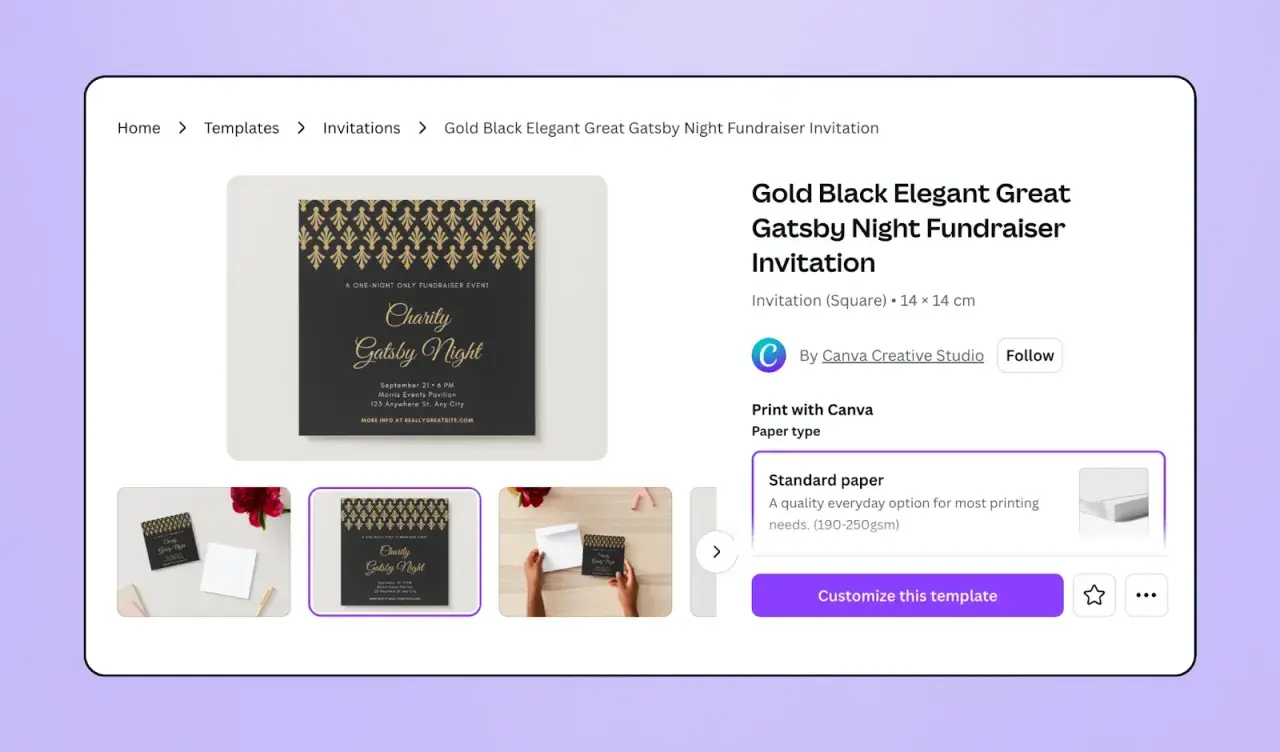
Strong fundraiser invitation wording does not try to sound grand; it tries to sound clear, human, and worth opening. The best invites explain why the event matters, what the guest is being asked to do, and how their presence supports the cause without making the message feel heavy-handed. Below, I break down the structure, show adaptable examples for common event types, and point out the small choices that improve response rates.
The fastest way to improve an invite is clarity plus one concrete reason to care
- Lead with the cause or event purpose, then move quickly to the date, place, and action you want.
- Keep the ask specific: attend, RSVP, buy a ticket, sponsor a table, or donate.
- Give one concrete impact line so readers understand where their support goes.
- Match tone to the event: formal for galas, warm for community drives, concise for email, and visual for social posts.
- Trim anything that sounds guilty, vague, or inflated; those lines usually hurt trust.
What a strong invitation needs to accomplish
When I review these messages, I ask one simple question first: can a reader tell within a few seconds what the event is and why it matters? An effective invitation is not a mini brochure. It has to do three things at once: set expectations, create enough emotional pull to make the event feel meaningful, and make the next step obvious.
The strongest copy usually balances purpose, specifics, and action. If one of those pieces is missing, the invite starts to feel vague, overly promotional, or simply hard to act on. That is why the best wording is often plainer than people expect: it respects the reader’s time and makes the ask feel real.
Once that job is clear, the next step is deciding which details deserve space and which ones should stay out of the way.
The details every invitation should include
In practice, every solid invitation should answer a small set of questions. I like to build from the basics first, then add one line about impact. That keeps the message grounded and prevents the copy from wandering into generalities.
| What to include | What to say | Why it matters |
|---|---|---|
| Event type | Gala, benefit dinner, fun run, auction, virtual night, or community drive | Sets expectations before the reader has to guess |
| Cause or beneficiary | Scholarships, food access, youth programs, shelter support, or another specific mission | Gives the event meaning instead of making it feel generic |
| Date and time | Thursday, October 15, 6:30 p.m. | Helps people decide quickly whether they can attend |
| Location or format | Venue address, virtual platform, or hybrid setup | Removes friction and prevents back-and-forth questions |
| Cost or ask | Ticket price, suggested donation, sponsorship level, or “free RSVP” | Makes the financial expectation clear |
| Call to action | RSVP by a certain date, register now, buy tickets, or sponsor a table | Tells the reader exactly what to do next |
| Helpful extras | Dress code, parking, food, accessibility, or guest speakers | Reduces uncertainty and makes attendance feel easier |
If the event has a ticket, sponsor level, or donation component, say so plainly. In the U.S., that also means being careful with any tax-deductible language: only mention it when it is accurate for your organization and the specific contribution. After the logistics are set, the wording itself can do more of the persuasive work.
Wording you can adapt for different event types
Different events need different levels of polish. A gala invitation should feel more composed than a neighborhood bake sale, and a peer-to-peer run can be more energetic than a formal donor dinner. The trick is not to write “better” copy in the abstract; it is to make the tone match the room you want people to imagine.
Formal gala
“Please join us for an evening of dinner and community in support of our scholarship program. Your attendance will help expand access for students who need it most.”
This works because it sounds polished without becoming stiff. It also connects the event to a real outcome, which keeps the invitation from reading like a generic social announcement.
Neighborhood benefit dinner
“We’re gathering neighbors, volunteers, and local supporters for a community dinner that will raise funds for our food pantry. Come share a meal and help stock shelves for the month ahead.”
This version feels warm and local. It names the gathering, the cause, and the effect of attending, which is exactly what a community-focused invite should do.
Fun run or walk
“Lace up with us for a family-friendly 5K that supports youth mentoring in our city. Every registration helps fund one more week of after-school programming.”
The energy is active, but the message still stays anchored in impact. That matters for events where the experience itself is part of the appeal.
Read Also: Organize a 5K Fundraiser - Your Complete Planning Guide
Virtual giving night
“Join us online for a short program, a few powerful stories, and a direct way to support local families this winter. You can take part from anywhere and still make an immediate difference.”
This one is useful when the barrier to attendance is convenience. It reassures the reader that distance is not a problem and that participation still counts.
Those examples all work because they explain the event, the benefit, and the ask in one breath. The tone can shift, but the structure should stay disciplined. From there, I usually adjust the same invitation for the channel it will live in.
How to tune the tone for email, print, and social posts
I usually adjust the same invitation three different ways: one version for email, one for print, and one for social or text. The message stays consistent, but the packaging changes. That matters because a long sentence that looks fine on a card can feel bloated on a phone screen.
| Channel | Best length | What to emphasize | What to avoid |
|---|---|---|---|
| About 100 to 160 words before the CTA | Purpose, details, and a visible RSVP button | Long paragraphs and multiple asks in one block | |
| Printed invitation | Short body copy with room for design | Tone, date, venue, and one elegant impact line | Overexplaining every logistical detail |
| Social post | One or two short sentences | Energy, visual framing, and a link | Dense copy that people have to reread |
| Text reminder | One direct sentence plus the link | Deadline, RSVP action, and urgency | Background story or extra context |
For segmented audiences, I also change the emphasis. Donors who know the organization may respond to impact and continuity, while newer contacts often need a faster explanation of why the event deserves a spot on their calendar. That kind of tailoring usually matters more than clever phrasing. It is a practical version of respect.
When the channel and tone are aligned, the next thing that can go wrong is the wording itself, and that is where many invitations quietly lose momentum.
Common wording mistakes that make people scroll past
Most weak invitations fail for predictable reasons. They are not usually badly written in the literary sense; they are badly organized, too abstract, or too eager to sound important.
- Starting with the ask before the reason makes the message feel transactional before it feels meaningful.
- Using vague phrases like “support our mission” without saying what the support does leaves the reader guessing.
- Burying the date, place, or RSVP deadline forces extra work, and extra work lowers response.
- Overloading the message with history can crowd out the event itself, which is the actual reason for the invitation.
- Sounding guilty or dramatic may get attention, but it often damages trust, especially with established supporters.
- Leaving the next step unclear creates friction. Readers should know whether to register, donate, reply, or simply hold the date.
The cleanest fix is usually subtraction, not invention. If a line does not help someone understand the event, feel the mission, or act with confidence, I cut it. That makes room for the one thing people actually need next: a crisp final pass.
A simple editing pass that makes the copy sound more human
Before I send an invitation, I do a short editing pass that catches most of the problems. It is less about style polish and more about making the copy easy to trust.
- Read the invite out loud once. If you run out of breath, the sentence is probably too long.
- Move the event details higher if the opening paragraph feels too warm but too vague.
- Replace abstract impact with one concrete outcome, such as meals served, students funded, or supplies delivered.
- Check every date, price, and deadline against the event plan, not memory.
- Make the RSVP action obvious in one place, not scattered across the message.
When the wording feels flat, I also use simple swaps. “Help our cause” becomes “fund weekend meals for local families.” “We’d love to see you there” becomes “Join us for dinner, live music, and a direct way to support the shelter.” The second version works because it names the experience and the impact instead of leaning on a generic line.
| Weaker phrasing | Stronger alternative | Why it performs better |
|---|---|---|
| Support our mission | Help fund after-school tutoring for 40 students | It turns an abstract promise into a real outcome. |
| Be part of something special | Join us for an evening benefit dinner and auction | It tells the reader what the event actually is. |
| Any amount helps | Your ticket helps cover one month of art supplies | It gives the ask a concrete scale. |
| We need your support | We’re raising funds to expand our pantry program this fall | It explains the need without sounding blunt. |
That kind of revision does not make the copy louder. It makes it easier to believe, and that is usually what moves someone from reading to responding.
The invitation works best when it feels like the first step, not the whole campaign
A strong invite rarely does everything on its own. It works as the opening move in a small sequence that helps people notice, remember, and act. For many events, I think in simple stages: a save-the-date, a main invite, one reminder, and a final nudge close to the deadline.
- 6 to 8 weeks out works well for early awareness, especially for larger events with tickets or sponsorships.
- 3 to 4 weeks out is usually the best window for the main invitation when people are expected to decide.
- 7 to 10 days out is the right time for a reminder that repeats the key details without rewriting the whole message.
- 24 to 48 hours before the event is useful for a short, direct final prompt if the audience is warm and the event depends on attendance.
The exact timing depends on the audience and the event size, and smaller community gatherings often need fewer reminders than a broad public campaign. What matters most is consistency: one clear message, one clear action, and one clear reason the event matters. When those pieces line up, the invitation does more than announce a fundraiser; it makes participation feel easy, timely, and worth showing up for.
