
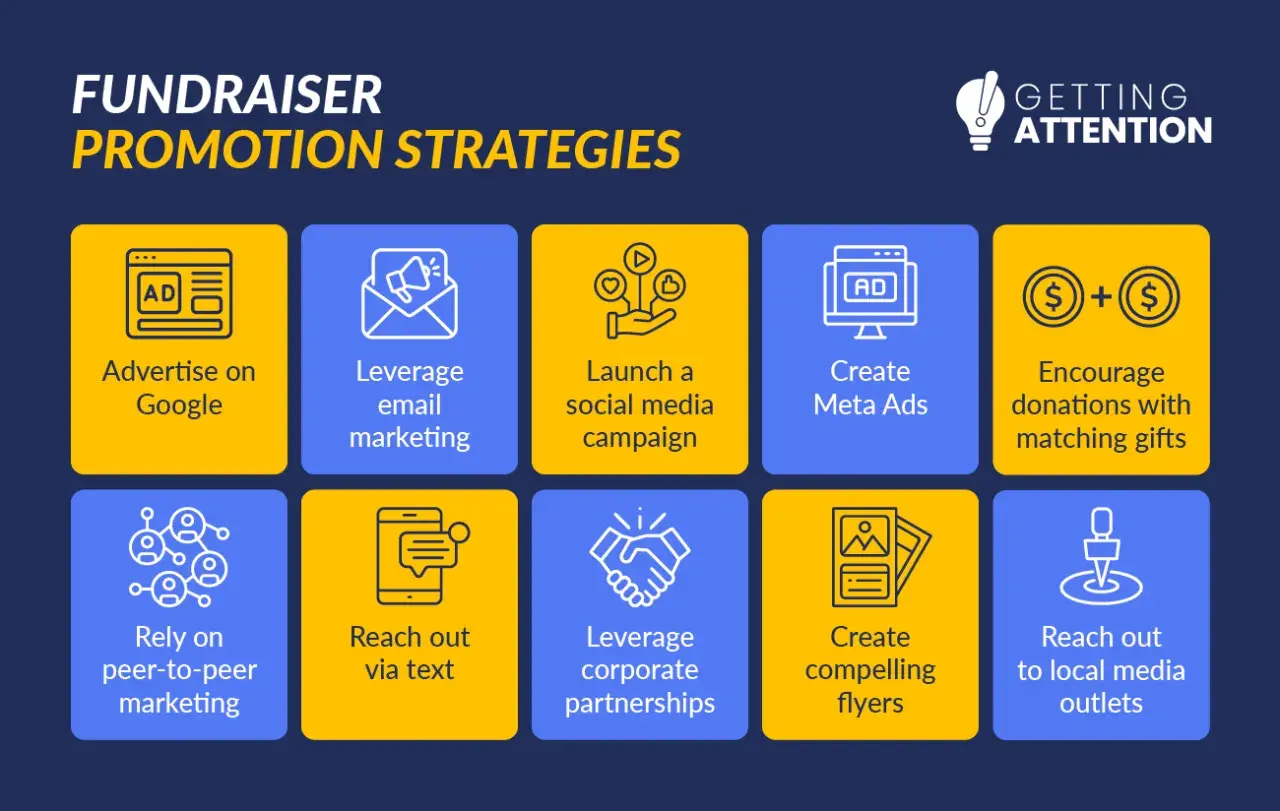
The best campaigns turn attention into donations without making the gift feel hard
- Start with one clear goal and one audience segment, then build the campaign around that choice.
- Match each platform to a specific job, such as awareness, proof, direct asking, or retention.
- Use short-form video, images, and supporter stories to earn trust before you ask for money.
- Keep the donation path mobile-first, short, and obvious.
- Track clicks, completed gifts, average gift size, and repeat giving instead of relying on likes alone.
- Use paid boosts as a test and amplifier, not as a substitute for a weak message.
What this kind of campaign needs to accomplish
In practice, I think of this work as four jobs: attract attention, explain the need, make giving easy, and keep the relationship alive after the donation. If a campaign only does the first job, it may look busy without bringing in meaningful revenue. If it only does the last job, it warms existing supporters but never expands the base. For U.S. nonprofits, that distinction matters even more around Giving Tuesday and year-end appeals, when feeds are crowded and every scroll matters.The biggest mistake I see is asking for money before the audience understands why the money is needed and what it will change. A donor usually needs a small arc: first they notice the issue, then they believe the organization is credible, then they feel the urgency, and only then do they act. When that sequence is clear, the content feels less like marketing and more like an invitation to participate.
Once that job is clear, the next decision is where your audience is actually willing to stop scrolling.

Choose the platforms where your supporters already pay attention
Not every platform deserves the same effort. I prefer to choose one primary channel and one supporting channel, then build the message around how people actually use those spaces. Meta still gives nonprofits native fundraising tools, which helps shorten the path from story to gift, but that does not mean every campaign belongs on Facebook and Instagram by default.
| Platform | Best use | Why it works | What to watch |
|---|---|---|---|
| Community updates, older donors, local supporters | Good for sharing, groups, and direct fundraising actions | Organic reach is limited without strong storytelling or paid support | |
| Reels, Stories, campaign visuals, behind-the-scenes updates | Feels native on mobile and rewards concise visual proof | Needs clean creative and a clear call to action | |
| TikTok | Discovery, founder-led updates, quick emotional storytelling | Can reach people who do not already follow the organization | Works best when the content feels human, not overly polished |
| Corporate support, workplace giving, board networks | Useful for credibility, partnerships, and professional audiences | Usually weak for urgent direct asks unless the story is clearly impact-driven | |
| YouTube and Shorts | Longer proof content, campaign recaps, evergreen education | Good for content that should keep working after the campaign ends | Requires more production discipline than a quick post |
I would rather see a small organization show up consistently on two channels than scatter weak content across five. A platform only helps if the audience, the format, and the fundraiser’s capacity line up. Platform choice shapes the voice; the calendar decides whether the campaign feels coherent or improvised.
Build a content calendar around one story, not random posts
This is where campaigns often get messy. Classy from GoFundMe is right to emphasize alignment between theme, channel, goal, and call to action, because the content has to feel like one campaign instead of a pile of unrelated posts. If the story changes every day, the donor never gets a stable reason to give.
I usually build the calendar around five content types:
- A human story that makes the need real.
- A proof post that shows the organization can actually deliver results.
- A direct ask with a specific dollar amount or use case.
- A supporter voice post, such as a quote, testimonial, or share from a board member.
- A thank-you post that confirms momentum and invites one more action.
For a two-week campaign, I like a simple rhythm: warm up for a few days, move into proof, then enter a short stretch of direct asks and reminders. If the campaign is shorter than a week, I compress it. In that case, I want one post that explains the problem, one that shows impact, and one that gives the clearest possible reason to act now.
The content mix matters because donors rarely convert from pressure alone. They give when the story feels specific, credible, and urgent enough to justify a pause in their day. A good story still loses donors if the giving path is clunky, so I treat the next section as part of the campaign, not an afterthought.
Make donating and sharing as frictionless as possible
The best posts can still fail if the donation experience feels heavy. I want the transition from social post to gift to feel almost boring: tap, understand, give, confirm. On mobile, the ideal form asks for the least amount of information needed to complete the gift and nothing more.
- Keep the landing page focused on one campaign, not six different stories.
- Use clear suggested amounts such as $25, $50, $100, and $250 so the donor does not have to guess.
- Make the page load fast and complete well on a phone.
- Offer a recurring donation option if long-term support matters to the campaign.
- Show trust signals, such as what the gift funds and who receives it.
- Put the share button and thank-you message immediately after the donation.
I also like to review the form from the donor’s point of view. If the page asks too many questions, hides the donation button, or forces extra clicks, the campaign leaks value. The emotional lift happened in the feed; the page should simply finish the job. Paid support can amplify a message that already converts, which is why I test it only after the offer feels clean.
Use paid boosts only after the message is working
Paid social can help, but I never use it as a rescue plan for weak creative. If the organic version of a post does not earn attention, clicks, or shares, putting money behind it usually scales the weakness. What paid media does well is extend reach, retarget people who already engaged, and give a stronger campaign more room to move.
My practical rule is simple: boost what already works. I would rather spend a modest amount to learn quickly than overspend on a guess. A small test budget can reveal a lot in 7 to 10 days, especially if I focus on one audience and one call to action instead of trying to prove everything at once.
- Boost the best-performing post, not the prettiest one.
- Retarget people who watched videos, visited the donation page, or engaged with earlier posts.
- Use a narrow test first, then widen only if the cost per gift looks healthy.
- Watch frequency so the same people do not see the same appeal too often.
- Cut underperforming creative fast and replace it with a clearer message.
If a campaign depends entirely on paid reach, that usually means the story, the audience fit, or the ask still needs work. Paid media should make a strong appeal stronger, not invent demand that is not there. Once the campaign is live, the right numbers tell you whether the appeal is landing or leaking.
Measure the metrics that actually predict fundraising results
Likes are pleasant, but they are not a fundraising metric. I care much more about what happens after the post is seen: whether people click, whether they complete the donation, whether they come back, and whether they share it with someone else. Those numbers tell me whether the campaign is building real momentum or just creating the appearance of activity.
| Metric | What it tells you | How I use it |
|---|---|---|
| Click-through rate | Whether the message creates enough curiosity or urgency to move people off-platform | Useful for judging creative strength and call-to-action clarity |
| Donation completion rate | Whether the landing page and form remove friction | One of the most important signals for campaign health |
| Average gift size | Whether the campaign attracts small, medium, or larger donors | Helps me tune the suggested amounts and the story framing |
| Recurring gift signups | Whether the campaign is creating longer-term value | Especially important when the organization wants stability beyond one appeal |
| Share rate | Whether supporters think the campaign is worth passing along | Good indicator of message resonance and trust |
| Cost per gift | How efficiently paid support converts into revenue | Helps decide whether to scale or pause a campaign |
If one post gets fewer likes but more clicks, I treat it as the better fundraising asset. If people share the post but do not donate, the story may be compelling but the ask may be too vague. The useful habit is to review the data daily during launch, then every 48 hours once the campaign settles into its rhythm. Those mistakes are fixable, and the easiest time to fix them is before the next appeal goes live.
The mistakes that quietly drain a campaign
The biggest errors are rarely dramatic. They are usually small, repeated, and easy to excuse in the moment.
- Asking for money before the audience understands the need.
- Posting the same asset everywhere without adapting it to the platform.
- Using a donation page that asks for too much information.
- Skipping the thank-you flow and never reconnecting with donors.
- Trying to chase viral reach instead of a relevant supporter audience.
- Leaving out plain language about where the money goes and how it helps.
- Ignoring consent and dignity when sharing beneficiary stories or photos.
In the U.S., clarity matters a lot. If a gift is tax-deductible, say so plainly; if it is restricted to a specific program, explain that too. Transparency does more than reduce confusion. It protects trust, and trust is the real currency of fundraising on social platforms. Once those basics are in place, the whole campaign becomes easier to repeat.
What I would keep in place before the next appeal
If I were setting up the next campaign from scratch, I would keep the operating system simple: one page that defines the goal, one story that explains the need, one donation path that stays short, and one review rhythm that checks the numbers before the campaign drifts. That structure is boring in the best possible way. It keeps the team focused on the work that actually raises money.
- Write a one-page brief before anything gets posted.
- Prepare a small asset bank with images, captions, short videos, and thank-you copy.
- Assign one person to watch comments, messages, and donor questions during the active campaign.
- Plan the follow-up before launch, not after the first gift arrives.
- Save the strongest creative for reuse, because good fundraising content should not be one-and-done.
If I had to reduce the whole approach to one rule, it would be this: use social media to earn attention, use the landing page to earn the gift, and use follow-up to earn the next gift. That is the practical center of a strong campaign, and it is usually where the difference between noise and real fundraising begins.
