
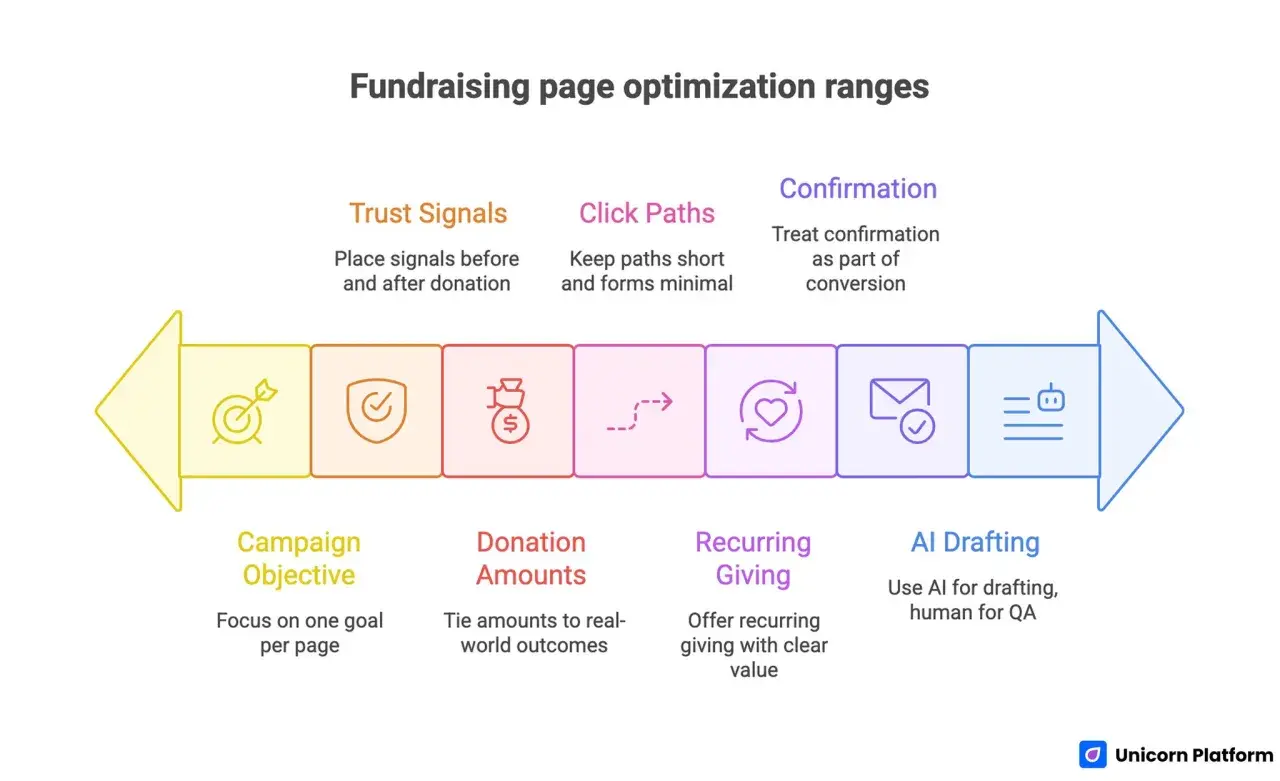
When people ask me how to start a fundraiser, I usually begin with the same advice: make the purpose unmistakable before you choose a platform. A strong campaign does three things well at once: it explains the need, gives donors a believable plan, and makes it easy to act. This guide covers the practical pieces that matter most in the United States, including format choice, campaign writing, promotion, legal basics, and what to do after the first donations arrive.
The fastest path to a fundraiser people trust
- Define the outcome first: who benefits, how much is needed, and what the money will cover.
- Choose the simplest format that matches your audience, not the flashiest one.
- Write a page that answers the donor’s real question: why this need, why now, and why trust you?
- Push hardest in the first 72 hours, when momentum and social proof matter most.
- Keep U.S. registration, tax receipts, and donor disclosures in order from day one.
Start with the outcome, not the platform
I always start by writing the goal in one sentence. That sentence should say who the money helps, what it will pay for, and when the need exists. If the goal is fuzzy, donors do the mental work for you, and most of them simply stop there.
Before you build anything, pin down four things:
- The exact purpose - rent support, medical travel, classroom supplies, event costs, or community programming.
- The target amount - the real need plus platform, payment, printing, and event costs if those apply.
- The time frame - a deadline, launch window, or date tied to the need.
- The beneficiary - the person or organization that will receive the funds and manage them.
A good test is simple: if someone reads your one-sentence goal and still asks, “Okay, but what exactly happens to the money?”, the goal is not specific enough yet. Once that sentence is clear, the rest of the campaign becomes much easier to build.
Choose the fundraising format that fits your crowd
I like to choose the lightest format that still matches the audience. A direct donation page is ideal when people already know the cause and need a simple way to give. A live event works better when local energy matters. Peer-to-peer fundraising is strongest when supporters have their own networks and are willing to ask on your behalf.
| Format | Best for | Strength | Tradeoff |
|---|---|---|---|
| Online donation page | Fast launches, personal needs, and broad sharing | Low setup burden and easy to update | Needs steady sharing to stay visible |
| Community event | Local causes, schools, and sponsor-friendly campaigns | Creates face-to-face energy and urgency | Requires planning, volunteers, and usually a venue |
| Peer-to-peer campaign | Organizations with many supporters | Turns volunteers into amplifiers | Needs coaching so the message stays consistent |
| Sale or auction | Groups that can source products, services, or donated items | Gives donors something tangible in return | Margins can shrink if inventory or logistics are sloppy |
| Hybrid campaign | When local support and online reach both matter | Combines social proof with broader visibility | More moving parts, which means more chances to lose focus |
GoFundMe’s organizer guidance points to the same basic pattern I see work elsewhere: clear story, strong visuals, and repeated sharing matter more than clever packaging. I would rather see a plain campaign that answers questions directly than a polished one that says very little. After the format is chosen, the page itself has to carry that trust forward.
Write the campaign page people trust
Trust is usually won in the first few seconds. The title should explain the cause without sounding dramatic. The opening paragraph should answer three things immediately: what happened, what the money will do, and why support is needed now. If I have to hunt for those details, I already assume donors will feel the same.
- Use a specific title - “Help cover emergency rent after a job loss” is stronger than “Please support our family.”
- Lead with the current reality - say what changed, what is urgent, and what the money will cover.
- Add a real photo - a clear, relevant image usually beats a generic graphic.
- Show the beneficiary early - people trust a fundraiser more when they know exactly where the money goes.
- State the plan for updates - donors want to know how progress will be reported.
I also like to include a simple sentence on what the fundraiser will not cover if that matters. That kind of clarity reduces awkward questions later and makes the whole effort feel more honest. Once the page is clear, the next job is getting it in front of people quickly enough to create momentum.
Create early momentum in the first 72 hours
The first three days do more than most people expect. Early donations create social proof, and social proof lowers hesitation for everyone who sees the campaign later. That is why I prefer a short, focused launch instead of a vague “please share when you can” approach.
A practical launch rhythm looks like this:
- Send the campaign first to a small core group of 20 to 30 people who are most likely to give or share.
- Ask 5 to 10 close supporters to donate early if they can, even in small amounts, because visible activity matters.
- Use one text message, one email, and one social post rather than scattering the ask across too many channels at once.
- Post an update within 24 hours so the page feels active, not abandoned.
- Repeat the ask every 2 to 3 days in the first week, but change the angle each time instead of copy-pasting the same message.
I would also keep one thing in mind: most people need to see a fundraiser more than once before they act. That does not mean being pushy; it means being visible with a short message that tells them what has changed since the last time they saw it. When that rhythm is missing, even a worthy campaign can stall.
Avoid the mistakes that quietly stall donations
The biggest problems are rarely dramatic. They are usually small, avoidable, and easy to miss when the campaign is moving fast. I see the same few mistakes over and over again, and each one weakens trust in a different way.
- Too much backstory, not enough ask - people need the context, but they also need to know exactly what action you want.
- A goal that feels made up - if the number does not connect to a real expense, it looks arbitrary.
- No follow-up plan - donors hesitate when they suspect the fundraiser will go silent after the first gift.
- Weak mobile presentation - many supporters will read and donate on a phone, so long blocks of text or clutter hurt conversions.
- Confusing money flow - if donors cannot tell who receives the funds and how they are used, they become cautious.
- Launching before approvals - for schools, nonprofits, and third-party campaigns, this is a common preventable problem.
The fastest way to improve a weak campaign is to remove anything that creates doubt. If a donor has to guess, reassure themselves, or hunt for details, the fundraiser is already leaking attention. The same clarity also makes the legal side much easier to handle.
Handle U.S. rules and donor records carefully
According to the IRS, about 40 states have charitable solicitation statutes that may require registration before you solicit residents of those states. That does not mean every fundraiser needs a lawyer on day one, but it does mean you should not assume state rules are optional. If the campaign supports a nonprofit, or if you plan to ask across state lines, check the registration rules before you launch.
| Issue | What it means | Practical move |
|---|---|---|
| State charitable solicitation registration | Many states regulate charitable fundraising and may require registration before you ask residents for donations | Confirm the states you will actively solicit and register where needed |
| Written acknowledgments | Donors generally need records for contributions of $250 or more if they want to claim a deduction | Send a clear receipt and keep a copy in your records |
| Quid pro quo contributions | If donors receive goods or services in return, extra disclosure can apply once the gift is above $75 | Spell out any benefit and its estimated value before accepting the gift |
| Personal versus charitable fundraising | Not every fundraiser is tax-deductible | Be explicit about whether the campaign is for a qualified charity or a personal need |
I also keep a simple records sheet with donor name, date, amount, payment method, fees, and any acknowledgment sent. That habit saves time later, especially when people ask for receipts or when the organizer needs to report results. With the rules and records in place, the final step is making sure the campaign ends as clearly as it began.
What to do after the goal is reached
A fundraiser is not finished the moment the money lands. The real final step is showing people what happened next. I like to send a short public update within a few days, then a more complete wrap-up once the money has been applied to its purpose.
- Thank donors publicly and privately so they feel seen without being pressured.
- Explain where the money went in plain language, not in accounting jargon.
- Address any surplus or shortfall clearly if the campaign raised more or less than expected.
- Archive the page or leave it open with a status update if support is still needed.
- Save what worked - message timing, supporter responses, and questions donors asked.
The campaigns that earn repeat support are the ones that stay specific, responsive, and accountable after the money moves. If I had to reduce the whole process to one rule, it would be this: make the ask simple, make the proof visible, and make the follow-through impossible to miss.
