
The best ideas are simple, social, and easy to run with adult help
- Low-cost fundraisers usually beat complicated ones because they are easier to launch and finish.
- Teen-friendly winners include bake sales, car washes, craft sales, game nights, yard work, and donation drives.
- School-based ideas work well when the group can pool effort and promote to a built-in audience.
- For a 14-year-old, adult supervision matters most when handling money, food, online payments, or public events.
- A realistic first goal is often $100-$300 for a small solo project and $300-$1,000 for a group event, depending on foot traffic and pricing.

What usually works best for 14-year-olds
I usually rank teen fundraisers by three things: startup cost, how many people are needed, and whether the plan can survive a busy school week. The winner is rarely the flashiest idea; it is the one that is easy to explain, easy to repeat, and easy for a 14-year-old to help run with an adult in the background. That is why the same formats keep showing up: they do not demand a lot of equipment, and they give people a simple reason to give.
| Idea type | Startup cost | Best for | Typical rough net |
|---|---|---|---|
| Bake sale | $20-$50 | Schools, churches, sports games | $50-$200 |
| Lemonade or snack stand | $15-$40 | Warm weather and foot traffic | $40-$150 |
| Yard work or cleanup | $0-$20 | Teens who are willing to do physical work | $20-$30 per hour per helper |
| Craft sale | $10-$60 | Creative teens with repeatable items | $50-$200 |
| Car wash | $25-$75 | Groups that can work together | $100-$300 |
| Game night or trivia night | $30-$100 | School halls, youth groups, or community spaces | $200-$600 |
These are rough ranges, not guarantees. If a teen has foot traffic, a strong story, or a school crowd already assembled, the same idea can earn much more; if the setup is hidden or overcomplicated, it can earn less. That is why the next section focuses on simple ideas that are cheap to test fast.
Simple low-cost ideas you can start this week
When I want a fundraiser that can launch without a spreadsheet and a sponsor deck, I keep it small and visible. A 14-year-old usually does better with ideas that sell something obvious or exchange labor for a clear price, because that makes the ask feel concrete instead of awkward.
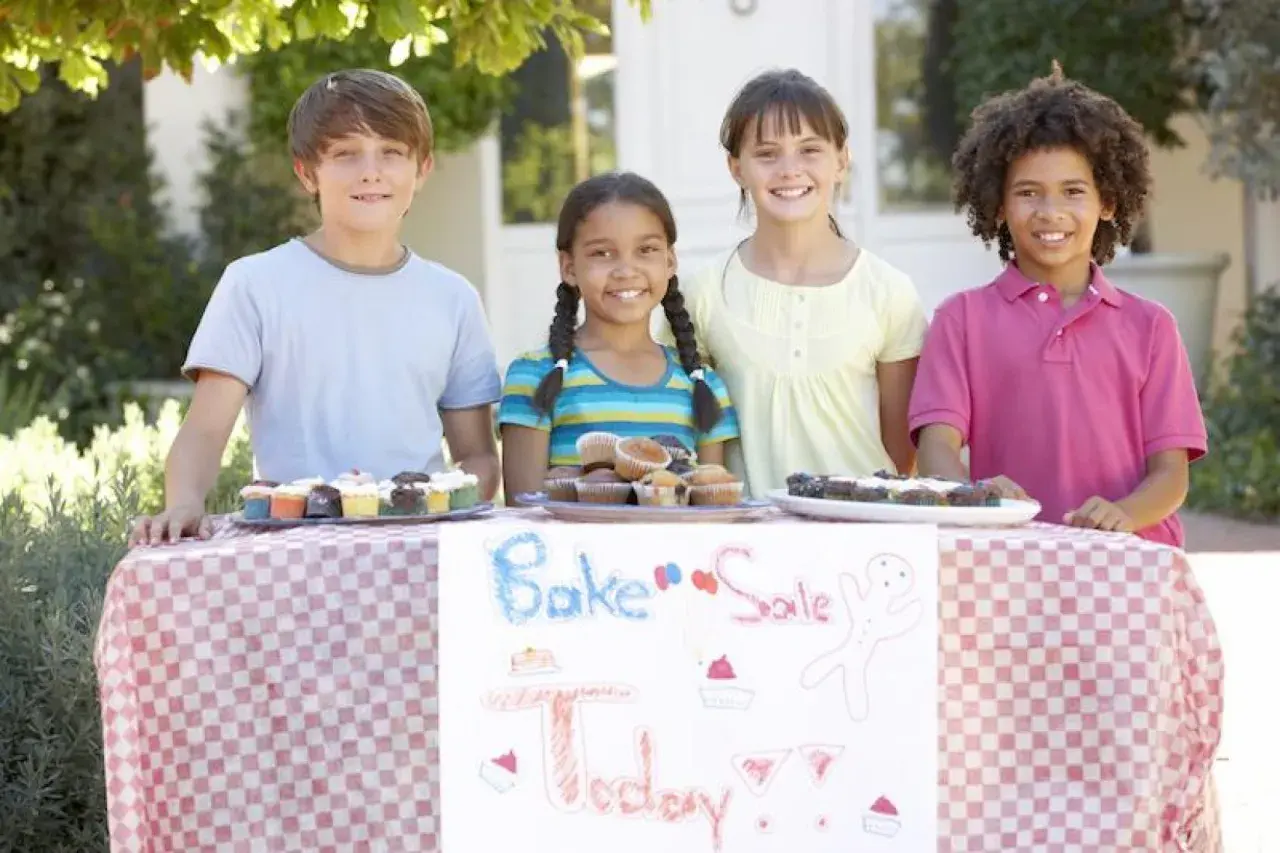
- Bake sale with one signature item. Cookies, brownies, or mini muffins are easier to batch than a huge menu. The key is to keep the display neat and the price simple, such as $2 for one item or $5 for three. A themed table near a game or school event can often do much better than a random table in an empty parking lot.
- Lemonade or snack stand. This works best in warm weather or near a community gathering. It is cheap to start, easy to explain, and good for younger teens who want a short, contained project. If the setup is busy, even a modest price like $2-$3 per cup can add up quickly.
- Yard work and neighborhood cleanup. Raking leaves, weeding, pulling weeds, and cleaning garages are all easy to understand and easy to sell. I like this idea because the value is obvious: people can see the mess disappear. Charging by the hour or by the task usually works better than asking for vague donations.
- Dog walking or pet sitting. This is a strong fit for a teen with trusted neighbors nearby. It can be priced simply, such as $15-$25 for a walk or visit, and it feels more personal than a product sale. The limitation is trust, so it works best when families already know the teen.
- Declutter sale. Old books, games, clothes, and toys can become cash without much upfront spending. The margin is often excellent because the inventory is already at home. A garage sale style setup also teaches a useful lesson: one person’s clutter can become another person’s bargain.
- Craft sale. Bracelets, bookmarks, keychains, and small paintings are good if the teen is genuinely quick at making them. I would avoid anything too time-heavy unless it can be produced in batches. A craft fundraiser becomes frustrating when each item takes an hour and only sells for a few dollars.
- Birthday fundraiser. Instead of gifts, a teen can ask family and close friends to support a cause, project, or local need. This is especially useful when the birthday already brings people together and the message can be shared in advance. It is a small idea with a surprisingly strong return when the story is clear.
The big advantage here is speed: these ideas can be tested in a single afternoon, then adjusted if the pricing feels too low or the response is weak. Once a teen has a first win, it becomes much easier to move into a bigger group event.
School and group events that raise more together
School-based fundraisers work because they borrow attention that already exists. Instead of convincing strangers one by one, you are asking an already connected group to participate in a simple game, challenge, or cause. That usually makes the event easier to promote and more fun to attend.
- Penny wars. Classes compete to collect the most change, and the friendly rivalry keeps people engaged. It works best when the rules are easy and the prize matters enough to create momentum.
- Dress-down or theme day. Students pay a small fee, often $1-$5, to wear something fun like pajamas, team colors, or a favorite character theme. It is low effort and very scalable, which is why schools keep using it.
- Trivia or game night. A modest ticket price, a few donated prizes, and a couple of solid volunteers can turn this into a reliable community event. It is especially good when parents, siblings, and teachers want something simple to attend.
- Talent show or open mic. This works when the group already has performers or a school culture that likes live events. Ticket sales, snack sales, and small sponsor donations can all stack together here.
- Read-a-thon or step challenge. Sponsored pledges are a smart fit for teens because the fundraising is tied to an activity, not just a sale. That makes the project feel healthier, more personal, and more likely to attract family support.
- Car wash with a fixed time slot. If the group has a safe, approved location and enough helpers, a car wash can raise meaningful money in a single day. The real trick is traffic, so this idea works best near a school event, church gathering, or busy neighborhood.
These formats usually do best when the event feels like a good time first and a fundraiser second. People are more willing to pay when they feel they are buying an experience, not just donating money.

How to choose the right idea before you spend a dollar
Once the obvious ideas are on the table, the real decision is fit. I like to ask a few practical questions before choosing anything: How much time is available? Does the teen have access to a crowd? Is there a place to sell or host the event? And can the plan work without buying a lot of materials first?
| Your situation | Best fit | Why it works | Watch out for |
|---|---|---|---|
| No budget at all | Yard work, pet sitting, decluttering, tutoring | Uses time and trust instead of supplies | Needs clear scheduling and adult oversight |
| Strong school access | Theme day, penny wars, trivia night, talent show | Built-in audience lowers promotion effort | May need approval from staff or administration |
| Good weather and foot traffic | Lemonade stand, car wash, snack table | Simple, visual, and easy to buy on impulse | Depends heavily on location and timing |
| Creative teen | Craft sale, custom cards, bracelets, art pieces | Uses a skill the teen already enjoys | Can become too time-heavy if items are hard to make |
| Cause-driven project | Read-a-thon, step challenge, birthday fundraiser | People respond well to a clear mission | Needs a simple, believable story behind the ask |
If the teen is outgoing, a public event may be the best fit. If they are quieter, a service-based fundraiser can feel more natural and still raise good money. Matching the idea to the person matters more than chasing the trendiest option, and that is what makes the next step so important: execution.
How to make the fundraiser actually raise money
A weak fundraiser is usually not a bad idea; it is a vague one. The teens who do well tend to be the ones who make the ask specific, keep the price easy to understand, and give people a reason to act now instead of later.
- Choose one number. Pick a clear target such as $150, $300, or $500. People are more likely to help when they know exactly what the money is for.
- Set one price ladder. Keep the pricing simple with easy numbers like $3, $5, $10, and $20. If people have to calculate too much, they hesitate.
- Pre-sell before the event. A few early buyers can create momentum, especially for baked goods, tickets, or a game night. Pre-selling also reduces the risk of making too much and selling too little.
- Make payment easy. Cash still matters, but a parent- or guardian-managed digital option can remove friction. GoFundMe’s teen fundraising guidance makes the same point: online pages are useful, but in-person effort still does the heavy lifting.
- Use sponsors when possible. A local business or family friend may give a fixed amount if the teen reaches a milestone. Even a $25 or $50 sponsor can make the project feel more real and credible.
- Tell people what the money does. Saying “for a team trip” is less persuasive than saying “to cover two bus seats and a registration fee.” Specificity helps people imagine the impact.
In my experience, the most effective teen fundraisers are not the most creative ones; they are the most focused ones. That is also why the basics around safety and permissions matter so much, because a clear plan is only useful if the setup is actually allowed.
Safety, permissions, and money handling should come first
A 14-year-old can absolutely be the visible face of a fundraiser, but an adult should handle anything that involves money, food, or public access. In the United States, local rules vary more than people expect, especially for food sales, raffles, sidewalk tables, and any event that uses a school or park space.
- Use a parent or guardian for online payment accounts and cash transfer apps.
- Check permits or approvals before selling on school grounds, in a park, or near a storefront.
- Keep food simple, labeled, and made in a clean kitchen.
- Do not run door-to-door sales alone, especially after dark.
- Assume raffles and games of chance need extra rule-checking.
- Count cash with an adult and record every expense the same day.
Those guardrails do not make the project less fun; they make it trustworthy. And trust is what turns one small fundraiser into support for the next one.
A realistic one-week plan that keeps the project moving
If I were helping a 14-year-old start from zero, I would keep the plan short and concrete. The point is not to build a huge operation; it is to finish one small fundraiser well enough that people want to help again.
- Pick one idea and one target amount.
- Ask an adult to approve the location, payment method, and schedule.
- Gather supplies and write a one-sentence pitch.
- Tell at least 20 people before the fundraiser starts.
- Run it once, count the money, and thank everyone the same day.
The best teen fundraisers do more than raise cash. They teach a young person how to organize a small effort, speak clearly about a purpose, and turn community goodwill into something useful. That is the real value here: a simple project that helps someone now and leaves the teen with a practical skill they can use again.
