
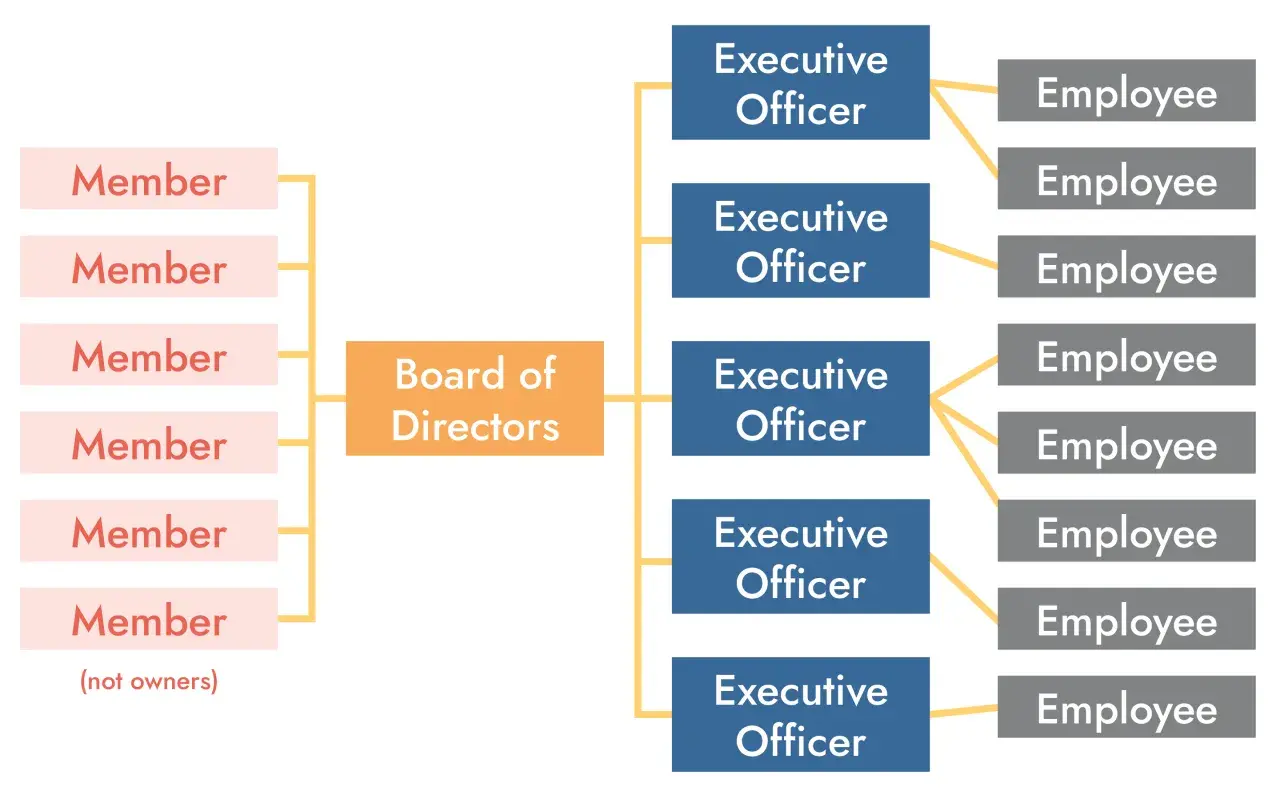
A board can be mission-driven and still drift if nobody can answer who approves strategy, who checks risk, and what happens when a conflict appears. I use a governance framework example like the one below to turn that ambiguity into a clear operating model for a U.S. community nonprofit. The point is not more paperwork; it is better decisions, cleaner accountability, and stronger public trust.
The board’s job is to make ownership, oversight, and reporting unmistakably clear
- Governance is the board’s operating system: it defines who decides, who checks, and how decisions get recorded.
- A useful U.S. nonprofit model usually includes bylaws, committee charters, a composition matrix, conflict disclosures, minutes, and a review calendar.
- Board composition matters: skills, independence, and community knowledge are as important as fundraising reach.
- The framework should be reviewed at least annually and after any major shift in mission, leadership, or funding.
- If staff, board, and volunteers cannot explain the decision path in plain English, the framework is too vague.
What a board governance framework actually covers
A governance framework is the structure that keeps board work from becoming improvised or personality-driven. It connects the organization’s bylaws, board roles, committee responsibilities, meeting cadence, approval rights, and documentation rules into one usable system.I usually think of it in three layers. Authority tells you who can decide. Oversight tells you who checks strategy, risk, and results. Documentation tells you what gets recorded, when it gets recorded, and who is responsible for keeping the record clean. If one of those layers is missing, the board starts operating on memory, and memory is a weak foundation for stewardship.
For a U.S. nonprofit board, that framework should also reflect mission protection, public accountability, and the legal reality that directors are expected to act with care, loyalty, and obedience to the organization’s purpose. Once that structure is clear, the next step is to see what it looks like in a real boardroom.
A practical example for a U.S. community nonprofit board
Here is the kind of model I would use for a community-impact nonprofit with a small staff and a volunteer board. It is simple enough to run without a compliance department, but specific enough to survive leadership changes and grant scrutiny.
| Framework element | What it covers | Example in practice |
|---|---|---|
| Mission and authority | Reserved powers, board approval rights, and the boundary between board and staff | The board approves the strategic plan, annual budget, and hiring or evaluation of the CEO |
| Board composition | Size, skills, independence, term structure, and community representation | A 9-member board with finance, legal, program, fundraising, and lived-experience perspectives |
| Committees | Focused review areas that prepare issues for full-board decisions | Governance handles recruitment and policy review; finance reviews budget and audit issues; programs reviews outcomes |
| Decision rhythm | When the board meets, what gets decided, and how urgent matters are handled | Board meetings every quarter, committee meetings monthly or bi-monthly, and interim approvals documented in writing |
| Controls and ethics | Conflict disclosure, recusal, records, and policy compliance | Conflict-of-interest disclosures at each meeting, minutes approved at the next meeting, and a retention policy for records |
| Community accountability | How the board hears from the people the organization serves | An annual listening session, a program dashboard, and a board review of what changed because of community feedback |
BoardSource’s recommended board practices point to two consecutive three-year terms as a common limit, and a board composition matrix makes recruitment more strategic. I like that approach because it keeps the board from recruiting only within the same network and pushes it to think about the missing skills, perspectives, and community knowledge it actually needs.
This is the part many boards miss: a framework is not only about control. It is also about making sure the board can reflect the community it serves and still make disciplined decisions when the pressure rises. From there, the question becomes which policies and roles make the framework real instead of decorative.
The policies and roles that make it work
The roles that should never be fuzzy
I want the board chair, treasurer, secretary, governance committee, and chief executive to have separate jobs that nobody has to guess at. The chair should steer agendas, keep the board focused on decisions, and partner with the CEO. The treasurer should make financial oversight understandable, not mysterious. The secretary should protect the record. The governance committee, when the board is large enough to need one, should own board recruitment, onboarding, term tracking, and periodic policy review.
That role clarity matters because it keeps the board from drifting into either micromanagement or passive rubber-stamping. If a small board does not have committees, that is fine, but the work still has to be assigned somewhere and tracked somewhere.
Read Also: Board Meeting Meaning - What Nonprofits Need to Know
The policies that keep trust intact
- Conflict-of-interest policy: defines disclosure, recusal, and how the board handles related-party decisions.
- Whistleblower policy: gives staff, volunteers, and board members a safe way to report concerns.
- Document retention policy: says what records are kept, how long they are kept, and how electronic files are protected.
- Fundraising policy: keeps donor claims accurate and fundraising practices consistent with law and mission.
- Executive compensation and evaluation process: separates performance review from personal preference and records the basis for decisions.
- Minutes and board records: show what the board actually decided, not just what it discussed.
The IRS encourages charities to keep governing-body minutes contemporaneously and to maintain written policies for conflicts of interest, document retention, fundraising, and governance decisions. I would not bury those policies in a binder and forget them; I would bring them into board packets, orientation, and annual review so they stay visible and usable.
Once those roles and policies are in place, the framework has a real chance of shaping behavior. The next task is implementation, because a well-written policy is still useless if the board never works it into its regular rhythm.
How I would roll it out without turning the board into a bureaucracy
I prefer a staged rollout. Boards that try to fix everything in one meeting usually end up with a thick packet and no follow-through. A cleaner approach is to build the framework in small, testable steps.
- Map the decisions for the next 12 months. List what the board must approve, what committees should review, and what belongs to staff.
- Write one-page charters for each committee or board function. Keep them short enough that volunteers will actually read them.
- Create a board calendar with budget approval, CEO evaluation, policy review, board recruitment, and annual self-assessment already scheduled.
- Build a standard board packet with financials, program metrics, minutes, conflict disclosures, and a decision log.
- Train new members immediately so the framework is explained on day one, not after they have already started improvising.
- Run one full cycle and then revise what was confusing, duplicated, or never used.
That implementation step also exposes where boards usually break down, which is where the hard lessons tend to sit.
Where boards usually break the framework
- The framework is too vague: it speaks in principles but never names owners, approvals, or review dates.
- The board confuses governance with operations: it starts managing staff tasks instead of setting direction and oversight.
- Recruitment is based on fundraising only: the board misses finance, legal, program, and community knowledge that it actually needs.
- Conflicts are handled informally: recusal is discussed in theory but not documented when it matters.
- Minutes are treated as an afterthought: the record does not clearly show decisions, votes, or follow-up.
- The framework is never refreshed: the board changes, the funding changes, but the governance model stays frozen.
Those failures are rarely dramatic at first. They show up as delay, confusion, repeated debates, and a quiet drop in trust. The fix is usually not a brand-new philosophy; it is a tighter system with clearer ownership and a regular review loop. That is why I end by looking at what the board should be able to prove after a year of using the framework.
What I would track after the first year
| Indicator | What I want to see |
|---|---|
| Board decisions | Major approvals happen on schedule, with a clear record of who decided what |
| Policy compliance | Conflicts are disclosed, minutes are approved, and key policies are reviewed on time |
| CEO oversight | The CEO has a written evaluation and the board can explain the basis for feedback |
| Board development | Orientation is complete, officers have successors in view, and self-assessment is completed |
| Recruitment quality | The board composition matrix is updated and new members fill actual gaps |
| Mission alignment | Program results and community feedback are reviewed, not just reported |
If those six areas are moving, the governance model is doing real work. If they are stalled, I would not start by rewriting the mission statement. I would tighten the decision map, refresh the committee roles, and make the review calendar non-negotiable. A good board governance framework should make stewardship visible, repeatable, and easy to explain. When that happens, the organization is far better positioned to protect its mission and serve its community with consistency.
