
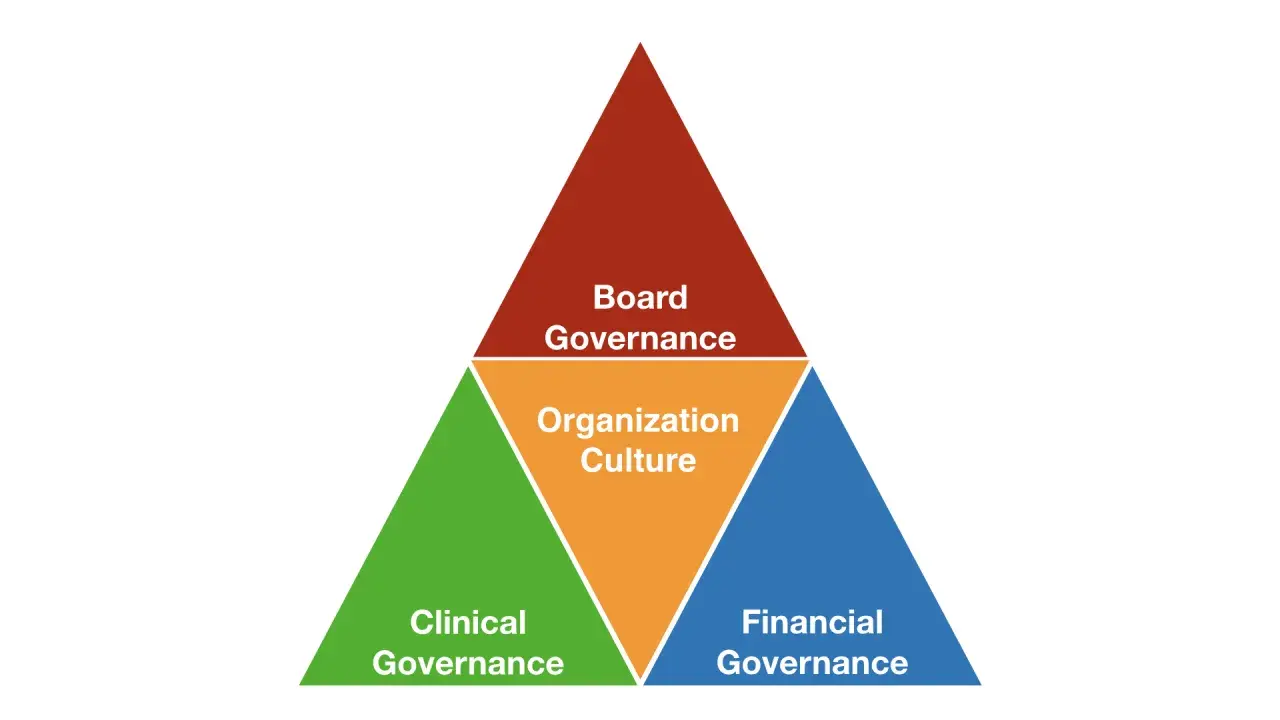
A hospital board of directors is the group that sets direction, guards the mission, and holds leadership accountable for safety, finance, and community trust. In practice, good governance is less about ceremonial approval and more about asking the right questions early enough to matter. I focus here on what the board actually does, who should sit on it, what belongs on the agenda, and how strong oversight changes outcomes for patients and the community.
The essentials of hospital governance at a glance
- The governing body is legally responsible for the hospital, even when day-to-day work is delegated.
- Strong boards balance clinical insight, financial discipline, and community voice.
- Quality and safety should appear on every agenda, not as a side note.
- Board members need preparation, confidentiality, and a real conflict-of-interest discipline.
- Community benefit is part of governance, especially in nonprofit and safety-net hospitals.
What the board actually governs
The cleanest way to understand hospital governance is to separate oversight from operations. The governing body sets the direction, approves guardrails, and holds the organization accountable; the executive team runs the hospital from day to day. Federal rules make that line explicit: the hospital’s governing body is legally responsible for the conduct of the hospital, appoints the chief executive, and remains accountable for contracted services, medical staff oversight, and patient care standards.
I like to explain it this way: the board decides whether the hospital is moving in the right direction and whether the leadership team has the tools and discipline to get there. It should not manage staffing assignments, bedside workflows, or every operational detail. If it does, it becomes a shadow management team, and that usually weakens both accountability and speed.
| Area | Board responsibility | Management responsibility | What I look for |
|---|---|---|---|
| Mission and strategy | Approve direction and major priorities | Build and execute the plan | Does the strategy fit the hospital’s market, patient mix, and community needs? |
| Quality and safety | Demand accountability and resources | Run improvement work | Are trends improving, or are leaders only explaining away problems? |
| Medical staff and privileges | Approve bylaws and set standards | Support credentialing processes | Are privilege decisions based on character, competence, training, experience, and judgment? |
| Contracted services | Ensure the hospital stays responsible for outcomes | Monitor vendors and service partners | Can the board see whether outsourced work is safe and effective? |
| Finance and reserves | Protect assets and approve risk appetite | Manage budget, cash, and forecasts | Are the reports understandable, timely, and tied to decisions? |
| CEO oversight | Hire, evaluate, and support the CEO | Lead the organization | Does the board assess performance with evidence rather than instinct alone? |
That division of labor matters because hospitals are too complex to run on instinct. Once the board knows its lane, the next question is who belongs in the room when those decisions are made.
Who belongs on a strong board
I do not trust boards that look impressive on paper but lack the right mix of experience, independence, and curiosity. The best boards usually include independent civic leaders, people with finance or audit experience, clinicians who understand care delivery without dominating it, and community members who can speak to local realities. The point is not to create a social club; it is to build a group that can see the hospital from more than one angle.
The American Hospital Association has long emphasized habits that sound simple but are often missing in practice: attending meetings, serving on committees, preparing in advance, respecting confidentiality, and staying educated about the field. Those are not administrative niceties. They are the basic behaviors that make oversight credible.
- Independence so conflicts of interest do not quietly shape decisions.
- Clinical fluency so quality reports are understood, not merely received.
- Financial literacy so reserves, margin, debt, and capital plans can be challenged intelligently.
- Community perspective so the board hears the barriers patients actually face.
- Judgment under pressure because hospital decisions often happen in uncertain conditions.
- Willingness to learn because no trustee can already know everything about health care, regulation, and local demand.
A board that is too narrow misses lived experience. A board that is too passive misses risk. The right mix gives the hospital both legitimacy and sharper judgment, which leads naturally to the question of what that group should be reviewing every time it meets.
What should be on every board agenda
A board packet should not be a data dump. I want to see a short, readable dashboard with trend lines, exceptions, and a clear explanation of what changed since the last meeting. According to the Joint Commission, the governing body is ultimately accountable for safety and quality, and quality improvement should be built into board oversight rather than parked in a side committee.
| Agenda area | What the board needs to see | Questions worth asking |
|---|---|---|
| Quality and safety | Falls, infections, readmissions, harm events, complaints, near misses | What is trending the wrong way, and what action has already started? |
| Workforce | Vacancies, turnover, overtime, agency use, burnout indicators | Where is staffing putting care at risk? |
| Financial health | Margin, cash, payer mix, days cash on hand, revenue cycle issues | What would happen if reimbursement or volumes shifted again? |
| Access and equity | ED wait times, appointment availability, language access, discharge barriers | Which patients are still struggling to get timely care? |
| Compliance and risk | Audit findings, policy exceptions, vendor performance, legal exposures | What risk has moved outside the hospital walls through contracts? |
| Leadership pipeline | CEO progress, succession plans, critical vacancies, development plans | If a key leader left tomorrow, who could step in? |
I also want quality and safety to sit on every agenda, not just the quarterly one. If a metric is green but the trend is worsening, that is still a problem. Oversight works best when it focuses on drift early, before the issue becomes a headline or a patient harm event. That kind of discipline matters even more when the board is also responsible for the hospital’s public purpose.
How hospital governance supports community benefit
This is the part that makes hospital governance more than an internal management exercise. In the United States, hospitals are major local institutions, and nonprofit hospitals in particular are expected to serve community need, not private gain. That means the board should ask whether the hospital is actually improving access, trust, and health outcomes in the neighborhoods it serves.
In practical terms, I would expect trustees to look beyond financial statements and ask about the lived experience of care: Can people get through the emergency department when they need to? Are language services easy to use? Is transportation a barrier? Are behavioral health, maternal health, and primary care needs being addressed in a way that fits the local population? Those are governance questions, not side projects.
- Emergency access should be real, not symbolic.
- Charity care and financial assistance should be understandable and usable.
- Community partnerships should be measured, not just announced.
- Surplus should be reinvested in facilities, people, and patient care where possible.
- Historically marginalized communities should have a visible voice in feedback loops.
When I see a board treat community benefit as a communications line item, I know the organization is missing the point. The stronger approach is to treat community impact as part of performance itself. That is where governance starts to slip, and it is also where many boards make the same predictable mistakes.
The governance mistakes that hurt hospitals most
Most weak boards do not fail because they are careless. They fail because they drift into habits that feel comfortable but do not produce real oversight. The good news is that the patterns are easy to name once you know what to look for.
- Confusing oversight with management. When trustees start solving staffing problems from the board table, they blur accountability and slow the hospital down.
- Letting quality become a clinical-only issue. Quality and safety are governance concerns because they shape patient outcomes, liability, reputation, and mission.
- Rubber-stamping major decisions. Big contracts, affiliations, joint ventures, and capital projects deserve challenge, not applause on cue.
- Ignoring conflicts of interest. A board that does not take related-party relationships seriously eventually loses credibility with staff and the community.
- Accepting polished narratives instead of hard data. A good presentation is not the same thing as a good system.
- Skipping board education. Health care changes too quickly for trustees to rely on last year’s assumptions.
- Using committees as a shield. Committees are useful, but they should not become a way to hide difficult issues from the full board.
The pattern I trust least is a board that stays polite while meaningful problems remain unchallenged. Hospitals need calm leadership, but they also need real accountability. Once that is accepted, the next step is to build a governance rhythm that keeps the board effective over time.
What stronger governance looks like over a full year
I prefer boards that work on a calendar, not on memory. A yearly governance rhythm keeps the hospital from overreacting to the latest crisis while forgetting the slow risks that matter just as much.
| Timing | What should happen | Why it matters |
|---|---|---|
| Every meeting | Review quality, safety, finance, access, and CEO updates | Keeps the board anchored in the operating reality of the hospital |
| Quarterly | Deep-dive on strategic risk, community benefit, capital plans, and major committee work | Prevents long-term issues from being buried under routine reports |
| Twice a year | Board education on one hard topic such as cyber risk, workforce strain, or reimbursement pressure | Builds shared judgment instead of isolated expertise |
| Annually | CEO evaluation, board self-assessment, conflict disclosures, committee refresh, succession review | Stops stagnation and makes accountability visible |
I also like to see one focused topic at each meeting. That could be infection prevention, behavioral health access, emergency preparedness, or the economics of a new service line. The point is to make the board learn the hospital in depth, not just skim a stack of reports. When trustees understand the operating model, they are much better at spotting whether leadership can self-correct.
The standard I use for boards that want to earn trust
The simplest test is also the hardest one: does the board make the hospital safer, clearer, and more faithful to its mission than it would be without that board? If leadership can explain how each major decision affects safety, access, finance, and community trust, the board is probably doing real work. If the answer is mostly ceremony, the organization will feel that gap eventually.
For me, good governance looks like disciplined questions, timely information, independent judgment, and a genuine respect for the people the hospital serves. When those pieces are in place, the board is not just supervising an institution. It is helping protect a public good, and that is the standard worth aiming for.
