
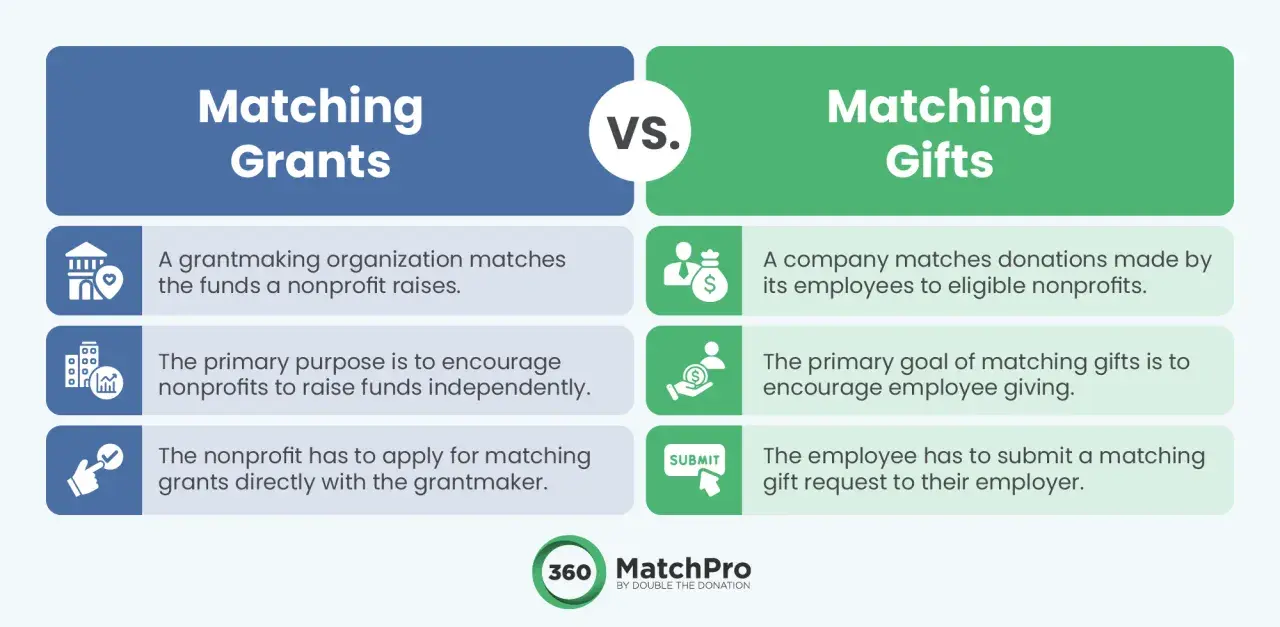
I think of matching-gift companies as one of the most efficient fundraising tools available to nonprofits: one employee donation can turn into a larger charitable check without asking the donor to spend more. The real value is not just the extra money, but the way these programs change donor behavior, timing, and follow-through. In this article, I break down how employer donation matching works, why it matters, what strong programs look like, and how fundraisers can capture more of the money that is already eligible.
The essentials that shape a strong employer-match strategy
- Most programs still use a 1:1 ratio, so a $100 gift often becomes $200 for the nonprofit.
- Annual caps commonly range from $1,000 to $15,000 per employee, which matters for repeat donors and major gifts.
- Double the Donation reports that only 1.31% of individual gifts are matched even though about 10% are eligible.
- The donor usually has to give first, then submit the match through an employer portal or a third-party platform.
- The easiest wins come from adding match prompts to donation pages, receipts, and thank-you emails.
How employee donation matching works
In practice, I treat matching as a three-step chain: the employee gives, the employer verifies, and the nonprofit receives the additional funds. Most U.S. programs are built around eligible 501(c)(3) organizations, and some employers also extend the benefit to schools, disaster relief, arts groups, or volunteer hours. The important detail is that the match is usually not automatic; the donor has to request it.
That request often happens through an HR portal, a giving platform, or a newer auto-submission flow that can reduce friction to a single click. Once submitted, the employer checks the donation amount, the nonprofit’s eligibility, and the employee’s status before sending the match. Some companies approve gifts within weeks, while others allow donors up to 12 months to file, which is why a good follow-up system matters so much.
- The employee makes a qualifying donation to an eligible charity.
- The employee submits a match request through the company’s process.
- The employer verifies the gift and confirms program rules.
- The company sends the matching payment to the nonprofit.
Some employers also match volunteer hours or donated products, not just cash, which can make the program more generous than the headline ratio suggests. Once you see that flow clearly, it becomes easier to decide where the fundraising opportunity really sits.
Why these programs matter for fundraising
The biggest reason I care about matching is simple: it changes the math of giving. A donor who planned to give $50 may be more willing to act when they know the employer will double the impact, and that psychological lift can improve both conversion and gift size. In fundraising terms, matching is not a side benefit; it is a built-in urgency signal.
There is also a real revenue gap. Many gifts qualify but never get claimed, which means the money is already sitting on the table and just needs a better prompt. Double the Donation reports that only 1.31% of individual contributions at the average nonprofit are matched, even though about 10% are eligible. That gap is why even a modest improvement in donor follow-through can create meaningful new revenue.
I also like matching because it works across campaign types. It helps year-end appeals, peer-to-peer events, monthly giving, and workplace-driven campaigns, and it can make a donor feel that their gift is being multiplied immediately rather than absorbed into a slow, abstract process. That makes it worth looking at what the strongest programs have in common.
What strong employer programs have in common
When I evaluate a program, I look for three things: clarity, simplicity, and a reasonable cap. The best systems do not force donors to hunt through dense policy pages or jump across multiple logins just to claim a benefit they already earned through employment. They make the match easy to find, easy to understand, and easy to submit.
| Program feature | What it usually looks like | Why it matters |
|---|---|---|
| Match ratio | Usually 1:1, though some companies offer 2:1 or higher | Determines how much the donation can grow immediately |
| Annual cap | Often between $1,000 and $15,000 per employee | Sets the ceiling for frequent donors and major supporters |
| Eligibility rules | Usually U.S. 501(c)(3) nonprofits, with some cause-based exceptions | Shows whether your organization can actually receive the match |
| Submission window | Commonly 90 days to 12 months after the donation | Missed deadlines are one of the most common reasons gifts go unclaimed |
| Workflow | HR portal, giving platform, or auto-submission | Less friction usually means higher participation |
One thing I would not underestimate is the importance of auto-submission. If a donor can request the match without leaving the donation flow, participation tends to rise because the process feels like a natural continuation of the gift, not a separate administrative task. The strongest programs are usually not the flashiest ones; they are the ones that remove the most unnecessary steps.

A few companies still set the standard
A few large employers still set the benchmark for what this benefit can look like when it is designed well. GE Aerospace is a useful reference point because it pioneered the modern corporate matching gift model in 1954, and its current program still reflects the classic structure that many companies copied later. Microsoft, Starbucks, and Pfizer show how different the same idea can look when it is adapted to a company’s culture and employee base.
| Company | What the program looks like | Why it is worth paying attention to |
|---|---|---|
| Microsoft | Dollar-for-dollar match up to $15,000 per employee each year; volunteer time is matched at $25 per hour | Shows how a large company can combine a generous cap with strong volunteer incentives |
| GE Aerospace | 1:1 match with a cap of $5,000 per year | Represents the historical benchmark for corporate matching and a straightforward, easy-to-explain model |
| Starbucks | Eligible nonprofits can receive up to $1,000 per year in company match | Smaller cap, but still useful because it is accessible and easy for employees to understand |
| Pfizer | Dollar-for-dollar match for eligible U.S. and Puerto Rico colleague donations to qualifying 501(c)(3) organizations | Useful example of a program that emphasizes clear eligibility and also extends to disaster matching when major crises hit |
How nonprofits can capture more of the available matches
If I were building a fundraising workflow today, I would make matching visible before the donor clicks donate and again after the gift is complete. The reason is simple: most donors will not go back later unless they are reminded, and the reminder has to feel easy rather than bureaucratic.
- Ask for employer information during the donation process so you can identify eligibility early.
- Add a match prompt to the thank-you page and the receipt email, not just a generic donation confirmation.
- Send a short follow-up within 24 to 48 hours that explains how to submit the request.
- Include matching language in peer-to-peer campaigns, gala follow-ups, and monthly giving pages.
- Train major-gift staff to mention employer matching when they hear a donor works for a large company.
- Use a searchable employer database or auto-submission tool if your platform supports it.
I would also segment the ask by donation type. A one-time donor may need a quick reminder and a simple button, while a recurring supporter may respond better to a quarterly nudge that shows how much their employer has already added over the year. When the ask fits the donor’s behavior, match claims go up without making the experience feel pushy.
The point is not to bombard people with extra emails. It is to remove the gap between “I gave” and “I claimed the match,” because that gap is where most of the missed revenue hides.
Where matching programs break down
The weak spots are usually predictable, and that makes them fixable. Donors assume every gift qualifies, deadlines get missed, and nonprofits sometimes promise a doubled impact before the employer has actually approved the request. I never treat matching revenue as fully secure until the employer portal confirms it.
- Eligibility is narrower than donors expect. Some employers exclude political groups, membership dues, event tickets, gala tables, or non-U.S. charities.
- Deadlines are easy to miss. A donor may have months to submit the form, but that window still closes.
- Submission is often incomplete. Missing receipt details, incorrect nonprofit names, or a blank employee ID can stall the process.
- Volunteer hours are overlooked. Many programs match time as well as money, but donors rarely know to ask.
- The process feels too cumbersome. If the workflow takes too many clicks, participation drops fast.
There is also a messaging trap. Some teams tell donors that a gift will be doubled before checking the employer rules, which can create frustration if the match is denied later. I would rather say, “Your gift may be eligible for a company match,” then show the next step clearly. That keeps expectations realistic and protects trust.
Once those leaks are fixed, the campaign becomes much more predictable and the match channel starts behaving like a reliable part of revenue rather than an occasional bonus.
The habit I would build into every giving campaign
If I were running a nonprofit campaign in 2026, I would treat employer matching as a default part of every ask, not a special add-on. That means the same logic should appear in the donation form, the thank-you message, the stewardship sequence, and the campaign dashboard. When donors see the match early and understand the process immediately, they are far more likely to complete it.
- Put the employer-match reminder next to the donation button.
- Use plain language that explains the donor gives first and the company follows with the match.
- Track match revenue separately so the team can see which campaigns actually move the needle.
The organizations that do this well do not rely on hype. They make the next step obvious, keep the rules simple, and follow up at the right moment. That is usually enough to turn a routine employee benefit into real, measurable fundraising growth.
