
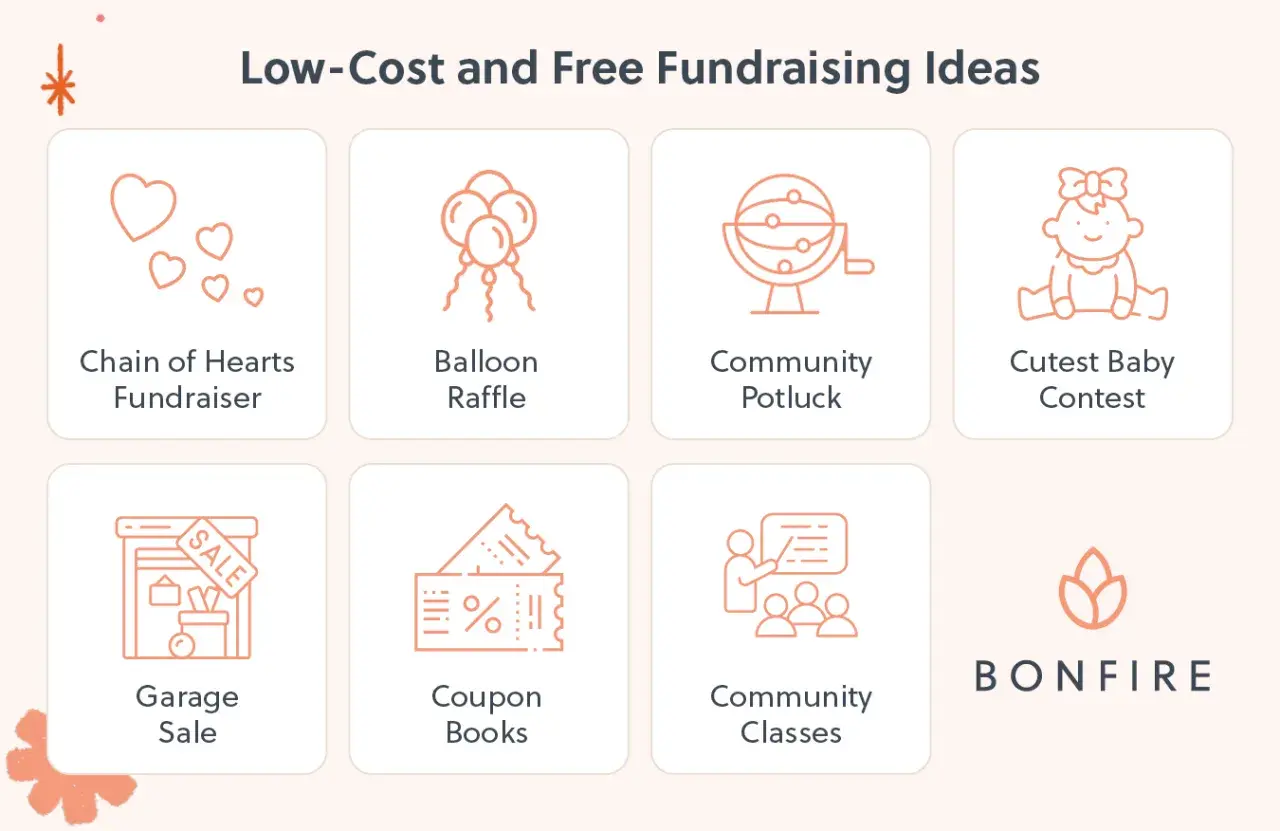
Raising money for a cause works best when the plan fits the person asking and the people they can realistically reach. The strongest campaigns are usually simple, specific, and easy to share, which is why the best fundraising ideas for individuals are rarely the flashiest ones. In the sections below, I break down the options that actually convert, how to choose the right mix, and what to avoid if you want the effort to feel credible.
The most effective personal fundraisers are clear, credible, and easy to act on
- Online crowdfunding gives you the fastest start when you need one clear donation link.
- Direct text and email outreach usually beats broad social posting because it feels personal.
- Small events, challenge campaigns, and service-based asks all work, but for different audiences.
- In the U.S., keep the money trail transparent and be clear about whether the cause is personal or tied to a qualified charity.
- The best results usually come from combining one main fundraiser with one or two supporting tactics.
What donors need to understand in the first 10 seconds
People do not need a perfect pitch. They need to understand the need quickly, trust the person asking, and see exactly how to help. I usually think of that as a three-part test for any personal fundraiser: clarity, credibility, and convenience.
| What a donor is silently asking | What your campaign should answer | Why it matters |
|---|---|---|
| What is this for? | One sentence with a concrete use of funds | Vague causes are harder to support |
| Who is behind this? | Name, photo, relationship to the cause, and a real story | People fund people, not abstractions |
| Why now? | A deadline, milestone, or urgent need | Urgency creates action |
| How do I give? | One link, one step, and clear donation options | Fewer clicks usually means more donations |
That is also why a polished page does not automatically perform better than a plain one. If the story is specific and the next step is obvious, people move. Once those basics are in place, the right format becomes much easier to choose.

The fundraising ideas that work best for individuals
There is no single best format, but some ideas are consistently easier to launch and easier for others to support. I group the strongest options into those that travel well online, those that create in-person energy, and those that turn your time or skills into support.
| Idea | Best for | Startup cost | Why it works |
|---|---|---|---|
| Online crowdfunding | Urgent, emotional, or wide-reaching causes | Low | One link is easy to share and update |
| Direct text and email asks | Your warmest network | Very low | Personal outreach converts better than a public post alone |
| Challenge campaigns | Shareable, participatory fundraisers | Low | People like backing a visible goal |
| Small community events | Local support and relationship building | Medium | Creates a shared moment around the cause |
| Service-based fundraisers | People with time, not much cash | Very low | Turns effort and skill into donations |
| Matching gifts or recurring support | Ongoing needs | Low | Builds momentum and predictability |
Online crowdfunding works best when the story is narrow
A crowdfunding page is the cleanest starting point for most individual campaigns because it gives supporters one place to understand the need and give. I prefer this format when the cause is easy to explain in one sentence, such as medical bills, travel costs, disaster recovery, tuition gaps, or a community project with a clear deadline.
The page should not read like a press release. It should sound human. A strong title, a short opening paragraph, a real photo, and a transparent explanation of where the money goes are usually enough. I also like to offer a few default amounts, such as $25, $50, and $100, because people often donate faster when they are not forced to invent a number from scratch. That simple structure makes the ask feel concrete, which is what helps the next idea work too.
Direct text and email asks still outperform public posts
If I had to choose one tactic that most individuals underuse, it would be direct outreach. A private message is more likely to be read, remembered, and acted on than a generic social post. This is where peer-to-peer fundraising helps: it simply means asking your own network to share and give rather than waiting for strangers to discover the cause.
I would rather see 30 thoughtful messages sent to people who actually know you than one broad post pushed to hundreds of followers who barely recognize the story. Keep the message short, personal, and specific. Say what the cause is, why it matters, and what a gift will do. If someone cannot donate, ask them to forward the message to one person who might. That keeps the reach growing without making the ask feel heavy.
Challenge campaigns create a reason to share
Challenge-style fundraisers work because they give people something to participate in, not just something to buy. Birthday fundraisers, step challenges, month-long pledges, shaved-head campaigns, and mileage goals all turn support into a visible moment. A good challenge is easy to explain, easy to track, and easy to join.
I like these campaigns when the fundraiser needs momentum more than polish. A 7-day walking challenge, a 30-day no-spend pledge, or a “donate per mile” campaign can feel playful without losing seriousness. The key is to keep the action tied to the cause so it does not become a gimmick. If the challenge is memorable and measurable, people will talk about it for you.
Small community events are better for visibility than for volume
Bake sales, trivia nights, yard sales, pop-up dinners, car washes, and craft tables still work, but I treat them as relationship builders first and revenue generators second. They are useful when the cause has a local audience or when the fundraiser benefits from showing up in public and collecting a few strong supporters face to face.
The best version of a small event is simple enough to run without burning out the organizer. A donated space, a few volunteers, and a clear hook are often enough. If you can get a local business to contribute a room, supplies, or matching funds, the event becomes easier to justify and more appealing to attend. That kind of support also makes service-based fundraising more attractive when cash is tight.
Service-based fundraisers make use of time instead of inventory
When someone has energy but very little startup money, I often recommend a service-based approach. Offer dog walking, lawn mowing, babysitting, snow shoveling, tutoring, résumé help, photography mini-sessions, or gift wrapping in exchange for donations. The appeal is simple: there is almost no inventory risk, and the value is easy to understand.
This method works especially well for individuals because it feels earned rather than abstract. People know exactly what they are paying for, even if they donate more than the listed amount. The downside is that it is time-intensive, so it is better for small or medium goals than for very large ones. Still, when a cause needs immediate action and the fundraiser has useful skills, this can be one of the most efficient options.
Selling or auctioning items can create quick wins
Closet cleanouts, themed gift baskets, donated goods, and online auctions are practical when the organizer already has items to work with or a network willing to donate them. This is not the flashiest route, but it can be effective because the inventory is tangible and the pricing is straightforward.
I like this option most when the goal is to turn unused things into visible progress. A cleanout sale can feel small, but it can also create an early win that helps the campaign look active and credible. The tradeoff is obvious: profits are limited by what you can collect and sell, so I would use this as a supporting tactic rather than the only one.
Read Also: Annual Fundraising Plan - Stop Scrambling, Start Systemizing
Matching gifts and recurring support build steadier momentum
For ongoing needs, recurring donations are often more useful than a one-time burst. Even small monthly gifts create predictability, which is valuable when a cause will not disappear after one weekend. A matching gift also helps because it gives supporters a reason to act now instead of later.
If you can persuade one local business, family member, or community partner to match donations up to a cap, the campaign gets an immediate boost in urgency. Recurring support works for a different reason: it turns a one-time donor into a continuing backer. Neither approach is as dramatic as a big event, but both are more durable than they first appear. That matters when the next decision is choosing the right mix.
How to choose the right option for your timeline and audience
The best fundraising idea is not the one that sounds smartest. It is the one your audience can understand, support, and share without friction. If I were choosing from scratch, I would match the idea to three variables: time, network, and energy.
| Your situation | Best-fit approach | Why I would choose it |
|---|---|---|
| You need money in the next few days | Crowdfunding plus direct text messages | Fastest path to early donations |
| You have a few weeks | Challenge campaign or small event | Enough time to build anticipation |
| You need ongoing support | Recurring donations or a matching challenge | Creates steady income instead of one spike |
| Your network is mostly local | Community event, service fundraiser, or yard sale | Local people are more likely to show up in person |
| You have almost no budget | Direct asks or service-based offers | Very little overhead |
The main mistake is trying to do everything at once. One clear hub with one supporting action usually beats five scattered tactics. If you can only do one thing well, choose the option that lets someone say yes in under a minute. That answer only works if the campaign page itself feels trustworthy, which is the next piece that matters.
How to build a campaign page that people trust
A strong page does not need to be fancy, but it does need to answer the right questions quickly. I like to think of the page as a promise: it should explain the need, show the person behind it, and make the use of funds visible enough that donors feel safe giving.
| Page element | Minimum standard | Why it matters |
|---|---|---|
| Headline | Specific and easy to understand | Sets the tone in one line |
| Opening story | Short, human, and direct | Builds connection fast |
| Budget or use of funds | Simple breakdown with real categories | Shows where the money goes |
| Photo or short video | Recent, honest, and not overly edited | Creates trust and emotional clarity |
| Donation options | Three clear amounts plus a custom option | Reduces decision fatigue |
| Updates | Regular progress notes and thank-yous | Shows the campaign is active |
I also recommend launching to a small warm circle before posting publicly. Early support creates social proof, which simply means other people feel safer giving when they can see that others already have. A 30- to 60-second phone video, a few personal messages, and one public update are often enough to make the page feel real. Even a strong campaign can stall if a few avoidable mistakes creep in, so I always look at those next.
Mistakes that quietly drain momentum
I see the same problems repeat: vague goals, too much dependence on social media, and pages that never get updated after the first post. None of these mistakes looks fatal at the beginning, but they quietly reduce trust and make it harder for donors to act.
- Being too vague about the need - “Help me out” is much weaker than “Help me cover travel and treatment costs for the next six weeks.”
- Posting once and waiting - Most campaigns need repeated, respectful reminders because people are busy, not indifferent.
- Choosing a fundraiser that is hard to explain - If you cannot explain the idea in one sentence, it will be harder for others to share it.
- Using too many channels at once - A single hub plus one or two support tactics usually performs better than a scattered approach.
- Ignoring legal and tax boundaries - According to the IRS, gifts to individuals are not tax-deductible, while donations to qualified organizations may be. That means a personal fundraiser should be honest about who receives the money and should never imply a deduction that does not exist.
- Forgetting the follow-up - Donors want to know what happened after they gave, even if the update is short.
- Overcomplicating events - A fundraiser that takes more effort to run than the cause can sustain usually collapses early.
Once those problems are avoided, the campaign has a much better chance of building steady traction. That is why the simplest plan is often the strongest one.
The simplest mix I would use for most personal causes
If I were starting from zero, I would build one crowdfunding page, send direct messages to 20 to 40 people who genuinely know me, and add one visible action within the first week, such as a small challenge, a dinner, or a local service offer. That combination works because it covers reach, trust, and momentum without demanding a large budget or a complicated setup.
From there, I would keep the campaign alive with short updates, specific milestones, and genuine thanks. The real advantage is not cleverness; it is consistency. When the ask is clear and the follow-through is steady, supporters do not have to wonder what to do next, and that makes the fundraiser easier to join and easier to share.
For most individual causes, the best path is not a big, dramatic stunt. It is a focused plan that gives people a reason to care, a reason to trust, and a very simple way to help.
