
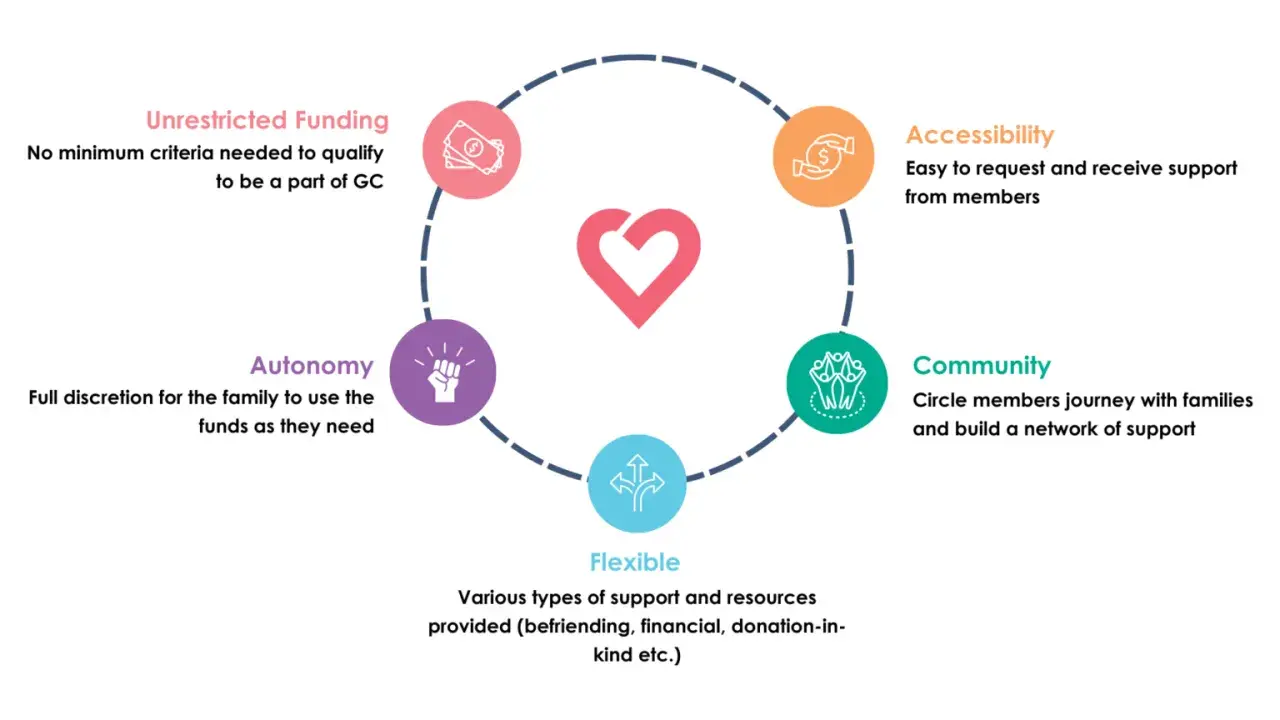
Giving circles are one of the clearest ways ordinary donors turn small gifts into larger community grants. The model works because it combines money, conversation, and shared judgment, which is exactly what many fundraising efforts need when trust matters as much as dollars. In the U.S., it is no longer a niche idea: recent research points to roughly 4,000 groups, 370,000 members, and about $3.1 billion in collective giving over seven years.
What matters most before you join or start one
- The model works best when a group has one clear purpose, a simple decision rule, and a contribution level people can sustain.
- A pooled gift can do more than raise money; it can build donor loyalty, volunteering, and long-term community ties.
- Nonprofits get the best results when they offer a specific project, a clear budget, and a fast way to understand impact.
- Admin matters more than most people expect, so governance, receipts, and grant decisions should stay simple.
- The biggest risk is overcomplication, not lack of goodwill.
What makes this model different from standard fundraising
Philanthropy Together describes the model as people with shared values coming together to decide where a pooled gift goes. That small shift changes the whole fundraising experience: donors are not just sending money, they are taking part in a shared decision. I think that is why this format feels so durable. It gives people a reason to stay engaged after the first donation, and it gives nonprofits more than a transaction. They get a grant, but they also get relationships, advocates, and often future volunteers.
For fundraising teams, that difference matters. A one-time campaign can raise cash quickly, but a collective-giving group can create a more stable channel of support if the experience is well designed. The real value is not only the pooled amount; it is the learning and trust that build around the grant decision. Once that is clear, the next question is how the model actually operates day to day.
How giving circles work in practice
The basic rhythm is straightforward: gather members, define a shared goal, pool funds, review opportunities, decide together, and make the grant. Some groups meet monthly, others quarterly, and some only once or twice a year. The schedule matters less than the clarity. If members know what they are committing to, they are far more likely to stay involved.
| Decision point | Common approach | What to watch |
|---|---|---|
| Contribution | A set annual, quarterly, or campaign-based pledge | Keep it realistic enough that members can stay in the group without pressure |
| Grant selection | Member nominations, review, and a vote | Define the criteria early so the process does not turn into endless debate |
| Administration | Independent, hosted by a nonprofit, or supported by a community foundation | Choose the structure that matches the group’s size and staff capacity |
| Member roles | Chair, treasurer, grants lead, outreach lead | Rotate work so the same people do not carry everything |
| Focus area | Local, identity-based, issue-based, or mixed | Stay focused enough that members can explain why the group exists |
The best-run groups make the process visible from the start. People should know who can join, how money is handled, how candidates are reviewed, and how a final decision gets made. If any of those pieces are vague, the circle can become frustrating faster than most organizers expect. Once the mechanics are clear, the bigger question is why this format is expanding so quickly in the current U.S. fundraising landscape.
Why the format is growing so fast in the U.S.
Recent U.S. research shows why the model keeps attracting attention. One analysis found roughly 4,000 groups, 370,000 members, and about $3.1 billion in collective grants over seven years. That is not just a story about money; it is a story about participation. People want to see where their dollars go, talk through the tradeoffs, and feel that their giving is connected to something specific and local.
I also think this model fits the mood of current fundraising better than many organizations realize. Donors are more selective, more values-driven, and more likely to respond to a clear invitation than a vague appeal. Candid notes that members often move beyond financial support and become volunteers or advocates, which helps explain why nonprofits value these groups so highly. When donors become participants, the relationship usually becomes stronger than a standard campaign can create. That leads directly to the most practical question for nonprofits: how do you make these groups want to support you?How nonprofits can attract the right groups
The strongest pitch is specific. A circle does not need your entire mission statement; it needs a concrete problem it can help solve. If you want a group like this to engage, make the ask easy to understand and easy to repeat to other members. I would always start with one project, one budget, and one clear result.
| Stronger ask | Why it works | Weaker alternative |
|---|---|---|
| Fund the final $25,000 for a neighborhood food-access program | Specific, measurable, and easy for members to discuss | Support our mission |
| Cover transportation for youth attending after-school sessions | Shows a real barrier and a direct solution | Help us do more community work |
| Visit one program site and meet staff plus participants | Builds trust and gives members a story they can remember | Read our annual report if you have time |
- Lead with a project that has a clear dollar amount attached.
- Show what success will look like in plain language, not nonprofit jargon.
- Offer a short, structured meeting or site visit instead of a long donor nurture sequence.
- Make it easy for members to volunteer, learn, or attend a grantee presentation.
- Send concise follow-up updates so the group can see what its pooled gift changed.
If a nonprofit only wants an anonymous check, this model is probably not the best fit. It works best when the organization is ready to build a little relationship around the money. That is also why many groups work well when they are hosted by a community foundation or a nonprofit with enough infrastructure to handle receipts and reporting. If you want to create one from scratch, the next section is where most of the hidden friction shows up.
How to start one without creating admin chaos
The simplest version starts with a small group and a narrow purpose. Pick one issue, one geography, or one community identity, then decide how members will contribute and how grants will be chosen. I would keep the first year deliberately modest. A circle that is clear and lightweight in year one has a better chance of becoming durable than one that tries to look impressive too early.
- Define the purpose in one sentence.
- Choose a contribution level that most members can sustain without hesitation.
- Pick a decision rule, such as majority vote or a small review committee.
- Assign basic roles so one person is not carrying all the admin work.
- Create a simple rubric for reviewing grantees.
- Plan one follow-up activity after the grant, not just the award itself.
The common mistakes are predictable. Groups make the mission too broad, hold too many meetings, skip role clarity, or spend so much time debating process that nobody remembers the actual grant goal. Another mistake is ignoring the boring parts: bank handling, receipts, timeline management, and communication. Those details are not glamorous, but they decide whether the group feels organized or exhausting. Once that foundation is in place, the next question is which format fits your goal best.
Which format fits which fundraising goal
Not every circle should look the same. The right structure depends on what the members want to accomplish and how much admin they are willing to tolerate. I usually recommend matching format to energy, not ambition. A well-run small group beats a big, loosely organized one almost every time.
| Format | Best for | Main strength | Main limitation |
|---|---|---|---|
| Place-based | Local community needs and neighborhood nonprofits | Members can see impact close to home | Can become too broad if the geography is not defined well |
| Identity-based | Shared lived experience and trust among members | Strong belonging and cultural relevance | Needs thoughtful norms so identity does not turn into sameness |
| Issue-based | Education, health, housing, arts, climate, or another clear cause | Easy to explain and easier to align around | Can drift if the issue is too large or too abstract |
| Hosted | Groups that want lighter administration and easier compliance | Less operational burden for members | Requires clear ownership of fees, receipts, and decision rights |
Mixing formats is common, but the rules still need to be explicit. The more focused the group, the easier it is to recruit members, explain the grant strategy, and keep the conversation productive. That consistency is also what helps the model survive after the first round of grants, which is where many groups lose momentum.
The real advantage is what happens after the grant
The best circles do not treat the grant as the finish line. They use it as the beginning of a longer relationship with members, grantees, and the community. That might mean a site visit, a short impact update, a volunteer day, or an annual celebration of what the pooled gift made possible. It can also mean inviting members into leadership over time so the group keeps renewing itself instead of fading when the founding organizer gets busy.
- Send one clear update after the grant is made.
- Invite the grantee to speak in person or virtually.
- Give members a chance to volunteer or advocate, not just donate.
- Rotate leadership before burnout sets in.
- Keep the next cycle of giving visible so momentum carries forward.
If I were advising a nonprofit or a small donor group, I would keep the first year simple, the purpose narrow, and the follow-up personal. That is usually what separates a one-off experiment from a durable community asset. In 2026, the strongest fundraising models are the ones that create belonging before they ask for scale, and this one does exactly that when it is kept clear and human.
