
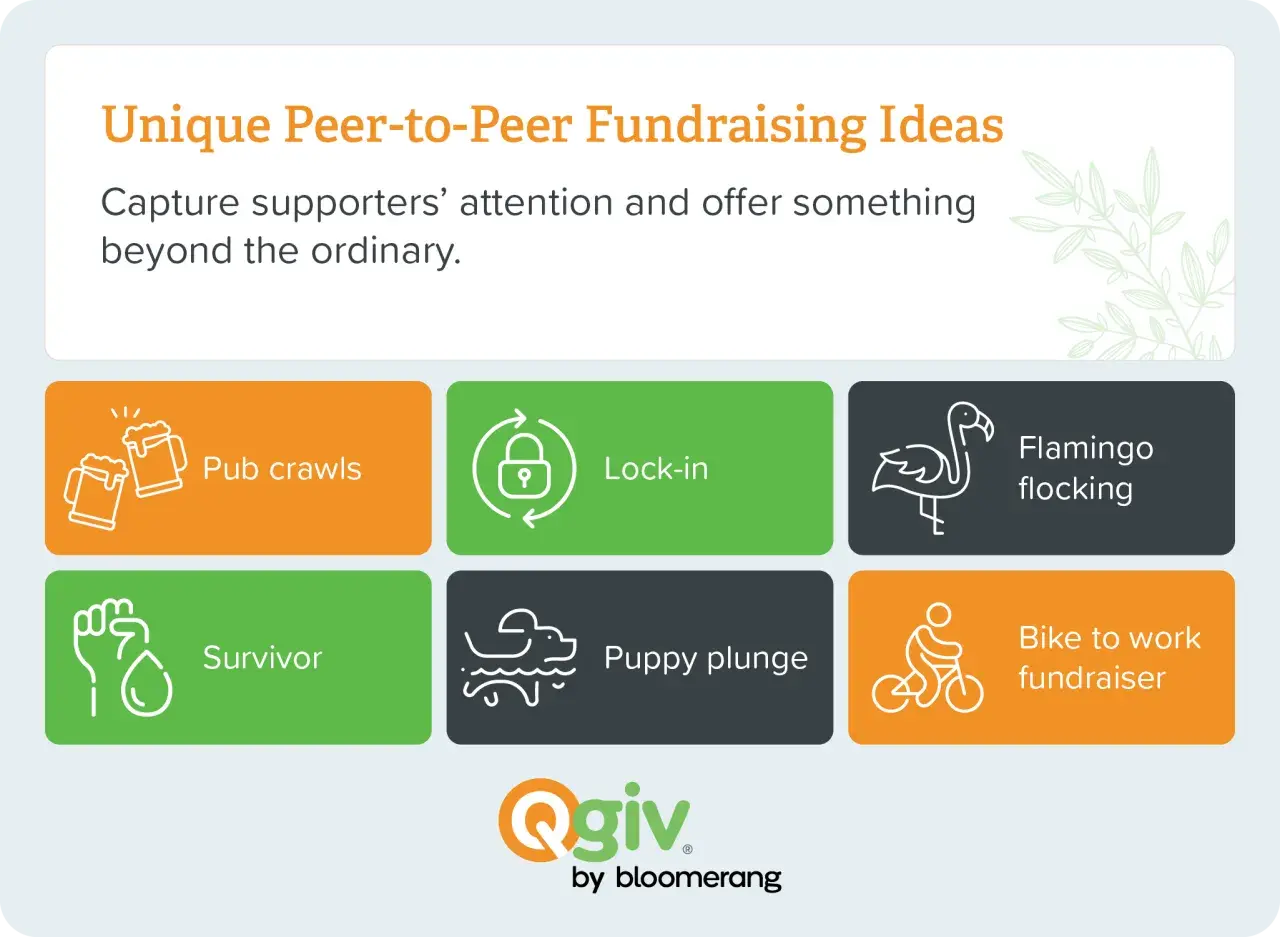
Peer-to-peer fundraising works because people are far more likely to give when the ask comes from someone they know and trust. Done well, it turns supporters into small but powerful ambassadors for a mission, extending your reach beyond the audience you already own. In this article, I’ll break down how the model works, where it fits best, how to launch it without drowning volunteers, and which signals tell you whether the campaign is building real community momentum.
What matters before you launch
- Supporters raise money from their own networks, so trust and personal storytelling do most of the work.
- The strongest campaigns make it easy to share, easy to donate, and easy to understand in under a minute.
- This approach is usually better for nonprofits that can coach participants and follow up consistently.
- The real win is not only revenue; it is new donors, stronger relationships, and future advocates.
- Track activation, conversion, and retention, not just the total amount raised.
What peer-to-peer fundraising really is
I think of this model as a distributed ask: the organization sets the mission, and individual supporters carry that mission into their own circles. Each participant creates a personal page or sharing link, tells their story in their own words, and asks friends, family members, coworkers, or classmates to contribute. The nonprofit still owns the cause and the outcomes, but the human connection comes from the supporter, not from a central campaign page alone.
That personal connection is why it works. GoFundMe Pro highlights research showing that 48% of people trust recommendations from friends and family more than ads or news, which is exactly the kind of trust this model uses. I also see another advantage that is easy to miss: every participant becomes a messenger, so the campaign can reach communities the organization would never reach by email alone. That is why this strategy is especially useful when the goal is both fundraising and visibility.
It helps to understand the operational shape of the model too. The nonprofit recruits or activates supporters, gives them tools, and then those supporters raise money from their own networks. The best campaigns feel personal without becoming chaotic, and that balance is what I’ll unpack next.

How it differs from crowdfunding and event fundraising
People often lump this model together with crowdfunding, but the mechanics are different enough that the choice matters. Crowdfunding usually revolves around one donation page and one central message. Peer-to-peer fundraising spreads that message across many personal pages. Event fundraising adds a live or time-bound moment, which can be powerful, but it does not always create the same network effect.
| Model | Who does the asking | Best when you need | Main tradeoff |
|---|---|---|---|
| Peer-to-peer fundraising | Supporters, volunteers, participants, or ambassadors | Wider reach, more social proof, and new donor acquisition | More setup, coaching, and follow-up |
| Crowdfunding | The organization or a single campaign owner | A simpler structure and one central story | Less organic reach through personal networks |
| Event fundraising | Usually the nonprofit, with attendees or sponsors supporting it | A visible deadline, social energy, or in-person participation | Momentum can fade once the event is over |
Donorbox’s guidance is blunt on this point: the distributed model is more complex than a single donation page, because supporters need training and ongoing support. That complexity is not a flaw; it is the price of getting many people to advocate for you at once. If your team cannot handle that support layer, a simpler format may be a better fit. If you can handle it, though, the reach can be dramatically stronger than a one-page campaign.
The practical question is not which model is “best” in the abstract. It is which model matches your staff capacity, your audience behavior, and the kind of story your community is ready to tell. That leads naturally to how I would build the campaign itself.
How to build a campaign people actually want to share
I start with one rule: if a supporter would feel awkward explaining the campaign to a friend, the campaign is not ready. People share when the ask is simple, specific, and emotionally clear. They do not share because the dashboard is polished or because the nonprofit has a clever acronym.
- Choose one focused story. A single program, emergency need, season of giving, memorial, walk, run, birthday, or classroom goal is easier to explain than a broad organizational wish list.
- Set a short campaign window. A defined period creates urgency and makes it easier for participants to stay active. Open-ended asks tend to drift.
- Recruit the right people first. Your best fundraisers are usually already close to the mission: volunteers, board members, alumni, parents, staff allies, long-term donors, or event participants.
- Give every participant a usable page. A personal story prompt, a photo, a suggested goal, and default copy reduce friction and make the page feel real.
- Make sharing effortless. Email templates, social captions, and text-message prompts should be ready on day one so people are not staring at a blank screen.
- Use light competition carefully. Leaderboards and badges can help, but not every audience responds to competition. Some respond better to team pride, school spirit, or shared purpose.
When I build these campaigns, I try to remove every avoidable decision from the supporter’s path. The organization should handle the boring work: branding, donation flow, receipts, troubleshooting, and message templates. The supporter should mainly do two things: tell a personal story and ask people they already know.
For U.S. nonprofits, I also pay attention to the little operational details that become big problems if ignored: acknowledgment language, donor data collection, and how receipts are issued. Those things do not make the campaign exciting, but they make it sustainable. Once that foundation is in place, the next job is supporting the people who are doing the asking.
What supporters need from you to stay active
Supporters are not freelance marketers. They are volunteers lending their credibility to your cause, and they need enough structure to feel confident without feeling micromanaged. If they disappear after setting up a page, it is often because they were not given a clear plan.
- A short explanation of why the campaign matters right now.
- Two or three sample messages they can personalize instead of writing from scratch.
- A mobile-friendly donation page that loads quickly and does not overwhelm donors.
- A realistic personal goal so they know what success looks like.
- Clear guidance on who to ask first and how to follow up without sounding pushy.
- Recognition that values effort, not only top-line results.
Support also means response time. If a fundraiser gets stuck while creating a page or cannot find the right wording, momentum drops fast. I have seen campaigns stumble not because the cause was weak, but because participants had no one to turn to when the process became confusing. That is why ongoing coaching matters more than a one-time launch email.
This is also where platform choice starts to matter. If your pages are clunky on mobile or your sharing tools are buried, the campaign will quietly underperform no matter how good the mission is. Once supporters are set up and supported, the next question is whether the campaign is actually healthy.
How to measure whether the campaign is actually healthy
I would not judge this kind of campaign by gross dollars alone. That number matters, of course, but it can hide a weak supporter experience or a shallow donor base. The better question is whether the campaign is creating new relationships that still exist after the appeal ends.
| Metric | Why it matters | What a weak signal looks like |
|---|---|---|
| Active fundraisers | Shows whether supporters actually launched pages and shared them | Many signups, few live pages |
| Donation conversion rate | Shows whether the story and page flow are persuasive | Traffic without gifts |
| Average gift size | Helps you see whether the ask is aligned with the audience | Gifts cluster far below expectations |
| New donor share | Shows whether the campaign is expanding your audience | Only existing donors are giving |
| Repeat engagement after the campaign | Shows whether supporters and donors are still warm later | Campaign interest vanishes immediately |
| Share activity | Reveals whether participants are actually acting as messengers | Pages exist, but no one is distributing them |
In practice, I care most about three things: how many people actually raised money, how many of the donors were new to the organization, and whether any of those people come back later. That last part is easy to neglect, but it is where the real value lives. A campaign that produces a burst of gifts and no future relationship is not a strong long-term result.
Once you start measuring the right things, the common failure points become easier to spot. That is where I usually turn next, because the mistakes are predictable and avoidable.
Where these campaigns usually go wrong
The biggest mistake is assuming enthusiasm can replace structure. It cannot. A passionate supporter still needs a clear story, a believable goal, and a low-friction page if you want their network to respond.
- The organization recruits too many people too fast. If support is thin, a large ambassador list becomes a burden instead of an asset.
- The message is too generic. “Support our mission” is not a story. People respond to a real person, a real program, or a real deadline.
- The page is too hard to use. If donors struggle on mobile or cannot finish in a few steps, conversions fall quickly.
- Supporters are left alone after launch. Most participants need reminders, prompts, and a little encouragement to keep posting.
- The campaign stops at the donation. Without stewardship, the organization misses the chance to turn first-time donors into repeat supporters.
- Competition becomes the whole strategy. Leaderboards can help, but they do not rescue a weak story.
The model also has limits that are worth saying out loud. If your cause does not naturally lend itself to personal storytelling, the campaign may need a stronger event hook or a smaller, more specific ask. If your current supporter base is tiny, the first campaign may be more useful as a relationship-building exercise than as a major revenue engine. And if your team cannot respond quickly to participant questions, the campaign will feel much harder than it should.
That realism matters. Peer-to-peer fundraising is powerful, but it is not magic. It rewards organizations that are organized, responsive, and willing to coach people well. When those conditions are in place, the campaign can do more than raise money. It can change how people relate to the mission.
What a strong campaign leaves behind
The best campaigns leave you with more than a one-time revenue spike. They leave a warmer donor list, a group of supporters who now know how to advocate for you, and a better sense of which stories actually move people. That is why I treat each campaign as both a fundraising event and a learning system.
If I were auditing a campaign after the fact, I would ask three questions: Which participants were easiest to activate again? Which messages made donors stop and act? Which new donors became repeat supporters or volunteers? Those answers are more valuable than a generic success story because they tell you what to repeat and what to fix.
That is the real promise of the model: not just more gifts, but a stronger social layer around the mission. When the people closest to your work can speak for it confidently, your fundraising becomes less transactional and more durable. And that is where the lasting impact usually starts.
