
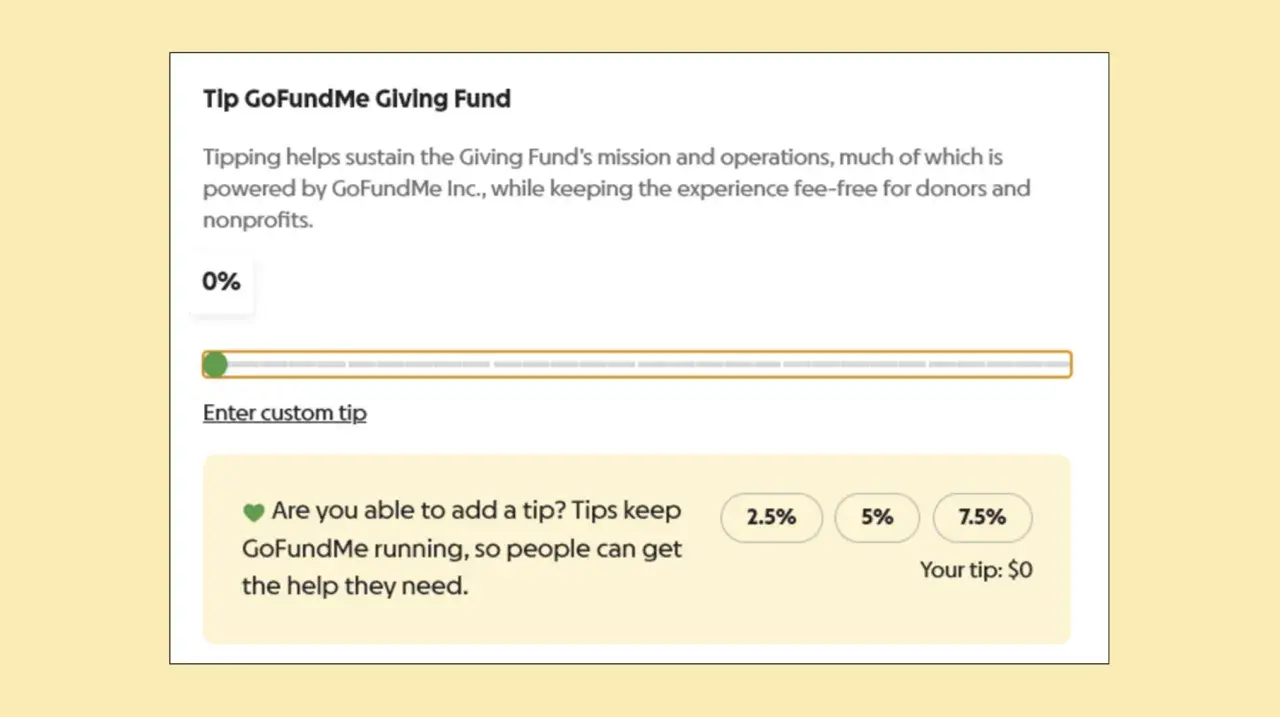
A practical GoFundMe tip is to separate the cause from the platform contribution. That small distinction matters more than most people expect, because it affects donor trust, the checkout experience, and how clearly a fundraiser explains where the money goes. In this article, I break down what the optional tip means, when I would leave one, and how organizers can present it without adding friction.
The tip is optional, the donation is separate, and clarity is what builds trust
- GoFundMe’s donor tip is a voluntary contribution to the platform, not extra money for the fundraiser.
- The amount can be changed to 0, and the organizer does not see whether a donor tipped.
- For donors, the right move depends on budget, trust, and whether the final total still feels comfortable.
- For organizers and nonprofits, simple fee language and specific use-of-funds details do more than clever checkout copy.
- Strong stories, updates, and gratitude usually matter more than the tip line itself.
What the optional GoFundMe tip really means
The first thing I tell people is this: the tip is not the donation. It is an optional contribution that helps support GoFundMe’s platform, while the fundraiser donation goes to the campaign itself. GoFundMe’s help center currently says the tip can be set to 0, and the organizer will not see whether a donor tipped.
That separation matters because donors often assume every line on checkout is part of the charitable gift. It is not. In the United States, GoFundMe says there is no fee to create or manage a fundraiser, but donations still have processing fees, so the checkout screen can include more than one cost element. The cleaner the language, the less likely people are to misread the total.
From a nonprofit software perspective, this is a trust issue as much as a pricing issue. When a platform makes costs visible without making them feel hidden or forced, donors usually move through the page with less hesitation. That is exactly why the next question matters: when should a donor actually leave a tip?

How I decide whether to tip as a donor
My rule is simple: I decide based on my own giving limit, not on guilt. If I can afford a little extra and I trust the platform, I may leave a modest tip. If the donation already stretches my budget, I set the tip to 0 and move on. The point is to support the cause first.
| Situation | What I would do | Why |
|---|---|---|
| The donation already uses most of my budget | Set the tip to 0 | The fundraiser matters more than a platform contribution. |
| I trust the campaign and want to support the service too | Leave a modest tip | It helps keep the platform running without changing my donation plan. |
| I am checking out quickly on mobile | Review the total before confirming | It prevents accidental over-giving when the screen is small. |
| I realize I added a tip by mistake | Request a refund | GoFundMe says unintentional tips can be refunded. |
I also think it is worth saying out loud that a tip does not fix a weak fundraiser. If the story is vague, the budget is unclear, or the goal feels arbitrary, donors will hesitate no matter how polite the checkout flow looks. The better fix is always a clearer ask, which brings us to the organizer side.
What organizers and nonprofits should say on the page
When I work through fundraising copy, I treat the optional tip line as part of the donor experience, even though it sits in checkout. If you are running a community campaign or nonprofit effort, your page should answer two questions before the donor reaches the payment step: what is this money for, and how will it be used?
Here is the phrasing approach I prefer:
- Say the fundraiser purpose in plain language.
- Break the goal into concrete uses instead of relying on one broad number.
- Make it clear that the platform tip is optional and separate from the donation.
- Do not present the tip as if it were required to help the cause.
- Use updates to answer cost questions after the campaign starts.
That last point matters. GoFundMe’s own fundraising guidance keeps returning to transparency, specificity, urgency, and gratitude, and I think that is the right order. If the story is specific, supporters are much less likely to get distracted by checkout details. If the story is vague, they notice every fee line instead.
A simple note like, “The optional platform tip helps support GoFundMe; your donation still goes to the fundraiser,” is often enough. It reduces confusion without turning the page into a lecture. Once that is in place, the real work becomes raising money with content that gives people a reason to act.
The parts of a fundraiser that actually move money
GoFundMe’s social fundraising advice lines up with what I see in strong campaigns everywhere: be specific, post updates, and keep sharing. One useful benchmark is to post 3 to 5 times in the first 7 days, and to vary the content so it does not feel repetitive. That rhythm is usually more effective than one perfect announcement that never gets followed up.
Here is the practical version I would use:
- Lead with the beneficiary or cause, not the platform.
- Explain exactly what donations will pay for.
- Share one milestone, one new photo, or one concrete update in each follow-up.
- Ask people to donate and reshare if they cannot give.
- Thank donors in public updates when appropriate.
I also like to think in small numbers. If someone can give $25, say what $25 helps cover. If $50 matters, explain why. Specific amounts make the campaign feel real, which is important in nonprofit software and in community fundraising alike. People give more confidently when they can picture the outcome of their gift.
That same logic also exposes the most common mistakes, which are usually less about the tip itself and more about how the fundraiser is framed.
Common mistakes that create friction and damage trust
The biggest mistake is treating the optional tip as a hidden fee. The second is pretending it is not there. Neither approach helps. Donors are usually fine with paying a platform contribution when they understand it, but they dislike surprises at checkout.
- Making the tip sound mandatory creates avoidable resentment.
- Using vague language leaves donors wondering what the money actually covers.
- Skipping updates makes the campaign feel static after the first day.
- Ignoring mobile checkout increases the chance of accidental over-giving.
- Forgetting gratitude weakens repeat support.
One detail many people miss is that the organizer cannot see whether donors tipped. That is useful to know because it keeps people from trying to read hidden meaning into the totals. If a campaign raises less than expected, the fix is almost never “push the tip harder.” It is usually better storytelling, better timing, or a more credible explanation of need.
When people understand that distinction, the platform feels less transactional and the fundraiser feels more human. That leads naturally to the most practical way to launch the campaign in the first place.
A cleaner way to launch the campaign when every dollar matters
If I were setting up a fundraiser for a nonprofit or community project, I would keep the checkout experience boring in the best possible way. The donor should see a clear goal, a clear use of funds, and a clear option to support the platform if they want to. Nothing should feel forced, and nothing should require a second guess.
The best campaigns are not the ones that squeeze the most from the checkout screen. They are the ones that make giving feel safe, specific, and worth repeating. Keep the ask honest, keep the numbers understandable, and let the optional tip stay optional. That is the cleanest way to protect trust and still give supporters room to be generous.
