
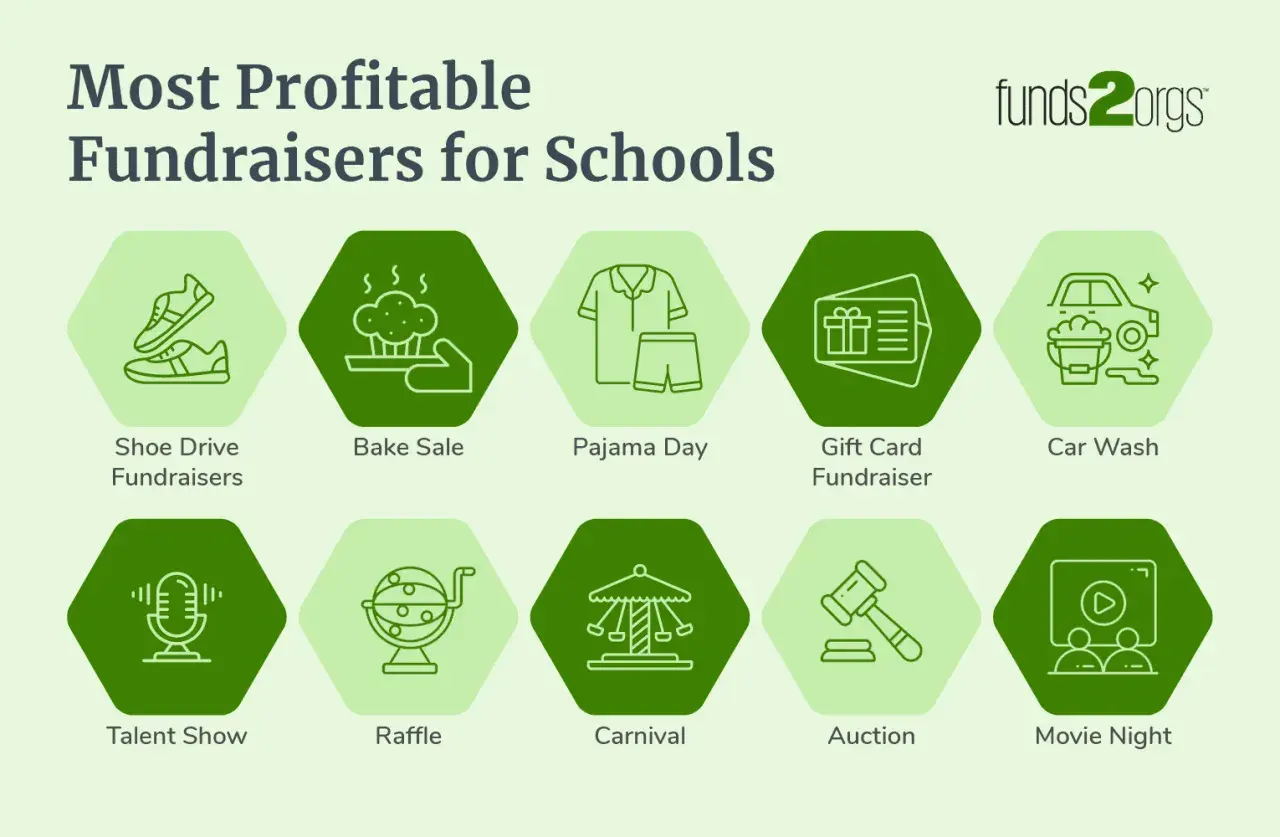
The strongest campaigns are simple to explain and easy to share
- Low-cost ideas usually win when the group has little cash up front and needs quick momentum.
- Ticketed events can raise more, but only when the school can reliably fill seats or tables.
- Digital tools like QR codes, online donation pages, and text-to-give now matter as much as flyers.
- Preorders beat guesses for shirts, snacks, and other items because they cut leftover inventory.
- Rules matter for raffles, food sales, and school use of space, especially across different U.S. districts.

What makes a fundraiser worth your time
I usually judge a school campaign by three questions. Can students explain it in one sentence? Can families support it without friction? Does the idea still make sense after you subtract supplies, permits, payment fees, and volunteer time?
The strongest options have low upfront cost, a clear audience, and one obvious call to action. That is why simple formats often outperform clever ones. A fundraiser is not only about raising money; it is also about creating something the school can repeat next semester without starting from zero.
For a small club, that may mean a single event plus an online donation page. For a larger campus effort, it may mean a product preorder, sponsor support, and a student-led promotion push. Once those filters are clear, the idea list becomes much easier to sort, which is where the practical options matter.
Low-cost ideas that are easy to run
When a group has limited time or no starting budget, I look for fundraisers that can launch fast and keep the math simple. These are the ideas I would put near the top of the list first.
- Spirit wear preorders work well because you only order what is already sold. T-shirts often fit a $15 to $25 range, while hoodies usually land higher, and the preorder model keeps you from guessing wrong on sizes.
- Restaurant nights are one of the cleanest low-lift options if a local place already supports school groups. They are not high-margin by themselves, but they are easy to explain, easy to promote, and almost invisible for volunteers once the partnership is set.
- Bake sales and snack tables can work at games, concerts, and parent nights. I like them most when ingredients are donated or kept very cheap, and when the table is set up where traffic already exists.
- Car washes are still useful, especially in warm months. The main advantage is visible effort; people like donating when they can see students working. The catch is weather, so I never treat this as a one-day-only plan.
- Used-book or yard sales turn donated clutter into cash. They are especially good when families are willing to clean out garages, closets, or storage bins before an event.
- Direct donation drives are underrated. If students can make a clear ask and share it with parents, relatives, and alumni, the school may raise money faster than with a complicated event.
These ideas are strongest when the school already has foot traffic or a willing local partner. If you want a format that can scale a little higher, the next step is to look at event-based fundraisers that create their own crowd.
Bigger events can raise more when attendance is reliable
When the audience is already likely to show up, ticketed events often bring in more money than small sales tables. The trick is to match the event to the people you actually have, not the crowd you wish you had.
| Event | Why it works | Typical starting price | Watch-out |
|---|---|---|---|
| Talent show or battle of the bands | Students promote their own performances, which lowers marketing friction. | $5 to $15 for admission, plus concessions | Needs sound, scheduling, and a backup plan for slow acts or technical issues. |
| Trivia night | Works well for parents, teachers, and alumni who want a social evening. | $5 to $10 per person or $30 to $60 per table | Needs a good host and questions that are fun, not exhausting. |
| Dance-a-thon | Easy to turn into a sponsor-backed pledge campaign. | Flat pledges or $25 to $100 per student in sponsorships | Requires supervision, music, water, and enough space to keep energy high. |
| Movie night | Simple for families and easy to pair with snacks and blankets. | $5 to $12 per ticket | Permits, weather, and licensing can matter more than people expect. |
| Silent auction | Can grow fast when local businesses donate strong items. | No fixed ticket price; revenue depends on bidding | Needs desirable items, not just a lot of items. |
| Color run or walk-a-thon | Photogenic, family-friendly, and easy to share online. | Flat registration plus optional sponsorships | Route planning, permits, and cleanup take more coordination than they look like on paper. |
I like these events most when sponsorships cover the fixed costs. Tickets alone rarely pay for rentals, sound, printing, and food, so the best versions use both attendance and sponsor support. That leads naturally to the part many schools still treat as optional, even though it is often the difference between an average result and a strong one.
Add a digital layer so the ask travels farther
In 2026, I would not run a school fundraiser without a digital path. A QR code on a poster, an online donation page, or a text-to-give option lets parents, grandparents, alumni, and neighbors respond in under a minute. That matters because many people want to support the school, but they will not fill out a paper form or carry cash to an event.
- QR codes belong on flyers, programs, table signs, and student handouts.
- Peer-to-peer pages work well when each student can ask their own circle of friends and family.
- Text-to-give is useful at games, concerts, and rallies where attention is short and mobile phones are already out.
- Short social posts with one clear link usually outperform long explanations.
- Preorders and digital forms reduce waste because you are collecting interest before buying inventory.
This layer does not replace the event. It widens the audience beyond the gym door. A student who misses the concert can still donate from home, and a grandparent in another state can contribute in seconds, which is why the best campaigns now feel both local and networked at the same time.
Match the format to your calendar and audience
I see a lot of good ideas fail simply because they land in the wrong season. A fundraiser that looks strong on paper can stall if it competes with AP exams, playoff travel, homecoming, winter break, or the first week back after summer. Timing is part of the strategy, not an afterthought.
| Your situation | Better choice | Why it fits |
|---|---|---|
| Small club with little budget | Peer-to-peer donation drive or restaurant night | Low startup cost and simple promotion. |
| School with strong performers | Talent show, concert night, or battle of the bands | The students themselves become the draw. |
| Sports-heavy campus | Car wash, spirit wear preorder, or game-night concessions | Fans already show up and are used to supporting teams. |
| Busy families and limited time | QR-code donation campaign or text-to-give ask | Fast to complete and easy to share on phones. |
| Indoor winter window | Trivia night, auction, or movie night | Weather is less likely to wreck attendance. |
| Need recurring revenue | Seasonal merch drops or recurring sponsor program | Repeatable, predictable, and easier to plan around. |
My rule is simple: choose the fundraiser that fits the calendar you actually have, not the one that sounds best in a brainstorm. That keeps the next problem smaller, which is avoiding the mistakes that quietly drain profit.
The mistakes that quietly kill profit
I have seen many school campaigns lose money without the idea itself being bad. The weak point is usually the setup.- Buying inventory too early creates leftovers and ties up cash.
- Pricing too low can make the fundraiser look busy while still producing a weak return.
- Relying on memory instead of roles leads to missed tasks, missing supplies, and messy money handling.
- Skipping sponsor outreach leaves local businesses out of the picture, even though they often want a simple way to help.
- Promoting only once is rarely enough. Good campaigns usually need a launch post, a mid-campaign reminder, and a last-chance push.
- Ignoring school or state rules can cause problems with raffles, food service, venue use, or student supervision.
The cleaner the logistics, the better the return. A modest idea with a good process almost always beats a flashy idea with poor execution, which is why I would rather see a simple plan run well than a complicated one run half-correctly.
The simplest launch plan I would use first
If I were helping a first-time student group, I would build the campaign around one clear event, one digital ask, and one realistic target. That combination keeps the project manageable and still gives it room to grow.
- Pick one idea that fits your audience. If the school has strong attendance at games, use that. If it has talented performers, build around them. If the community is short on time, go digital.
- Set the target and the money path. Decide how much you need, what each ticket or item should cost, and whether you are using preorders, donations, or sponsorships.
- Assign three roles early. One person handles promotion, one handles money and records, and one handles day-of logistics.
- Promote in three waves. Launch it, remind people halfway through, and push again in the final 72 hours.
- Track what worked. Note which channel brought in the most support so the next fundraiser starts smarter.
When I strip the process down, the best result usually comes from clarity, not novelty. Start with one visible event, one easy online ask, and one purpose people can understand quickly, and the fundraiser will feel much more real to donors, students, and families alike.
