
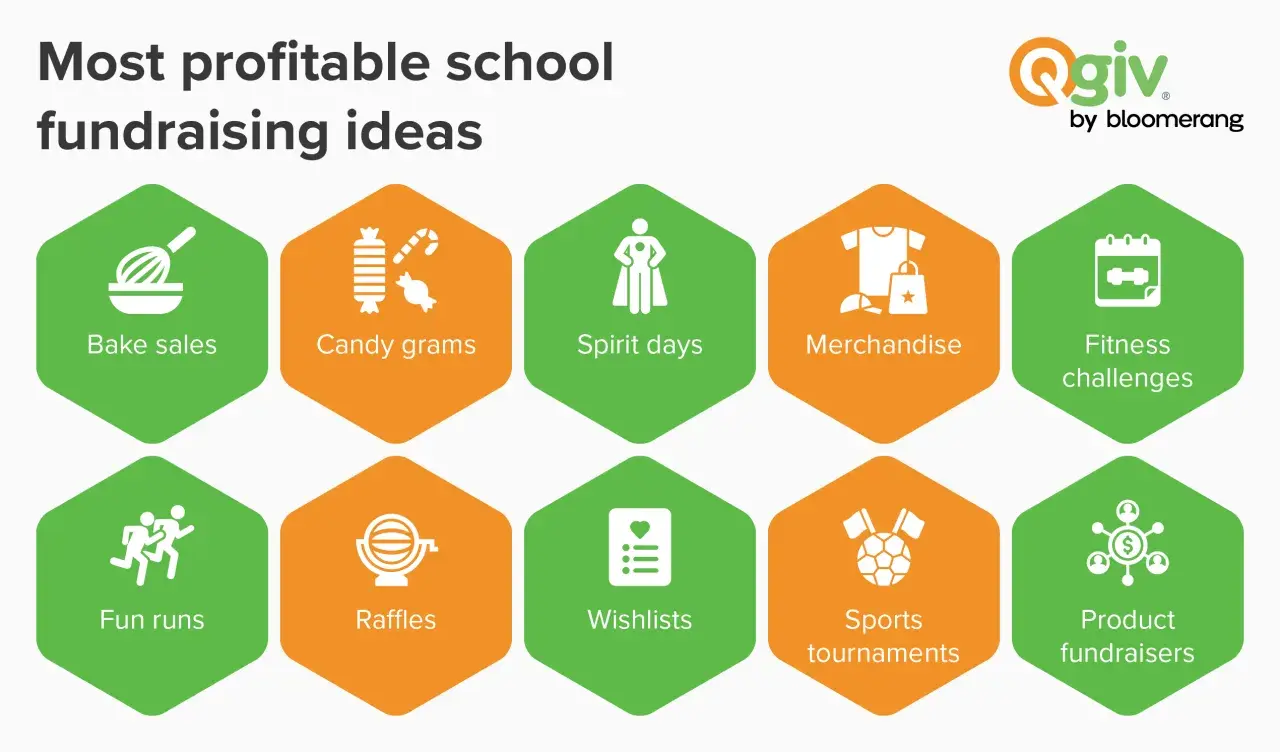
What matters most before you pick a fundraising idea
- Clarity beats novelty. If donors cannot understand the purpose in a few seconds, conversion usually drops.
- Net revenue matters more than hype. A polished event that barely clears its costs is not a win.
- Low-friction asks convert better. Short forms, mobile payment options, and clear gift levels help people act faster.
- Retention is part of fundraising. A campaign should aim to create repeat donors, not only one-time gifts.
- U.S. compliance is not optional. Raffles, sales, and some event formats can involve state-level rules and tax considerations.
- Measure what repeats. Track average gift, conversion rate, and donor return rate so the next campaign is stronger.
What makes a fundraiser work in practice
When I evaluate a fundraising concept, I start with four questions: will people instantly understand it, will it fit the audience, can the team deliver it cleanly, and will it actually leave money on the table after expenses? That last question is the one people skip most often, and it is usually the one that decides whether a campaign feels successful or merely busy.
I also care about the donor experience. If the ask is confusing, the ticketing page is clunky, or the event requires too many steps, people quietly disengage. In 2026, donor attention is still limited, so the best ideas are the ones that reduce effort while making the impact feel concrete.- Audience fit: A gala may be elegant, but it is a poor fit for a small list that prefers online giving.
- Operational load: If the event depends on 40 volunteers and three vendors, the idea is less flexible than it looks.
- Margin: The cleanest campaigns keep fixed costs low and leave room for follow-up gifts.
- Repeatability: The best ideas can be run again with minor improvements instead of being rebuilt from scratch.
Once those filters are in place, the shortlist gets much smaller, which is exactly where the useful work begins.

The fundraising ideas I would shortlist first
If I had to choose a small set of formats that consistently deliver for community organizations in the United States, I would start here. These are not the only options, but they are practical, familiar to donors, and easier to adapt to different budgets.
| Idea | Best for | Why it works | Main limitation |
|---|---|---|---|
| Peer-to-peer crowdfunding | Awareness campaigns, urgent needs, community projects | Supporters share the ask with their own networks, which expands reach fast | Needs a compelling story and active promotion to avoid going quiet |
| Matching gift campaign | Short donation drives and year-end appeals | Creates urgency and makes donors feel their gift goes further | Works best when the match is real and time-limited |
| Monthly giving club | Organizations that need steady operating support | Builds predictable revenue and stronger retention over time | Slower to launch than a one-time appeal |
| Community dinner or benefit event | Local nonprofits with a strong in-person network | Brings donors together and creates social proof | Food, venue, and staffing can compress the margin quickly |
| Skill-based workshop or class | Groups with a credible speaker, artist, coach, or educator | Feels useful, not just transactional, so people are more willing to pay | Needs a real value proposition, not just a generic activity |
| Sponsorship package | Organizations with business ties or local visibility | Can unlock larger gifts by tying support to recognition | Requires a clear audience and a professional offer |
| In-kind drive with a conversion step | Food banks, shelters, schools, and neighborhood causes | Easy for many people to join, especially when cash giving is harder | Needs a plan to turn donated goods into visible impact |
The pattern behind all of these is the same: people give more readily when the value is obvious and the process feels simple. A small digital campaign can often be launched for very little money if you already have an email list, while a seated dinner can move into the low thousands once venue, food, signage, and processing fees are counted. I usually recommend starting with the format your team can explain and fulfill cleanly, then layering creativity on top of that.
That leads naturally to the next question, which is not “What sounds exciting?” but “What fits this audience right now?”
How to choose the right format for your audience
I do not pick a fundraiser by taste alone. I pick it by timing, audience behavior, and internal capacity. A small team with a modest list and a strong social following needs a different model from a school with a large parent network or a nonprofit with several corporate partners.
| If you need… | Best starting formats | Why I would choose them |
|---|---|---|
| Cash in 2 to 4 weeks | Matching campaign, crowdfunding page, direct email appeal | Fast to launch, easy to share, and low on overhead |
| Revenue over 1 to 3 months | Workshop, sponsorship package, small community event | Gives you time to recruit, promote, and build credibility |
| Long-term stability | Monthly giving club, membership model, recurring donor program | Builds predictable support instead of chasing isolated wins |
| High visibility in the neighborhood | Walkathon, volunteer challenge, local partnership event | Turns the fundraiser into community participation, not just a payment link |
The practical rule I use is simple: if you cannot describe the audience, the offer, and the next action in one sentence, the idea is probably too broad. A fundraiser does not need to be big to work; it needs to be legible. Once the format is chosen, the way you write the ask becomes the real differentiator.
How to write the ask so people give
Most fundraising pages underperform because they ask for money in a vague way. People do not respond well to abstraction, but they do respond to specific outcomes. I always try to translate the mission into something visible: meals served, families reached, workshops funded, supplies purchased, or transport covered.
A strong ask usually includes three things: a clear outcome, a donation ladder, and a simple way to pay. For example, $25 can cover supplies for one participant, $75 can fund a family meal, and $250 can underwrite part of a workshop or service day. Those numbers do more than decorate the page; they help the donor picture the effect of the gift.
- Lead with the result: Tell people what changes if they give, not just what the organization needs.
- Offer 3 to 5 gift levels: Too few feels restrictive, too many creates decision fatigue.
- Use a real deadline: Match periods, event dates, and campaign milestones make action easier.
- Make mobile easy: Many donations now happen on a phone, so the form should be short and fast.
- Add one follow-up path: A monthly gift, volunteer signup, or share button keeps the relationship alive.
This is also where urgency helps, but only if it is credible. A matching gift, a limited seating cap, or a visible project deadline gives the donor a reason to act now instead of later. Without that, even a good idea can drift.
The mistakes that quietly drain results
Some fundraising efforts fail loudly, but most fail in quieter ways. They look fine on paper, yet they produce too little net revenue, too little donor learning, or too little momentum for the next campaign. I have seen plenty of events that generated applause and almost no future giving.
AFP’s Fundraising Effectiveness Project reported that charitable dollars grew by 5.0% in 2025 even as donor counts fell 3.6%. I read that as a warning, not a celebration: it suggests that the sector can look healthier on revenue while still losing the broader base that makes community fundraising resilient. If you care about long-term social impact, retention matters as much as the first gift.- Overbuilding the event: Fancy production can eat the margin before the campaign even starts.
- Ignoring follow-up: If you do not ask again, many first-time donors never return.
- Measuring gross instead of net: Revenue means little if the expenses swallowed half of it.
- Using vague messaging: “Support our mission” is weaker than a specific, visible outcome.
- Forgetting team capacity: The best idea is useless if the staff or volunteers cannot sustain it.
When I see a campaign underperform, the issue is usually not the cause itself. It is the design, the timing, or the lack of a second-step relationship plan. That is why logistics and compliance matter more than many teams expect.
U.S. rules and logistics that can change the outcome
In the United States, the practical side of fundraising can vary by state, county, and format, so I treat compliance as part of the campaign design. That is especially true for raffles, games of chance, and any event that mixes charity with prizes, food sales, or ticketed access.
- Check local rules early: Raffles and similar games may require registration, permits, or specific disclosures.
- Separate gifts from purchases: If donors are buying merchandise or meals, the accounting is different from a pure donation.
- Keep acknowledgments clean: Donors should receive clear records, especially for larger gifts or noncash contributions.
- Plan for accessibility: Mobile-friendly pages, captions for livestreams, and clear directions help more people participate.
- Protect the experience: Insurance, weather backups, and volunteer role clarity save campaigns from avoidable chaos.
I do not think compliance is the glamorous part of fundraising, but it is often the part that keeps a smart idea from becoming an expensive mistake. If the logistics are sound, the final piece is learning how to reuse the campaign instead of treating it as a one-time event.
How I turn one good campaign into a repeatable system
The easiest way to improve fundraising is to stop thinking in one-off terms. After a campaign ends, I want to know four things: how many people converted, what the average gift was, how much the campaign cost per dollar raised, and how many donors gave again later. Those numbers tell you whether the idea has real staying power or only temporary excitement.
If you want a simple rule, use this: keep what increased trust, cut what added friction, and repeat the parts donors understood fastest. The organizations that grow steadily usually do not chase a different idea every month; they refine a few workable formats until they become familiar, credible, and easy to support.
That is the real value of choosing the right fundraising model. It creates a structure you can improve, not just an event you can remember.
