
Online donation software earns trust in a very practical way: it has to move money cleanly, protect donor data, and make the fee structure understandable before a campaign goes live. Donorbox does enough of that well that it deserves a serious look, but the real answer to is Donorbox legit is yes, with a few important caveats. In this article I break down the security signals, the costs, the best-fit use cases, and the checks I would run before putting it on a nonprofit website.
What matters most before you trust a donation platform
- Donorbox looks legitimate because it combines standard payment security, external processors, and a long operating history.
- Its published security materials point to SOC 2, PCI DSS Level 1, SSL/TLS encryption, fraud monitoring, and no card storage on its servers.
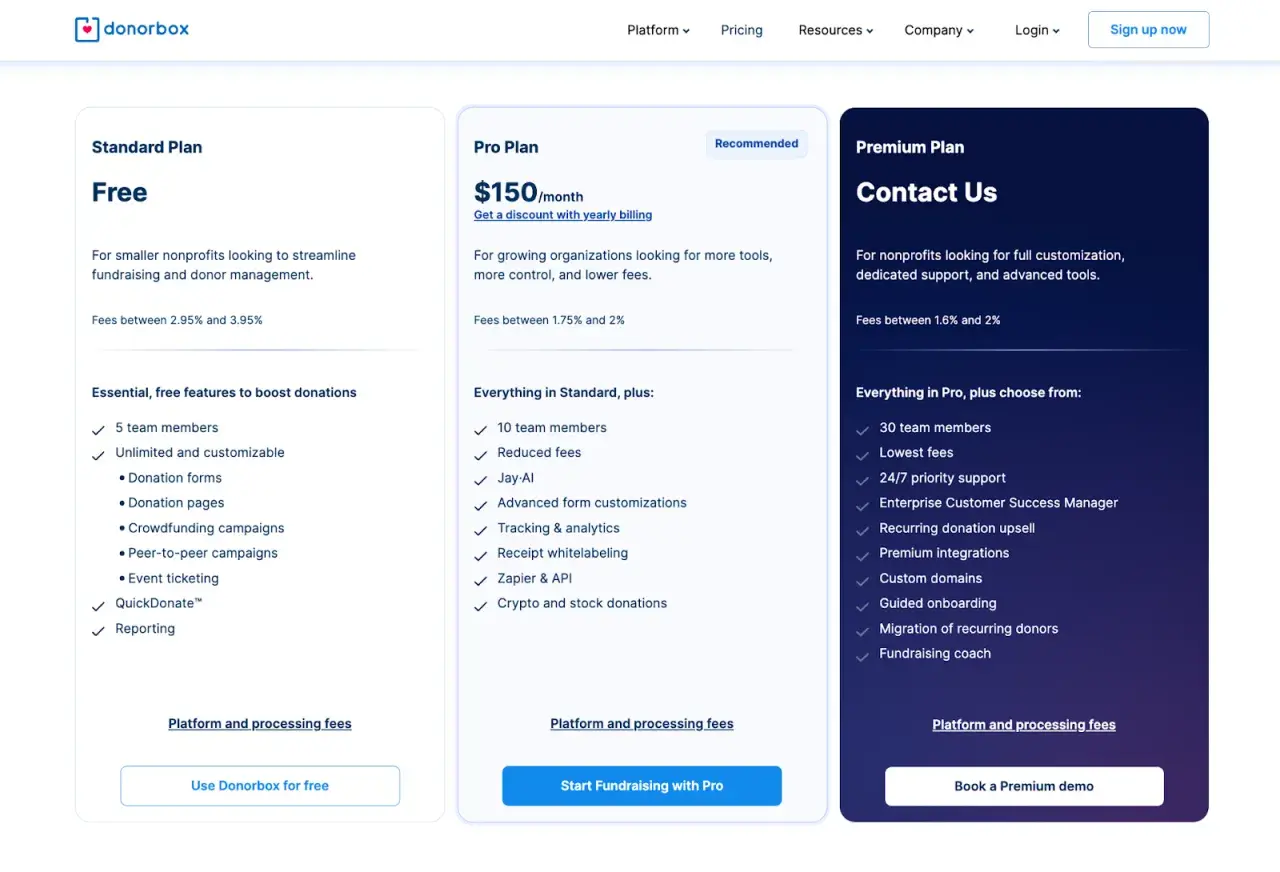
- The platform is real, but the fee stack is not trivial: Standard starts at 2.95%, Pro costs $150 per month, and Premium is custom.
- For many nonprofits, the platform is a strong fit for embedded donation forms and recurring gifts, but it is not a full CRM replacement.
- If you want a low-friction fundraising tool, Donorbox is credible; if you are ultra fee-sensitive, you should model the monthly cost before committing.
Why Donorbox looks legitimate on paper and in practice
When I evaluate nonprofit software, I look for three things first: a real company footprint, modern payment security, and a business model that does not depend on hiding the important details. Donorbox clears that bar. It is not a throwaway form builder with a donate button bolted on at the end; it is a fundraising platform built around Stripe and PayPal, which means the money movement layer is handled by established processors rather than by an isolated checkout page.
The strongest legitimacy signal is security. The platform says it uses SSL/TLS encryption, PCI DSS Level 1 controls, two-factor authentication, fraud monitoring, and no card storage on its own servers. For a nonprofit, that matters more than a flashy interface. Donors do not care whether the dashboard is elegant if their payment data is exposed or the checkout feels sketchy.
BBB lists Donorbox with an A+ rating, although it is not BBB accredited. I do not treat that as a deal-breaker; I treat it as a useful distinction. It tells me the company is real, has operating history, and can be evaluated like a normal business rather than a short-lived campaign tool. Public feedback is mixed, which is normal for software that handles payments and support tickets, but the key point is that the complaints I would expect tend to be about fees, support, or expectations, not about the platform being fake.
| Signal | What it suggests | My read |
|---|---|---|
| SOC 2 Type I & II and PCI DSS Level 1 | Independent controls and payment-grade security | Strong positive |
| SSL/TLS, 2FA, fraud monitoring, no card storage | Lower exposure to common security failures | Strong positive |
| A+ BBB rating, not accredited | Real business with oversight, but no accreditation badge | Positive with context |
| Mixed public reviews | Normal pressure points around support and billing | Worth reading before buying |
That is enough evidence for me to call Donorbox a genuine nonprofit platform, and the more interesting question becomes whether the fees and feature set fit your fundraising model.
The fee structure is straightforward, but not cheap
This is where many organizations get surprised. Donorbox is transparent, but transparent does not mean inexpensive. The Standard plan is free to create and use, yet it still charges a 2.95% platform fee on core fundraising tools plus payment processing fees from Stripe or PayPal. The Pro plan is $150 per month and lowers the platform fee to 1.75% to 2%, while Premium reduces the rate further with custom pricing.
| Plan | Platform fee | Monthly fee | Best fit |
|---|---|---|---|
| Standard | 2.95% on core fundraising tools; 3.95% on some add-on features | $0 | Small nonprofits, new campaigns, low-volume fundraising |
| Pro | 1.75% to 2% | $150 | Growing organizations that want lower per-donation fees |
| Premium | 1.6% to 2% | Custom | Larger teams that need support, customization, and priority service |
In the U.S., Donorbox says nonprofit processor discounts typically run at 2.2% + $0.30 for Stripe or 1.99% + $0.49 for PayPal, depending on eligibility and processor. On a $100 donation processed through Stripe on the Standard plan, that works out to roughly $5.45 in platform plus processing fees before any donor-covered fee option. On Pro, the same gift is roughly $4.25, but the $150 monthly subscription means the lower rate only starts to matter once donation volume is high enough.
Using the lower 1.75% platform fee, the Pro plan starts to offset its monthly cost at about $12,500 in monthly donations. Below that level, the Standard plan can be cheaper, especially if you are still testing your fundraising flow or only receiving modest monthly volume. That is why I would never judge Donorbox by the word “free” alone; the real question is whether your volume, add-ons, and payment processor choice make the total cost sensible for your organization.
There are also extras that can change the math, including text-to-give, integrations, Live Kiosk, and other add-ons billed separately. Donors can cover fees, which helps, but I still recommend testing that option carefully because the wording can affect conversion.
Where it fits best and where I would hesitate
Donorbox makes the most sense for nonprofits that want to launch quickly, accept recurring donations, and embed a clean form on an existing site without building custom infrastructure. For community groups, mutual-aid projects, schools, and small-to-mid-sized nonprofits, that is often exactly the right tradeoff: simple collection on the front end, serious payment handling in the background.I would be especially comfortable recommending it when the fundraising goal is clear and focused. If your team wants to run campaign pages, collect one-time gifts, build recurring support, or use a donation form that does not look amateurish on mobile, Donorbox is a strong candidate.
Where I would hesitate is when an organization expects one platform to do everything. Donorbox is fundraising software first, not a deep all-in-one CRM. If you need advanced donor segmentation, complex move management, or a complete internal operations system, I would treat Donorbox as a layer in your stack rather than the entire stack.
- Best for embedded donation forms, recurring gifts, and campaign pages.
- Best for teams that need speed and do not want heavy technical setup.
- Less ideal if you want a full CRM replacement.
- Less ideal if every fraction of a percentage point matters to your budget.
That leads directly to the practical question I would ask before launch: does the setup feel easy because it is genuinely simple, or because you have not yet checked the details that matter?
How I would check it before using it on a live campaign
If I were rolling Donorbox out for a real nonprofit, I would test it like a revenue system, not like a demo. The goal is to make sure the donation flow, fee settings, and account controls all behave the way your board, finance team, and donors expect them to.
| Check | Why it matters | What I would do |
|---|---|---|
| Ownership of the Stripe or PayPal account | You need control over the money, not just the form | Confirm the processor account is in the organization’s name |
| Two-factor authentication and admin roles | Reduces the risk of account takeover | Enable 2FA and keep admin access limited |
| Donation flow on mobile | Most donors will not sit at a desktop to give | Complete a real test donation on iPhone and Android |
| Fee settings and donor-cover wording | Prevents budget surprises and friction | Test both fee-covered and non-covered versions |
| Refunds, receipts, and support path | Protects staff time when something breaks | Verify templates, turnaround, and who handles escalations |
| Total monthly cost under real volume | Reveals whether the platform still makes sense at scale | Model a low month, a normal month, and a strong campaign month |
My rule here is simple: if I cannot explain the cost and control structure of a typical $100 gift in one sentence, the platform is not ready for launch. A trustworthy tool should be easy to understand after the novelty wears off.
Once those basics are in place, the decision stops being about guesswork and becomes a straightforward fit analysis.
My verdict for U.S. nonprofits in 2026
So, is Donorbox legit? Yes. I would describe it as a legitimate, established fundraising platform with real security controls, a real business footprint, and enough nonprofit functionality to be useful for organizations that want to collect donations quickly and professionally.
What I would not do is confuse legitimacy with universal fit. Donorbox is trustworthy, but it is not automatically the cheapest option, and it is not a full donor-management suite. If your goal is secure online giving with recurring donations and a clean donor experience, it is a solid choice. If your goal is to minimize every fee or replace your CRM, I would compare alternatives before committing.
My practical stance is this: trust the platform, but still run the numbers on a normal month, a busy campaign month, and the add-ons you actually need. That is the difference between choosing software that looks good in theory and choosing software that supports your mission in real life.
