
The strongest online campaigns are simple to join and easy to share
- Revenue usually comes from a mix of ticket sales, direct gifts, sponsorships, pledge-based participation, or matching support.
- Livestream events, peer-to-peer challenges, donation-based classes, and matching drives are the most dependable formats.
- The best idea depends on audience size, volunteer capacity, and how much urgency you can create.
- A mobile-friendly donation page and a clear goal often matter more than production value.
- If you add a raffle, prize drawing, or game-style mechanic in the US, check state rules first.
How online fundraisers actually generate revenue
I usually start here because the format is less important than the money mechanism behind it. Some campaigns work through ticket sales, others rely on direct donations, while a third group raises money through sponsorships or pledges from participants. Once you know which mechanic you are using, it becomes much easier to choose a concept that feels natural instead of forcing a gimmick.
For most community groups and nonprofits, there are four reliable paths:
- Direct giving works well when supporters already care about the cause and do not need much convincing.
- Ticketed participation fits events that offer entertainment, teaching, or access, such as a live panel, trivia night, or workshop.
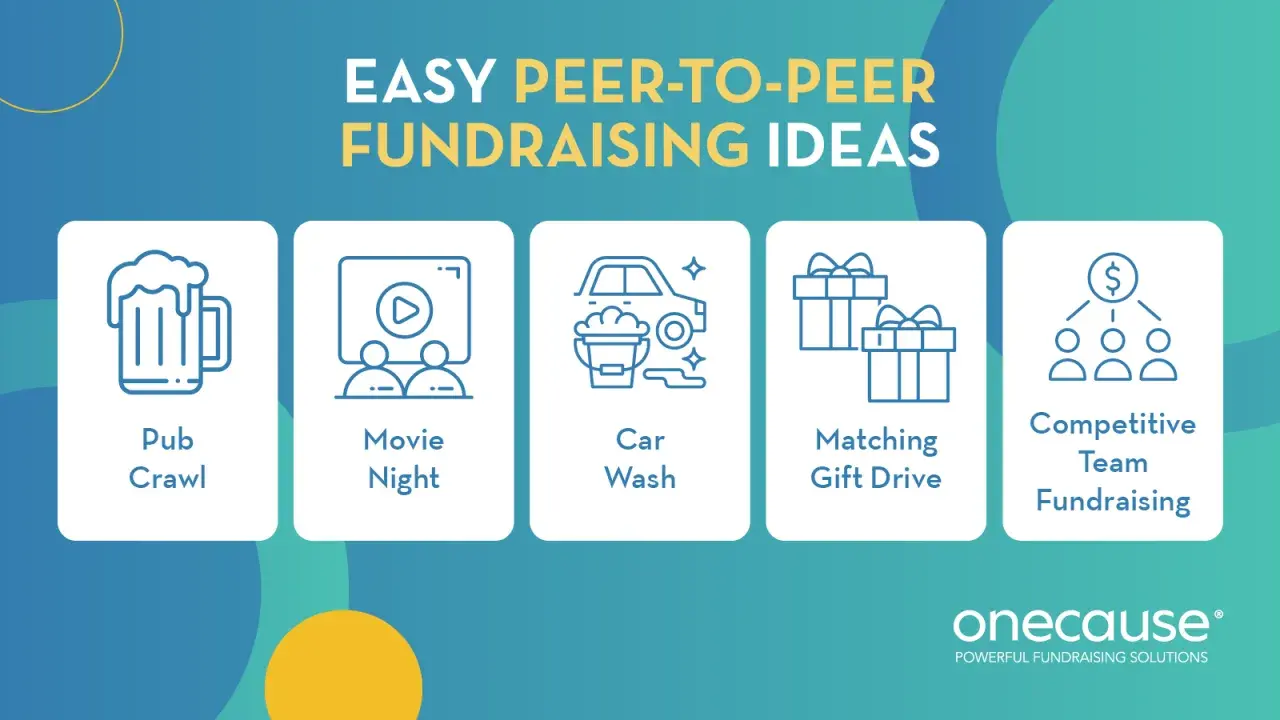
- Peer-to-peer fundraising is strong when your supporters have their own networks and are willing to ask friends to contribute.
- Sponsorship or matching support adds urgency and credibility, especially when a donor underwrites part of the goal.
I like to think of these as different doors into the same campaign. A good online fundraiser does not try to use all of them at once; it picks one primary path and makes it easy to say yes. That choice leads directly into the part most people actually want: which ideas are worth using.

Creative formats that work in practice
When people ask for digital fundraising concepts, they usually want something they can run without a huge budget or a full events team. The ideas below are popular for a reason: they are understandable, flexible, and easy to explain in a sentence. In other words, they reduce the amount of mental work a donor has to do before giving.
| Format | Best for | Why it works | Watch-out |
|---|---|---|---|
| Livestream talent night | Small or medium communities with one strong host | Creates a shared moment and gives people a reason to donate during the stream | Needs rehearsal, moderation, and a backup plan if the connection fails |
| Trivia or game night | Supporters who like friendly competition | Low barrier to entry and easy to turn into a team-based donation event | Can become flat if the questions are too hard or the pace is too slow |
| Virtual workshop or class | Audiences that value learning, creativity, or wellness | People feel they are getting something useful while supporting the cause | Requires a facilitator who can keep the session engaging online |
| Peer-to-peer challenge | Groups with motivated volunteers or ambassadors | Each participant brings their own network, which extends reach quickly | Needs a simple sharing kit or people will stall after sign-up |
| Matching campaign | Organizations with at least one committed major donor | Creates urgency and makes smaller gifts feel more impactful | Works best when the match is specific and time-bound |
| Birthday or milestone fundraiser | Individuals, grassroots groups, and causes with loyal supporters | Feels personal and natural, especially on social platforms | Needs a clear story, not just a vague request for help |
| Virtual auction | Groups with donated items, experiences, or services | Can raise larger gifts when the items are genuinely attractive | Needs clean item descriptions, deadlines, and careful follow-up |
The pattern here is simple: the best ideas are not always the flashiest ones. They are the ones that match your audience's behavior. A fitness-minded community may respond well to a steps challenge, while a local arts group may do better with a livestream performance or online class. Once that fit is clear, the next question is how to choose the right format without overthinking it.
How to choose the right idea for your audience
I would not choose a campaign based on trendiness alone. I would start with the people who already know your work and ask what kind of experience they are most likely to finish, share, and support. If the format feels hard to explain in one sentence, that is usually a sign to simplify.
| Quick question | If the answer is yes | What that tells you |
|---|---|---|
| Do you have supporters who will recruit friends? | Use peer-to-peer fundraising | Your audience can multiply reach without a large ad budget |
| Do you have a strong host or facilitator? | Use a livestream event or workshop | Personality and presence can carry the campaign |
| Do you have one donor willing to underwrite a match? | Use a matching drive | Urgency and social proof can lift response rates |
| Do your supporters prefer low-effort participation? | Use a donation page, birthday fundraiser, or challenge | People are more likely to give when the ask is fast and clear |
| Are people spread across cities or time zones? | Use a flexible, asynchronous campaign | Not every fundraiser should depend on everyone being online at once |
My rule of thumb is blunt: if you cannot see how a donor goes from interest to payment in under a minute, the idea probably needs another round of editing. Keep the ask simple, make the giving path obvious, and choose the format that your team can actually support. Once that is settled, promotion becomes much easier to plan.
Promotion that turns interest into gifts
A good idea with weak promotion usually underperforms. I like to build the outreach plan before the event itself, because the campaign page, email copy, and social posts all need to tell the same story. In practice, that means deciding on your goal, your timeline, and your first three messages before you go live.
A simple rollout often works better than a noisy one:
- Three to four weeks out, announce the campaign and open the donation page.
- Two weeks out, share why the cause matters and who benefits.
- Seven days out, add urgency with a match, countdown, or milestone update.
- Forty-eight hours out, send the clearest ask you have.
- Within 24 hours after closing, thank supporters and report the result.
Email, text, social media, and direct outreach each play a different role. Email is good for detail, text is strong for urgency, social is useful for sharing, and direct messages still do a lot of quiet work in community fundraising. I also think the donation page itself deserves more attention than it usually gets: keep it mobile-friendly, make the suggested amounts visible, and avoid asking for more information than you truly need. If the page feels clumsy, the campaign leaks money before it has a chance to breathe.
There is one more tactic that consistently helps: a match with a deadline. A 48-hour or 72-hour matching window gives people a reason to act now instead of later, and later is where a lot of donations disappear. That urgency is powerful, but it can be wasted if the campaign contains avoidable mistakes.
Common mistakes that quietly cost donations
I see the same problems over and over, and most of them have nothing to do with the cause itself. They are usually execution problems: too many steps, too little clarity, or too much attention on the event and not enough attention on the donor.
- Overcomplicating the experience makes people drop off before giving.
- Asking without showing impact leaves donors unsure what their money actually changes.
- Using a weak donation form creates friction at the exact moment you need momentum.
- Ignoring accessibility excludes people who would otherwise participate.
- Skipping compliance checks can cause trouble if you add raffles, prizes, or game-style elements.
- Forgetting follow-up wastes the goodwill you just created.
The compliance piece matters especially in the United States, where raffle and charitable solicitation rules can vary by state. I would treat that as a planning item, not a footnote. If your campaign includes a prize drawing, sweepstakes element, or anything that looks like gambling, check the rules first and shape the fundraiser around what is permitted. That kind of diligence does not make the campaign less creative; it makes it usable.
The other issue worth naming is donor fatigue. People are more generous when the request is specific. A request for “support our mission” is weaker than “help us fund 40 backpacks for local students” or “cover one month of meal deliveries.” Specificity is not decoration; it is one of the main drivers of response. That is why I finish every campaign plan with a simple framework rather than a long brainstorm.
The lean planning framework I would use for the next campaign
If I were setting up a new online fundraiser today, I would keep the process small and deliberate. The goal is not to create the biggest event possible; it is to create a campaign that people understand, trust, and can support quickly.
- Choose one clear outcome and one dollar target.
- Pick one primary revenue model, such as tickets, donations, matches, or pledges.
- Define the audience in one sentence so the message stays focused.
- Write the donation ask in plain language and test it on a phone.
- Set three giving levels, such as $25, $50, and $100, so supporters have a starting point.
- Assign roles early: host, tech backup, donor follow-up, and campaign manager.
- Prepare the launch message, one reminder, and one final 24-hour push before you begin.
- Track three numbers after the campaign: visitors, donors, and average gift.
That last step matters more than many people expect. Visitor numbers look impressive, but they do not tell you whether the concept actually worked. Donors and average gift size tell a more honest story. If a campaign attracted modest traffic but converted well, the idea may be strong. If traffic was high and donations were weak, the issue is probably the ask, the page, or the audience fit. The clearest online fundraising campaigns are rarely the most complicated ones, and the next one you run will usually improve once you simplify the path from attention to action.
