
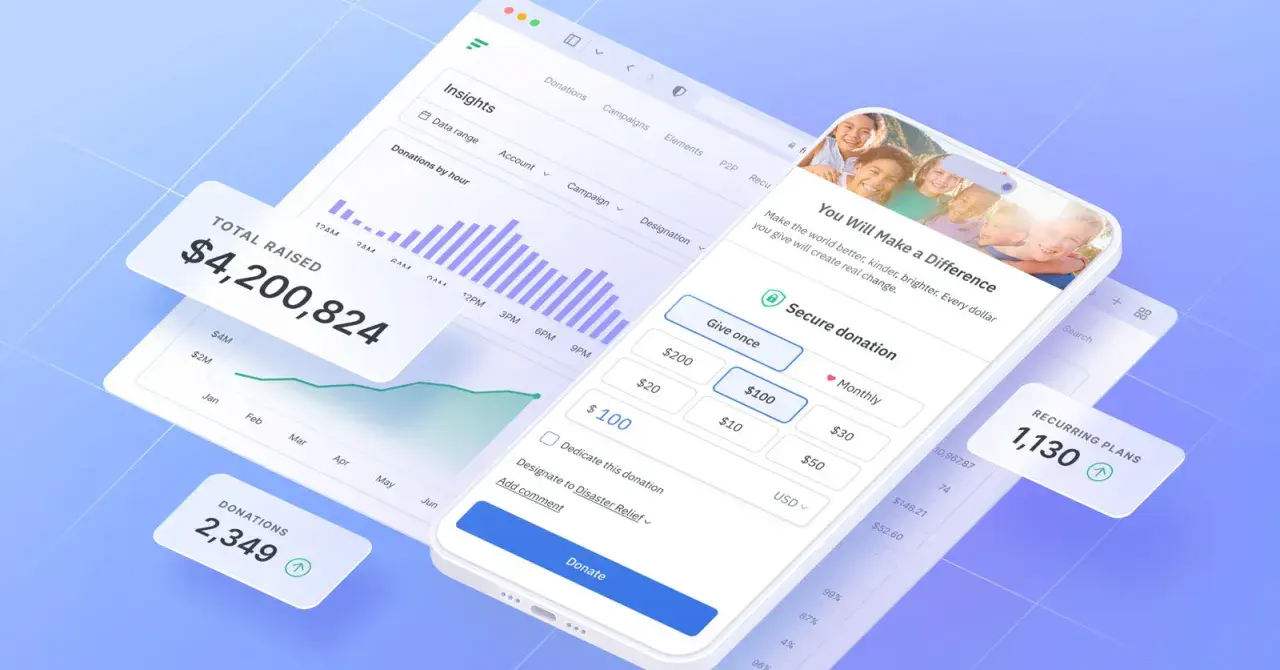
Vertical raise fundraising works best when a group needs a structured way to move from a base donation goal to larger, visible stretch targets without turning the campaign into a manual spreadsheet exercise. In practice, the model combines tiered asks, fast donor outreach, and software that keeps the campaign visible to staff, volunteers, and supporters. I’ll break down how it works, where nonprofit software helps, and where the limits are so you can judge whether it fits your organization.
The fastest win is matching the target to the audience you can actually reach
- Start with a realistic base goal, then add one or two stretch goals only if the first wave of support lands.
- The software matters because the campaign depends on sharing, tracking, and clean donor data.
- This model fits schools, clubs, and community nonprofits best when they already have a warm network.
- Mobile donation flow, segmentation, and reporting are more important than flashy extras.
- Long-term value comes from donor records and follow-up, not just the one-time total raised.
What this model is really doing
At its core, this is a campaign model built around upward scaling. You start with a reachable base target, then move to a stretch goal if the first wave of support lands well. That sounds simple, but the psychology matters: donors respond better when they can see momentum, not just a static number on a page. A $5,000 goal that becomes $7,500 after strong early response feels alive; a single oversized ask often feels abstract.
I usually think of it as a ladder: base goal, stretch goal, and maybe one final expansion if the audience is warm and the timeline is short. My rule of thumb is to keep the first stretch goal about 10% to 25% above the base target. Beyond that, the campaign needs either a larger audience or a second channel of outreach, otherwise the number starts looking cosmetic. That is why the model is less about asking for more and more, and more about designing a believable progression that the team can explain in one sentence.
For schools, youth programs, and local nonprofit groups, that structure works because supporters understand what the money is for. Once the ladder is clear, the software has a specific job: keep the momentum visible and manageable.

Why software changes the result
This is where nonprofit software stops being a nice extra and becomes the engine of the campaign. A good platform handles contact collection, reminders, page personalization, donation capture, and basic reporting without forcing staff to chase updates in five different tools. Vertical Raise-style platforms are built around email, text, and social sharing; on its own site, Vertical Raise also emphasizes an invite workflow and a dashboard that tracks emails sent, dollars raised, and social shares.That matters because upward-scaled goals depend on visible momentum. If donors can share the campaign easily, or if participants can re-share with a click, the audience expands faster than a one-to-one outreach list would allow. The company says its resharing flow can widen reach by 21%, which I would treat as a platform-specific claim rather than a promise, but the logic behind it is sound: reduce friction and more people complete the share.
In the nonprofit context, I care just as much about data quality as reach. If the platform cannot export donor records, capture notes, or show which ask level converted best, you may raise money once and then have no usable intelligence for the next campaign. The next section is where that becomes concrete.
How I would run a campaign that can scale
When I map a campaign like this, I start with a sequence instead of a slogan. The goal is to make every step measurable, because the software only helps when the campaign itself is disciplined.
- Set one base goal and one stretch goal. I prefer a visible ladder, not three competing numbers.
- Segment the donor list. Board members, alumni, parents, family friends, and local businesses should not all get the same ask.
- Write two versions of the pitch. One should be short and mobile-friendly; the other can be more detailed for warmer donors.
- Launch through three channels. Email, text, and social sharing are enough for most school and program campaigns if the list is warm.
- Review early data every day. I look at response rate, average gift, and whether the stretch goal is still believable.
- Close fast and steward immediately. The thank-you should go out while the campaign is still fresh, not two weeks later.
For many groups, a 2- to 4-week launch window is enough if the audience already knows the cause. Colder audiences usually need longer, but I would rather lengthen the outreach window than inflate the target with no plan to support it. Once the flow is defined, choosing the right feature set becomes much easier.
Which software features matter most
Not every fundraising platform is built for the same job. If the campaign is meant to scale upward, I would focus on the features that remove friction for donors and give staff a clean picture of what is happening in real time.
| Feature | Why it matters | What breaks without it |
|---|---|---|
| Mobile donation pages | Most shares happen on a phone, so the page has to load cleanly and finish in a few taps. | Drop-off before the gift is completed. |
| Email, text, and social sharing | Upward-scaling campaigns depend on reach, not only on one donor at a time. | Staff ends up doing manual outreach that does not scale. |
| Donor segmentation | Different audiences respond to different ask levels and stories. | Weak conversion and donor fatigue. |
| Reporting and exports | You need to know what worked, not just that money came in. | No learning loop for the next campaign. |
| Payout and reconciliation tools | Finance teams need clean records and predictable disbursement. | Admin time grows after the fundraiser ends. |
If I were selecting software for a school booster club, I would weight shareability and campaign visibility heavily. If I were selecting for a broader nonprofit, I would put more weight on donor history, recurring giving, and CRM integration, which is the donor database that tracks relationships and engagement. The best system is not the one with the loudest promise; it is the one that preserves usable donor data after the campaign ends.
Costs, limits, and when another model fits better
Cost is where many teams misread the decision. A platform that is easy to launch can still be expensive if it takes a large cut, requires add-on services, or makes donor follow-up cumbersome. General nonprofit software can be cheaper upfront, especially when it is free-to-start or subscription-based, but it often asks your staff to do more of the campaign design and coordination themselves.
Vertical Raise says its pricing varies by fundraiser type and service level, which is useful if you want a managed setup, but it also means you need to ask exactly what is included before you commit. I would want clarity on platform fees, payment processing, donor tipping, reporting access, and whether the organization keeps full export rights to the donor list.
Here is the comparison I usually use when the team is trying to decide quickly:
| Model | Best for | Main tradeoff |
|---|---|---|
| Managed vertical campaign platform | Schools, teams, and groups that want guided setup and built-in sharing | Less control over long-term donor systems and pricing can be less transparent |
| General nonprofit fundraising software | Organizations that need donation pages, CRM, recurring gifts, and analytics | More setup work and less campaign hand-holding |
| DIY stack | Teams with strong internal ops and a limited budget | Lowest tooling cost, highest staff time |
This model is less compelling when the organization relies on recurring donors, major gifts, or year-round stewardship. It is also weaker if the audience is cold or if the staff cannot manage the donor data after the campaign. In those cases, a broader fundraising system usually creates more value even if the launch feels less turnkey.
The mistakes that quietly kill momentum
The hardest part of these campaigns is rarely the donation page. It is the operational discipline behind the page. I see the same mistakes again and again:
- Making every donor get the same ask instead of adjusting by relationship and giving capacity.
- Treating share volume as success even when actual gifts are weak.
- Ignoring mobile checkout until people start dropping off.
- Skipping consent and privacy checks for email and text outreach.
- Waiting too long to thank donors or report results back to supporters.
The one rule I would not skip is this: choose the software based on the data you want after the campaign, not just the money you want during it. If the platform cannot leave you with clean donor records, clear segments, and a repeatable workflow, you will have to rebuild the campaign from scratch next time.
For schools, clubs, and community nonprofits with a warm network, this model can be efficient and energizing. For organizations that live on recurring giving and long-term donor relationships, I would lean toward software that treats stewardship as seriously as the campaign itself. That is the difference between a good fundraiser and a durable fundraising system.
