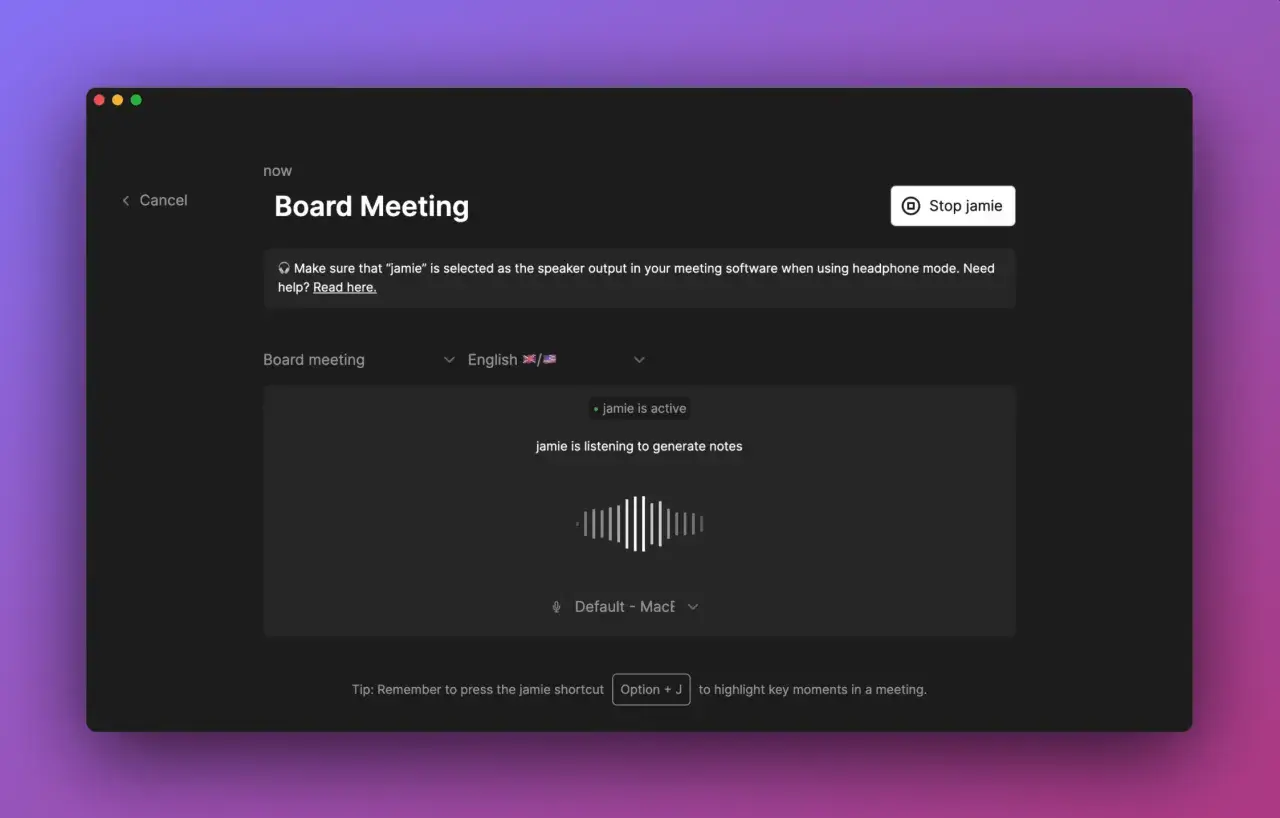
Board minutes do more than satisfy a filing habit. They protect the organization’s memory, show that the board acted with a quorum, and create a clean record of decisions, votes, recusals, and next steps. Knowing how to record minutes of a board meeting matters because those notes become the board’s official memory. In this guide, I walk through the practical side of the process for U.S. boards, from preparation and note-taking to approval, storage, and the judgment calls that keep the record concise and defensible.
The essentials in one glance
- Start with the basics: organization name, date, time, location or platform, attendees, quorum, and the person taking minutes.
- Record motions, vote counts, abstentions, dissenters, and action items, not a transcript of the discussion.
- Use the agenda as your template so the final record stays organized and easy to review.
- Document conflicts of interest, recusals, and executive-session handling with extra care.
- Draft the minutes promptly, approve them cleanly, and store the final version in a secure board record system.
What board minutes are supposed to prove
I start with one question: what would someone need to see in the record to trust the decision? For me, the answer is simple. The minutes should show that the meeting was valid, the board understood the issue, the board made a clear decision, and someone was assigned to follow through. If those four things are visible, the record is doing real governance work.
- Validity means the meeting was properly called and a quorum was present when business was transacted.
- Decision trail means the motion, vote, and outcome are clear enough to reconstruct later.
- Accountability means action items have owners, deadlines, and a clear connection to the board’s decision.
- Risk control means recusals, abstentions, and confidential matters were handled in a disciplined way.
That framework keeps minutes from drifting into prose. Once the purpose is clear, the next step is to prepare a template that makes good minutes easier to write in the room.
Prepare the template before anyone takes a seat
The cleanest minutes start before the meeting begins. I use the agenda as the skeleton, then build a template with fixed fields for the organization name, date, time, meeting format, attendance, quorum, motions, and action items. The quorum threshold should come straight from the bylaws and any applicable state rule, because that number should never be guessed from memory.
- Pull the previous approved minutes and note any unresolved follow-up items.
- List board members, officers, guests, and staff who may attend in person or online.
- Leave space for each motion, the name of the person who moved it, and the vote outcome.
- Prepare a separate field for recusals, abstentions, and conflict disclosures.
- Keep a motion tracker so you can record each action consistently instead of rewriting it from scratch.
If the board uses Robert’s Rules or another parliamentary authority, I mirror that language in the motion line so the record stays consistent. With the template ready, the main challenge becomes capturing the meeting accurately without turning the notes into a transcript.
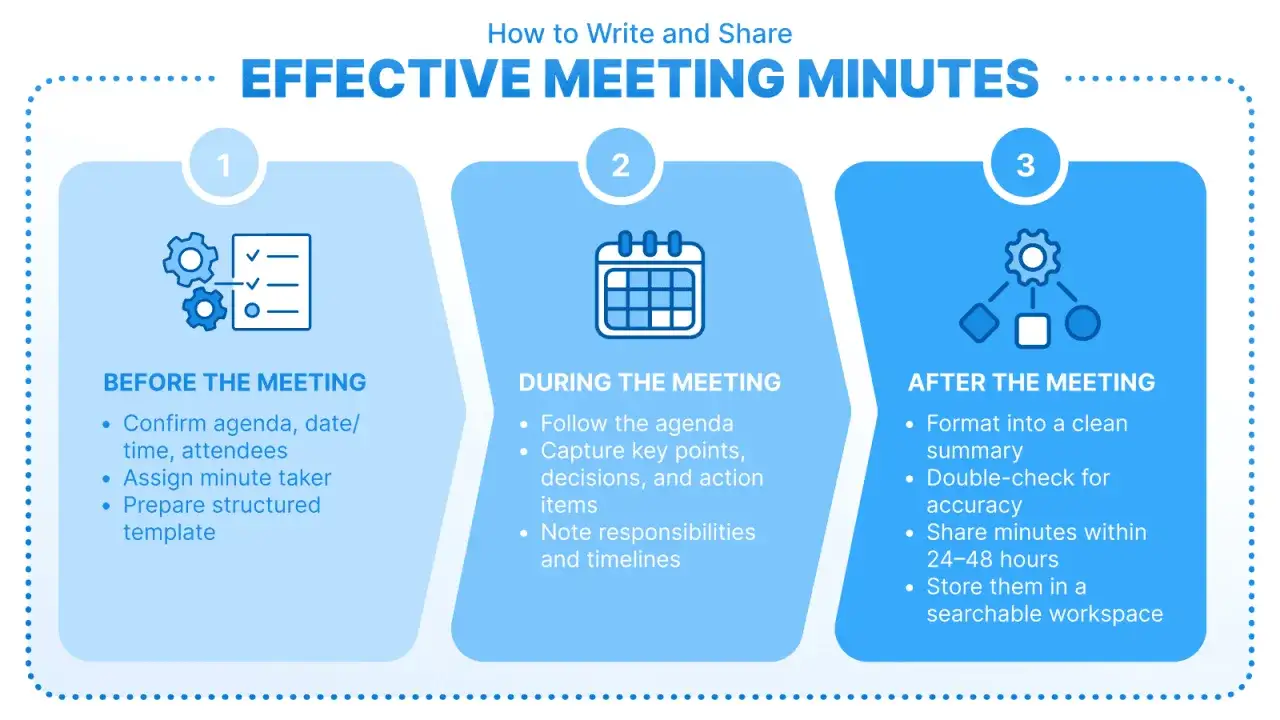
Capture the meeting in facts, not in full sentences
Minutes are a record of action, not a transcript. I write in short factual sentences and keep the focus on decisions, not on every argument that led there. The useful test is easy: if a person missed the meeting, could they tell what the board did, why it mattered, and what happens next?
| What to capture | How I write it | Why it matters |
|---|---|---|
| Attendance and quorum | List who was present, excused, or absent, and note when quorum was reached. | Shows the meeting could legally act. |
| Motions and votes | Record the exact motion, the mover, the seconder, and the vote tally. | Creates the decision trail. |
| Reports and documents | Name the reports, budgets, policies, or resolutions introduced. | Shows what informed the board’s decision. |
| Action items | State the owner, deadline, and deliverable in one line. | Turns board decisions into follow-through. |
| Conflicts and recusals | Note the disclosure, the recusal, any abstention, and the final vote result. | Supports transparency and loyalty obligations. |
| No quorum or failed motion | Record that no business was transacted, or that the motion was tabled or failed, plus the next step. | Prevents later confusion about what the board actually authorized. |
| Consent agenda or executive session | Note the grouped approval or the confidential session boundary, not the full internal debate. | Keeps routine and sensitive matters properly separated. |
Rule of thumb: If a sentence sounds like a diary entry, cut it. If it sounds like a board resolution, keep it.
For example, I would write “The board approved the community grant budget of $240,000 by a 7-1 vote, with one abstention” rather than narrating the entire budget debate. That level of detail preserves the decision without exposing every side conversation. After the live note-taking comes the part most people underestimate: turning rough notes into a clean draft quickly.
Turn rough notes into a clean draft quickly
I prefer a two-pass process. First, I clean the notes while the meeting is still fresh, usually within 24 to 72 hours. Second, I compare the draft against the agenda, the motion tracker, and any supporting documents before it goes to the chair or secretary for review. That timetable is a practical target rather than a legal rule, but it keeps errors from hardening into the official record.
- Expand shorthand while the discussion is still fresh in your mind.
- Check every motion against the wording used in the room.
- Verify the vote count, including abstentions and dissenters.
- Confirm action items with owners and deadlines.
- Remove filler language, repetition, and anything that sounds interpretive.
If your board approves minutes at the next regular meeting, circulate the draft early enough for directors to spot mistakes before they vote. That review step matters more than people think, because minutes are easiest to correct before they are adopted and filed.
Leave out the noise and protect the sensitive parts
One of the hardest skills in minute-taking is restraint. I do not record side conversations, personal opinions, or verbatim debate unless the board has a clear reason to preserve that level of detail. The cleaner the record, the more likely it is to be useful months or years later.
| Leave this out | What to do instead |
|---|---|
| Personal commentary or speculation | Omit it and keep the note factual. |
| Verbatim debate | Summarize only the substance that led to the decision. |
| Off-topic chatter | Skip it unless it affected the meeting outcome. |
| Sensitive personnel, compensation, grievance, or legal strategy details | Keep the record limited, or separate it into confidential minutes if appropriate. |
| Long explanations for routine approvals | Note the approval and the document title instead of repeating the discussion. |
Approve, store, and control access to the final record
Minutes should not float around indefinitely as half-edited drafts. Once the board approves them, I treat the finalized version as the official record and keep drafts separate. Depending on the organization, the secretary signs the minutes, the chair may countersign them, and the final copy is stored in a secure board file or portal with a clear version history.
- Keep draft and final versions separate so the official record is easy to identify.
- Store approved minutes with the board book or board portal records.
- Restrict access to executive-session or otherwise confidential minutes.
- Archive supporting documents that explain major decisions, such as budgets or resolutions.
- Follow the organization’s retention policy and any state-law requirement that applies.
I also make sure the record is easy to search later. A board that can find its own decisions quickly is a board that can govern faster and with less confusion. That leads to the part I care about most: building habits that make every future set of minutes better than the last.
The standard I use for mission-driven boards
If I had to reduce the whole process to one standard, it would be this: a person who missed the meeting should be able to understand what the board decided without needing a second conversation. That is the right balance for most U.S. boards, especially mission-driven organizations that need accountability without bureaucratic clutter.
Before I close a set of minutes, I check five things: quorum is stated, every motion has a clear result, recusals and abstentions are named, action items have owners and deadlines, and the document reads as a factual record rather than a narrative. When those five boxes are checked, the minutes usually do their job well, and the board’s governance trail stays strong.