
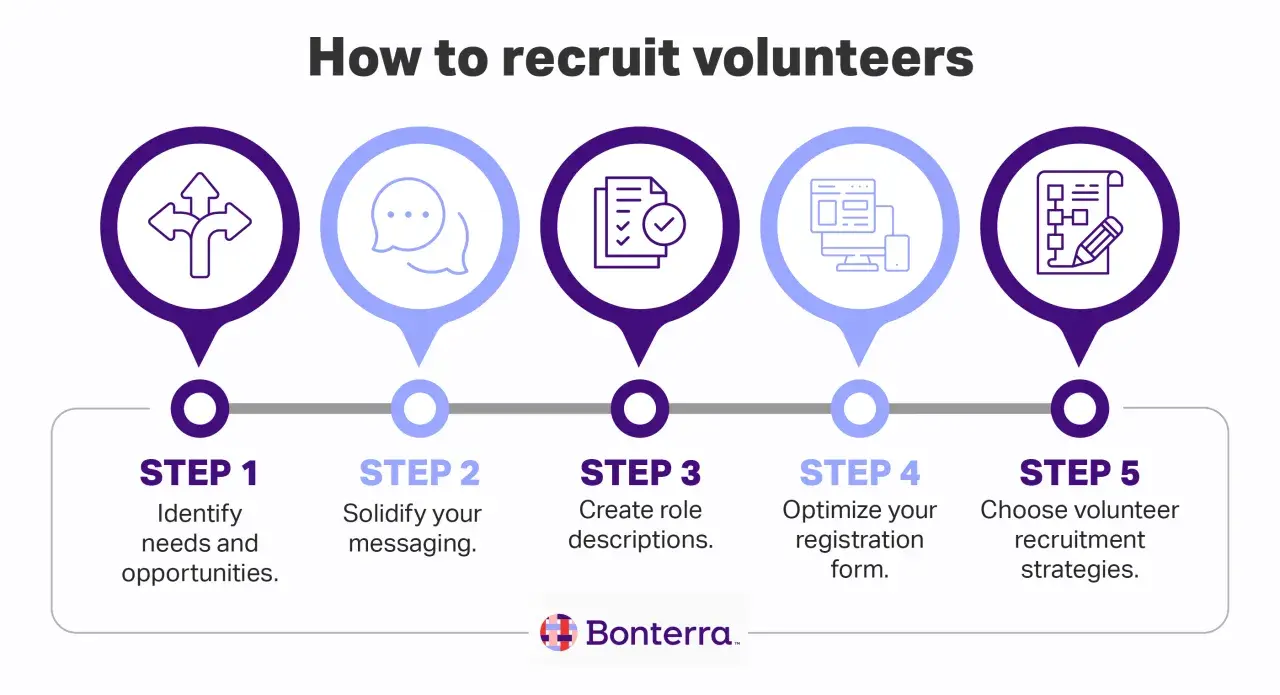
Strong volunteer programs do not run on enthusiasm alone. They work when people know what they are doing, who to ask, when to show up, and how success will be measured. If I need to organize volunteers for a community program, I start by building a simple operating system: roles, schedules, communication rules, onboarding, and a light layer of accountability.
What matters most when a volunteer team needs to run smoothly
- Role clarity comes first. Volunteers stay engaged when expectations are short, specific, and realistic.
- Structure should fit scale. A small recurring project and a large event need different coordination models.
- Placement matters as much as recruitment. The right person in the wrong role still creates friction.
- Communication should be simple. One primary channel and one backup channel are usually enough.
- Training and recognition reduce turnover. A clean first shift is often the difference between one visit and long-term commitment.
- Basic metrics reveal problems early. No-shows, fill rate, and retention tell you more than guesswork does.
What good volunteer coordination actually looks like
Good volunteer coordination is not about controlling people. It is about removing confusion before it turns into churn. In practice, I want every volunteer to understand five things from the start: the purpose of the work, the exact task, the start and end time, the person they report to, and what to do when something goes wrong.
That sounds basic, but it is where many programs break down. Volunteers rarely leave because the mission is weak; they leave because the first shift felt disorganized, the role was vague, or no one followed up. AmeriCorps emphasizes orientation and training as part of effective volunteer management, and I think that focus is right because enthusiasm fades fast when people are left to improvise.For me, the real test is simple: can a new volunteer arrive, get oriented in minutes, and contribute without needing three different staff members to interpret the process? If the answer is no, the program is probably too dependent on memory and informal favors. The next step is to replace that improvisation with a structure that scales.

Build the team around roles, not goodwill
One of the fastest ways to weaken a volunteer program is to treat every helper as interchangeable. They are not. Some people are good at greeting, some are dependable with setup, some handle logistics well, and some naturally keep a group calm when things get busy. Points of Light repeatedly stresses the value of clear position descriptions and identified volunteer leaders, and I would do the same in almost any community program.
My rule is straightforward: define the role before you recruit for it. That means writing a short description with the task, time commitment, physical demands, supervision, and any limits. If a role cannot be described in a few clean lines, it is usually too fuzzy to manage well.
| Structure | Best for | Strength | Weak spot |
|---|---|---|---|
| Single coordinator | Small recurring programs | Fast decisions and consistent standards | Bottlenecks quickly once volume grows |
| Team leads or captains | Mid-sized programs with several shifts | Better delegation and local problem-solving | Needs training so each lead works the same way |
| Shift pods | Large events or service days | Flexible and easy to scale by location or task | Can drift if expectations are not standardized |
In practice, once a program is juggling around 15 to 20 active volunteers, I start looking for team leads before the coordinator becomes a bottleneck. That is not a hard rule, but it is a useful warning sign. If the same person is answering every question, fixing every schedule conflict, and explaining every process, the system is too dependent on one human being.
The structure you choose should make delegation easy. The moment a volunteer leader can solve a problem at the edge without waiting for permission on every small decision, the whole program becomes more resilient. That brings us to the next issue: getting the right people into the right roles in the first place.
Match people to the right work from the start
Bad placement causes more frustration than bad intentions. I have seen highly committed people lose interest simply because they were put in work that did not fit their skills, energy, or availability. The fix is not complicated, but it has to be intentional.
When I screen volunteers, I ask a small set of practical questions: when they are available, what type of work they prefer, whether they are comfortable with front-facing interaction, whether they can lift, stand, or travel, and what they hope to get out of the experience. That last question matters more than many teams realize. A student may want experience, a retiree may want community, and a corporate group may want a clear, time-bounded project. If you ignore the motivation, you often assign the wrong task.
- Availability tells you whether someone can help consistently or only occasionally.
- Skills help you avoid wasting a strong organizer on repetitive work that needs no judgment.
- Comfort level matters for public-facing, emotional, or physically demanding roles.
- Motivation helps you choose between service, leadership, logistics, or behind-the-scenes support.
For sensitive roles, I also check the local rules that apply to the program, especially when volunteers work with children, older adults, confidential information, or cash handling. The rules vary by state and by setting, so I verify requirements before I place anyone in a role that carries extra risk. That is not bureaucracy for its own sake; it is how you protect both the people being served and the volunteers themselves.
Once placement is right, scheduling and communication become much easier to manage.
Make scheduling and communication boring in a good way
The best volunteer schedules are not clever. They are predictable. Volunteers should know where to look, when to confirm, what happens if they are late, and who gets notified if they cannot make a shift. If the process needs a long explanation, it is too fragile.
I prefer one primary channel for routine updates and one backup for urgent changes. Email works well for policies, weekly updates, and non-urgent reminders. Text is better for same-day changes. A shared calendar or sign-up tool should always reflect the current roster, not last week’s version of reality.
| Channel | Best use | Rule I follow |
|---|---|---|
| Schedules, policies, reminders, and follow-ups | Send a concise weekly digest | |
| Text message | Day-of changes and urgent confirmations | Keep it short and action-focused |
| Shared calendar | Shift visibility and real-time updates | Update it immediately after any change |
| Phone call | Safety issues, no-shows, or escalation | Use it only when speed or nuance matters |
A few habits make a big difference. I ask for confirmation 24 hours before a shift when the work is time-sensitive. I keep a backup contact for every lead volunteer. And if someone misses shifts repeatedly without notice, I pause their schedule until we talk about expectations. That is usually kinder than letting the pattern continue and quietly destabilize the rest of the team.
Clear communication prevents chaos, but it does not keep volunteers coming back on its own. For that, the first experience has to feel worth repeating.
Train, support, and recognize volunteers so they stay
Retention starts before the first task is complete. A volunteer who feels uncertain, ignored, or underused will not stay long, even if they care deeply about the cause. That is why I treat onboarding as a core part of operations, not a bonus feature.
My minimum setup is simple: a short orientation, a quick shadowing period when possible, a one-page handbook with the essentials, and a follow-up check-in after the first shift. The handbook should cover the practical details people actually need: arrival instructions, contact names, safety rules, basic boundaries, and what success looks like in the role. It should not read like a policy archive.
Recognition matters too, but it has to be specific. A generic thank-you is fine; a specific thank-you is better. I would rather send a brief note that says, “Your calm handling of the line kept the whole intake process moving,” than a broad message that sounds automated. The more concrete the appreciation, the more credible it feels.
- After the first shift: ask what was unclear and what felt easy.
- After the first month: check whether the role still fits their expectations.
- After a successful event: recognize the behavior you want repeated, not just attendance.
AmeriCorps and other volunteer-management resources consistently treat orientation, training, and appreciation as core practices, and that matches what I see on the ground. Volunteers do not need perfection. They need enough support to feel competent, welcomed, and useful. Once that is in place, you can start measuring what the system is actually doing.
Track a few numbers that reveal real problems
You do not need a dashboard full of vanity metrics. You need a small set of numbers that tell you when the program is drifting. I usually watch five things: fill rate, no-show rate, retention, time to fill, and volunteer feedback. If those are healthy, the program usually is too.
| Metric | What it tells you | What worries me |
|---|---|---|
| Fill rate | Whether the schedule is realistic and appealing | Roles that stay open too long may be badly designed or poorly promoted |
| No-show rate | How reliable the process and reminders are | Above 10% is usually a warning sign in my experience |
| 30-day retention | Whether onboarding and early support are working | If new volunteers vanish quickly, the first experience is probably too thin |
| Time to fill | How much recruitment pressure the program is under | If you are always scrambling, you need a reserve pool or a simpler shift structure |
| Volunteer feedback | Where friction hides | Repeated comments about confusion, waiting, or poor communication should trigger a fix |
I also pay attention to patterns rather than isolated complaints. One missed shift happens. Three missed shifts in the same role often point to a scheduling issue, not a people problem. One confused question is normal. Ten confused questions about the same step usually mean the instructions are unclear.
That kind of reading helps you improve the program without overcomplicating it, which is exactly what the final layer should do: keep the whole system light enough to run, but solid enough to trust.
The lean volunteer system I would start with in a community program
If I were building from scratch, I would keep the first version deliberately small. One page of role descriptions. One intake form. One scheduling calendar. One communication channel for routine updates. One backup channel for urgent changes. One short orientation. That is enough to support most community programs without creating unnecessary administration.
- Write roles before recruiting anyone.
- Match volunteers to tasks using availability, skills, and motivation.
- Set a clear communication rhythm and a backup plan for changes.
- Train early, check in quickly, and recognize specific contributions.
- Review a few simple metrics every month and fix the friction you actually see.
The goal is not to squeeze more labor out of volunteers. The goal is to make their effort feel clear, safe, and worth repeating. When the structure is simple and the expectations are honest, volunteers do better work, managers spend less time firefighting, and the community gets a steadier return from every hour donated.
