
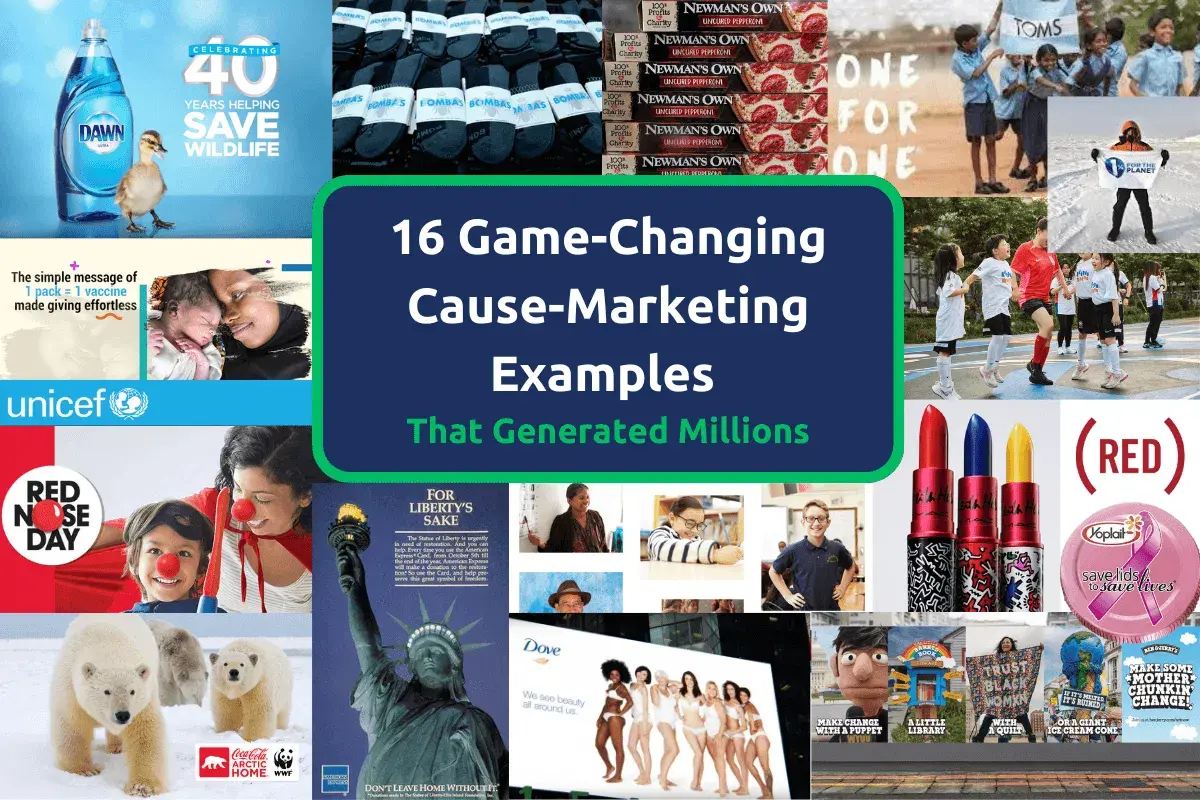
Cause marketing works best when a brand and a nonprofit help each other for a clear reason: money reaches the mission, and the company earns trust because the offer feels useful rather than ornamental. In this article, I break down cause marketing examples, the fundraising mechanics behind them, and the mistakes I would avoid if I were building one from scratch. The focus is on U.S. partnerships, especially the kind that turn everyday purchases, events, and retail moments into real support for a charity.
What the strongest partnerships have in common
- The cause fits the brand’s audience and the way people already buy.
- The donation mechanic is easy to explain in one sentence.
- The nonprofit gets money, visibility, or useful resources, not just a logo placement.
- The campaign has a deadline, a clear call to action, and honest disclosure.
- The best versions can return every year without feeling forced.
What cause marketing looks like when fundraising is the real goal
At its core, cause marketing is a promotional partnership with a charitable outcome. Habitat for Humanity describes it as a mutually beneficial arrangement between a for-profit business and a nonprofit, and that wording matters because the best campaigns are never one-sided. The charity needs funds, awareness, or operational support; the business needs credibility, relevance, and a reason for customers to care.
When I evaluate one of these campaigns, I look for three things first: whether the brand and the cause actually belong together, whether the donation flow is simple enough for a customer to understand in seconds, and whether the charity receives something meaningful beyond exposure. If those three pieces are missing, the campaign usually feels decorative instead of effective. Once that is clear, the useful part is seeing how different brands actually put the idea into the market.
Cause marketing examples that show the model in practice
The strongest examples are useful because they show different ways to raise money without turning the customer experience into a lecture. Some lean on a product purchase, some on an event, and some on a retail moment that is so small it barely slows the transaction.
Chili’s and St. Jude show how repetition builds trust
Chili’s long-running partnership with St. Jude Children’s Research Hospital is one of the clearest U.S. examples of a campaign that became bigger than a seasonal promotion. St. Jude says the restaurant chain has raised more than $120 million since the partnership began in 2002, which tells you something important: a good cause campaign does not need to be flashy if it is consistent. The Create-A-Pepper program and related donation moments work because the mechanics are easy, the cause is emotionally clear, and customers know where the money is going.
What I take from this example is simple: repeatability is a fundraising asset. If your campaign can come back every year without customers feeling manipulated, you have something durable.
Red Nose Day works because the symbol is tiny and memorable
Red Nose Day is a strong example of how a small, playful object can carry a serious fundraising purpose. The red nose is cheap to buy, easy to spot, and instantly recognizable, which makes it ideal for retail and media amplification. That combination matters because fundraising often fails when the ask feels heavy or abstract; here, the physical item becomes the conversation starter.
This model is especially effective when a brand wants scale. A campaign like this can live in stores, on television, and online without losing its identity, and that matters for nonprofit awareness as much as it matters for donations.
Habitat for Humanity partnerships show the value of practical giving
Habitat for Humanity’s cause marketing partnerships are useful because they remind me that not every campaign has to rely on pure cash. Some brands contribute materials, services, or store-driven promotions that help fund homebuilding while also giving customers an easy way to participate. In home improvement and housing-related categories, that fit is unusually strong: the product itself is tied to the mission.
This is where I think many companies underestimate the power of in-kind support. A donation of flooring, paint, appliances, or skilled labor can reduce a nonprofit’s operating burden and create a more concrete story than a generic check ever could. When the mission is tangible, the partnership feels tangible too.
Event-led campaigns can turn fan energy into donations
Supercross’s partnership with St. Jude is a good reminder that events can be fundraising engines when the audience already feels part of a community. In 2025, the Supercross community raised over $650,000 for St. Jude and passed $3 million in cumulative support, which is exactly the kind of result that comes from turning attention into action. Fans are already emotionally invested, so the campaign does not have to invent engagement from zero.
I like this model because it shows how cause marketing can live inside a culture, not just inside a checkout flow. If the audience already shows up for the sport, the brand can use that attention to drive giving without interrupting the experience.
Read Also: Movie Night Fundraiser - Plan Your Profitable Event
Even small local round-ups can outperform bigger-looking ideas
A neighborhood coffee shop asking customers to round up to the nearest dollar for a local food bank will never look as polished as a national campaign, but it can still raise meaningful money. The reason is volume. Tiny asks are easier to accept, and the charity benefit compounds across transactions. In fundraising, that low-friction design matters more than most brands want to admit.
When the ask is small enough to feel effortless, participation rises. That is why the best small campaigns often beat the best-looking ones.
The formats that usually raise money without confusing customers
Not every structure works equally well. Some formats are built for speed, some for emotion, and some for long-term brand equity. When a company wants a campaign that customers will actually understand, I usually see one of these models.
| Format | How it works | Why it converts | Main risk |
|---|---|---|---|
| Checkout round-up | Customers round up to the nearest dollar or add a small fixed donation. | The ask is tiny and fast, so friction stays low. | It can feel robotic if the prompt is poorly written or repeated too often. |
| Percent-of-sale donation | A brand donates a stated share of sales from a product or campaign period. | Customers understand the exchange immediately. | The terms must be crystal clear, including dates and any cap. |
| Limited-edition product | A special item or bundle supports a charity for a set time. | Urgency and collectability drive action. | It can look opportunistic if the product quality is weak or the cause fit is thin. |
| Event tie-in | A race, concert, festival, or in-store event includes a donation moment. | The audience is already engaged and emotionally present. | It needs strong operations so the giving moment does not disrupt the event. |
| In-kind plus cash support | The company contributes products, services, or logistics in addition to money. | Nonprofits get practical value, not only a financial lift. | Harder to measure unless the value and purpose are defined in advance. |
For fundraising teams, the practical question is not “Which format is best?” It is “Which format will my audience understand instantly and support without hesitation?” The answer usually depends on whether the buying habit already exists and whether the charity fits the product or event. That leads directly to the question of authenticity.
What makes a partnership feel authentic instead of opportunistic
I trust a campaign more when it sounds specific instead of grandiose. A strong partnership usually has a real audience overlap, a clear benefit for the nonprofit, and a donation structure that a customer can explain back to someone else. If those pieces are missing, the campaign may still raise some money, but it will not build the kind of trust that lasts.
- Fit beats fame. A smaller brand with a natural cause match usually feels more credible than a big brand that is chasing a trending issue.
- Transparency beats vague generosity. People should know what is being donated, when, and under what conditions.
- The nonprofit needs a real role. If the charity is only there for branding, the campaign feels hollow.
- Measurement matters. I want at least one hard metric beyond revenue, such as funds raised, repeat participation, or donor conversions.
On the legal side, I treat sale-linked donations as a disclosure issue, not a detail to clean up later. In U.S. fundraising practice, this kind of offer is often structured like a commercial co-venture, which means the promise, timing, and any cap should be stated plainly. That is not just compliance hygiene; it is part of keeping donor trust intact.
Where these campaigns usually fail
Most weak campaigns do not fail because the cause is unpopular. They fail because the mechanics are sloppy. The brand talks more than it gives, the terms are too vague, or the nonprofit is reduced to a logo and a thank-you quote.
- The donation terms are hard to find. If customers need to hunt for the fine print, trust drops fast.
- The cause and the product do not belong together. When the fit is forced, the campaign feels like a marketing costume.
- The ask is too complicated. If a customer has to decode five steps, most of them will stop halfway through.
- The company overclaims impact. Small campaigns should not pretend to solve a structural problem on their own.
- The nonprofit is overloaded. If the organization has to do all the storytelling and all the fulfillment work, the partnership is imbalanced.
One mistake I see often is treating the charity as campaign decoration. The partnership should make the mission easier to understand and easier to support, not just prettier to advertise. That point matters even more when the company wants to repeat the program next year.
How I would choose a partner before saying yes
If I were advising a nonprofit or a brand, I would start with five questions. Does the audience overlap make sense? Is the donation mechanic simple enough for a cashier, a server, or a website visitor to explain in one breath? Can the campaign be measured without guesswork? Does the nonprofit have enough capacity to manage the partnership well? And is the story strong enough to repeat without losing credibility?
For nonprofits, I would also ask whether the partnership brings more than money. A strong brand ally can deliver new donors, volunteers, in-kind support, or local visibility that lasts after the campaign ends. For businesses, I would ask whether the cause strengthens the product story or just decorates it. That difference is often what separates a serious fundraising program from a one-off publicity play.
The campaigns worth copying are the ones people can explain in one breath
The best U.S. campaigns in 2026 still follow the same rule: make the ask simple, make the cause visible, and make the outcome believable. That is why the strongest examples keep working year after year. They do not rely on jargon, and they do not ask customers to become experts in philanthropy before they can participate.
If I were starting from zero, I would choose one product, one nonprofit, and one metric. Then I would build a campaign that feels easy enough to join, honest enough to trust, and specific enough to repeat. That combination is what turns cause marketing from a nice gesture into real fundraising.
