
Peer-to-peer fundraising works best when supporters can set up a page quickly, share it without friction, and move donations back to the cause without turning staff into manual operators. That is why the choice of software matters: the right tool keeps the campaign lightweight for volunteers and clear for finance, while the wrong one adds hidden cost in time, fees, and confusion. In this article I focus on what free peer-to-peer fundraising software actually needs to do, where “free” still has a price, and which platform models make the most sense for U.S. nonprofits.
What matters most before you pick a platform
- True zero-fee tools are rare; many “free” platforms still rely on donor tips or standard payment processing.
- The best tools make it easy for supporters to create pages, teams, and shareable links without staff support.
- For U.S. nonprofits, the real decision is not just platform fee. It is donor experience, admin time, and data handoff.
- If a volunteer cannot launch and share a page in minutes, the platform is not really free in practice.
- Choose the simplest model that fits your campaign structure before you chase advanced features you may never use.
What peer-to-peer fundraising software actually has to do
At its core, peer-to-peer fundraising software turns supporters into fundraising partners. Your nonprofit creates the main campaign, and then individuals or teams create personal pages that reach their own networks. Every gift still supports the cause, but the ask comes from a trusted relationship rather than from the organization alone.
That sounds simple, but the software has to do several jobs well at once. It needs to host the campaign page, let fundraisers personalize their own pages, collect donations, issue receipts, track progress, and show your team who is active and who needs a nudge. In practice, I think of it as a coordination tool as much as a donation tool.
- Main campaign structure so your team can set the goal, story, and timeline.
- Individual or team pages so fundraisers can personalize their ask and credit.
- Sharing tools so supporters can move fast on email, text, and social.
- Reporting so you can see signups, activations, and revenue by fundraiser.
- Checkout and receipting so donors get a clean experience and your records stay usable.
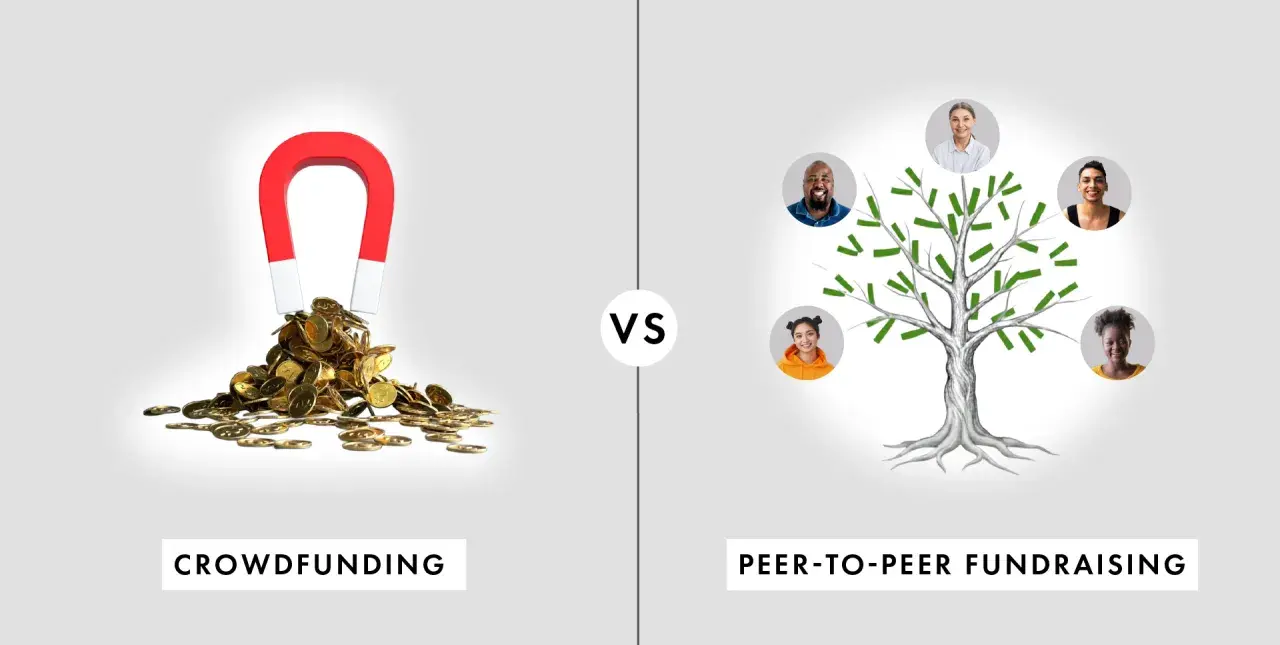
This is also why peer-to-peer is not the same as crowdfunding. Crowdfunding usually centers on one campaign owner making one direct ask. Peer-to-peer spreads that ask across many trusted personal networks, which is exactly what makes the model powerful for community-based nonprofit work. That difference matters, because the next question is not what the software does, but what “free” really means once money starts moving.
What free really means in this market
I am cautious with the word free in nonprofit software. Sometimes it means no monthly subscription. Sometimes it means no platform fee if donors cover the cost. And sometimes it means zero fees only on paper, because processing charges still show up somewhere in the flow.
| Pricing model | What you usually pay | Best fit | Main trade-off |
|---|---|---|---|
| True zero-fee | No platform fee and no transaction fee, often funded through optional donor contributions | Budget-sensitive nonprofits that want every dollar to reach the mission | The checkout may ask donors to support the platform, which not every audience likes |
| Free with donor tips | No platform fee when optional tips are enabled; standard fees apply if you disable them | Teams that want a richer toolset without paying upfront | Your “free” model depends on donor behavior |
| Free to start, transaction-based | No signup cost, but per-transaction or campaign fees apply | Organizations that want low friction at launch | Costs rise as campaign volume grows |
| No monthly subscription, fee-capped | No subscription, but processing and fee structures still apply | Nonprofits that want predictable admin overhead and a broader suite | Not free in the strict sense |
The practical question is simple: who pays for the rails? If the platform is charging donors, your fundraising team needs to be comfortable with that message. If the nonprofit is absorbing the fee, then the fee needs to fit the revenue model. That is why the feature set matters next, because the cheapest option is not always the easiest one to run.

The features that separate a useful platform from a cheap one
When I evaluate P2P tools, I do not start with the price tag. I start with the supporter experience. If the fundraiser cannot get set up quickly, the campaign slows down before it really begins.
- Individual and team pages let supporters tell their own story while staying tied to the main campaign.
- Leaderboards and progress bars create momentum, especially for walks, runs, school drives, and team challenges.
- Social sharing and trackable links make it easier to see which fundraisers are actually bringing in donors.
- Automated emails and text reminders reduce the need for your staff to chase every participant manually.
- Admin controls let your team create or manage pages for less technical volunteers.
- Reporting and CRM handoff keep the campaign useful after the money is raised.
- Mobile-friendly checkout matters because most supporters will open and share pages on a phone first.
One feature I would not treat as optional is campaign communication. Built-in messaging, reminders, and easy sharing are what keep a volunteer campaign alive after launch day. Without them, even a low-cost platform can become expensive in staff hours, which is why the next step is comparing the main options side by side.
Which platforms are genuinely free and which are free to start
In 2026, the nonprofit market has a few different answers to the same question. Some tools are genuinely zero-fee. Others are free to start but recover cost through donor tips or transaction pricing. A few sit in the middle with no monthly subscription but meaningful processing costs.
| Platform | Published cost model | Best for | Trade-off |
|---|---|---|---|
| Zeffy | Zero platform fees, zero transaction fees, funded by optional donor contributions | Teams that need the clearest no-fee model | You need to be comfortable with a donor contribution prompt in checkout |
| Givebutter | 0% platform fees when optional donor tips are enabled; 3% platform fee if tips are disabled | Nonprofits that want a broad free fundraising stack with strong P2P features | The free model depends on donor tips; without them, costs rise |
| Mightycause | No subscription cost, with a fee structure built around processing and donor cover options | Organizations that want a broader nonprofit software suite and no monthly subscription | It is free to start, but not a strict zero-fee P2P option |
| Donorbox | Free to create a campaign, but supporter pages carry a 3.95% fee and the main campaign uses a 2.95% standard fee | Teams already leaning toward Donorbox’s ecosystem | Not the right fit if your definition of free means no platform cost at all |
My read is straightforward. Zeffy is the clearest true zero-fee choice. Givebutter is the strongest if you want a free starting point plus a richer fundraising toolbox. Mightycause is attractive when you want no monthly subscription and a broader nonprofit software layer. Donorbox is easy to begin with, but it is not the lowest-cost answer if peer-to-peer is your main use case. Once you know which model you are choosing, the launch plan gets much easier to shape.
How to launch a campaign without making volunteers do the work
The best peer-to-peer campaigns feel easy because the nonprofit did the hard thinking in advance. I usually recommend building the campaign around volunteer behavior, not internal convenience.
- Pick one campaign format. A walk, birthday campaign, school challenge, memorial fundraiser, or team challenge all work differently. Do not force one setup onto every audience.
- Recruit captains first. Team captains or board members are easier to activate than a large open pool. They set the tone for everyone else.
- Give fundraisers a kit. Include sample text messages, email copy, social graphics, a short FAQ, and a suggested ask amount. The less they have to invent, the faster they start.
- Activate the first 48 hours aggressively. Early momentum matters. I like to see the first pages live quickly, with simple prompts to self-donate, share, and thank donors.
- Track the right metrics. Watch activated fundraisers, shares per fundraiser, average gift, and conversion rate, not just total dollars raised.
For many U.S. nonprofits, a 4-8 week campaign window is enough to build urgency without exhausting the supporter base. Shorter campaigns can work for events; longer ones make sense only when you have a reason to keep the energy alive. Once you start watching these numbers, you will also see where free tools begin to strain, which is the real boundary worth knowing.
Where free tools stop being enough
Free software is usually enough for a focused campaign with a clear goal, a manageable number of fundraisers, and a team that can coach people without much overhead. It starts to break down when the campaign becomes operationally complex.
- Multi-chapter or multi-entity organizations often need more advanced permission controls and reporting.
- Heavy CRM reliance makes data sync and segmentation more important than the platform fee itself.
- Recurring campaign calendars can justify paid automation if it saves staff from repetitive tasks.
- Event-heavy fundraising may need ticketing, auctions, mobile bidding, or sponsorship tools that free P2P products do not handle well.
- Brand control and compliance matter more as the organization grows, especially if finance or development teams need tighter governance.
That is the point where I stop asking whether a tool is free and start asking whether it is efficient. If a paid platform cuts ten hours of staff time every campaign and reduces donor drop-off, it may cost less in the real world than a “free” tool that creates friction. That trade-off leads to the final decision framework I would use for a U.S. nonprofit.
The decision framework I would use for a U.S. nonprofit
If your priority is to keep every possible dollar for the mission, I would start with a true zero-fee option. That is the cleanest answer for small teams, grassroots campaigns, and organizations where donor trust is extremely price-sensitive.
If your goal is a stronger all-in-one fundraising experience and you are comfortable with optional donor tips, I would look closely at a tip-funded platform. That model can be a practical middle ground for U.S. nonprofits that need polished pages, teams, reminders, and reporting without paying a monthly subscription.
If your organization already has a more complex fundraising engine, I would not force a free tool to act like enterprise software. At that point, I would choose the platform that gives me the cleanest workflow, the best supporter experience, and the simplest reporting, even if it is not the cheapest on paper. Before signing anything, I would run one live campaign test on a phone, because that usually reveals more than a pricing page ever will.
