
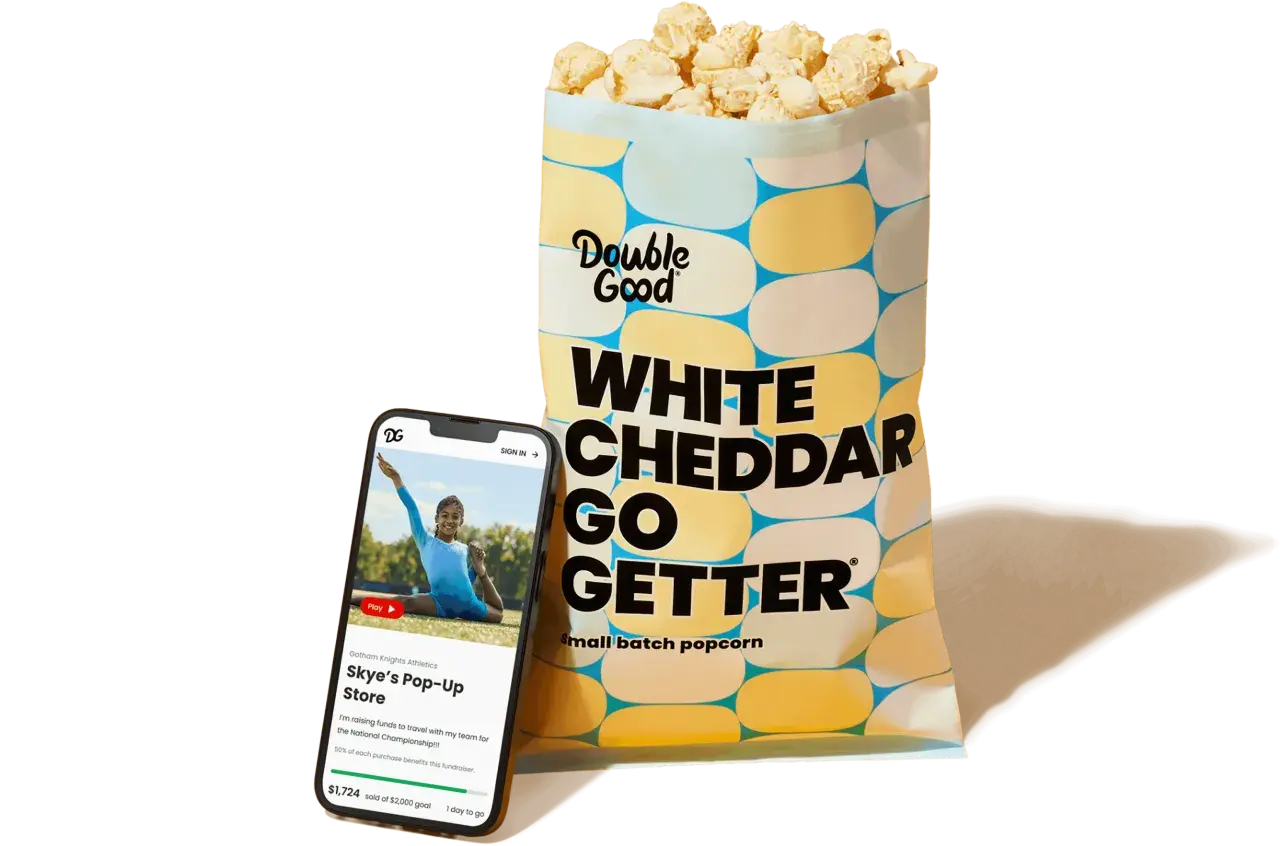
Virtual fundraisers like Double Good work because they remove friction: supporters buy one product, the order ships directly, and the campaign feels easy enough to share from a phone. The catch is that Double Good is product-based fundraising, so many of the best alternatives are not direct clones; they are donation-first tools for peer-to-peer pages, events, recurring gifts, or fuller nonprofit software. I would compare them by asking what kind of campaign you are really trying to run, not just which platform looks cheapest.
What matters most when choosing a fundraising platform
- Double Good is built around a short, mobile-friendly product sale, not a broad nonprofit CRM.
- The closest alternatives usually fall into donation pages, peer-to-peer fundraising, event software, or all-in-one nonprofit tools.
- Zeffy is the clearest zero-fee option for nonprofits that want to keep every dollar.
- Givebutter and Donorbox are stronger when you want flexible fundraising pages, peer-to-peer tools, and recurring gifts.
- GoFundMe Pro, OneCause, and Bloomerang make more sense when branding, events, or donor data matter more than product sales.
- The right choice depends on whether you need to sell, collect donations, mobilize supporters, or run events.
What Double Good actually does differently
Double Good is not just another fundraising app. It is a tightly packaged model built around selling gourmet popcorn online in the U.S., keeping half of what is sold, and shipping directly to supporters. That structure matters because it turns fundraising into a simple buying decision instead of a long donor journey.
I think that simplicity is the real reason it works. Supporters do not have to navigate an auction, fill out a complex form, or understand a nonprofit’s back-end process. They see a product, place an order, and the logistics disappear into the system. For school groups, youth teams, and clubs, that is often the fastest path to participation.
But the same simplicity also creates a limit. If your organization needs recurring gifts, donor segmentation, event registration, or CRM-style reporting, Double Good is no longer the right mental model. At that point, you are comparing a product fundraiser with actual nonprofit software, and the tradeoffs change fast. That is why the alternatives only make sense if you know what kind of fundraising job they are meant to do.

The closest alternatives by fundraising model
When people ask for virtual fundraisers like Double Good, they usually want a tool that feels easy, mobile-first, and shareable. The honest answer is that most alternatives are closer in workflow than in product type. Some are better at zero-fee giving, some at peer-to-peer campaigns, and some at events. I would not treat them as interchangeable.
| Platform or model | Closest fit | Why it stands out | Main tradeoff |
|---|---|---|---|
| Double Good | Short product-based pop-up fundraiser | Simple mobile sales, direct shipping, and a clean product ask | Not built for donor management or broader nonprofit operations |
| Zeffy | Donation-first nonprofit fundraising | No platform fees and no credit card fees for nonprofits | Best for donations, not product sales |
| Givebutter | Flexible all-in-one fundraising | Peer-to-peer, events, donation pages, and a modern donor experience | Most useful when you lean into its full feature set, not just one page |
| Donorbox | Donation pages and recurring giving | Simple setup, peer-to-peer options, 50+ currencies, 15 languages, and 22+ payment methods | Lower fees and advanced tools sit behind paid tiers |
| GoFundMe Pro | Branded nonprofit campaigns | Campaign Studio, giving cart, and peer-to-peer campaign tools | More of a guided platform than a quick self-serve storefront |
| OneCause | Event-heavy fundraising | Ticketing, tables, sponsorships, auctions, SMS, and campaign keywords | Too heavy for simple product drives |
| Bloomerang | Fundraising plus CRM | Donation forms, peer-to-peer tools, text donations, and donor insights | Better for operations than for one-off campaigns |
The pattern is clear: Double Good wins when you want a product sale, while these other platforms win when you want donor capture, event management, or supporter-led growth. If your team keeps confusing those two jobs, the platform choice will feel harder than it really is.
How to choose the right platform for your campaign
The easiest way to narrow the field is to start with the campaign behavior you need, not the software category you think you want. I use four questions most often: Are people buying something or donating? Will supporters share the campaign on their own? Do you need recurring revenue? And will the fundraiser live inside an event?
If the ask is a product sale
Choose a product-led fundraiser when the item itself helps drive participation. That is why popcorn, cookies, discount cards, and similar offers still work: people understand the exchange immediately. If you need a short campaign window and you do not want to manage inventory, Double Good is strong because the logistics are already solved.
If supporters need to share the campaign
Peer-to-peer fundraising is a different mechanic. In peer-to-peer, each supporter gets a personal page and raises money through their own network. That works especially well for schools, team challenges, memorial campaigns, and community drives. Givebutter, Donorbox, and GoFundMe Pro are all more natural fits here than a product sale platform.
If recurring revenue matters
Recurring gifts are where nonprofit software starts to pull away from product fundraising. A recurring donor is not buying once; they are joining a relationship. If your goal is monthly support, donor tracking, and follow-up automation, I would look first at Donorbox, Bloomerang, or GoFundMe Pro instead of a one-time virtual sale.
Read Also: Volunteer Website Design - Get More Sign-Ups
If events drive the calendar
For galas, auctions, golf outings, ticketed dinners, and sponsorship-heavy campaigns, event tools matter more than product logistics. OneCause is particularly strong here because it combines ticketing, tables, auctions, fund-a-need appeals, and SMS into one workflow. That is overkill for a simple drive, but exactly right for a revenue event that needs many moving parts.
Once you know the campaign mechanic, the platform choice becomes much more obvious. The next step is matching the tool to the type of organization, because a school group, a small nonprofit, and a national chapter network rarely need the same setup.
Best-fit platforms for common nonprofit scenarios
In practice, I usually sort teams by operating style. That saves time and prevents overbuying software they will never fully use.
| Scenario | Best fit | Why it works | What to watch |
|---|---|---|---|
| Youth teams, bands, and school groups | Double Good or a simple peer-to-peer tool | Fast setup, easy sharing, low admin burden, and a clear ask | If you need donor records or monthly giving, you will outgrow a product-only model |
| Small nonprofits with tight budgets | Zeffy or Givebutter | Low or zero platform fees and enough tools to launch quickly | Confirm how fees are handled and whether donors are prompted to cover them |
| Growing nonprofits that need repeatable campaigns | Donorbox or GoFundMe Pro | Strong donation pages, recurring gifts, and more control over the donor journey | Advanced customization can push you into paid tiers |
| Organizations running galas or auctions | OneCause | Built for ticketing, sponsorships, tables, and live event workflows | It is more platform than plug-and-play fundraiser |
| Teams that want fundraising and donor data together | Bloomerang | Pairs fundraising tools with CRM-style donor insights and record management | Better for operations-heavy teams than for short campaign bursts |
What stands out to me here is that the “best” platform is usually the one that matches your team’s workload, not the one with the longest feature list. If your staff is small, simplicity beats ambition. If your fundraising plan is more mature, integration and donor intelligence start to matter a lot more.
Mistakes that quietly reduce online fundraising results
- Choosing by fee alone. A cheaper platform can still cost more if the donor experience is awkward and conversion falls.
- Mixing product sales and donation asks in one campaign. That confuses supporters unless the campaign is designed very carefully.
- Ignoring mobile flow. Most supporters will open the campaign on a phone, so a clunky checkout path hurts results fast.
- Launching without share assets. Supporters need ready-made text, images, and a short explanation of why the campaign matters.
- Skipping follow-up. The first gift is only the beginning if you want repeat support or future campaign participation.
- Buying more software than the team can operate. A feature-rich platform is a bad deal if no one has time to use half of it.
I have seen teams save a few dollars on platform costs and lose far more because the campaign felt confusing or too busy. The donor experience usually matters more than the fee line, especially when the audience is donating from a phone in under a minute.
A fast way to narrow the field without overbuying software
If I were making the decision from scratch, I would use a simple rule. Choose the tool that matches the campaign behavior first, then compare fees, then compare reporting. That order keeps you from forcing the wrong platform into the wrong job.
- If you need a product-driven, short-term, mobile-friendly sale, stay close to the Double Good model.
- If you need to keep costs near zero and your campaign is donation-first, start with Zeffy or Givebutter.
- If you need recurring giving, donor history, and a stronger nonprofit software backbone, look at Donorbox or Bloomerang.
- If you need branded storytelling and supporter-led campaigns, GoFundMe Pro is worth a look.
- If events and auctions drive your revenue, OneCause fits better than a simple online donation tool.
The real decision is not whether a platform is “like Double Good.” It is whether it helps your supporters act quickly, keeps your staff from drowning in admin, and produces the kind of fundraising outcome your mission actually needs. When those three things line up, the technology fades into the background and the campaign starts doing its job.
