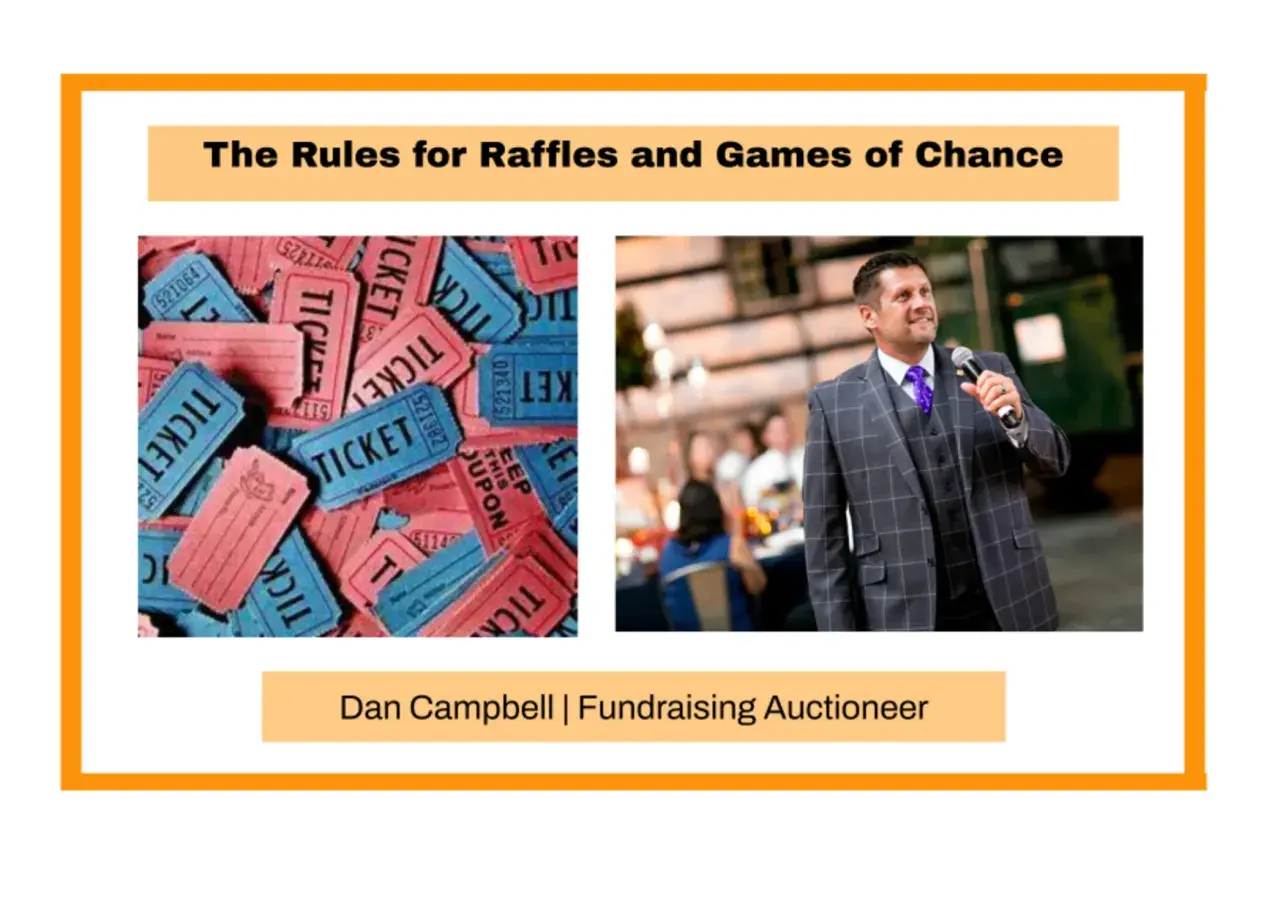
fundraising raffles work best when they are simple for supporters and clean for the organization: a clear prize, a fair drawing, and rules people can trust. The tricky part is that these events sit between community engagement, gaming rules, and tax reporting, so good results depend on more than selling tickets. In this article, I walk through what makes the model effective, where the legal and tax traps are in the United States, and how to place a raffle beside a silent or live auction without weakening either one.
What matters most before you plan one
- Raffles work best when the barrier to entry is low and the prize feels worth the ask.
- State rules vary widely, and some places require registration, permits, or limits on online sales.
- Federal reporting can apply to larger prizes, so ticket value and prize value both matter.
- Clear rules, visible drawings, and tight cash handling do more for trust than flashy promotion.
- Raffles often pair well with auctions, but they are not interchangeable tools.
Why raffles still work at community events
I like raffles when an event needs broad participation instead of a few expensive bids. A ticket is a small decision, which means more people can take part without committing to a major spend. That makes raffles especially useful for schools, faith groups, neighborhood nonprofits, and gala-style events where the crowd is mixed and not everyone is ready to bid aggressively.
The economics are straightforward. A well-chosen prize creates anticipation, while the ticket price gives you a scalable way to raise money from many supporters at once. In practical terms, I often see ticket prices land in the $5 to $25 range for community events, with bundle pricing such as 5 for $40 or 10 for $75 when the prize justifies it. The bundle matters because it nudges average order value upward without making the ask feel rigid.
Raffles also play well with event psychology. People who might skip an auction item will still buy a ticket if the prize is easy to understand and the cause feels close to home. That is why a raffle is usually strongest when the story is simple, the prize is visible, and the organization can explain exactly where the money goes. Once that foundation is clear, the next question is whether the structure is legally and financially sound.
The legal and tax rules I would check first
This is the part many groups underestimate. In the United States, raffle rules are not uniform, and in some states they are heavily regulated or limited. I would always check whether the organization needs a permit or registration before selling a single ticket, whether online ticket sales are allowed, and whether the event has to be run by a qualified nonprofit or by an organization with a minimum operating history.
Federal reporting also matters. As a rule of thumb, if a winner’s prize minus the wager exceeds $5,000 and is at least 300 times the wager, federal withholding of 24% generally applies and a Form W-2G is required. That threshold can matter fast if the prize is cash, a travel package, or another item with substantial fair market value. For noncash prizes, I would treat valuation carefully, because a donated car or trip is still prize value for reporting purposes.
There is another point that often surprises boards and event chairs: a raffle ticket purchase is generally not a charitable deduction, because the buyer is paying for a chance to win something. Auctions are different. At a charity auction, the deductible portion is usually only the amount paid above fair market value, and only when the buyer can show they understood the item’s value. That difference sounds technical, but it affects how you describe the event to donors and how you frame receipts.
I also watch the state-level constraints on how proceeds can be used. Some states require detailed reporting, some limit what can be paid out of raffle revenue, and some restrict the use of certain formats entirely. If the organization is trying to keep the event simple, the compliance piece should be planned first, not patched in after tickets are already moving. Once that is settled, the format itself becomes much easier to choose.
Which raffle format fits your crowd
There is no single raffle model that works everywhere. The best version depends on the audience, the size of the event, and how much administrative weight the team can carry. I usually think in terms of four common formats: a prize raffle, a 50/50 raffle, a bundled ticket model, and a sponsored experience raffle.
| Format | Best for | Main strength | Main limitation |
|---|---|---|---|
| Prize raffle | Events with a donated item or sponsored prize | Easy to explain and easy to promote | Revenue depends on how attractive the prize is |
| 50/50 raffle | High-foot-traffic events and recurring gatherings | Simple structure and strong perceived value | Can feel less mission-specific if the story is weak |
| Bundle ticket raffle | Supporters who respond well to volume pricing | Lifts average sale without adding complexity | Too-large bundles can reduce participation |
| Experience raffle | Donor bases that respond to premium or emotional prizes | Can command higher ticket prices | Requires better storytelling and prize sourcing |
If your state allows it, a digital or hybrid ticket flow can extend reach beyond the room, but I would still treat the setup as a compliance decision, not just a convenience feature. The platform matters less than the clarity of the rules, the way payments are tracked, and whether the winner selection can be explained without confusion. From there, the real operational work begins.
How to run the ticket sale and drawing cleanly
The mechanics should feel boring in the best possible way. I want every ticket sale, every payment, and every entry number to be easy to reconcile later. That starts with a written rule set that covers the ticket price, the drawing time, the prize description, eligibility limits, refund policy, and what happens if the winner cannot be reached.
- Set the ticket price and sales window before promotion starts.
- Write the rules in plain English and keep them visible at the event and online.
- Assign one person to oversee sales and another to verify the count.
- Use numbered tickets or a clearly auditable digital entry log.
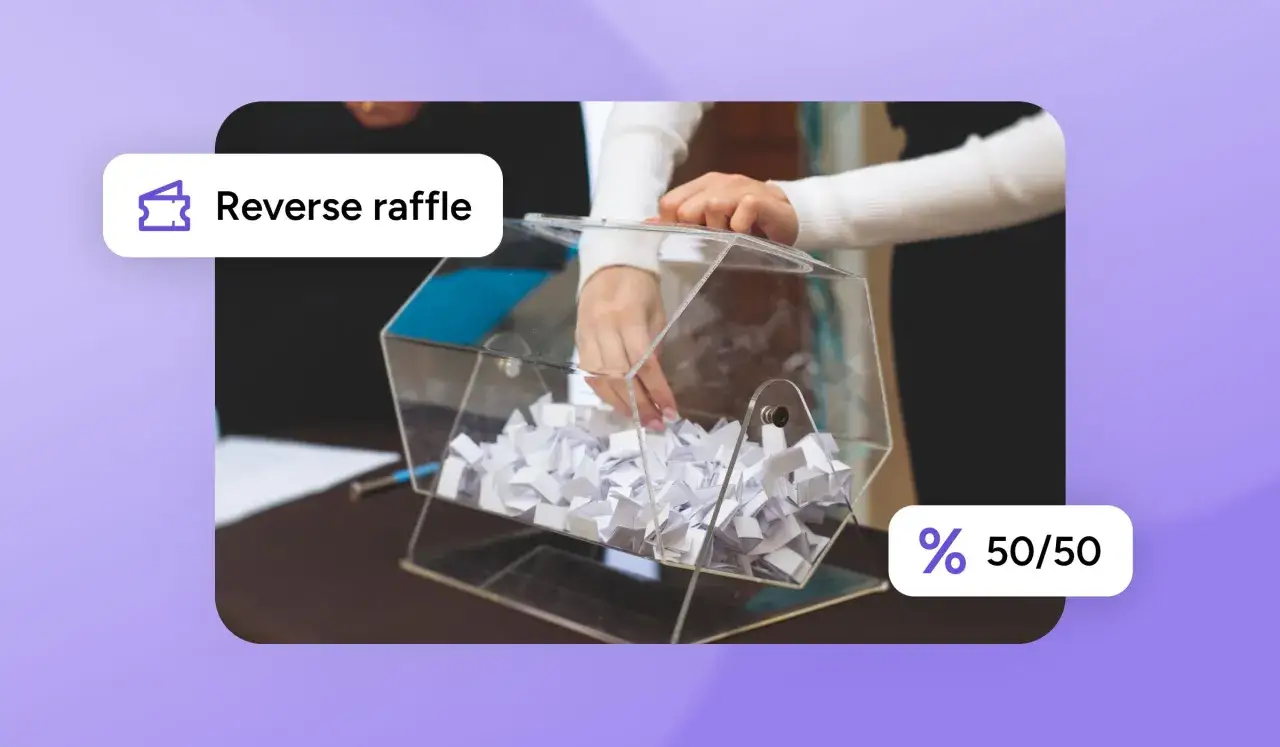
- Hold the drawing in public, with a witness and a clear selection method.
- Record the winner, prize details, and any tax paperwork immediately.
I also recommend one small habit that saves a lot of pain later: separate the people handling cash from the people handling the drawing. It is a simple control, but it reduces disputes and makes the fundraiser look professional. If the prize is high-value, I would also prewrite the winner announcement and tax instructions so the organization is not improvising under pressure.
Transparency matters even when the crowd is friendly. A visible bowl, a sealed container, or a verified digital random draw is enough in many cases, but the key is consistency. If supporters cannot tell how the winner was chosen, they will remember that longer than they remember the prize itself. That is why the comparison with auctions is worth making explicitly.
How a raffle compares with silent and live auctions
Raffles and auctions both raise money at events, but they solve different problems. A raffle creates a low-friction entry point, while an auction rewards attention, enthusiasm, and higher spending from a smaller group. When I’m planning an event, I usually think about which behavior I want to encourage before I decide which tool deserves the spotlight.
| Tool | Best use case | Revenue pattern | Staffing load | Donor experience |
|---|---|---|---|---|
| Raffle | Broad participation and impulse-friendly giving | Many smaller purchases | Moderate | Fast, simple, and low pressure |
| Silent auction | Guests who like browsing and comparing items | Mixed bids across multiple items | Higher, especially with item management | Engaging, but more time-intensive |
| Live auction | Rooms with strong donor energy and a skilled auctioneer | Fewer transactions, often larger ones | High | Energetic and theatrical, but less accessible |
A raffle is usually the better choice when the audience is large, diverse, or not deeply familiar with the organization. A live auction is better when the room is concentrated, wealthy, and ready to compete. Silent auctions sit in the middle, which is why they often pair well with raffles rather than replacing them. In fact, one of the cleanest event strategies I’ve seen is to use a raffle for reach and an auction for depth.
If I were choosing between them, I would ask one simple question: do I need lots of small yeses, or a few larger yeses? That answer usually tells me where the fundraiser should lean. From there, the final step is not creativity but discipline.
The launch checklist I use before opening sales
Before I let the first ticket go out, I want six things settled: the legal permission to run the event, the exact ticket price, the prize description, the drawing method, the reporting plan, and the person who owns reconciliation. If even one of those is vague, the event becomes harder to manage than it needs to be.
- Confirm that the raffle is allowed in your state and that any filing deadlines are on the calendar.
- Make sure the prize has a documented value and a clear source.
- Decide whether bundled tickets make sense for your audience.
- Prepare the tax and winner-notification process before the drawing day.
- Train volunteers on the same script so the rules stay consistent.
- Plan the follow-up thank-you so the raffle feeds the donor relationship, not just the cash box.
The strongest raffles feel mission-driven rather than transactional. They give supporters an easy way to participate, they protect the organization from avoidable mistakes, and they can create a useful bridge between events and deeper giving. If I had to reduce the whole approach to one principle, it would be this: keep the mechanics simple, keep the compliance tight, and let the cause carry the message.