
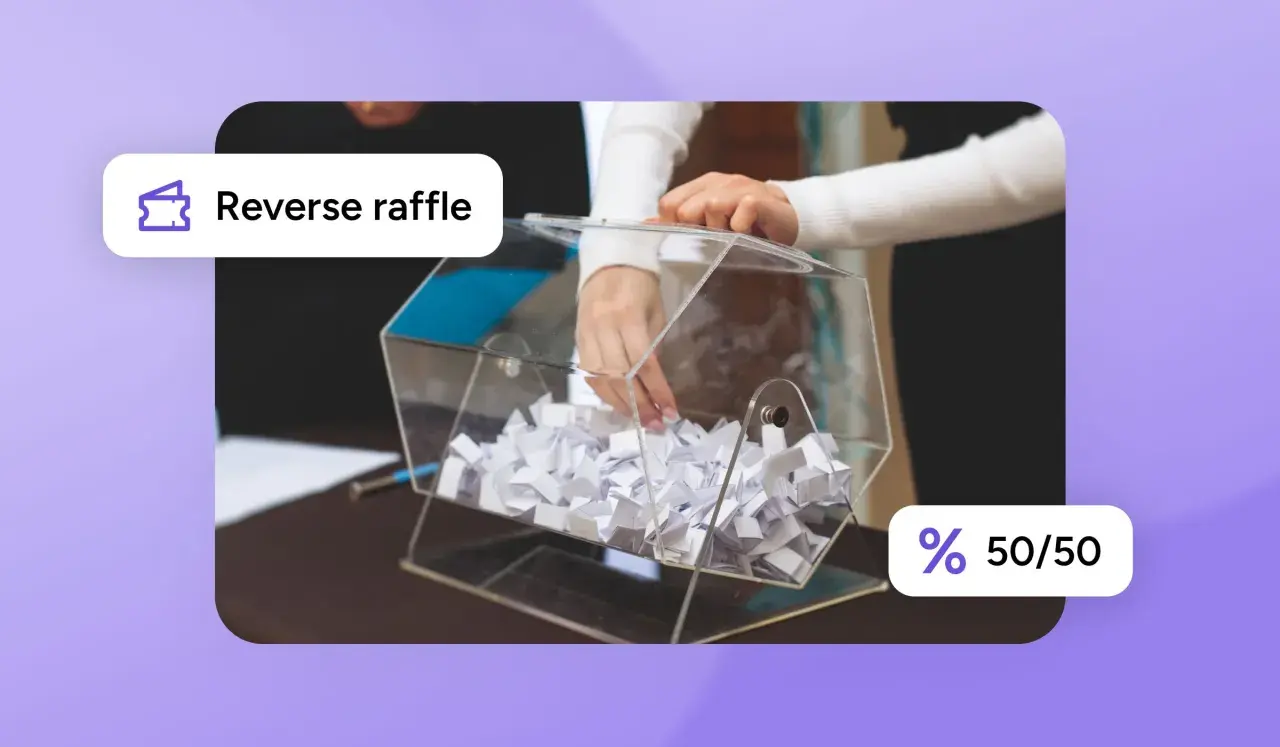
Community events often lean on raffle games because they are easy to explain, cheap to launch, and friendly to casual donors. Used well, they can turn a dinner, school fair, benefit night, or auction into something people actively want to support. The trick is to keep the prize structure simple, the rules transparent, and the compliance work done before the first ticket is sold.
What matters most before you build a prize drawing
- Drawings work best when the audience is broad and the prize feels worth the ticket price.
- In the U.S., state gaming rules and federal tax reporting can affect how you sell tickets and pay winners.
- Ticket buyers generally cannot deduct the ticket cost as a charitable contribution.
- Auctions raise money differently, so they reward different items, audiences, and volunteer setups.
- The cleanest events keep the process visible, numbered, and easy to trust.
Why this format still works at community events
I like prize drawings for one simple reason: they lower the barrier to participation. A guest who would never raise a paddle in a live auction may happily spend $10 on a chance to win a donated basket, a weekend getaway, or a local experience.
That low-friction feel matters in community fundraising. You are not asking every attendee to make a large bid or sit through a long auction block. You are giving them a quick, understandable way to support the cause while still getting a little suspense in return.
Drawings also fit the rhythm of a busy event. Ticket sales can start at check-in, continue during dinner, and close at a clearly announced time. If the room is mixed, with some generous donors and some casual supporters, the drawing is often the most inclusive tool in the room. That said, it works best when the rest of the plan is equally disciplined, which brings me to the prize and pricing decisions.
How to choose prizes and ticket prices that actually move
The strongest prize is not always the most expensive one. In practice, I want something that feels desirable, has obvious value, and does not create a logistics headache. A donated local experience, a bundled gift package, or a sponsor-backed item often beats a random high-dollar product nobody asked for.
| Prize setup | Why it works | When I use it |
|---|---|---|
| One headline prize | Easy to explain and easy to market | Large mixed crowds where the ticket has to feel simple and compelling |
| Bundle of smaller prizes | More winners feels fairer and keeps interest high | Family events, school fundraisers, and neighborhood gatherings |
| Experience or service prize | No shipping or storage, and it often feels more personal | Local audiences that care about restaurants, travel, or community experiences |
| Gift card or prepaid value | Flexible and broadly attractive, but less story-driven | When donor relationships or event rules make a simple, versatile prize the safer choice |
A simple pricing test helps more than a fancy spreadsheet. If you sell 200 tickets at $10, the gross is $2,000. If the prize package is donated or costs $250 to assemble, the margin is strong. If the ticket price climbs to $25, the audience has to believe the prize is unusually good or tied closely to the mission.
For smaller neighborhood events, I usually see $5 or $10 tickets move faster than $25 ones. For gala-style crowds, a premium drawing ticket can work, but only when the prize feels special enough to justify the ask. Once the economics make sense, the next filter is compliance, because the legal details are where many otherwise good fundraisers get clumsy.
What I check before selling a single ticket in the U.S.
State law comes first. Most raffle rules are controlled locally, and the details can change a lot from one state to another. Before I print tickets, I want to know whether the organization needs a license, a registration, a special account for proceeds, or a limit on who can sell tickets.
The IRS adds two practical tax issues. First, reportable prizes can trigger Form W-2G when the prize reaches the federal threshold for gambling winnings, which for raffle prizes is generally $600 or more and at least 300 times the wager. Second, ticket purchases are not charitable deductions, even when the event supports a good cause. That point surprises people every year, so I usually state it plainly in the event materials.If the organization runs gaming regularly, there is another layer to watch: those proceeds may be treated as unrelated business taxable income unless an exception applies. That does not mean a community drawing is off-limits; it means the format should be intentional, limited, and documented.
Auctions sit in a different tax lane. At a charity auction, buyers may be able to deduct the amount paid above fair market value if the value was clear enough for them to know what they were doing. Fair market value, or FMV, is the price a normal buyer would pay for the item outside the fundraiser. That difference is one reason auction item descriptions need to be more careful than a simple prize blurb.
When the legal side is handled early, the event itself becomes much easier to run.
How to run the drawing without friction
The best live drawing feels almost boring in the right way. Everyone knows what the cut-off is, the ticket count matches the money collected, and the winner can be verified without the room wondering whether anything was improvised.
- Number the tickets or use a digital system that creates a clear paper trail.
- Announce the cut-off time, the prize list, and whether winners must be present.
- Keep one person selling, one person reconciling the money, and one person witnessing the draw.
- Use a visible method for the selection, such as a ticket drum or a trusted randomizer projected on screen.
- Record the result immediately and have a backup plan if the winner cannot be reached or does not meet the stated rules.
Small details matter here. If the crowd cannot see the process, trust drops fast. If the rules are vague, staff end up negotiating in public. And if the tickets are not reconciled, nobody can tell whether the fundraising total is real. Once that part is tight, the bigger strategic question is whether a drawing is even the best mechanism for the room you have.
Where a drawing beats an auction and where it does not
I treat drawings and auctions as different tools, not competing versions of the same idea. A drawing is built for breadth; an auction is built for intensity. That distinction is easy to miss, and it explains why some events raise more money by simplifying rather than adding more features.| Format | Best for | Revenue pattern | Weak spot |
|---|---|---|---|
| Prize drawing | Large or mixed crowds, modest ticket prices | Steady, participation-driven | Lower ceiling unless attendance is strong |
| Silent auction | Guests who like browsing and comparing items | Item-by-item bidding can climb quickly | Needs appealing packages and good tracking |
| Live auction | Smaller crowds with strong donor energy | Fast spikes on premium items | Requires pacing, a good auctioneer, and more rehearsal |
My rule of thumb is simple. If I want many people to participate with little hesitation, I lean on the drawing. If I have fewer guests but strong donors, I lean on auction items. If I have both, I use one strong drawing and a tightly curated auction instead of trying to make every format louder at once. That keeps the room from feeling crowded and keeps volunteers from burning out.
This is also where event purpose matters. Mission-driven audiences often respond better to one or two well-chosen asks than to a wall of unrelated merchandise. A good prize or auction lot should feel connected to the community, not just donated because someone needed a quick offload.
Common mistakes that quietly cut into revenue and trust
- Choosing a prize that sounds exciting on paper but does not match the audience.
- Setting the ticket price so high that casual supporters opt out.
- Printing tickets before checking permit, registration, or reporting rules.
- Making the drawing process hard to follow or impossible to verify.
- Offering too many small prizes and diluting the main incentive.
- Leaving winners uncertain about claim windows, taxes, or identity checks.
- Advertising the cause well but explaining the mechanics poorly.
The pattern behind most of these mistakes is the same: the event tries to be clever when it should be clear. A drawing does not need a lot of flair to work; it needs a credible prize, a simple rule set, and enough promotion to turn attention into ticket sales. If you can get those three things right, the format becomes far more reliable.
That is why I usually recommend building the event from the attendee outward, not from the prize inward. Start with who will be in the room, what they can comfortably spend, and how much complexity your volunteer team can realistically handle.
A simple event formula that keeps the mission in focus
If I were designing a community fundraiser from scratch, I would keep the formula plain: one strong drawing, one or two auction items only if the audience can support them, and a short explanation of where the money goes. That combination is usually easier to sell than a crowded program with five ways to spend money and no obvious path to impact.
- Use one headline prize that feels worth the ticket.
- Keep the ticket price in the impulse range for your audience.
- Explain the benefit in one sentence, not one paragraph.
- Show the winner process publicly so people trust the result.
- Pair the drawing with a story, not just a sale.
When a fundraiser feels fair, simple, and visibly mission-led, people buy in faster and complain less. That is the version I trust: not the biggest, not the flashiest, just the one that respects the guest, protects the organization, and turns a small chance to win into real support for the work.
