
The essentials at a glance
- The format pairs reading goals with pledges from family, friends, or the wider community.
- Two weeks is usually the most workable length for a school or youth group event.
- Per-page, per-minute, and flat donations each make sense in different settings.
- Clear tracking matters more than elaborate prizes or complicated rules.
- The strongest results come when the money has a visible purpose, like books, literacy support, or a school library upgrade.
What this kind of fundraiser really does
I like this model because it is simple to explain and easy to defend. Students read books they would likely be reading anyway, supporters pledge money based on that reading, and the organization keeps the process tied to something educational instead of selling boxes or wrapping paper. That makes it a strong fit for elementary schools, PTAs, libraries, scouting groups, and neighborhood programs that want fundraising to feel constructive rather than transactional.
The other reason it works is trust. Donors usually respond better when they can see a direct link between the ask and the outcome: new books, a refreshed classroom library, a family literacy night, or support for children who do not have regular access to books at home. In other words, the event works best when the reading is the story and the fundraising is the result, not the other way around. Once that is clear, the next step is deciding how to launch it without creating extra work for staff or volunteers.

How I would set up the event from idea to kickoff
- Set one concrete goal. I would define the outcome before anything else: a new set of classroom books, a library refresh, author visit funding, or support for a literacy program. A vague goal like “raise awareness” is too soft to motivate donors.
- Choose a short event window. In most cases, I would keep the reading period to about one to two weeks. That is long enough for kids to settle into a rhythm, but short enough that excitement does not fade.
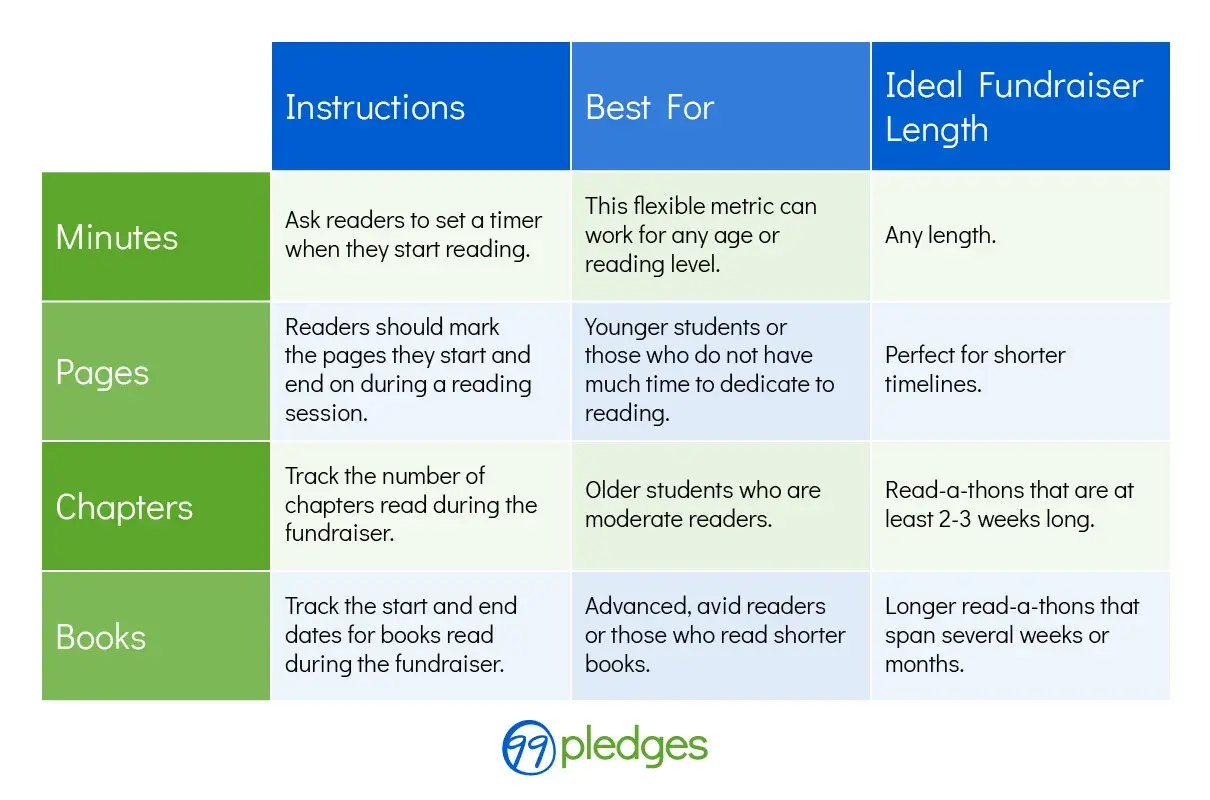
- Decide how progress will be tracked. Minutes, pages, chapters, or books all work, but I would pick just one main unit. Mixing too many units usually creates confusion for families and headaches for volunteers.
- Build the donation path first. If possible, I would use a mobile-friendly pledge page or QR code so families can give in seconds. Paper can work, but it adds sorting, reminders, and manual tallying later.
- Write the rules in plain English. Who can participate, what counts as reading, whether adults need to sign logs, and when pledges are due should all be obvious from the start.
- Plan the reminder rhythm. I would send a launch note, one mid-event update, and a final push near the deadline. More messages are not always better; clarity beats noise.
If I had to simplify the setup further, I would say this: pick the goal, pick the unit, make giving easy, and keep the timeline tight. Once that skeleton is in place, the real design choice becomes how donors should pledge.
Choosing the pledge model that fits your readers
The pledge model matters more than most organizers expect. It shapes how donors think, how students track their reading, and how predictable the final total will be. If I were launching the event in a mixed-age school, I would usually offer a simple hybrid: one option for flat gifts and one option for unit-based pledges. That gives casual donors an easy path while still letting enthusiastic supporters tie their gift to reading progress.
| Model | Best for | Why it works | Trade-off |
|---|---|---|---|
| Per page | Older students and confident readers | It rewards volume and can feel exciting for motivated readers | It needs careful tracking and can create uncertain totals |
| Per minute | Younger students or mixed-age groups | It is fairer when reading ability varies widely | Families need a clear way to log sessions accurately |
| Flat donation | Busy donors and simplified campaigns | It is the easiest option to understand and collect | It is less directly tied to reading output |
My rule of thumb is straightforward: use the model that creates the least friction for your audience. If your readers are very young, per-minute or flat gifts usually keep things fair. If your community likes a little friendly competition, per-page pledges can work well as long as everyone understands the math. The right model should support the reading, not distract from it, which is why motivation is the next piece I focus on.
Keeping readers motivated without making it all about prizes
I have seen more energy come from simple, well-timed encouragement than from expensive rewards. A bookmark, a class reading goal, a themed reading day, or a shared celebration can do more than a long list of prizes that only a few students ever reach. The goal is to make reading feel visible and socially supported, not to turn it into a race that discourages quieter or slower readers.
- Use themes that make the event feel special. Pajama day, flashlight reading, reading forts, and author-inspired dress-up days all create momentum without adding much cost.
- Reward participation, not just top performance. I would give recognition for consistency, effort, and class participation so every child has a realistic way to succeed.
- Make progress easy to see. A wall chart, digital thermometer, or classroom tracker helps children understand that their reading is moving the whole group toward a goal.
- Offer book choice wherever possible. Students are more likely to read when they can pick something they actually want to finish.
- Protect access and fairness. If some students read at home and others need school time, build in both options so the fundraiser does not favor only the most supported families.
The point is not to gamify reading into something artificial. It is to create enough energy that students want to keep going. When that part is working, the next challenge is making sure families and neighbors actually hear about the event and understand how to give.
How I would ask families and the community for support
Donation asks usually fail when they are too long, too vague, or too hard to act on. I would keep the message short and specific: what the event is, what the money supports, how long it runs, and exactly how someone can give. If people need to hunt for the donation link or decode the tracking rules, you lose momentum right there.
For the actual outreach, I would use three touchpoints. First, a kickoff message that explains the goal and shares the donation path. Second, a midpoint update that gives a real example of progress, such as how many minutes or books have already been logged. Third, a final reminder within the last 48 hours that makes the deadline impossible to miss. That rhythm is enough for most families without feeling spammy.
I also think specificity matters. “Support literacy” is fine, but “Help us add 40 new books to the school library” is better. If the event is funding a take-home book shelf, a reading celebration, or classroom sets for a grade level, say so. The clearer the outcome, the easier it is for donors to picture their money doing something useful. Once the event is over, though, the work is not finished; the closeout is what turns one campaign into a repeatable tradition.
What I would keep for the next round
If I were running this from scratch, I would treat the follow-through as part of the fundraiser, not an afterthought. Families remember whether they were thanked properly, whether the final results were shared, and whether the promised outcome actually showed up. A quick note with the total raised is good; a photo or short story showing what the money will do is much better.
I would also keep a short list of what worked and what did not. Did one reminder outperform three? Did paper logs create confusion? Did flat gifts raise more than per-page pledges for casual donors? Those details are small, but they matter because they tell you where the friction really lives. If the goal is social good, the strongest version of the event is the one that makes reading visible, giving simple, and the community impact easy to see.
That is why I would start with a simple structure, make the pledge path easy on mobile, and tie the outcome to something tangible the community can recognize. In practice, that is what turns a read-a-thon fundraiser into something people want to support again, because they can see both the reading culture and the benefit it creates.
