
Repeatable revenue matters more than a one-night spike
- Start with one recurring-giving offer, one seasonal appeal, and one community-facing campaign.
- Choose ideas that a tiny team can launch in 2 to 6 weeks, not months.
- Measure net revenue, donor retention, and staff hours together, not just gross dollars.
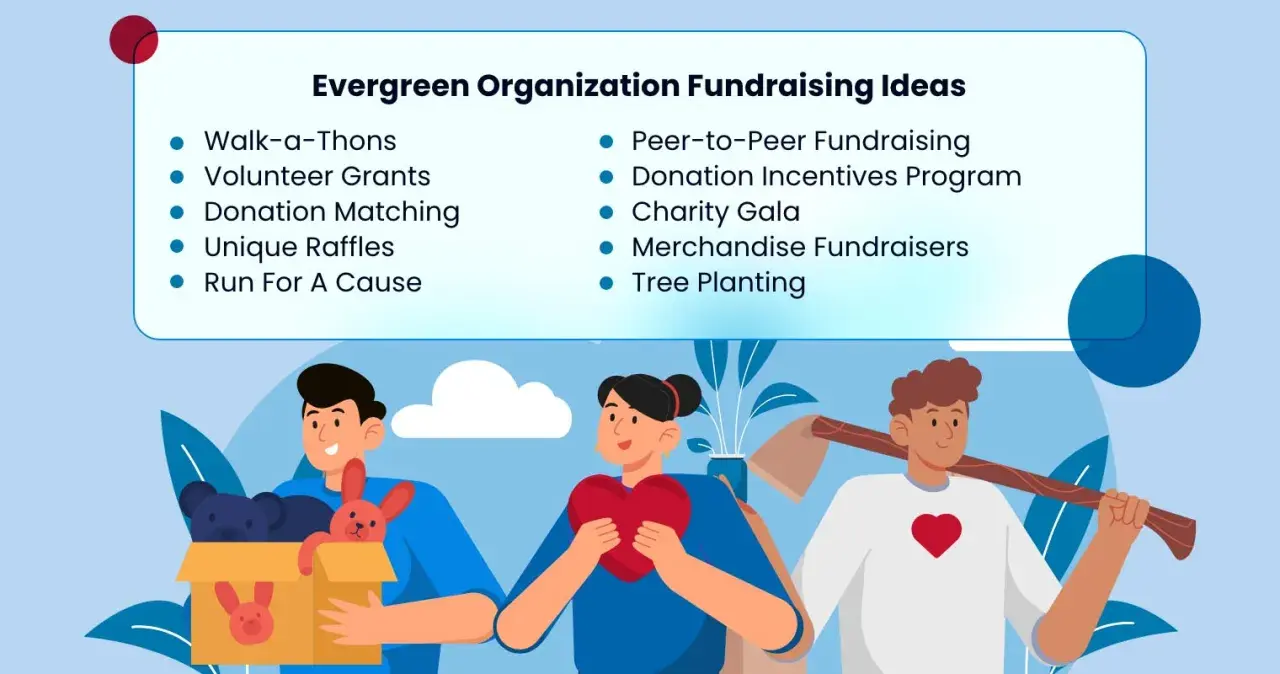
- Peer-to-peer asks, matching gifts, and local partnerships usually beat expensive gala-style events.
- Events should build your donor list and donor trust, not only your total on the night.
What small nonprofits actually need from fundraising
When I look at fundraising for a small organization, I do not start with glamour. I start with reliability. A small team usually has fewer staff hours, a thinner donor file, and less margin for a campaign that looks impressive but leaves almost nothing after costs. In practice, that means the best ideas are the ones that can be repeated, explained quickly, and tied directly to a clear mission outcome.
The sector data points in the same direction. AFP’s Fundraising Effectiveness Project reported that in 2025 total charitable dollars grew by 5.0% while donor counts fell by 3.6%, which tells me money is becoming more concentrated in fewer hands. Giving USA also reported $617 billion in U.S. charitable giving in 2025, but small organizations only benefit from that pool when they have a simple way to keep donors engaged and returning.
So the real question is not “What fundraiser sounds exciting?” It is “What fundraiser can we run, repeat, and improve without burning out the team?” Once that is clear, the best ideas become much easier to sort.
The low-cost ideas I would start with first
The ideas below are the ones I reach for first when a nonprofit needs traction without a large budget. The cost ranges are rough planning ranges, not fixed prices, but they are useful for deciding what fits a small operation.
| Idea | Best use | Typical upfront cost | Why it fits a small team |
|---|---|---|---|
| Monthly giving drive | Stable cash flow | $0 to $150 | Low friction, easy to repeat, and strong for retention |
| Peer-to-peer campaign | Expanding reach through supporters | $0 to $300 | Supporters recruit donors you would not reach alone |
| Matching gift challenge | Urgency and momentum | $0 to $200 | A clear deadline makes the ask easier to understand |
| Crowdfunding story campaign | One project or urgent need | $0 to $250 | Simple story, simple ask, quick to share |
| Local business sponsorship bundle | Community visibility | $0 to $500 | Creates mutual benefit instead of a one-way ask |
| Simple product sale or merch | Audience that likes identity-based support | $200 to $1,500 | Works best when you already have an audience and a visual brand |
That keeps the work focused and prevents the common mistake of trying to build every fundraiser into a full-scale event. From there, the next step is deciding which in-person activities are worth the effort.

Fundraising events that still make sense on a small budget
Most small organizations do not need a gala. They need an event that feels local, usable, and easy to explain. If an event can not plausibly net at least three times its direct costs, I usually treat it as donor cultivation rather than a true fundraising engine.
- Trivia or game night works because it is low-cost, social, and easy to sponsor. A local restaurant, brewery, or community space can often host it in exchange for visibility.
- Community workshop or class works when your organization has a skill, a mission-related topic, or a credible voice people want to learn from. Think budgeting, gardening, art, language support, or wellness topics tied to your cause.
- Micro-auction or bundle auction can be effective if you already have in-kind donations. The best auction items are not random prizes; they are experiences that match your community’s interests.
- Neighborhood breakfast, coffee hour, or lunch meetup works best as a donor relationship event with a clear ask. It is often cheaper than a formal dinner and easier for first-time supporters to attend.
A practical ticket range for a lean event is often $25 to $50 per person, provided fixed costs stay low and sponsors cover part of the room, food, or materials. The event should feel welcoming rather than expensive. If it starts to look and feel like a gala, the overhead can outrun the mission very quickly.
Events are useful when they create a next step, which is why I always tie them to recurring support and stewardship rather than treating them as one-off moments.
How to turn one-time gifts into recurring support
If I had to pick one tactic that matters more than most small teams expect, it would be monthly giving. A recurring donor gives you predictability, but the bigger advantage is psychological: the donor has already chosen to stay connected. That lowers the friction of future asks and makes your revenue less dependent on one big seasonal push.
Keep the offer simple. I like three giving levels, usually something like $10, $25, and $50 per month. People decide faster when you remove the guesswork. The labels matter too. “Join the sustaining circle,” “become a monthly partner,” or “power this work every month” often feels more human than a generic subscription-style ask.
What works best is the sequence around the ask. Thank the donor quickly, show a concrete result, then invite them into ongoing support while the mission is still fresh in their mind. You do not need a heavy automation stack to do this well. A clean thank-you email, a short impact story, and a clear monthly option can do a lot of the work.
I also recommend using recurring giving as the default follow-up after a successful one-time campaign. The idea is simple: once someone has said yes to your mission, make the next step obvious. That is how small nonprofits stop living campaign to campaign.
How to choose the right mix for your audience and capacity
The best idea on paper is useless if it does not fit your audience or your staff time. I usually narrow choices with three questions:
- Can one person realistically run this without creating a bottleneck?
- Will a supporter understand the impact in under 10 seconds?
- Does this idea create a path to a second gift, not only a first one?
If your donor base is local and relational, a small event, sponsorship drive, or community meal may outperform a polished digital campaign. If your audience is spread out, peer-to-peer fundraising or crowdfunding will usually make more sense than asking people to show up in person. If you serve a visual, urgent, or emotionally resonant mission, storytelling campaigns tend to travel well because people can explain them quickly to friends.
Capacity matters just as much. A campaign that depends on eight volunteer shifts is not a small campaign if you only have three reliable volunteers. In those cases, I would choose a lower-touch model and spend the saved time on follow-up, because follow-up is where the real revenue accumulates.
The goal is not to pick the most creative idea. The goal is to pick the idea that your actual team can execute cleanly and repeat with confidence.
Mistakes that make small campaigns weaker than they should be
I see the same mistakes again and again, and most of them are avoidable. They do not come from bad intentions. They come from trying to do too much, too fast, with too little structure.
- Chasing gross instead of net is the fastest way to fool yourself. A campaign that raises $8,000 but eats 120 staff hours is not a win if a simpler campaign could have brought in $6,000 with a fraction of the effort.
- Running an event without follow-up wastes the best part of the donor journey. The event should produce names, conversations, and second touches, not just receipts.
- Asking without a specific outcome makes supporters hesitate. “Help us do more” is weaker than a concrete use of funds and a visible result.
- Copying gala logic often leads to overproduced campaigns that small teams cannot sustain. Big nonprofits can afford to optimize for prestige; smaller ones usually cannot.
- Launching too many campaigns at once blurs the donor experience. People give faster when they understand which ask matters most right now.
If I had to reduce the lesson to one line, it would be this: clarity beats complexity. A plain campaign with a sharp story and solid follow-up will usually outperform a clever idea that nobody has time to manage.
Once those errors are out of the way, the final step is building a simple annual rhythm that keeps fundraising moving without exhausting the team.
A lean fundraising stack that keeps revenue moving all year
If I were starting from scratch, I would build a small, repeatable stack instead of a long list of disconnected tactics. First, I would run one monthly giving program and make it easy to join. Second, I would plan one seasonal appeal tied to a real need or milestone. Third, I would add one community-facing campaign, such as a peer-to-peer push, sponsor drive, or small local event.
- Use monthly giving for predictability.
- Use one story-led campaign to bring in new donors.
- Use one local event or partner effort to build community visibility.
- Use stewardship every month so first gifts have a path to second gifts.
