
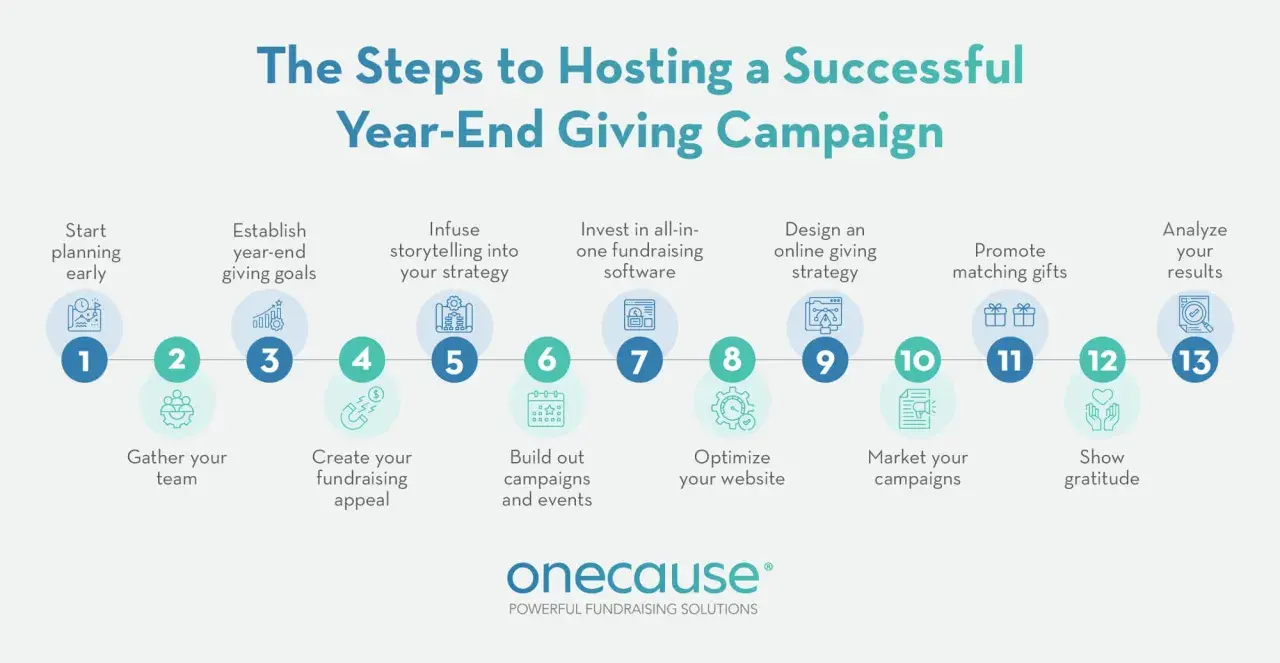
Year-end fundraising works best when it feels like a clear, timely invitation, not a last-minute scramble. The strongest campaigns connect a specific community need to a simple giving path, then follow through quickly after the gift lands. In this article, I break down what makes late-year fundraising effective in the United States, what donors are actually responding to in 2026, and how to build a campaign that is practical enough for a small team to run well.
What matters most before the year closes
- Late-year giving still matters, but donors in 2026 are cautious and selective, so vague appeals underperform.
- The best campaigns focus on one clear outcome, one audience segment, and one friction-light donation path.
- Timing matters because gifts generally count in the tax year they are actually paid.
- December spikes are real, but the strongest results usually come from preparation that starts well before the final week.
- January stewardship is not an afterthought, because retention starts the moment the gift is received.
Why late-year giving still deserves your attention
There is a reason so many nonprofit teams keep coming back to the final quarter. In the U.S., late-year giving still concentrates a meaningful share of donor attention, and the final days of December remain especially active. Recent Giving USA reporting also points to a broader shift that matters for planning: donors are still engaged, but their behavior is more spread out across the year, which means December is important without being the only moment that counts.
I would read that as a warning against lazy urgency. In 2026, donor caution is still real, and one national survey found that 25% of U.S. donors expect to reduce charitable giving this year while 48% expect no change. That does not mean people have stopped caring. It means they want clearer proof, stronger relevance, and less friction before they act. When I plan a year-end campaign, I assume the donor is already juggling holiday spending, family obligations, and a dozen other appeals. The message has to earn attention fast, and that leads directly to what donors need to hear.
What donors need to hear before they give
Most year-end appeals fail because they talk too much about the organization and not enough about the outcome. Donors usually do not need more background. They need a reason to believe their gift will do something concrete, soon, and credibly. I try to build every late-year message around four ideas: a specific need, a visible result, a sensible deadline, and an easy next step.
| Message angle | When it works best | Why it converts |
|---|---|---|
| One problem, one outcome | When the campaign supports a program with a clear finish line | People act faster when they can picture the result |
| Matching gift or challenge | When you can show momentum and social proof | It adds urgency without sounding desperate |
| Tax-year timing | When supporters are already considering year-end giving | It gives the donor a practical reason to act now |
| Recurring support | When you want to retain donors beyond December | It lowers the emotional weight of the first decision |
There is also a legal timing point worth remembering. The IRS says contributions must actually be paid before the close of the tax year to count for that year, which is why processing delays can matter more than they seem. For tax year 2026, some non-itemizers can also deduct limited cash gifts to certain qualified organizations, so it is worth explaining timing plainly without turning the appeal into a tax lecture. The point is not to overstate the deduction. The point is to remove uncertainty and help supporters understand why the deadline is real. Once that message is clear, the next question is how to organize the campaign so it does not collapse under its own deadlines.

Build a timeline that starts before December
The campaigns that look effortless in December usually started months earlier. If I were building this from scratch, I would not wait until the holiday rush to define the offer, write the copy, or test the donation page. I would treat the final quarter as an execution window, not a creative window.
| Timeframe | What I would do | Why it matters |
|---|---|---|
| September to early October | Review the donor list, confirm the campaign goal, and choose one clear story | Prevents the late-year message from becoming generic |
| Late October to mid-November | Draft email and social copy, secure board participation, and prepare receipts | Gives the team time to revise before attention gets crowded |
| Giving Tuesday week | Launch with proof, not hype, and make the ask easy to share | Captures early momentum without exhausting the audience |
| Mid-December | Send reminders, donor stories, and one strong impact update | Keeps the campaign visible without sounding repetitive |
| December 26 to 31 | Switch to short, direct, mobile-first asks and final-day follow-up | Matches how donors actually behave in the last stretch |
| January 1 to 15 | Thank quickly, segment donors, and send an early impact note | Turns a seasonal spike into the start of retention work |
One thing I have learned the hard way is that the calendar should serve the donor journey, not the internal meeting schedule. If the campaign only becomes visible when your team is already overloaded, it will feel rushed to donors too. A disciplined timeline creates room for the one thing that makes year-end fundraising work better than most teams expect: a clean, low-friction path to giving.
Make donating effortless on every device
Late-year donors are often giving in short bursts, on mobile, between other obligations. That means every extra click, field, or confusing choice costs you attention. The best donation page is not flashy. It is calm, fast, and obvious about what to do next.
- Keep the form short and ask only for information you truly need.
- Use one dominant call to action and remove competing navigation.
- Show suggested amounts that feel realistic for your donor base.
- Offer recurring gifts as an option, but do not bury the one-time gift path.
- Test the page on a phone, not just on a desktop browser.
- Check the receipt and confirmation flow before the campaign goes live.
I would also pay close attention to the moment after the gift is submitted. A delayed confirmation email, a broken receipt, or a vague thank-you page can undo the trust the donor just extended. Good infrastructure is invisible when it works and painfully visible when it does not. Once the giving path is clean, the next lift usually comes from choosing the right mix of channels for the final appeal.
Choose channels that match the donor’s attention span
Not every channel deserves equal weight in a year-end campaign. I use different channels for different jobs. Email is usually the workhorse. SMS is for opted-in supporters who are already close to the mission. Direct mail still has value for older or high-trust audiences. Social media helps with visibility and proof, but it rarely closes the loop by itself. Personal outreach is the right tool when the relationship is warm enough to support it.
| Channel | Best use | Main caution |
|---|---|---|
| Story-driven appeals, reminders, and donor segmentation | Too many sends without a clear narrative will blur together | |
| SMS | Final 24 to 48 hour nudges for engaged supporters | Only works when permission and trust are already established |
| Direct mail | Higher-trust asks, especially for established donors | Needs enough lead time to arrive before the tax deadline |
| Social media | Short proof points, live momentum, and community visibility | Should support the ask, not replace it |
| Personal calls or board outreach | Major donors and mid-level supporters with prior engagement | Requires preparation so the conversation stays specific |
In practice, the strongest campaigns do not rely on a single channel. They use a sequence. A donor sees the story, gets the reminder, and then encounters the final deadline in a format that fits the moment. That sequence only works when it is not cluttered by avoidable mistakes, which is where many otherwise solid campaigns lose money.
Avoid the mistakes that quietly weaken December results
The most expensive errors in late-year fundraising are usually boring, not dramatic. They are the small failures that make a campaign feel harder to understand or harder to complete. Sector data has also shown a worrying pattern in recent years: revenue can rise even while donor counts fall, which is one reason I pay so much attention to retention and not just the final dollar total.
- Starting too late and expecting one appeal to carry the whole month.
- Writing a vague ask that does not explain what the gift will change.
- Making the form harder than it needs to be with too many fields or distractions.
- Talking only to new donors and ignoring people who already trust the mission.
- Forgetting stewardship until after the team has moved on to January planning.
- Measuring success only by revenue instead of by donor quality and return rate.
If I had to choose one mistake to eliminate first, it would be the assumption that urgency can replace clarity. It cannot. Urgency without clarity feels noisy, and clarity without urgency feels easy to postpone. The strongest campaigns balance both, then keep working after the deadline passes, which is exactly where the final piece comes in.
Turn the January follow-up into next year’s base
The first month after December 31 is where a campaign either becomes a relationship or fades into a transaction. I would thank donors quickly, segment them by behavior, and send a short impact update while the campaign is still fresh in their minds. A first-time donor should hear something different from a recurring supporter, and an upgraded donor should feel that their larger commitment was noticed for the right reason.
For community-focused organizations, this is where the mission becomes tangible. A donor who gave because they cared about housing, food access, education, or neighborhood resilience should see what changed because of that gift. That is what makes year-end work durable. It is not just about finishing strong in December. It is about giving people a reason to stay with the work when the calendar resets.
If you want year-end fundraising to feel less like a scramble, start earlier than you think, keep the message concrete, and remove as much friction as possible. The final weeks of the year reward teams that are disciplined, donor-centered, and willing to treat every gift as the start of the next conversation.
