
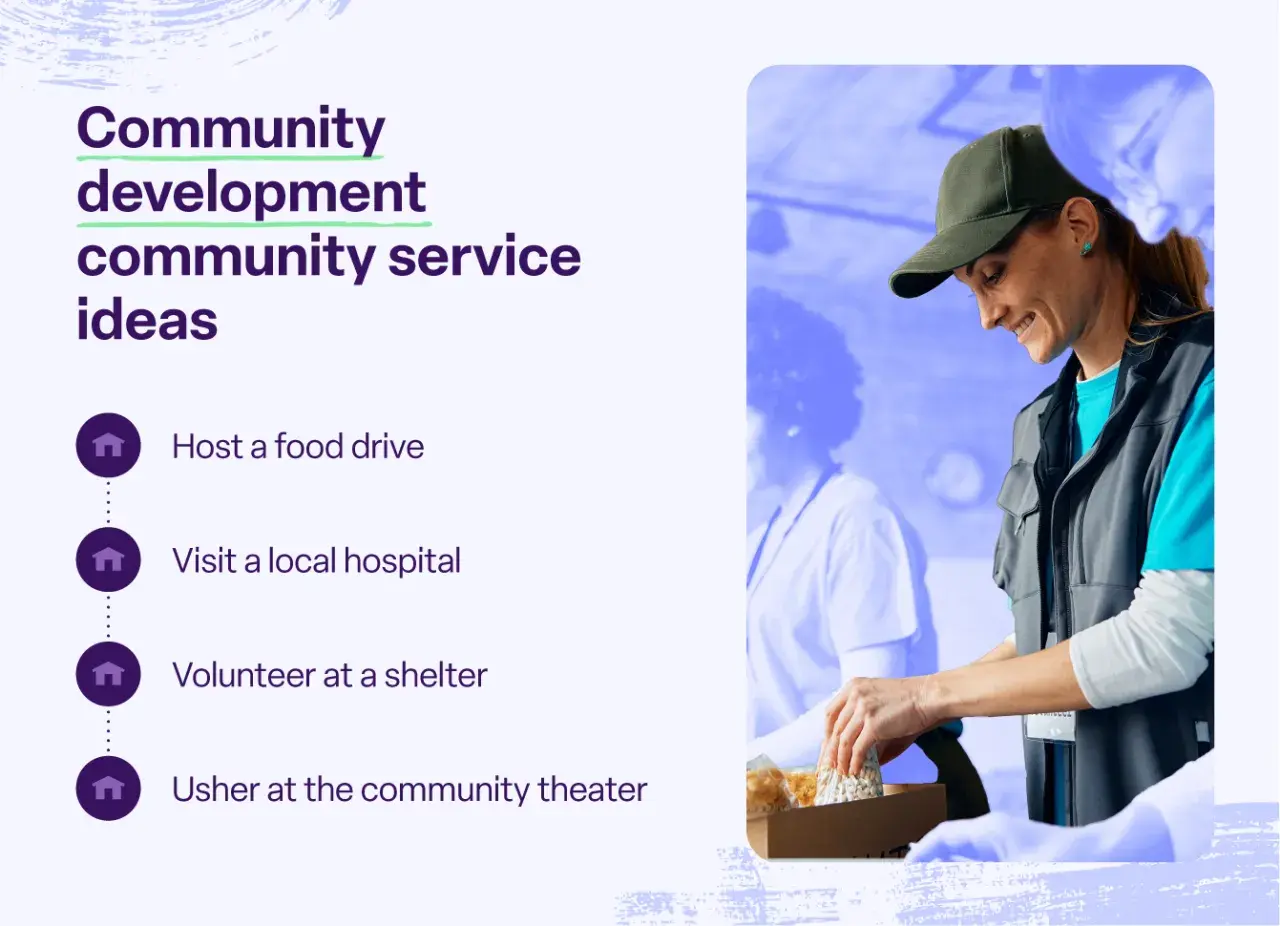
Volunteer work is most effective when it solves a real need and fits a real schedule. The strongest community service ideas are usually simple enough to start, specific enough to matter, and flexible enough to repeat. In 2026, that often means choosing work that supports food access, education, neighborhoods, seniors, or disaster response without creating extra burden for the organization behind it.
The best service projects are practical, repeatable, and matched to local needs
- Start with a real need. If the organization did not ask for the help, the project may look nice but deliver little value.
- Choose a format you can repeat. One shift helps; a recurring role usually changes more.
- Match the task to your constraints. Time, transport, physical effort, and emotional load all matter.
- Use both hands-on and remote options. Online service can be just as useful when distance or mobility is a factor.
- Avoid vague donation drives. Targeted support tends to be more efficient and less wasteful.
What makes a service project worth your time
I usually start with one test: would this still matter if nobody posted about it? If the answer is yes, you are probably looking at real community value rather than a feel-good activity with little follow-through.
The second test is simpler: can the organization use help again next week, not just today? The most effective volunteer efforts are usually the ones that are easy to coordinate, easy to explain, and realistic for the people doing them.| Signal | Why it matters | What it looks like in practice |
|---|---|---|
| Clear need | Prevents you from spending time on work nobody asked for | Food pantry sorting, tutoring, litter cleanup, meal prep |
| Low onboarding | More volunteers can actually show up and help | Park cleanup, donation packing, community event support |
| Repeatable | Consistency usually creates more impact than novelty | Weekly reading hour, monthly drive, regular shelter shifts |
| Measurable | It is easier to know whether the effort is working | Boxes packed, students served, blocks cleaned, calls answered |
| Safe and realistic | Reduces burnout and keeps expectations honest | Tasks matched to age, mobility, schedule, and training |
Once those basics are clear, the actual ideas become much easier to judge, which is where the most useful examples come in.

Hands-on ideas that solve immediate needs
When people ask me for a starting point, I usually point them toward projects that are visible, local, and easy to explain in one sentence. They tend to be easier for first-time volunteers, and they give nonprofits support they can use right away.
Food and essentials
Food insecurity is one of the clearest places where volunteer hours translate into direct help.
- Sort and pack groceries at a food pantry. It is basic work, but it keeps shelves moving and inventory organized.
- Run a targeted food drive. Ask what the pantry actually needs instead of collecting random items that sit unused.
- Prepare hygiene kits, diapers, or winter supplies. Small items often make the biggest difference for families under pressure.
- Deliver meals or groceries to older adults. This combines logistics with human contact, which is often the real value.
Education and literacy
Education-focused service works best when it is consistent. A steady hour often matters more than a dramatic one-time event.
- Read with children after school or at a library. Regular attention helps more than a polished presentation.
- Tutor in a subject you know well. One student can justify the effort if you show up reliably.
- Help organize books and school supplies. Clean systems save staff time and make the space more usable.
- Support adult literacy or ESL programs. These roles reward patience, clear communication, and a calm pace.
Public spaces and the environment
These projects are popular for a reason: they are visible, practical, and easy to coordinate with a group.
- Join a park or trail cleanup. The before-and-after effect is immediate, which helps volunteers stay engaged.
- Plant trees or help maintain a community garden. The payoff grows over time instead of disappearing after one shift.
- Remove litter from sidewalks, riverbanks, or school grounds. Small cleanups can change how an area feels.
- Support neighborhood beautification or mural restoration. These projects can strengthen pride as well as appearance.
Read Also: What Are Service Projects? Your Guide to Real Impact
Crisis response and neighbor support
This category usually requires more structure, but it can matter enormously when a community is under stress.
- Help with blood drives. Organizing donor check-in or logistics may seem small, yet it supports a system that saves lives.
- Pack supplies for disaster relief. This is useful when agencies need fast, organized help rather than general goodwill.
- Assemble welcome kits for temporary housing. Basic items create dignity during a chaotic transition.
- Support a warming center or cooling center. In extreme weather, practical assistance can be the difference between comfort and risk.
If you want something less physical, the next set of options is often a better fit and is easier to sustain over time.
Flexible options when time or mobility is limited
Not every valuable volunteer role happens in person. Points of Light describes online volunteering as flexible, inclusive, and impactful because it removes barriers of location, mobility, and time, which is exactly why I recommend it to people who have good intentions but limited bandwidth.
The American Red Cross also lists remote roles such as support, translation, and digital advocacy. That matters because it shows remote service is not second-tier work; in the right organization, it is simply another way to deliver help.
| Remote option | Best for | Why it works |
|---|---|---|
| Virtual tutoring | People who like one-on-one support | Predictable schedule and visible progress |
| Translation or captioning | Bilingual volunteers or fast typists | High utility with no travel time |
| Grant research or writing | People with office or nonprofit experience | Helps organizations raise money and plan better |
| Digital advocacy | People comfortable online | Amplifies campaigns, events, and volunteer recruitment |
| Micro-volunteering | Very busy volunteers | Short tasks fit into 10- to 30-minute windows |
I like this lane because it lowers the friction that often keeps service from happening at all. If you can help from home once a week, that is often more useful than showing up once and disappearing.
How to match the work to your skills and schedule
The best fit is usually the one that respects your actual constraints instead of pretending they do not exist. I ask people to choose the hardest constraint first: time, transportation, physical effort, or emotional load.
| Your constraint | Better fit | Why it works |
|---|---|---|
| Only 1 to 2 hours a month | Micro-volunteering, donation sorting, online tasks | Low commitment keeps you consistent |
| No easy transportation | Remote roles or neighborhood-based projects | Travel does not become the reason you stop |
| You want to volunteer as a family | Park cleanups, food packing, supply drives | Simple tasks keep kids and adults engaged |
| You want to use professional skills | Design, IT, bookkeeping, grant writing | Skills-based service can create outsized value |
| You want a long-term role | Tutoring, mentoring, shelter support, volunteer coordination | Regular presence builds trust and better outcomes |
A few mistakes show up again and again: people pick a project because it sounds noble, not because the organization asked for it; they overcommit to one Saturday and never return; or they bring donations that were never requested. I would rather see a small, boring, repeatable role than a glamorous project that burns everyone out.
Before you commit, ask three simple questions: what is the exact task, who is supervising it, and what happens if I can only do this once a month? Those answers tell you far more than a polished flyer ever will. Once the fit is right, volunteering becomes easier to sustain and much more useful to the community.
A simple way to turn one volunteer day into lasting impact
If I were starting from scratch in the U.S., I would pick one organization, one specific task, and one repeat date. That small rule cuts through most of the noise and keeps the work grounded in what the nonprofit actually needs.
- Ask what task is most urgent this week, not what looks best on social media.
- Choose a role you can repeat at least once more, because consistency usually beats novelty.
- Measure outcomes in plain language: meals packed, books shelved, students tutored, blocks cleaned.
- Leave room to switch if the work is too physical, too emotional, or too disorganized for your schedule.
The strongest service habits are usually modest at the beginning. Once the work fits your life and the need is clear, volunteering stops feeling like an occasional obligation and starts becoming a reliable way to strengthen the community around you.
