
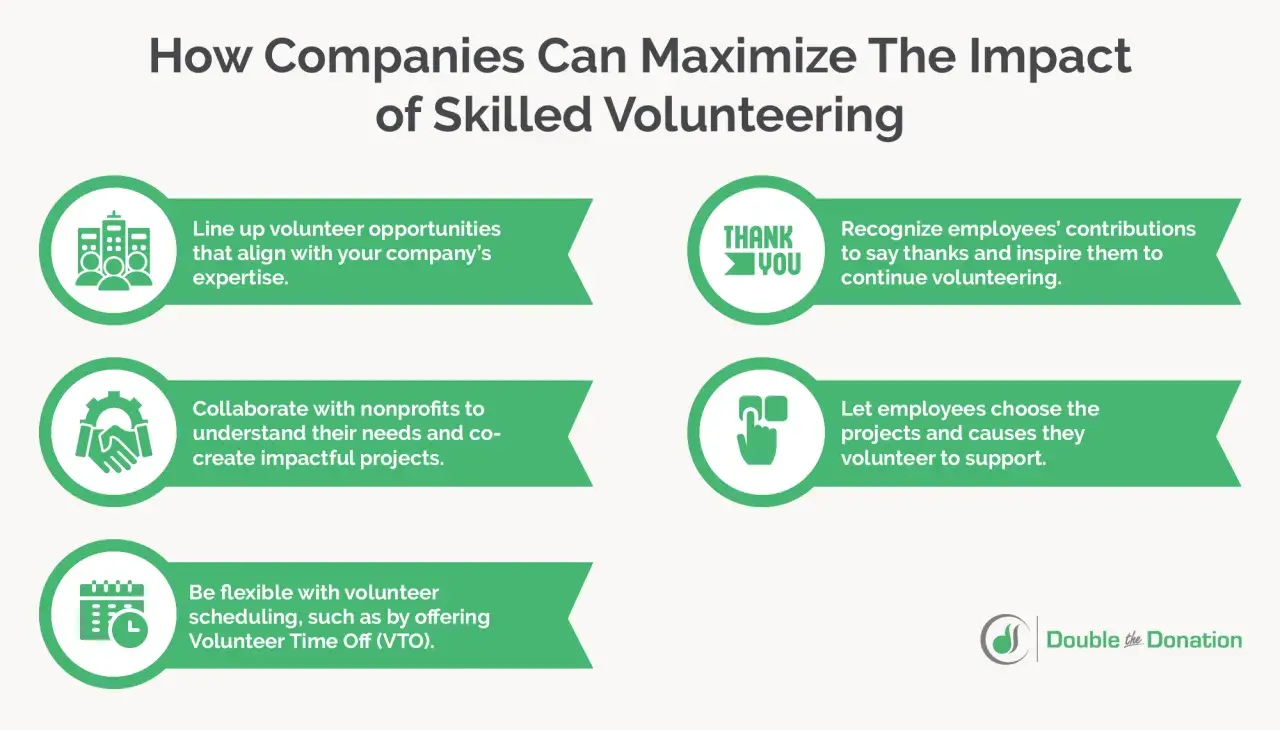
The essentials that make a volunteer effort work
- Start with a real local need, not with a random activity people happen to like.
- Match the format to the time, energy, and skills your volunteers actually have.
- Clear roles, supplies, safety, and follow-up matter as much as enthusiasm.
- Not every useful project is hands-on; remote and skills-based help can matter a lot.
- Track outputs and partner feedback, not just how busy the room felt.
What service projects usually include
Most community service projects fall into four buckets: direct service, indirect service, advocacy, and skills-based support. I like this split because it turns a vague idea into a planning decision, and planning is where good intentions become useful work.| Type | What it looks like | Best for | Main limitation |
|---|---|---|---|
| Direct service | Serving meals, tutoring, park cleanups, shelter support, mentoring | Groups that want visible, hands-on work | Usually needs training and supervision |
| Indirect service | Sorting donations, packing kits, collecting supplies, planting trees | One-day events and larger teams | Easy to overvalue quantity over need |
| Advocacy | Awareness campaigns, voter education, letter writing, public education | Issues that need attention and policy pressure | Results are slower and harder to measure |
| Skills-based support | Bookkeeping, design, IT help, legal advice, grant research | Volunteers with professional expertise | Must be scoped tightly so it stays useful |
Most groups get better results when they combine categories instead of forcing every helper into the same task. A pantry drive, for example, works best when one team handles collection, another sorts, and a third follows up with the partner organization. Once you know the format, the next question is whether the project actually fits the community need and the volunteer pool.
Why the right fit matters more than headcount
According to national survey data from AmeriCorps and the U.S. Census Bureau, 75.7 million Americans formally volunteered through an organization between September 2022 and September 2023, contributing 4.99 billion hours worth $167.2 billion in economic value. That scale is impressive, but it does not mean every event works equally well. A dozen people doing the right task can outperform a crowd doing the wrong one.
- One-time volunteers do best when the task is simple, visible, and finishable in one shift.
- Recurring volunteers can handle mentoring, tutoring, and other relationship-based work.
- Skilled volunteers should be given outcomes, not errands, or their expertise gets wasted.
- Remote volunteers can help with research, translation, outreach calls, design, and admin.
I also pay attention to how the project feels to the people doing it. If the work is physically hard, emotionally heavy, or poorly explained, you will lose energy fast. If the task is clear and the partner need is obvious, people usually stay focused and come back. That is why design matters as much as recruitment.
How to design a project volunteers can finish well
I would build the project around six decisions, in this order.
- Name the outcome. Decide what should be true when the shift ends, such as 200 meals packed, a block cleaned, or a supply drive delivered.
- Confirm the partner’s need. Ask the nonprofit, school, or neighborhood group what will actually help them and what will create more work.
- Keep the scope small enough to finish. A service event is better when it ends with one clear win than when it starts three unfinished tasks.
- Assign roles before people arrive. Everyone should know where to go, what to bring, who leads, and what to do if they finish early.
- Remove avoidable friction. Think parking, weather, restrooms, gloves, waivers, food, transport, and accessibility. These details decide whether the day feels easy or chaotic.
- Plan the follow-up. Thank people, report the result, and tell volunteers what the next step is if they want to return.
My practical rule is simple: if the organizer cannot explain the project in one minute, the volunteers will probably spend the first 15 minutes figuring it out. For a small one-day effort, I usually think in terms of two to four weeks of lead time; for anything that depends on permits, donations, or multiple sites, I would plan longer and assume something will change.

The formats that work best for different volunteer groups
The same service idea can work beautifully for one audience and fail for another. I like to match the task to the group first, then adjust the task to the setting.
| Volunteer group | Good project format | Why it works | Avoid |
|---|---|---|---|
| Individuals or pairs | Phone outreach, pantry sorting, cleanup shifts, data entry | Low setup, easy supervision, easy to complete in a short block | Complex roles that depend on team coordination |
| Families | Park cleanups, card writing, kit assembly, donation drives | Simple tasks keep children and adults engaged at the same pace | Sensitive direct-service work with age restrictions |
| School clubs | Literacy kits, clothing drives, campus cleanups, awareness campaigns | Clear goals work well with limited meeting time and rotating members | Projects that depend on long training or adult-only access |
| Corporate teams | Painting, warehouse support, pro bono consulting, packing events | Teams can finish visible work quickly and document results internally | Tasks that look easy but require real technical knowledge |
| Remote volunteers | Translation, resume help, research, design, donor follow-up | Online work opens the door for people who cannot travel or stand for long periods | Anything that needs in-person observation or physical handling |
That last row matters more than it used to. Recent national data show that a meaningful share of formal volunteers served partly or completely online, so hybrid service is no longer a side note. The catch is that remote work only helps when the instructions are tight and the deliverable is specific. No matter which format you use, a few mistakes keep showing up again and again.
Common mistakes that quietly weaken the impact
- Starting with the activity instead of the need. A project should solve a real problem, not just give people something pleasant to do.
- Using volunteers as unpaid staff. If the task needs consistency, supervision, or accountability, it may be a staffing problem, not a volunteer one.
- Asking for too much in one shift. If volunteers leave exhausted and the partner still has cleanup work, the event was oversized.
- Giving vague instructions. “Help out” is not a task. People need a clear target, a deadline, and a point of contact.
- Ignoring accessibility. Transportation, mobility, language, child care, and physical effort all affect who can join.
- Measuring success by energy only. A lively room is nice; a useful result is better.
- Forgetting the partner after the event. The group that hosts the project should not have to repair the process afterward.
The most damaging mistake, in my view, is the vanity event: the one that photographs well but leaves the neighborhood, school, or nonprofit with little practical gain. If you want volunteers to trust the project, make the result visible to the partner first and the camera second. The way to avoid that trap is to measure more than attendance.
How to know whether the effort actually helped
Good volunteer programs measure outputs and outcomes. Outputs are the immediate things you can count, like 80 hygiene kits assembled or 12 bags of trash removed. Outcomes are the change those outputs create, like a pantry team finishing a backlog faster, a school gaining usable supplies, or a partner choosing to schedule the same group again.
| What to track | What it tells you | Simple example |
|---|---|---|
| Attendance | Whether recruitment worked | 22 volunteers checked in |
| Completion rate | Whether the plan was realistic | All kit boxes were packed before noon |
| Partner feedback | Whether the work was actually useful | The school asked for the same format next month |
| Volunteer return rate | Whether the experience felt worthwhile | More than half signed up again |
If I had to choose one leading indicator, I would pick repeat participation. It is not a perfect measure, but it usually tells you whether the experience was useful enough to earn a second shift. I also suggest one short debrief with the partner and one short reflection from volunteers. Ask what slowed the work down, what should change next time, and what surprised people in a good or bad way. That gives you a better read than a long report nobody will use. Once you have that feedback, the final step is deciding what to repeat and what to stop doing.
What I would repeat in the next volunteer cycle
If I were rebuilding a service program from scratch, I would keep the structure modest and repeatable. I would choose one community need, one clear task, one trained contact person, and one follow-up message after the event. That combination does more for long-term trust than a bigger but messier event ever will.
- Keep the instructions short enough that a first-time volunteer can start fast.
- Use a partner organization that can absorb the help without extra cleanup.
- Leave room for hybrid or remote participation when the task allows it.
- Close the loop with results so volunteers can see where their time went.
The best service efforts are not always the biggest ones. They are the ones a community can repeat, improve, and rely on when the next need shows up.
