
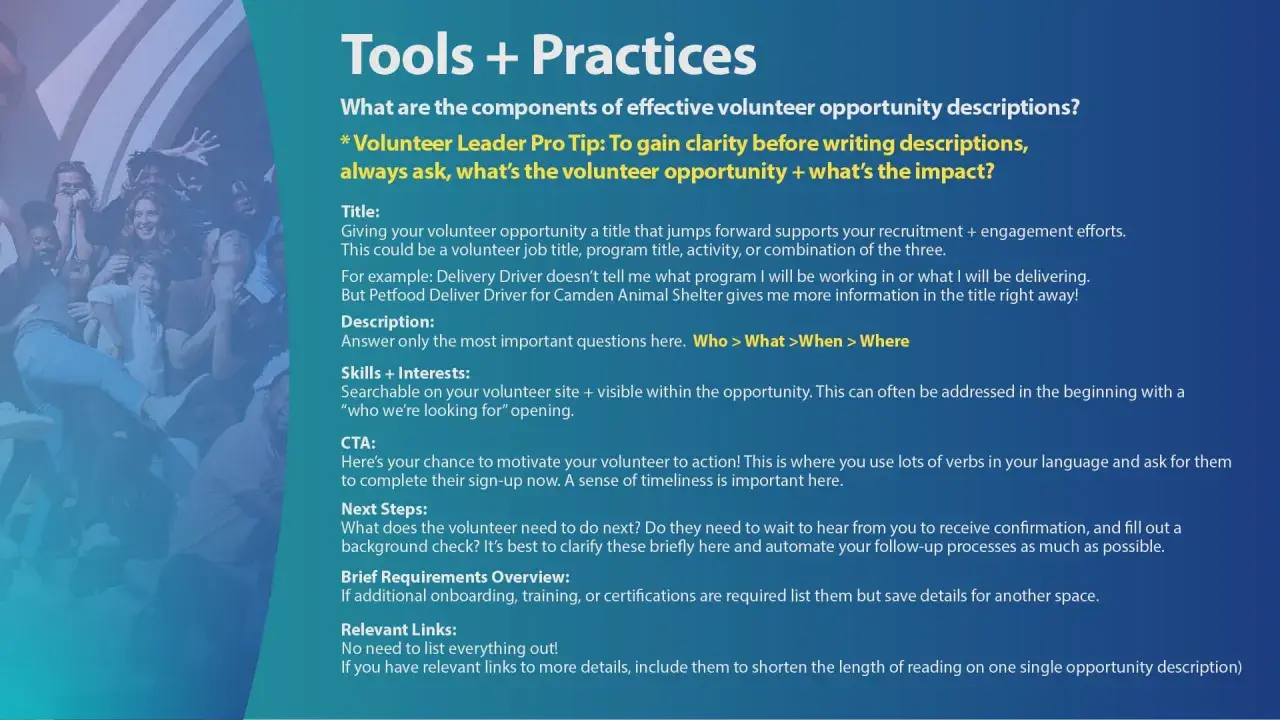
Key points to keep a volunteer role usable on the day
- Focus on a small set of visible tasks: greeting, check-in, setup, wayfinding, activity support, and cleanup.
- Spell out time, location, shift length, supervision, and physical demands before volunteers commit.
- Separate general support from tasks that need training, cash handling, child supervision, or safety clearance.
- Use short shifts and clear handoffs; confusion is the fastest way to lose momentum and goodwill.
- Write for the actual event, not the ideal version of it, so expectations match reality.
What an event volunteer actually does
An event volunteer is usually there to keep the event moving, not to design it from scratch. In practice, that means helping guests find their way, supporting the registration desk, setting up supplies, moving signs or tables, answering basic questions, and cleaning up when the crowd leaves. The role is often public-facing, which matters more than many organizers realize, because volunteers are frequently the first and last people attendees interact with.
I usually separate this role from event staff or a coordinator role. Staff members make decisions, solve exceptions, and carry responsibility for the full plan. Volunteers handle defined tasks inside that plan. That distinction makes the work easier to explain, easier to schedule, and safer for everyone involved. Once that difference is clear, the written outline becomes much easier to shape.What belongs in an event volunteer job description
When I write a volunteer role sheet, I keep it to the information people need before they say yes. A strong outline should answer a few basic questions immediately: What is the event? Where is it? When does the shift start and end? What will the volunteer actually do? Who supervises the role? What should they wear or bring? If the person can answer those questions in under a minute, the description is doing its job.
| Section | What to include | Why it matters |
|---|---|---|
| Event overview | One or two lines on the event’s purpose, audience, and location | Helps volunteers understand the mission and the setting quickly |
| Time commitment | Arrival time, shift length, end time, and whether breaks are provided | Prevents confusion and late cancellations |
| Main duties | A short list of the actual tasks, not vague encouragement | Sets expectations and reduces on-site improvisation |
| Supervision | Who the volunteer reports to and how to find that person | Gives people a clear point of contact when something changes |
| Requirements | Age limits, physical tasks, dress code, language needs, or background checks if applicable | Helps people self-select responsibly |
| Training and check-in | Orientation time, briefing length, and where to check in on arrival | Reduces day-of friction and missed instructions |
| Safety and boundaries | Weather exposure, crowd conditions, emergency steps, and tasks volunteers should not do | Protects guests, volunteers, and the event itself |
I would also include accessibility details when they matter. If the job involves stairs, standing for long periods, outdoor heat, or noise, say so plainly. People are much more likely to commit when the description feels honest. With the structure set, the next step is choosing which duties belong on the page and which should stay with staff.
The core duties I would list first
For most community events, I start with the duties that are visible, repetitive, and easy to teach quickly. Those tasks create the most value without requiring deep prior experience. They also give volunteers a real sense of contribution, which matters if you want people to return.
| Duty | What it looks like on site | Watch-outs |
|---|---|---|
| Check-in and registration | Greeting guests, confirming names, handing out badges or materials | Needs a clear script and a backup plan for missing names or walk-ins |
| Setup and breakdown | Unpacking supplies, moving chairs or tables, placing signs, packing up afterward | Say whether lifting is required and how much help is available |
| Wayfinding and greeting | Welcoming people, pointing them to restrooms, sessions, or activity areas | Works best for volunteers who are comfortable speaking with strangers |
| Line and crowd flow | Keeping walkways open, directing traffic, preventing bottlenecks | Needs a supervisor and clear escalation instructions if problems appear |
| Activity support | Helping at booths, games, crafts, stage transitions, or resource tables | Should be paired with short training if there is equipment or a script involved |
| Supply support | Restocking water, brochures, napkins, handouts, or giveaway items | Simple work, but it fails fast if inventory is not counted in advance |
| Cleanup | Collecting trash, folding tables, returning items to storage, wiping surfaces | Do not assume people know what “cleanup” means; define the end point |
| Accessibility assistance | Helping guests locate accessible entrances, seating, or services | Best handled with sensitivity and clear boundaries |
I also draw a hard line around certain tasks. If a duty involves handling money, supervising minors, operating equipment, managing medical issues, or making security decisions, I do not bury that in a generic volunteer note. Those responsibilities need training, policy, and a named supervisor. That is where a realistic role outline protects both the event and the people serving at it.
Skills, limits, and expectations that keep the role workable
The best volunteer descriptions do not just list tasks; they also define the conditions under which those tasks happen. For most one-day events, I prefer 2 to 4 hour shifts and a 10 to 15 minute orientation, because longer stretches make attention drift and make it harder to keep people energized. If the event is outdoors, say whether volunteers should expect heat, rain, cold, or uneven walking surfaces. If the event is indoors but crowded, say whether the work involves noise, long periods of standing, or repeated lifting.
| Expectation | Better wording | Why it helps |
|---|---|---|
| Communication | Friendly, calm, and comfortable speaking with guests | More useful than asking for a vague “great attitude” |
| Physical ability | Able to stand for extended periods and assist with light lifting if assigned | Helps people judge whether the work fits their abilities |
| Availability | Available for the full shift plus a short check-in at the start | Prevents partial coverage and last-minute gaps |
| Age and supervision | Minimum age requirements and whether minors need an adult with them | Important for school events, faith-based events, and public festivals |
| Training | Attend a brief orientation before the event begins | Reduces mistakes and speeds up the handoff to volunteers |
| Weather and environment | Prepared for sun, rain, noise, crowds, or limited shade | Stops avoidable discomfort and no-shows |
| Boundary setting | Ask for help if a guest issue, safety issue, or medical issue appears | Prevents volunteers from improvising beyond their training |
In the United States, I also think it is worth stating whether volunteers will need a waiver, a background check, or simple sign-in paperwork. Not every event requires that level of formality, but when it does, people should know before arrival. The clearer the limits are, the easier it is to turn good intentions into useful service. From there, the most helpful step is to translate all of this into a copy-ready outline.
A copy-ready duty outline for a typical US event
Here is the kind of structure I would use if I were drafting a role sheet for a community fundraiser, neighborhood festival, school event, or nonprofit outreach day:
- Role title - Give the role a plain name such as registration volunteer, greeter, setup helper, or activity assistant.
- Purpose - Explain in one sentence how the role supports the event’s mission and guest experience.
- Shift time - List the arrival time, shift length, expected end time, and whether volunteers can sign up for multiple blocks.
- Primary duties - Name 3 to 5 tasks that the volunteer will actually perform on site.
- Requirements - Note any standing, lifting, age, language, or dress expectations.
- Training - Say how long the briefing is and where volunteers should report first.
- Supervision - Identify the lead staff member or volunteer captain who will answer questions.
- Safety and boundaries - Clarify what the volunteer should not do and how to escalate problems.
- What success looks like - Define the outcome in simple terms, such as smooth check-in, fewer bottlenecks, or a clean closing.
If I were turning that into a short paragraph, I would write something like this: the volunteer will greet guests, support check-in, direct attendees to key areas, restock supplies, and assist with cleanup at the end of the event. The volunteer should arrive 15 minutes early for a briefing, wear comfortable shoes, and report to the site lead for any guest or safety concerns. That kind of wording is practical because it tells people what matters without drowning them in filler. Still, even a good outline can fail if the wording is too vague, so the last step is tightening the language.
The wording that makes volunteers show up prepared
The difference between a useful role sheet and a vague one is usually one sentence at a time. I see a lot of event descriptions that say “help where needed” or “other duties as assigned,” but that does not help a volunteer decide whether the work fits. Better wording is specific enough that someone can picture the shift before they arrive. The goal is not to sound corporate; the goal is to sound clear.
| Vague wording | Stronger wording |
|---|---|
| Help where needed | Assist at check-in, answer basic guest questions, and direct attendees to the activity area |
| Be flexible | Be ready to switch between registration and wayfinding if the line gets busy |
| Must have a positive attitude | Friendly, calm, and comfortable speaking with the public |
| Light duties | Stand for up to two hours and help carry light supplies during setup |
| General event support | Set up signage, distribute programs, and help with breakdown after the final session |
The common mistake is not that the description is too short; it is that the description is too soft. When the role sheet avoids real details, volunteers arrive uncertain, staff spend time improvising, and guests feel the inconsistency. When I keep the outline concrete, volunteers show up with the right expectations, the event runs with less friction, and the mission gets the kind of visible support that people remember.
