
The best roles are useful, realistic, and easy to repeat
- Choose work that solves a clear need, not just work that sounds meaningful.
- Direct-service ideas like food banks, tutoring, and senior support create fast, visible results.
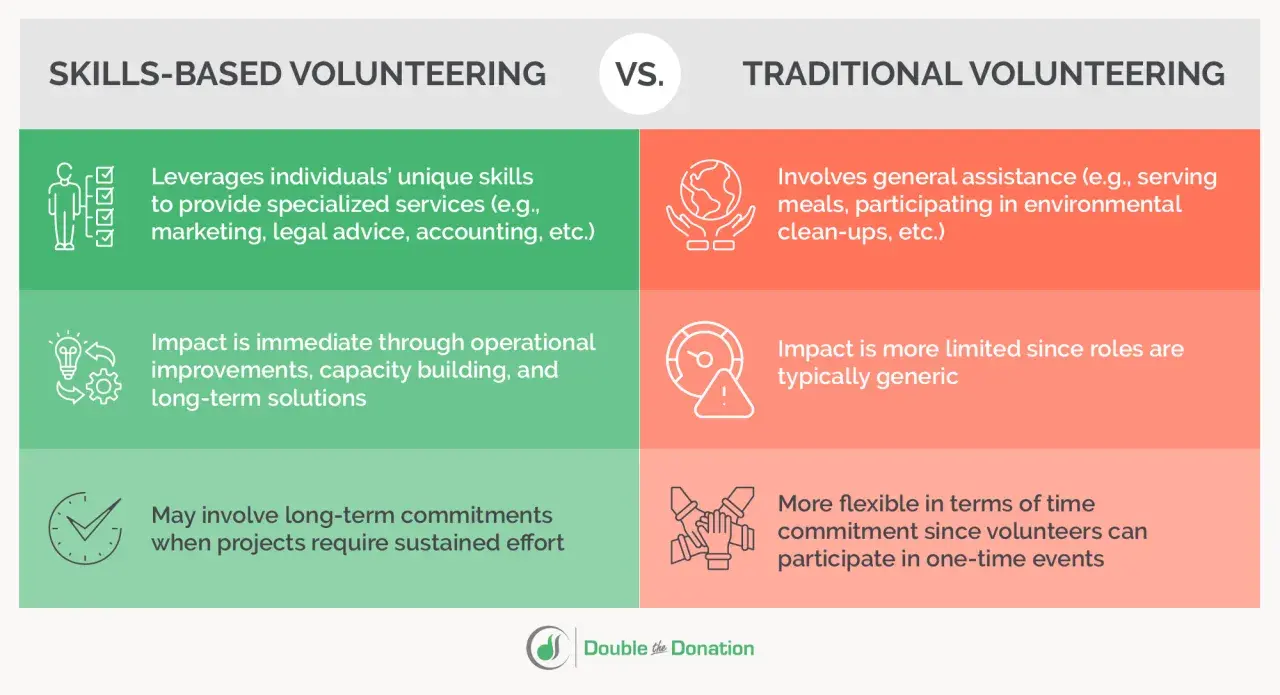
- Skills-based roles often have the highest leverage if the nonprofit has a clear plan for your help.
- Remote and one-off tasks are strong options when your schedule is tight.
- The biggest mistakes are overcommitting, ignoring logistics, and volunteering without clear expectations.
Volunteer ideas that create visible local impact
When I want a volunteer role to feel worthwhile quickly, I start with problems people can actually see and measure. Food access, education support, elder isolation, public spaces, and disaster readiness are all areas where a few hours can make a noticeable difference. AmeriCorps organizes its focus areas in a similar way, which is a useful reminder that the strongest volunteer work usually sits close to a real community need.| Volunteer idea | Why it matters | Typical time | Best fit | Watch-out |
|---|---|---|---|---|
| Food bank sorting and distribution | Gets groceries and essentials moving to families faster | 2 to 4 hours | People who like clear tasks and on-site teamwork | The work can be repetitive, so ask where the bottleneck is |
| Tutoring or mentoring | Supports learning, confidence, and long-term opportunity | 1 to 2 hours weekly | Patient volunteers who can show up consistently | Consistency matters more than enthusiasm |
| Senior companionship or hospice visits | Reduces isolation and gives older adults regular human contact | 1 to 2 hours weekly or monthly | Good listeners with a calm, respectful style | Emotional boundaries and training matter |
| Park, trail, or neighborhood cleanup | Improves shared spaces and makes a visible difference quickly | 1 to 3 hours | Groups, families, and active volunteers | Cleanup is best when there is a disposal plan |
| Animal shelter support | Helps with feeding, walking, laundry, and adoption support | 2 to 3 hours | People comfortable with animals and routine care | Some shelters require training, age minimums, or vaccinations |
| Library or literacy support | Expands access to books, homework help, and community programming | 1 to 3 hours | Quiet, service-minded volunteers | Check the library’s volunteer rules and schedule first |
| Disaster prep or response | Strengthens community resilience before and after emergencies | Variable | Flexible people with physical stamina | Training and supervision are not optional |
I put these options near the top because they are concrete. You can explain them to a friend in one sentence, and you can usually tell whether the work is helping within a single shift. That distinction matters, because the best role for you may be one with less public visibility but more practical value. Next, it helps to look at volunteer work that uses your existing skills instead of only your free time.
Skill-based roles are often the highest-leverage option
Skill-based volunteering is the right move when you can solve a problem that staff simply do not have time to handle. Idealist’s volunteer listings make that clear by surfacing roles like board service, data work, research, health-related support, and arts projects alongside more traditional hands-on opportunities. That mix tells me a lot of nonprofits are looking for judgment and expertise, not just extra pairs of hands.
- Grant research and writing helps small organizations reach funding they would otherwise miss.
- Bookkeeping or budget cleanup reduces stress for staff and improves accountability.
- Social media, design, or newsletter help is useful when the message exists but the bandwidth does not.
- Translation or interpretation can remove a real access barrier in multilingual communities.
- Website, CRM, or spreadsheet cleanup is boring work, but it often unlocks better service delivery.
- Career mentoring or resume reviews helps workforce and education nonprofits support job seekers faster.
The trap with skilled volunteering is vagueness. “I can help with marketing” is not nearly as useful as “I can create three event graphics, rewrite the signup page, and schedule one email this week.” I prefer roles with one owner, one deliverable, and a realistic deadline. If the organization cannot define the task clearly, your talent may be wasted inside the confusion. That is why the next section matters so much when your time is limited.

Low-time and remote options still matter
Not everyone can commit to a weekly shift, and that is fine. I treat short, flexible volunteer work as a real category, not a lesser one. It works best when the task is tightly defined, the handoff is simple, and the organization can absorb a finished piece of work without needing constant supervision.
- Virtual tutoring works well for subjects where students need steady support but not in-person presence.
- Phone check-ins with older adults can be a lifeline for people who are isolated.
- Transcription or captioning helps organizations make content more accessible.
- Social media support can be done from home if the nonprofit already has a message and a calendar.
- Donation-drive coordination is useful when your main strength is organizing people and reminders.
- Kit assembly at home or in a small group is ideal for schools, shelters, and mutual-aid efforts.
Micro-volunteering is the term I use for these short, discrete tasks that can be completed in minutes or a single sitting. It is a good fit when you cannot promise continuity, but it only works if the job is specific enough to finish cleanly. Once you know that difference, it becomes much easier to choose a role that actually fits your life instead of borrowing someone else’s ideal schedule.
How to match a role to your schedule, energy, and personality
Before I say yes to any volunteer role, I ask four questions: how often, how far, how physically demanding, and how much training. Those four filters eliminate most bad fits quickly. They also save you from the common mistake of choosing based on emotion instead of logistics.
| If your reality is... | Look for... | Avoid... |
|---|---|---|
| Very little free time | One-off events, remote tasks, or small recurring jobs | Weekly commitments that require travel across town |
| Strong people skills | Mentoring, hotline support, hospitality, or senior companionship | Roles that mostly involve silent sorting unless you enjoy that work |
| Analytical or detail-oriented | Data cleanup, bookkeeping, admin support, or research | Jobs with vague goals and no measurable output |
| High physical energy | Cleanups, packing shifts, disaster preparation, or warehouse support | Sedentary roles that do not use your stamina well |
| Need structure | Roles with a supervisor, a schedule, and a clear onboarding process | Loose projects that depend on you inventing the process yourself |
Common mistakes that make volunteering feel pointless
I see the same few errors again and again, and none of them have anything to do with the cause itself. They usually come from mismatch, not from lack of goodwill.
- Choosing the cause but not the task. A good cause still fails if the actual work does not suit you.
- Overcommitting too early. One inspiring event can lead to three months of guilt if you say yes too fast.
- Skipping the training conversation. Some roles are simple; others carry safety, privacy, or legal requirements.
- Doing emotional work without boundaries. Hospice, crisis support, and similar roles can be meaningful and draining at the same time.
- Creating extra work for staff. If your “help” needs constant supervision, you may be adding friction instead of reducing it.
My rule is simple: if a role cannot describe success, handoff, and expectations in plain language, I keep looking. That does not mean the organization is bad. It usually means the opportunity is not ready for a volunteer yet. Avoid those traps, and your first placement has a much better chance of becoming a habit instead of a guilt project.
A simple way to start this week
If you want a practical starting point, narrow the field instead of trying to find the perfect role on day one. I would begin with one direct-service option, one skills-based option, and one flexible backup, then compare how each one feels after a first shift.
- Pick one role that helps people directly, such as food pantry support, tutoring, or neighborhood cleanup.
- Pick one role that uses a skill you already have, such as writing, design, admin, translation, or bookkeeping.
- Contact two organizations and ask what problem is hardest for them right now, then match yourself to that need.
- Commit to a trial period of 2 to 4 hours, then decide whether the schedule and the work are sustainable.
If I had to recommend a small set of starting points for most adults in the United States, I would choose food access work, library or tutoring support, and one remote admin task. That combination is practical, broadly useful, and honest about the fact that people volunteer with different amounts of time, strength, and confidence. Start with one role that is easy to show up for, and the rest of your volunteer path becomes much easier to build.
