
A volunteer coordinator keeps the volunteer side of a mission organized, safe, and useful, which is why this role matters so much in schools, nonprofits, faith groups, hospitals, and local service programs. In this article, I look at what the position really covers, which systems keep people engaged, how to measure impact in the United States, and where volunteer programs usually break down.
The role is about structure, not just enthusiasm
- The job is not only scheduling. It connects recruitment, onboarding, supervision, and recognition into one system.
- Clear role descriptions reduce confusion, no-shows, and burnout.
- Fast communication matters. Volunteers respond better when the first contact and first shift feel simple.
- Good programs track a few practical metrics, not a wall of numbers.
- Recognition helps, but it works best after the basics are already consistent.
What the role actually covers
I see this role as the operating layer between a mission and the people who want to help. It is not just about filling shifts. It includes role design, screening, onboarding, communication, supervision, recognition, and the small fixes that keep volunteers from disappearing after their first good intention.
| Responsibility area | What it includes | What happens if it is weak |
|---|---|---|
| Recruitment | Outreach, intake, matching people to the right roles | You get mismatched volunteers who leave quickly |
| Orientation | Expectations, policies, schedule, safety, boundaries | People guess instead of knowing what to do |
| Scheduling | Shift planning, reminders, backups, coverage gaps | No-shows create stress for staff and clients |
| Support | Check-ins, problem solving, escalation paths | Small issues grow into disengagement |
| Recognition | Thanks, feedback, growth opportunities, celebration | People feel invisible and stop returning |
That mix is why the best programs feel calm even when they are busy. Once the structure is clear, the next question is how the work actually runs from week to week.

The weekly systems that keep volunteers engaged
The fastest way to lose good people is to make the work feel random. I would rather see a modest program with predictable habits than a busy one that runs on memory and apologies. Volunteers usually stay when the experience feels clear, responsive, and respectful of their time.
The weekly rhythm usually comes down to five systems: intake, matching, reminders, support, and follow-up. A small nonprofit can run those systems in a spreadsheet. A larger organization may need software, especially if there are multiple sites, recurring shifts, or sensitive placements. I do not think software should be the first answer. Process should be. If the process is weak, the tool just helps you move confusion faster.
- Intake should be simple. Ask only for the information you need to place someone correctly.
- Matching should be deliberate. A client-facing role is not the same as a behind-the-scenes task.
- Reminders should be predictable. A volunteer should not have to wonder whether a shift is still on.
- Support should be visible. People need to know who to contact when something changes.
- Follow-up should happen fast. I like a same-day or next-day thank-you after a first shift, because momentum matters.
If the work includes children, vulnerable adults, money handling, or safety-sensitive tasks, the system has to get tighter. That means stronger screening, clearer supervision, and more explicit training. The next piece is the human side of the job, because process alone does not keep people engaged.
The skills that matter more than charisma
Charisma can help at the start, but it will not save a weak program. The people who do this work well are usually strong in a few quiet skills that do not always look glamorous from the outside.
- Clear communication keeps instructions short, direct, and easy to act on. Volunteers should not need to decode the message.
- Boundary-setting protects both the mission and the volunteers. Good intentions do not replace role limits.
- Follow-through builds trust. If you say you will call back, send the schedule, or solve a problem, do it.
- Conflict handling matters because service work brings people with different backgrounds, expectations, and energy levels into the same space.
- Data literacy helps you see patterns in attendance, retention, and drop-off before they become bigger problems.
- Cultural competence matters in U.S. community work because volunteers and the people served often come from very different contexts.
How to build a volunteer program that survives busy seasons
When I set up a program, I start with the work itself, not with recruitment. If the role is fuzzy, the pipeline will be fuzzy too. People are more likely to show up for a task that is specific, bounded, and clearly useful.
- Define the work first. Write down exactly what volunteers will do, how long it takes, and what they are not expected to handle.
- Write one role description per task. A good description should cover purpose, time commitment, skills, location, and supervision.
- Set screening rules early. Decide what needs an application, references, background checks, training, or approval before you recruit widely.
- Build orientation into the first contact. For simple roles, I like a 20 to 30 minute orientation. For client-facing or safety-sensitive work, I would make it longer and more structured.
- Create a backup path. Every recurring shift should have a plan for late cancellations, no-shows, and schedule changes.
- Design recognition before the first crisis. A thank-you note, a shout-out, or a short story about impact is easier to maintain when you have already decided how it will happen.
- Review and simplify. If a task creates confusion every week, the process is probably too complicated.
This is the part most organizations underestimate. They recruit people before they have a system, then spend months trying to keep up. A cleaner structure early on saves real time later, and it gives volunteers a reason to stay. Once the structure is there, measuring the result becomes much easier.
How to measure impact without drowning in spreadsheets
I like simple metrics that tell a real story. Hours matter, but hours alone do not show whether the program is healthy. A team can log a lot of service and still lose people because the experience is confusing or unrewarding.
As of 2026, the latest national estimate from Independent Sector puts the value of a volunteer hour at $36.14, with state values varying. I use that number as a useful signal, not a hard price tag, because the real value of service is more than a dollar figure. It still helps when you need to explain why organized volunteer management is worth attention and budget.AmeriCorps reports that more than 28 percent of Americans volunteered through an organization between September 2022 and September 2023. That tells me the public appetite for service is real, but it also tells me programs have to compete for attention, trust, and time. Good coordination matters because people have options.
| Metric | What it tells you | What I watch for |
|---|---|---|
| Response time | How accessible the program feels | First replies within 24 to 48 hours |
| Show-up rate | Whether scheduling and reminders work | Any sudden drop, especially on recurring shifts |
| Retention | Whether volunteers want to return | How many people come back after the first month |
| Hours served | Capacity and reach | Useful, but never enough on its own |
| Volunteer feedback | What the experience actually feels like | Repeated comments about confusion, wait times, or weak support |
My rule is simple: if a number does not help you make a decision, it is probably not the right number to track. That leads directly to the mistakes that quietly push people out of the program.
The mistakes that quietly push volunteers away
Most volunteer programs do not fail loudly. They erode. People stop replying. Shifts feel awkward. Staff start improvising. Then everyone assumes the problem is motivation, when the real issue is usually design.
- Recruiting before defining the work creates mismatched expectations from day one.
- Giving vague instructions forces volunteers to guess, which is a fast way to create frustration.
- Using recognition as a substitute for support turns appreciation into decoration instead of substance.
- Ignoring site supervisors creates mixed messages between the person coordinating volunteers and the people receiving help.
- Expecting one person to do everything leads to slow replies, lost records, and burnout.
- Skipping feedback means the same problems repeat because nobody names them early.
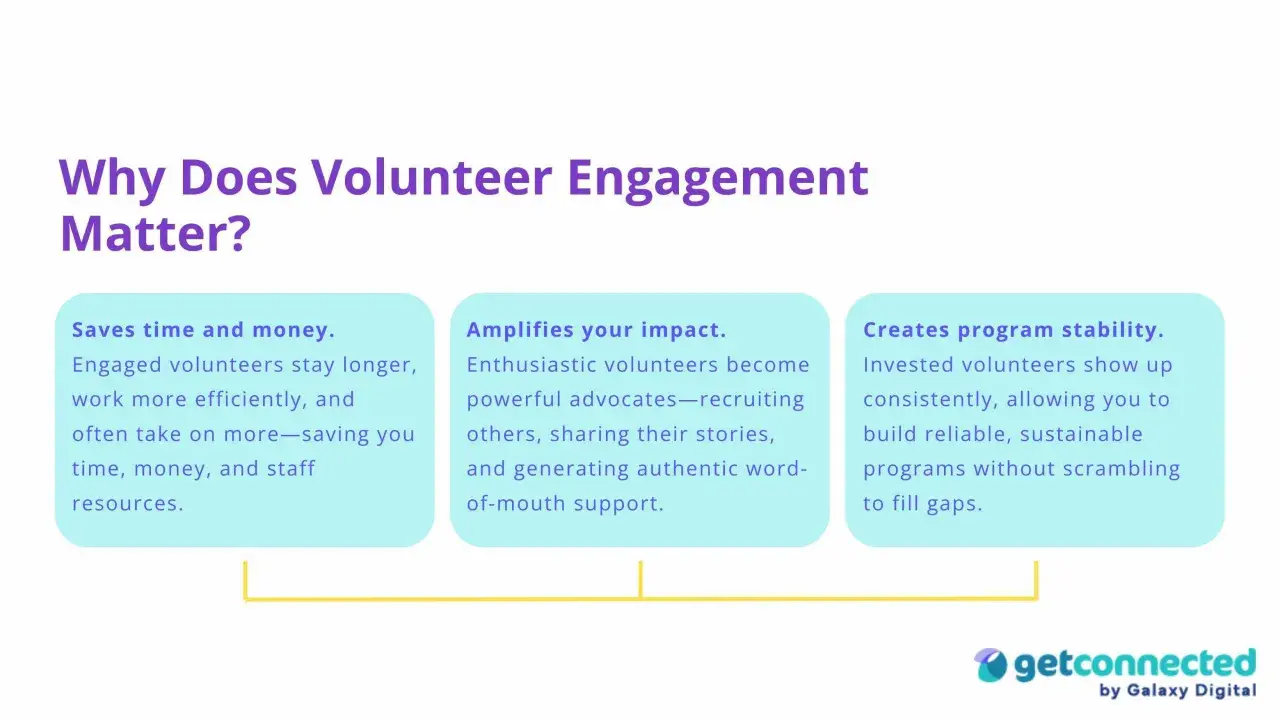
The pattern is predictable. When volunteers have to guess, wait, or repeat themselves, they leave. When they feel prepared, trusted, and useful, they stay longer and do better work. That is why the final step is not just hiring or assigning the role, but setting it up to succeed.
What makes the role work in the real world
If I were building this from the ground up, I would want five things in place before the first volunteer arrives: one clear owner, one communication channel, one simple tracking system, one onboarding checklist, and one recognition habit. That is enough to make the experience feel reliable without overbuilding the program.
The strongest volunteer programs are not the most complicated ones. They are the ones that respect time, reduce confusion, and connect each person to a task that actually fits. When that happens, the mission benefits, the staff gets support, and volunteers feel that their service matters.
