
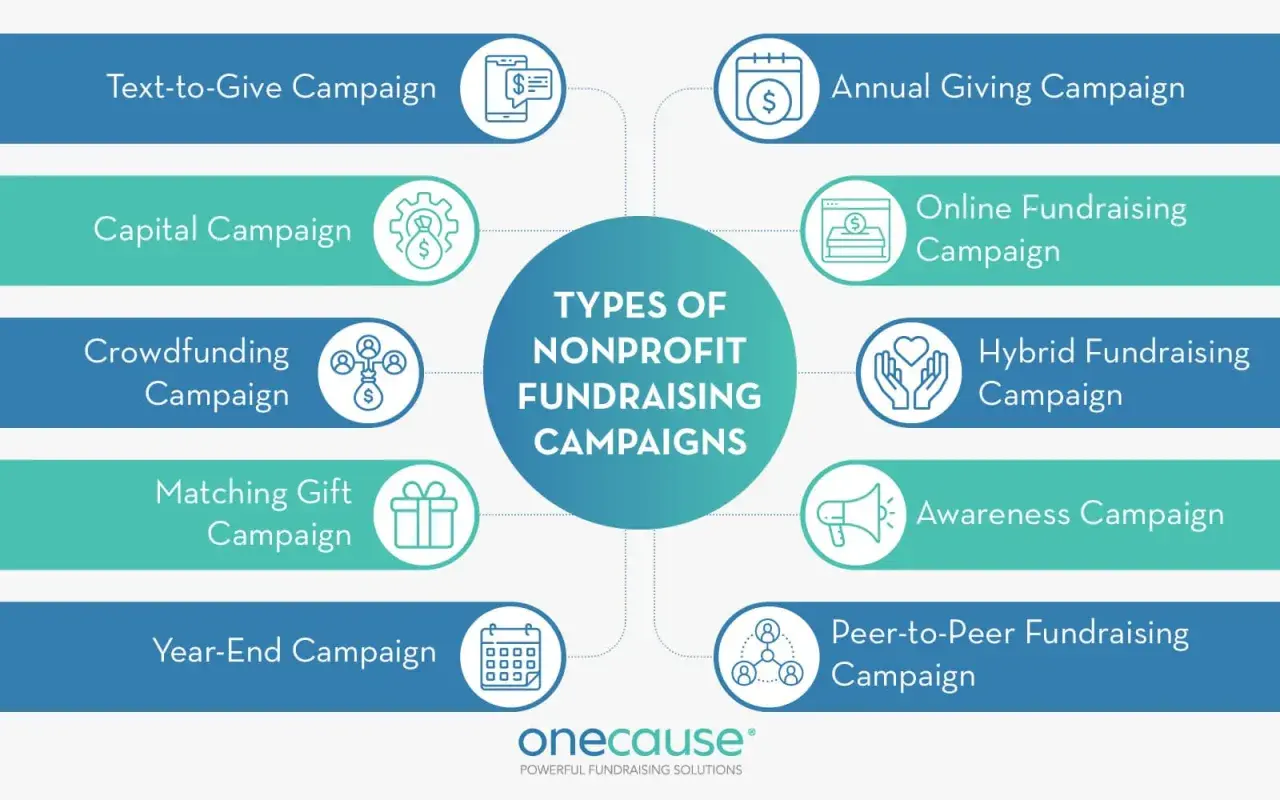
A strong fundraising drive works best when the ask is concrete, the timeline is realistic, and the cause is easy to understand in one pass. I treat it less like a one-off request for cash and more like a planning exercise: you turn a mission into a target, a target into a story, and a story into action. This article breaks down how to shape the goal, choose the right format, write a message people trust, and avoid the mistakes that quietly reduce donations.
Key points that keep a campaign focused and credible
- Start with the funding gap, not the platform. The best campaign is built around a specific need, a deadline, and a clear outcome.
- Match the format to the audience. Events, peer-to-peer outreach, and digital appeals each work best in different situations.
- Make the ask specific. Donors respond better to direct examples like what one gift actually covers.
- Reduce friction. Simple donation pages, clear payment options, and fast thank-you messages improve results.
- Track more than the total raised. Average gift size, conversion rate, and repeat support tell you whether the campaign is healthy.
What a fundraising campaign is meant to accomplish
A fundraising campaign is not just about collecting money. It is about giving people a reason to act now instead of later, and a reason to believe their contribution will create a visible result. In my experience, the strongest campaigns do three things at once: they define a need, make that need feel human, and show the donor exactly how to help.That is why a generic appeal underperforms. People rarely give simply because a cause is worthy. They give when the request feels specific enough to solve, credible enough to trust, and urgent enough to matter today. A local food pantry asking for “support” is vague; the same pantry asking for help to fund 2,000 weekend meal bags before the school break is much easier to act on.
It also helps to be honest about what the campaign is and what it is not. A short, targeted effort is ideal for a defined gap, such as covering event costs, replacing equipment, or funding a seasonal need. A longer giving program is better when the goal is ongoing support, donor retention, or general operating stability. Once you know the job the campaign is supposed to do, the next step is putting a real number on it.
Set the goal and budget before the first ask
I like to start with the funding gap, not the wish list. That means listing the real cost of the project, subtracting what is already committed, then adding a small buffer for processing fees, timing delays, or lower-than-expected average gifts. A simple goal is easier for a donor to understand and easier for your team to defend.
A useful way to build the target is:
- List the direct costs of the need.
- Subtract confirmed grants, sponsorships, or internal reserves.
- Add a buffer of roughly 10% if the campaign depends on many small gifts.
- Convert the total into a donor count and average gift size.
For example, if a community arts program needs $18,000 and already has $6,000 committed, the campaign goal is $12,000. If the expected average gift is $60, the team needs about 200 gifts. If the average gift climbs to $120, the same goal can be reached with about 100 gifts. That calculation matters because it tells you whether the campaign depends on a few major donors, a broad base of small donors, or a mix of both.
I also recommend setting one primary metric and two supporting metrics. The primary metric is usually dollars raised. The supporting metrics can be donor count, repeat donors, event attendance, or conversion rate from page visits to gifts. That keeps the team from obsessing over a single number that does not tell the whole story. Once the target is clear, the real question becomes how people will give.

Choose the format that fits the audience
Not every campaign should look the same. Some causes benefit from a live event because people need a shared experience. Others work better as a peer-to-peer effort because the ask is more credible when it comes from a friend, coworker, or classmate. A digital campaign can be faster and cheaper, but it usually needs stronger storytelling to stand out.
| Format | Best for | Strengths | Limits | When I would choose it |
|---|---|---|---|---|
| Event-based | Local communities, schools, and organizations with active supporters | Creates energy, visibility, and social proof | More planning, staffing, and upfront cost | When the goal is also to build relationships, not just raise funds |
| Peer-to-peer | Networks with volunteers, alumni, or advocates who can recruit others | Expands reach through personal trust | Quality depends on how well participants are coached | When supporters are willing to tell the story in their own words |
| Digital-first | Broad audiences, urgent needs, and geographically dispersed donors | Fast to launch, easy to share, easy to measure | Can feel crowded if the message is too generic | When speed, scale, and low overhead matter most |
| Hybrid | Campaigns that need both reach and community connection | Combines live momentum with online convenience | More moving parts to coordinate | When I want a launch event, a digital donation path, and follow-up waves |
My rule of thumb is simple: if the audience is local and emotionally engaged, an event can work well; if the audience is spread out, a digital or peer-led format usually performs better. Hybrid campaigns are often the safest choice when you need both visibility and convenience. The format is only half the battle, though. The message itself has to earn the gift.
Write a message that makes giving feel specific
The best appeals are concrete. They tell people what problem exists, why it matters, what the donation changes, and what action to take now. I prefer a message with four parts: the need, the proof, the ask, and the outcome. When those four parts are clear, the donor does not have to work to understand the case for giving.
Here is the kind of language that usually works better than a vague request:
- Need: “Our after-school tutoring program has a waiting list of 30 students.”
- Proof: “Last semester, 8 in 10 participants improved their reading scores.”
- Ask: “A gift of $50 helps cover one week of tutoring supplies.”
- Outcome: “Your support keeps the program open for the next group of students.”
Specific donation tiers help too. Instead of asking people to “give what they can,” show a few options that feel real: $25, $50, $100, $250. Those numbers should connect to outcomes when possible. One gift might cover meals, another might buy supplies, and a larger gift might fund a full scholarship or sponsor a service day. The donor should never have to guess what their money does.
Short stories work better than long backstory when the ask is time-sensitive. One person helped, one barrier removed, one direct result. That is enough. The message only becomes stronger when donors trust the organization behind it, which is where transparency and ease of giving come in.
Build trust and remove friction
People give faster when they feel safe. In the United States, the IRS says 501(c)(3) organizations can receive tax-deductible contributions, but donors still need to confirm that a particular organization qualifies before assuming a gift is deductible. The FTC also advises people to check the charity before they donate and to be cautious about rushed requests or unusual payment methods. I treat that advice as part of the campaign itself, not as a side note.
Trust is built through small details:
- A donation page that loads quickly on mobile.
- Clear wording about where the money goes.
- Visible contact information and a real organization name.
- Payment options that feel normal and secure.
- A receipt or thank-you message sent without delay.
Friction matters just as much. If a donor has to click through too many screens, create an account, or search for the amount they want to give, the campaign loses momentum. I usually prefer a page with a few preset amounts, a visible recurring-gift option, and one obvious primary button. You want the action to feel easy, not clever.
This is also where donor stewardship begins. A quick thank-you, a clear receipt, and a follow-up update are not extras. They are part of the mechanism that turns a one-time gift into a future relationship. Once the giving experience is smooth, the next challenge is keeping attention long enough to finish the goal.
Keep momentum after launch
Most campaigns do not fail because the idea is bad. They stall because the launch is noisy and the middle goes quiet. I like to think about the timeline in three parts: the opening push, the middle rhythm, and the final urgency.
In the opening phase, the team should make the first ask internally, recruit early donors, and publish the goal before enthusiasm fades. If possible, aim to secure the first 10% to 20% of the target early. That gives the campaign proof, which makes later asks easier.
In the middle, the campaign needs fresh material. That can mean donor stories, progress updates, short videos, matching-gift windows, or a live tally of the amount raised. The point is not to overwhelm people with content. The point is to remind them that the campaign is still moving and still matters.
The final stretch needs urgency without panic. A simple message like “We are $3,200 away from funding the full program” works better than a dramatic plea that sounds desperate. If the deadline is real, say so. If the remaining gap is small, make that clear. Donors respond well to the feeling that they can still help close the circle.
After the campaign ends, I always advise a short pause before the team jumps into the next ask. That gives you time to look at the numbers with a clear head, which is the best way to improve the next round.
What to measure so the next campaign is stronger
A campaign is more useful when you can explain why it worked. I would track a handful of metrics rather than a giant dashboard nobody reads. The most helpful ones are simple, and they tell you where the effort gained traction or leaked attention.
| Metric | What it tells you | Why it matters |
|---|---|---|
| Total raised | Whether the campaign hit the financial goal | It answers the core question, but not the whole story |
| Average gift | How much donors were comfortable giving | Helps you refine future asks and donation tiers |
| Number of donors | How broad the support base was | Shows whether the campaign reached new people or leaned on a few large gifts |
| Conversion rate | How many visitors actually donated | Useful for diagnosing message and page performance |
| Repeat donor rate | How many people gave more than once | Indicates whether the campaign created lasting trust |
If you want a practical benchmark, look at your own history first. A campaign that beats your prior average gift by 15% can be a real win even if the donor count stays flat. Likewise, a campaign with many small gifts may be healthier than one that depends on a single large check. The right interpretation depends on the goal you set at the start. With the metrics in hand, the final task is to make the next effort easier than this one.
How to make the next appeal easier than this one
After the money is raised, I like to save the pieces that clearly worked: the subject line that earned the most opens, the story that produced the strongest response, the donation tier that converted best, and the channel that brought in the most reliable traffic. That archive becomes a shortcut the next time the organization needs to ask.
It also helps to note what should disappear. Maybe the landing page asked for too much explanation. Maybe the event took too much staff time for the return. Maybe one donor segment responded better to text messages than email. Those details matter more than the polished version of the campaign story because they tell you how people actually behaved.
The most effective campaigns are rarely the flashiest ones. They are the ones with a clear goal, a believable case, a low-friction giving path, and a disciplined follow-through. If you build those pieces into the process now, the next campaign will be easier to launch, easier to explain, and much easier to repeat.
