
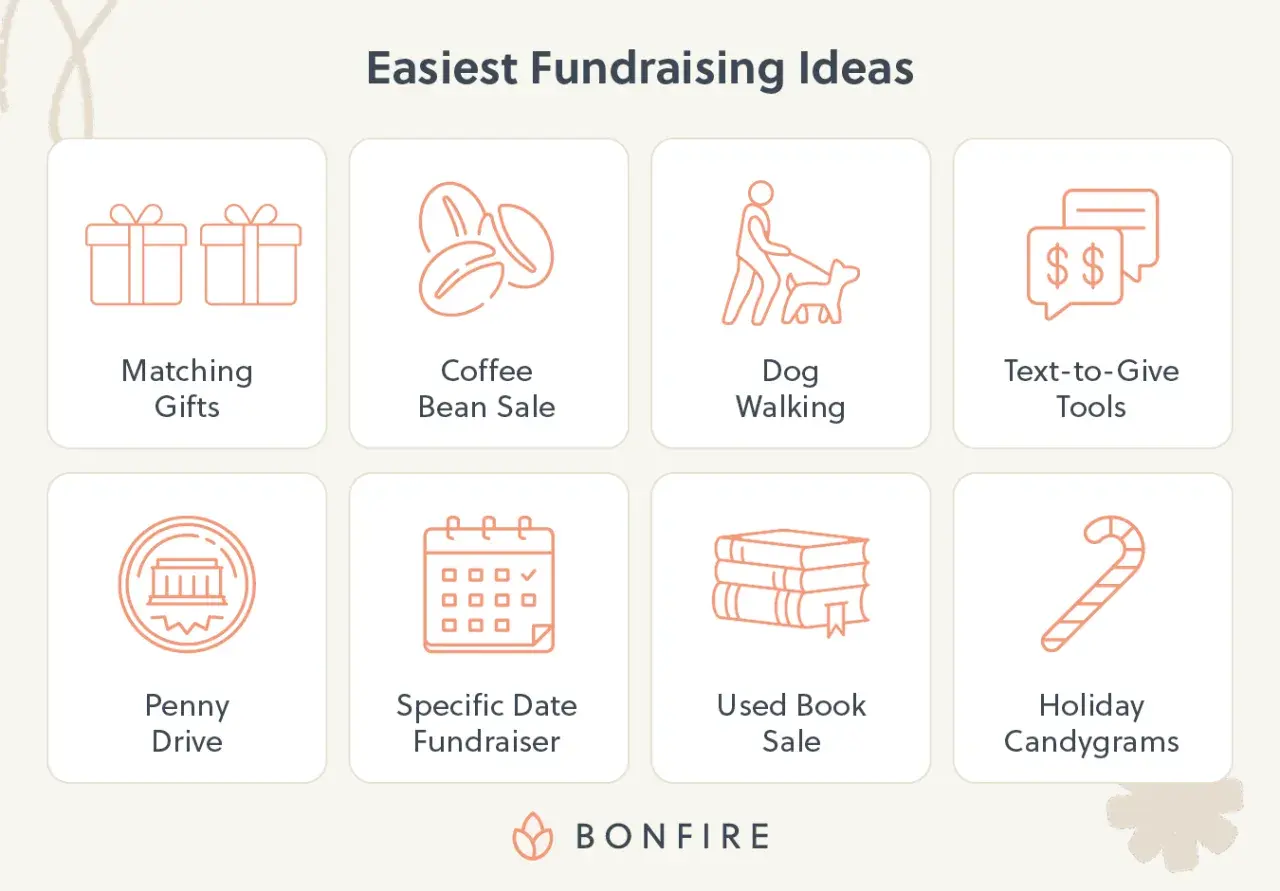
What matters before you pick a fundraiser
- Start with one concrete outcome, not a vague request for support.
- Choose formats that match your volunteers, not just the size of your ambition.
- Mix in-person and digital participation so people can help in different ways.
- Budget for fees, supplies, and thank-you work, not only the money you hope to raise.
- Use simple campaigns you can repeat, because repeatability usually beats one-off excitement.
- Check local rules before adding raffles, food service, or anything that needs a permit.
What makes a community fundraiser feel worth joining
I usually define grassroots fundraising as money raised by the people closest to the issue, with accountability flowing back to that community. That matters because supporters do not just want to donate; they want to understand what changes because they gave, why the timing matters, and what role they can play beyond opening their wallet.
The strongest local campaigns make participation easy at three levels: give, share, and show up. A parent can buy a ticket to a school breakfast, a neighbor can share a donation link, and a volunteer can help set up chairs or count cash. That is a much better structure than asking everyone to do the same thing, because people have different comfort levels, schedules, and budgets.
In practice, the best community campaign is usually tied to one visible outcome: buying instruments for a youth arts program, covering emergency rent support, funding a meal distribution, or keeping a neighborhood clinic stocked. I would rather back a narrow, believable ask than a broad mission statement that sounds noble but feels abstract. Once that is clear, the next step is choosing a format that can carry the message without adding friction.
The most useful community-led fundraiser formats
I prefer to work from proven formats instead of inventing something complicated under deadline. The table below is a practical way to compare common options before you commit volunteer time.
| Idea | Typical cash outlay | Volunteer effort | Best use |
|---|---|---|---|
| Community breakfast or potluck | $50-$200 | Medium | Neighborhood groups, schools, faith communities |
| Yard sale or swap market | $0-$75 | High upfront, lower on event day | Groups with donated items and space to sort them |
| Open mic or talent night | $100-$400 | Medium | Youth programs, arts causes, family-friendly groups |
| Restaurant partner night | $0-$25 | Low | Small teams with one friendly local business |
| Peer-to-peer birthday fundraiser | $0-$50 | Low | Supporters with active personal networks |
| Matching challenge | $0-$25 | Medium | Campaigns with one lead donor who can unlock urgency |
| Workshop or class night | $25-$150 | Medium | Groups with a volunteer expert who can teach something useful |
| Monthly giving circle | $25-$100 to set up | Low after launch | Organizations that need steadier cash flow |
Low-cost, high-trust ideas
- Host a breakfast, potluck, or soup night and tie every ticket to one specific outcome, such as supplies, scholarships, or emergency relief.
- Run a yard sale, swap market, or clean-out day if you have donated goods, a storage plan, and a small team willing to sort items.
- Organize a service auction where volunteers donate practical help like tutoring, dog walking, cooking, or yard work.
- Use a walk, bike ride, or neighborhood challenge when visibility matters as much as the final dollar amount.
These formats work because people understand them instantly. There is no learning curve, and that lowers the psychological cost of participation. A supporter does not have to decode your model before deciding to help; they can see the event, understand the ask, and imagine themselves inside it.
Digital ideas that still feel local
- Build a mobile-friendly donation page with one short story and one clear ask.
- Use peer-to-peer birthday or milestone fundraisers so supporters raise money from their own circles.
- Put a QR code on flyers, signs, and table tents so people can give without waiting to get home.
- Use a matching challenge or countdown campaign when you need urgency and momentum.
Digital tools work best when they extend a real community instead of replacing one. I have seen too many campaigns rely on a link alone and then wonder why the response was thin. A donation page is not a strategy by itself; it becomes effective when people already feel connected to the cause.
Read Also: Environmental Fundraisers - Maximize Impact & Community Trust
Ideas that turn one gift into repeat support
- Start a monthly giving circle with a small, predictable amount.
- Invite local shops to round up purchases or donate a share of one day’s sales.
- Ask first-time donors to become volunteer ambassadors after the event.
- Turn a successful annual event into a tradition people expect and plan for.
These are the tactics I reach for when the goal is not just one burst of cash, but a healthier funding rhythm. Repeatable support gives a community room to breathe, and it reduces the panic that often shows up when every campaign has to start from zero. The better your audience fit, the less convincing you have to do later.
How to choose the right mix for your audience
I would not push the same fundraiser on every group. A PTA, a tenant union, a church, and an arts collective all have different rhythms, and those rhythms should shape the campaign. The right choice depends on how people already gather, how they prefer to give, and how much time they can realistically offer.
| Audience | Best fit | Why it works | What I would avoid |
|---|---|---|---|
| School families | Breakfasts, read-a-thons, class challenges, matching gifts | Families respond to clear goals and visible child-centered outcomes | Anything that requires long meetings or too much coordination |
| Faith communities | Meal events, pledge cards, service auctions, recurring gifts | People already gather regularly and trust shared purpose | Overly technical donation funnels that slow participation |
| Neighborhood associations | Yard sales, clean-up days, porch concerts, block parties | The fundraiser doubles as a social event | High-ticket events that feel too formal for the setting |
| Advocacy or mutual aid networks | Peer-to-peer asks, text-to-give, matching challenges, crowdfunding | Supporters are already mobilized and likely to share quickly | Formats that depend on getting everyone in one room |
| Workplace or alumni groups | Class nights, team challenges, recurring giving, sponsored drives | People already have a built-in identity and shared story | Campaigns that feel disconnected from the group’s actual culture |
When I help a group choose, I ask three questions. Do people here show up, donate online, or respond better to peer asks? Can the team handle one event well, or do they need a low-maintenance recurring model? Is the need urgent, or are we building something that has to last beyond this month? Those answers usually narrow the field faster than any brainstorming session does.
How to run the campaign without burning out volunteers
A small fundraiser gets messy fast when every task lands on one person. The solution is not more heroics; it is a simpler operating model. I would assign one owner for money, one for outreach, and one for logistics, then build the rest of the campaign around those roles.
- Keep the ask to one sentence and use the same wording on flyers, social posts, and in-person scripts.
- Use one donation page, one QR code, and one thank-you workflow so nobody has to guess what happens next.
- Plan for a 2- to 4-week launch window instead of an open-ended campaign that loses energy.
- Budget 5%-10% of expected revenue for printing, small supplies, refreshments, and basic event overhead.
- Assume online gifts will include processing costs of roughly 3% plus a small fixed fee, so plan around net revenue rather than gross revenue.
- Track cash, checks, online gifts, and in-kind donations separately.
- If you collect cash, have two people count it and deposit it promptly.
- For raffles, alcohol, food service, and public events, check state and local rules before you advertise anything.
- Make sure your donation form works well on a phone, because that is where a lot of first gifts now happen.
The real goal is not to make volunteers do more. It is to make each action repeatable and easy to explain to the next person who joins. When a campaign is clear enough that a tired volunteer can still carry it out, you have a model worth keeping.
The mistakes that quietly drain a community campaign
Most weak campaigns do not fail because the cause is weak. They fail because the execution adds friction where trust should have been building. If I had to name the most common problems, they would look like this:
- Vague purpose. “Support our mission” sounds broad, but people give faster when they know exactly what their money will do.
- Too many channels. Email, texts, flyers, events, and social posts can all help, but only if the team can actually maintain them.
- No follow-up. The first gift is not the finish line. Without a thank-you and a next step, you lose the chance to turn one donor into a long-term supporter.
- Overcomplicated events. Fancy setups can impress people, but they also create more chances for things to break, stall, or run late.
- Ignoring local rules. A raffle, food table, or alcohol sale can create legal or permit issues that are easy to avoid if you check early.
- Chasing gross instead of net. A campaign that brings in money but leaves behind high fees and high stress may not be as successful as it looks.
- Expecting one event to solve a long-term funding gap. A single fundraiser can create momentum, but it is rarely a complete revenue plan.
The mistake I watch most often is confusing activity with progress. A busy calendar can feel productive even when it is not building a donor base. Once that is clear, a short launch plan is usually enough to get a real campaign moving.
The 30-day launch plan I would use for a first campaign
If I were starting from scratch, I would keep the first month simple and measurable. The point is not to do everything; the point is to create enough traction that the community can see itself in the campaign.
- Days 1-3. Pick one cause, one audience, one target amount, and one primary format. If the team cannot explain the campaign in two sentences, it is too broad.
- Days 4-7. Recruit a core group of 3-8 volunteers and assign roles. Confirm the venue, the donation page, or both, depending on whether the campaign is in person, online, or hybrid.
- Days 8-14. Write the main story, prepare simple visuals, create the QR code, and draft message templates for email, text, and social media.
- Days 15-21. Soft-launch to warm supporters first. Ask a few people to test the process, then fix anything that feels confusing or slow.
- Days 22-30. Open the campaign publicly, post updates regularly, thank donors within 48 hours, and ask supporters to share or bring one more person in.
If the first round falls short, I would not assume the idea was wrong. I would tighten the story, shorten the path to give, and repeat the format once the audience has seen it work. That is usually where real grassroots momentum lives: not in a huge launch, but in a simple campaign people trust enough to repeat.
