
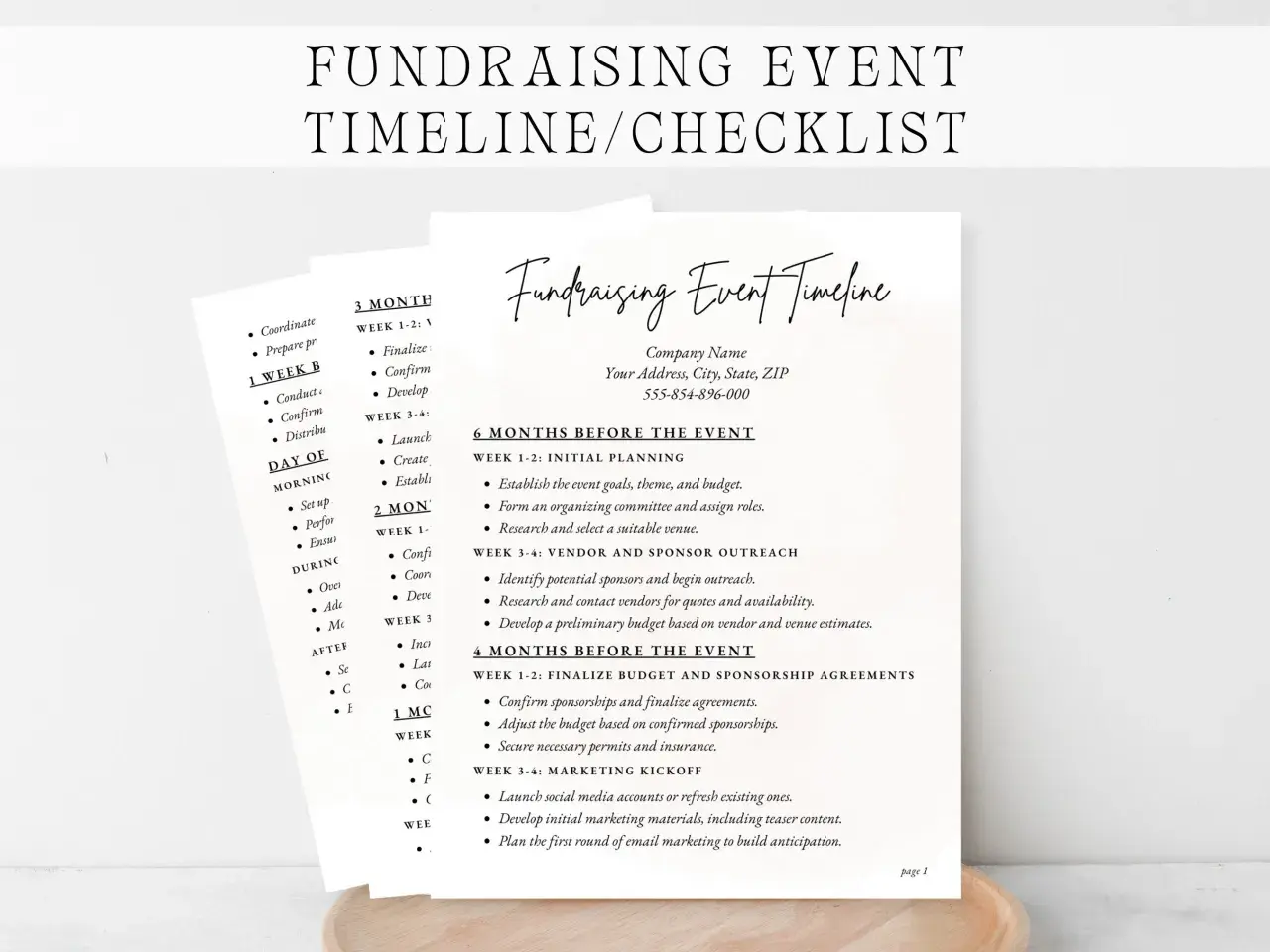
A strong fundraiser checklist keeps a community event from turning into a scramble. I use one to pin down the goal, map the budget, assign the work, and make sure the event still feels human instead of overproduced. The right list also protects the part that matters most: making it easy for people to give, stay engaged, and see the impact of their support.
The clearest plan turns one fundraising goal into a sequence of small, visible tasks
- Start with a net goal, not a vague wish to raise more.
- Choose the event format that fits your audience, staffing, and budget before you sign anything.
- Build in a 10% to 15% contingency so one surprise cost does not wreck the margin.
- Make giving mobile-friendly and as close to a one-minute flow as possible.
- Assign one owner for promotion, one for logistics, and one for follow-up.
- Thank people fast, then measure what the event actually produced.
Set the goal, audience, and format before you buy anything
I start with the number and work backward. A good event plan begins with a net fundraising target, a likely audience size, and a realistic date window; Givebutter’s 2026 planning guidance points smaller events toward roughly six months of preparation and more elaborate ones toward about eight. That timeline matters because every later decision, from venue size to ticket price, depends on it.
The format choice should match the supporters you already have, not the event you wish you could run.
| Format | Best for | Strength | Watch out for |
|---|---|---|---|
| In-person | Local communities, galas, auctions, and events built around energy and face-to-face connection | Strong emotional pull, easier networking, and better sponsor visibility | Higher venue, staffing, and production costs |
| Virtual | Supporters spread across a wider area or teams working with a smaller budget | Lower overhead and wider reach | Attention drops quickly, so the program should stay tight, usually around 60 to 90 minutes |
| Hybrid | Events that need both local momentum and remote participation | Flexible and inclusive | Hardest to coordinate because you are really running two experiences at once |
If I am unsure which model wins, I ask one blunt question: which format lets the most people participate without stretching the team too thin? Once that is answered, the rest of the plan becomes much easier to defend.
Build a budget that can survive real-world costs
The budget is where many well-meant events get fuzzy. I separate it into direct costs, revenue sources, and a contingency line so I can see whether the event is actually worth doing. A fundraiser that raises $30,000 but costs $26,000 is not the same as one that raises $30,000 and costs $8,000.
| Budget area | What to include | What I watch for |
|---|---|---|
| Direct costs | Venue, rentals, AV, permits, insurance, catering, printing, and payment processing fees | Get written quotes before you set ticket pricing |
| Hidden costs | Shipping, overtime, extra signage, last-minute supplies, gratuities, and replacement items | These are the costs that quietly erase margin |
| Revenue streams | Tickets, sponsorships, auctions, donations, and merchandise | Do not assume every stream will hit its best-case number |
| Contingency | A reserve equal to 10% to 15% of direct costs | Protects you from late fees, substitutions, and small surprises |
My rule is simple: if the event cannot absorb a 10% to 15% overage, the plan is too fragile. That buffer is often the difference between a clean win and a stressful break-even night.
To test the numbers, I like to sketch a simple example. If the net goal is $20,000 and direct expenses are $7,500, then sponsorships, ticket sales, auction bids, and on-site gifts need to clear the full expense layer before the campaign starts feeling successful. Once the budget is honest, logistics become much easier to judge.

Lock in logistics, permits, and vendors
This is the part of the plan that saves events from embarrassing surprises. I confirm the venue, capacity, load-in time, parking, AV, Wi-Fi, accessibility, and a rain plan before I pay deposits. If the event includes alcohol, a raffle, street use, or food service, I verify local rules early because those requirements vary by state and city in the U.S.
- Venue contract and cancellation terms.
- Insurance and any required permits.
- Vendor load-in, power, and sound checks.
- Accessible entry, restrooms, seating, and signage.
- Backup supplies such as extension cords, tape, printed schedules, and chargers.
- Volunteer count with at least one backup for check-in and one for cleanup.
I also confirm who owns each vendor conversation. A single missed email about catering counts as a logistics failure, even if the event itself looks polished. Once the backend is stable, I can focus on the part guests actually see: the message and the ask.
Create the promotion and donation system people will actually use
GoFundMe Pro’s event guidance is right about one thing that still gets overlooked: the giving experience needs to be mobile-first. I want supporters to be able to register, donate, or place a bid on a phone without zooming, guessing, or typing a long URL. Flexible payment options matter too, especially cards, Apple Pay, and Venmo, because friction at checkout quietly kills revenue.
My promotion stack is usually small but deliberate.
- A clear event page with the mission, ticket details, and one strong call to action.
- QR codes on printed materials so guests can donate without searching for the link.
- Email and social posts scheduled ahead of time, not drafted on the morning of the event.
- A sponsor packet with benefits, deadlines, and logo specs that partners can reuse.
- Template copy and graphics for anyone fundraising on your behalf.
- Text-to-give or text-to-donate setup if the event depends on fast, on-site contributions.
I usually push the messaging beyond please give and make the impact concrete. People respond faster when they understand what one ticket, one bid, or one donation actually does for the cause. With that in place, event day becomes less about explaining the mission from scratch and more about channeling momentum.
Run the event day with a clear team and run-of-show
The run-of-show is the minute-by-minute script for the day, and I never treat it as optional. It should cover arrivals, speeches, auctions, donation moments, volunteer handoffs, cleanup, and who makes decisions if something slips. On a busy event day, clarity is a form of kindness.
- One host or emcee to keep the flow moving.
- One person handling check-in and registration questions.
- One person watching donations, bids, or pledge totals.
- One volunteer lead who can reassign people quickly.
- One tech contact for microphones, slides, Wi-Fi, and payment tools.
- One person responsible for cash, receipts, and post-event reconciliation.
I also prepare for the unglamorous failures: a dead tablet, a missing extension cord, a microphone that cuts out, or a guest who forgot their ticket. Those are the problems that eat time if no one owns them. If the event includes auctions or peer-to-peer fundraising, I want digital bidding and live totals visible enough to create energy without becoming distracting.
When the schedule is tight and the team knows its lane, guests feel a smoother experience even if they never see the backstage work. That smoothness matters because it shapes how people feel when the event is over.
Follow up quickly and measure what the event really delivered
The work is not finished when the last table is cleared. I plan follow-up before the event happens so the thank-you process does not get delayed by fatigue. A strong rule of thumb, echoed in current nonprofit event guidance, is to send thank-you emails within 48 hours, call top donors soon after, and share an impact report within a month.
I measure more than gross revenue because gross numbers can flatter a weak event.
- Net revenue after all expenses.
- Attendance versus capacity.
- Average gift size and conversion rate.
- New donors acquired versus returning supporters.
- Sponsor retention for the next campaign.
- Volunteer retention and referral quality.
If I only look at the total raised, I miss whether the event is actually building a healthier support base. The real question is whether the night deepened trust and made the next ask easier. That is the difference between a one-off fundraiser and a repeatable community asset.
The details that protect both revenue and trust after guests leave
The last layer is the one most teams leave to chance, and it is usually where small leaks happen. I always double-check accessibility, receipt delivery, donor data cleanup, and the debrief notes while the event is still fresh. If the event raised money but left supporters confused, under-thanked, or unable to follow up, part of the value was lost.
A few small habits help more than people expect:
- Keep a backup copy of the guest list and the donor list offline.
- Write down what worked while the team still remembers the details.
- Capture a few photos or testimonials that can be reused in future appeals.
- Record vendor notes, from arrival times to any service gaps.
- Save the exact wording of the best-performing ask or auction pitch.
If I were setting this up for a first-time team, I would turn the debrief notes into a shared document and review them within 24 hours, while the gaps are still fresh. That small habit makes the next event cheaper to plan, easier to staff, and much more credible to supporters.
