
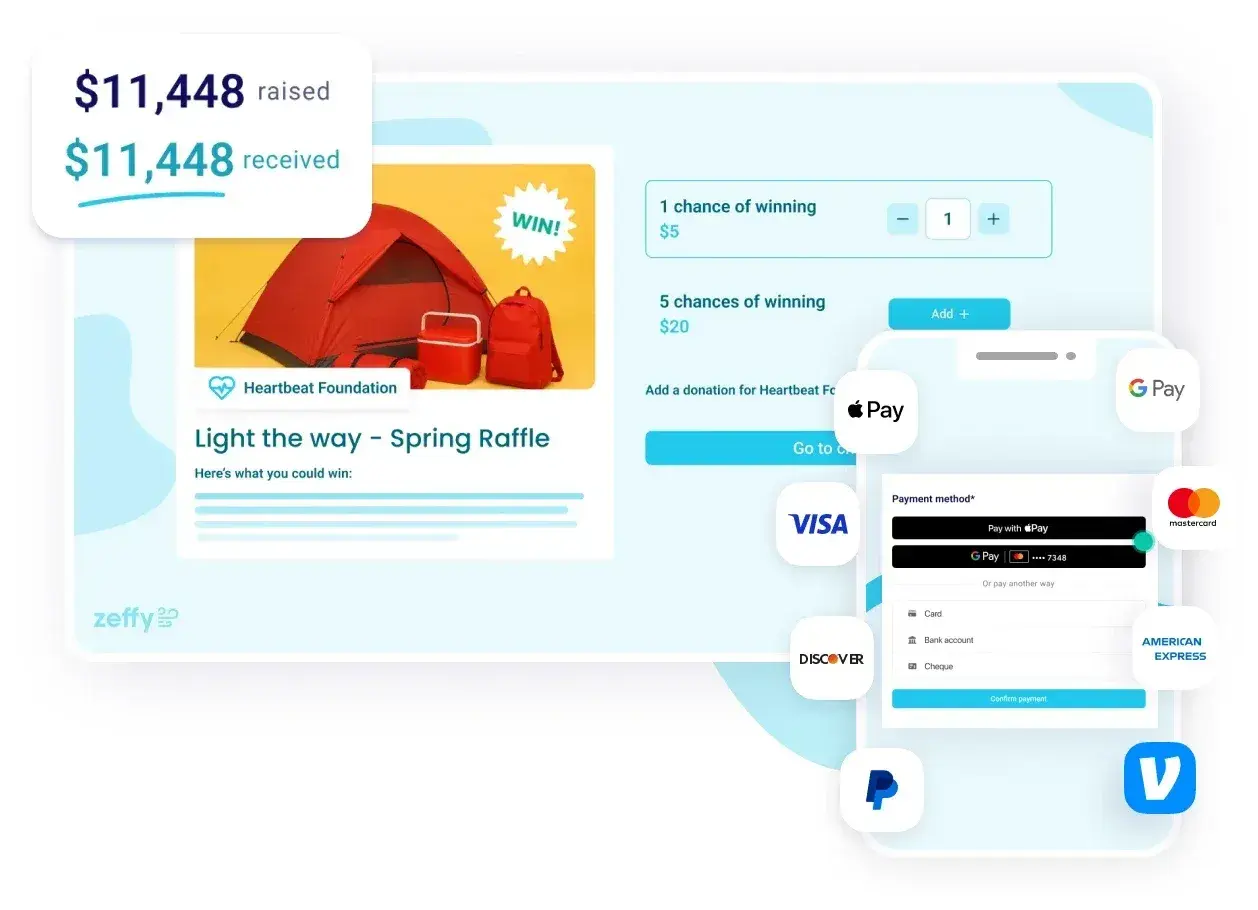
A raffle app is most useful when it removes manual work instead of just digitizing a ticket stub. For a nonprofit, that means handling mobile ticket sales, payment tracking, winner selection, receipts, and the recordkeeping that keeps a campaign from turning chaotic. In this article, I focus on what the software should do, what US compliance usually requires, how pricing really works, and how to choose a setup that fits a mission-driven team.
What matters most before you choose
- The best tools do more than sell tickets; they manage entries, receipts, drawing records, and exports.
- In the US, raffle rules are state-led, so legal fit matters as much as the interface.
- Budget for software, card processing, permits, staff time, and prize reporting.
- The right setup depends on campaign size, volunteer capacity, and whether you need donor data integration.
- Simple is usually better if the raffle is small; automation matters more as volume grows.
What this software should actually do for a nonprofit
The real value is operational. I look for a tool that can collect entries on a phone, assign unique ticket numbers, confirm payment instantly, and keep a clean ledger for the event team. If the platform only adds a checkout page, it is usually not enough for a serious fundraiser.
| Function | Why it matters | What I would expect |
|---|---|---|
| Mobile ticket sales | Most supporters buy on their phones, not on a desktop in an office | Fast checkout, clear ticket bundles, easy sharing |
| Unique entry tracking | Prevents confusion during the draw and makes reconciliation easier | Sequential ticket IDs or entry records |
| Payment and receipt handling | Reduces admin work and support questions | Instant confirmation, digital receipts, visible fees |
| Winner management | Transparency matters when donors want to trust the result | Random draw tools, audit trail, winner export |
| Data export | Useful for CRM follow-up, reporting, and tax records | CSV export or direct integration |
Once that basic job is clear, the feature list becomes much easier to judge.

The features I would not skip
At this point, the question is not whether the software works in a demo. It is whether it can survive a real event, a real volunteer team, and a real payment flow without creating extra cleanup later.
- Mobile-first ticketing. Supporters should be able to buy, share, and confirm entries on a phone without fighting the layout.
- Unique ticket numbers or entry IDs. This keeps the drawing auditable and makes reconciliation far easier.
- Secure payments and receipts. Card checkout, digital receipts, and clear fee disclosure reduce support questions.
- Winner selection controls. A random draw, timestamped audit trail, and exportable winner record help preserve trust.
- Participant data export. CSV export or CRM sync matters if you want to follow up with donors later.
- Text and email tools. Reminder messages and share links usually move the needle more than flashy design.
- Basic admin roles. Staff and volunteers should not all have the same permissions.
I would also ask whether the tool handles refunds, duplicate detection, and simple bundle pricing such as three tickets for one price. Those details seem minor until the day of the event, when they become the difference between a smooth flow and a support queue. Those features are only half the story; the other half is whether the raffle is legally structured where you operate.
Why compliance can make or break the campaign
I treat compliance as part of product selection, not something to clean up afterward. In the US, nonprofit raffles are regulated mostly at the state level, while the IRS comes into play when prizes get large enough to trigger reporting or withholding. That means the right tool is the one that helps you stay organized, but it does not replace legal review.
| Rule area | What it usually means | What I would verify before launch |
|---|---|---|
| State registration or license | Many states require some form of permit, registration, or license before ticket sales begin. | Whether your organization qualifies, and how long approval takes. |
| Annual or event limits | Some states cap the number of unlicensed public raffles or the gross receipts you can raise without a license. | Whether your campaign stays under those caps. |
| Winner reporting | The IRS treats raffle winnings as gambling income, and larger prizes can trigger Form W-2G and federal withholding. | How the tool collects winner identity details and tax forms. |
| Prize structure | Cash and noncash prizes are handled differently for tax purposes. | Whether your prize description and payout workflow match the prize type. |
California's Department of Justice is one example of how specific this can get: nonprofit raffles generally require registration, the filing needs to be in place before ticket sales start, and the state asks for a 60-day lead time in many cases. Washington is more explicit about unlicensed activity, limiting public raffles to two per year and $5,000 in gross receipts before a license is required. Those are not universal numbers, but they show why a one-size-fits-all approach is risky. After compliance, the next question is what the campaign will actually cost.
How the costs break down in the real world
For ticket pricing, I would not overcomplicate it. Recent nonprofit guides show a practical range of about $1 to $35 per ticket, with $1 to $10 common for school and community events and $25 to $100 more typical when the prize is premium and the audience can support it. The software side is separate: many platforms now advertise a 0% platform fee on some plans, while others charge roughly 6.9% on raffle entries, and card processing usually adds a low-single-digit percentage plus a fixed per-transaction fee.
| Cost item | Typical pattern | Why it matters |
|---|---|---|
| Platform fee | 0% to about 7% of entry sales, depending on the product and plan | This directly affects net proceeds. |
| Card processing | Usually a percentage fee plus a fixed amount per transaction | Card sales are convenient, but fees add up quickly on small tickets. |
| Permit or registration | Can be free, modest, or tied to filing deadlines and admin work | Delays can be more expensive than the fee itself. |
| Staff time | Setup, support, reconciliation, and winner verification | This is the hidden cost most teams underestimate. |
| Marketing and fulfillment | Creative assets, print, shipping, and prize handoff | A cheap platform is not a cheap campaign if promotion is weak. |
My rule of thumb is simple: if the total fee stack eats a meaningful share of a small raffle, the platform is not a fit. Once the budget is realistic, choosing the right setup becomes a matching exercise, not a guessing game.
Which setup fits your campaign size
The wrong product choice usually comes from buying for the wrong scale. A neighborhood fundraiser does not need the same stack as a year-round nonprofit with donor journeys and event calendars, and I would not pay for complexity that the team will never use.
| Setup | Best for | Strengths | Trade-offs |
|---|---|---|---|
| Raffle-first platform | One campaign or a few focused fundraisers each year | Fast launch, ticketing, drawing controls, basic reporting | Usually fewer CRM and broader fundraising tools |
| All-in-one fundraising suite | Nonprofits that run raffles alongside donations, events, and recurring giving | Cleaner donor records and less duplicate admin | Heavier interface and, sometimes, higher cost |
| Simple ticketing tool | Small community groups testing the waters | Low friction and easy setup | Weaker automation and fewer controls |
| Custom or no-code build | Teams with internal technical support | Tailored workflows and branding | Maintenance and compliance burden shifts to your team |
If I had to choose in one sentence, I would say this: use a dedicated raffle tool when speed matters, and an all-in-one platform when the campaign needs to live inside a larger fundraising system. The best answer depends less on features in isolation and more on how your team actually works. With the model chosen, the last job is to launch in a way that does not create cleanup later.
How I would launch it without creating cleanup later
When I see a raffle go sideways, the issue is usually not the drawing. It is the setup: unclear rules, untested checkout, missing permit paperwork, or a winner record that no one can reconstruct later. I would treat launch day as a controlled process, not a rush to go live.
- Confirm whether your state requires registration, a permit, or a license before sales open.
- Write the ticket rules in plain language: price, bundle offers, prize details, drawing date, and what happens if a winner cannot be reached.
- Test mobile purchase flow on more than one phone and network, not just on office Wi-Fi.
- Make sure payment confirmation, ticket numbering, and receipts all match the same entry record.
- Set permissions so one person can run the draw without having full control of every admin setting.
- Prepare winner verification, including identity and tax information if the prize could trigger reporting.
- Run a short reconciliation after the event so sales, fees, payouts, and prizes line up.
The most common mistakes are boring ones: hidden fees, unclear bundles, no backup plan for refunds, and no process for large prizes. If your team can explain the whole workflow in one minute, you are usually in good shape. That is usually what separates a smooth fundraiser from one that feels improvised.
The details that keep the raffle credible
Two details do more to protect trust than most teams expect. First, keep the prize story simple and concrete. People respond better when they understand exactly what they are buying a chance to win, and why the fundraiser matters. Second, make the drawing feel visibly fair, whether that means a live random draw, a timestamped audit trail, or both.
- Keep the entry path short. Every extra step lowers conversion.
- Show the ticket price clearly. Surprise fees damage trust fast.
- Use one owner for rules and one owner for records. Shared responsibility often becomes no responsibility.
- Plan the follow-up before the draw. Winner contact, thank-you messages, and donor retention matter after the prize is awarded.
For most nonprofits, the right tool is the one that makes the fundraiser feel simple to supporters and accountable to staff. If it does both, the software is doing real work for the mission.
