
A sponsored reading event works best when the rules are easy, the sponsor ask is clear, and the story feels bigger than a classroom challenge. For schools, libraries, and community groups in the United States, a smart read-a-thon can raise money, build reading habits, and give donors a direct way to support literacy instead of just writing a check. In this article I focus on the ideas that actually help: event formats, theme choices, reward structures, and the planning details that make participation stick.
The strongest events are simple to join, easy to sponsor, and fun to talk about
- Choose the reading metric first, then build the theme and prizes around it.
- Per-minute pledges, flat gifts, and team goals each work best for different audiences.
- Themed events are most effective when they support reading, not distract from it.
- Reward systems should recognize participation and progress, not only top totals.
- Keep the campaign window tight enough to maintain momentum and long enough to gather pledges.
Choose the pledge model before you choose the decorations
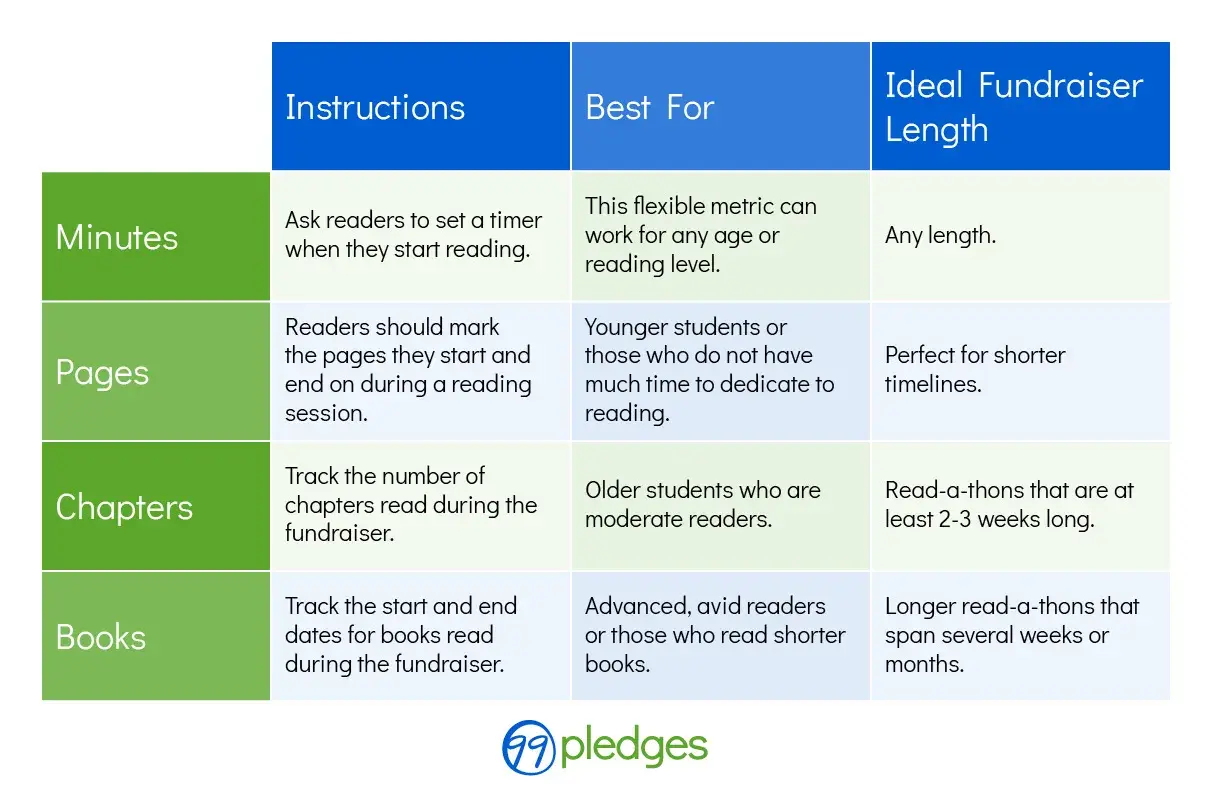
The biggest planning mistake I see is starting with the poster and ending with the rules. A read-a-thon is really a sponsorship model first and an event theme second, so I always decide how readers will measure progress before I think about colors, slogans, or bonus prizes. Minutes read are the most flexible option for mixed-age groups, pages work better for older students, and books finished can be motivating when the audience already reads at a steady pace.
A read-a-thon is a form of peer-to-peer fundraising, which means every reader is effectively running a small campaign with help from family and friends. That is why the measurement choice matters so much: the easier the log and the sponsor ask, the more likely people are to participate without hesitation.
| Model | Best fit | Why it works | Where it can fall short |
|---|---|---|---|
| Minutes read | Elementary schools, libraries, mixed-age programs | Fair for different reading levels and easy to track daily | Requires a simple log and a clear rule for audiobooks or read-aloud time if you allow them |
| Pages read | Upper elementary, middle school, book clubs | Feels concrete and is familiar to older readers | Can penalize longer books or struggling readers |
| Books finished | Older students, summer reading drives | Very simple to explain and celebrate | Too blunt for young readers or anyone reading heavier books |
| Flat donation | Busy families and community donors | Fastest ask, easiest to share, least confusing for sponsors | Does not scale with reading volume, so it needs a strong story of impact |
In many U.S. school campaigns, I like a hybrid ask: a flat gift for casual supporters and a per-minute option for families who want the donation to track effort more closely. A practical range is often around $0.10 to $0.25 per minute or a flat $10 to $25 donation, because that keeps the ask low enough that sponsors do not have to do mental math for long. Once that structure is settled, you can build a theme that makes the event feel alive instead of merely organized.

Theme ideas that make the event feel memorable
A theme is useful only if it helps people picture the event quickly. The best ones create a small world around reading: a map, a campsite, a mystery, a mission, or a destination. I prefer themes that can be explained in one sentence, because parents, volunteers, and sponsors need to understand the hook without reading a long guide.
| Theme | What it looks like | Why I like it |
|---|---|---|
| Read Around the World | Readers pick books from different countries or cultures and mark their progress on a map | It adds curiosity and fits a mission-driven, community-minded event |
| Camp Read-a-Lot | Blankets, flashlights, tents, and cozy reading corners at school or home | It is visually strong and easy for families to recreate without much expense |
| Under the stars | Evening reading, pajamas, paper stars, and a calm, library-like atmosphere | It feels special without needing a complicated activity schedule |
| Mystery at the library | Clues, bookmarks, and story-based challenges unlocked by reading goals | Works especially well for upper grades because the event feels like a game |
| Treasure hunt challenge | Milestones reveal new clues, small prizes, or class achievements | Good for schools that want progress to feel active and visible |
| Community heroes | Readers are framed as helpers supporting books, literacy, or a local cause | Fits nonprofit or library campaigns where social impact matters as much as the fundraiser |
The right theme also makes promotion easier. A single visual idea can carry your emails, signs, pledge pages, and social posts, which saves time and keeps the messaging consistent. From there, the next decision is what actually keeps readers moving through the event.
Rewards that build momentum without turning reading into a contest
I am cautious with prize tables that only reward the biggest totals. They usually create a gap between confident readers and everyone else, and that gap is bad for morale. A better model is to use three layers of recognition: small participation rewards, milestone rewards, and one public celebration that recognizes the whole community.
- Participation rewards: a bookmark, sticker, reading passport stamp, or a shout-out board for everyone who logs time.
- Milestone rewards: extra recess, pajama day, choosing the next read-aloud, or a class reading picnic after a shared goal.
- Community rewards: a school-wide dance break, a library display, or a public thank-you wall when the event hits its fundraising target.
What matters most is that the reward matches the behavior you want repeated. If the goal is steady reading, reward consistency. If the goal is participation, reward everyone who shows up. If the goal is community support, make the final celebration visible enough that sponsors can see what their money made possible. That leads naturally into the part that determines whether families actually stay engaged after launch.
A simple launch plan that keeps families engaged
The strongest campaigns I have seen are not complicated. They use one page of rules, one clear fundraising story, and a short timeline that people can understand without a meeting. For most schools and libraries, I would keep the event to one to two weeks, or up to a month only if you already have a strong reading culture and reliable communication.
- Set the goal in plain language. Name the reading target, the fundraising target, and the community outcome, such as new books, library supplies, or literacy programming.
- Create the sponsor ask. Give families both a flat-donation option and a reading-based option, then explain what each one supports.
- Launch with a short kickoff. Model how to log reading, what counts, and how readers should ask for sponsorships from relatives, neighbors, and friends.
- Share one mid-event update. A simple class leaderboard, a photo of a reading corner, or a progress bar is usually enough to keep energy up.
- Close with a public thank-you. Report the minutes, money, or books raised, and name the concrete impact so donors know the event mattered.
Online tools are useful when your donors live outside the neighborhood, but paper logs still work fine for small groups as long as someone owns the final tally. I also recommend making the sponsor message easy to forward by text or email, because many donations come from grandparents, aunts, uncles, and family friends who never see the school flyer. Once the launch is clear, the main remaining risk is avoidable mistakes.
Mistakes that drain energy from the event
Most weak read-a-thons fail for predictable reasons, and almost all of them are fixable. The problem is rarely a lack of enthusiasm; it is usually a rule set that is too fussy, a prize system that is too narrow, or a fundraising story that never becomes concrete.
- Making the tracking system too complicated. If families need a spreadsheet to understand the event, participation drops.
- Offering only top-reader rewards. That can feel unfair and quietly discourages the students who need the confidence boost most.
- Asking for too much too soon. A sponsor letter with three options is fine; a packet with six pages of instructions is not.
- Ignoring different reading levels. Minutes are usually fairer than pages when the group includes new readers, reluctant readers, and advanced readers together.
- Forgetting the why. Donors respond better when they know whether they are funding books, a library update, or a literacy program in the community.
- Letting the event run without a finish line. Momentum needs a clear end date, otherwise even good ideas start to feel soft and unfocused.
When I review campaigns that underperform, the pattern is usually the same: the event asked for effort but did not make the outcome feel visible. Fix that, and the rest becomes much easier to manage. The final question is what combination tends to work best in the real world.
The version I would run first in an American school or library
If I were planning one event from scratch, I would choose a minute-based read-a-thon with a simple theme, a flat-donation option for casual supporters, and a per-minute pledge for families who want a more direct link between effort and giving. I would keep the reward structure light, use only a few milestones, and make the impact statement specific: new books, better library access, or literacy support for children who need it most.
That combination works because it respects the three people who have to say yes: the reader, the sponsor, and the organizer. It is also flexible enough to fit a PTA fundraiser, a public library program, or a neighborhood literacy drive, which is why this format keeps showing up in community-centered events. If your organization also runs auctions or other fundraisers, a read-a-thon can complement them by bringing in families and younger readers who want a simpler way to help. Keep the mechanics simple and let the reading itself stay at the center.
