
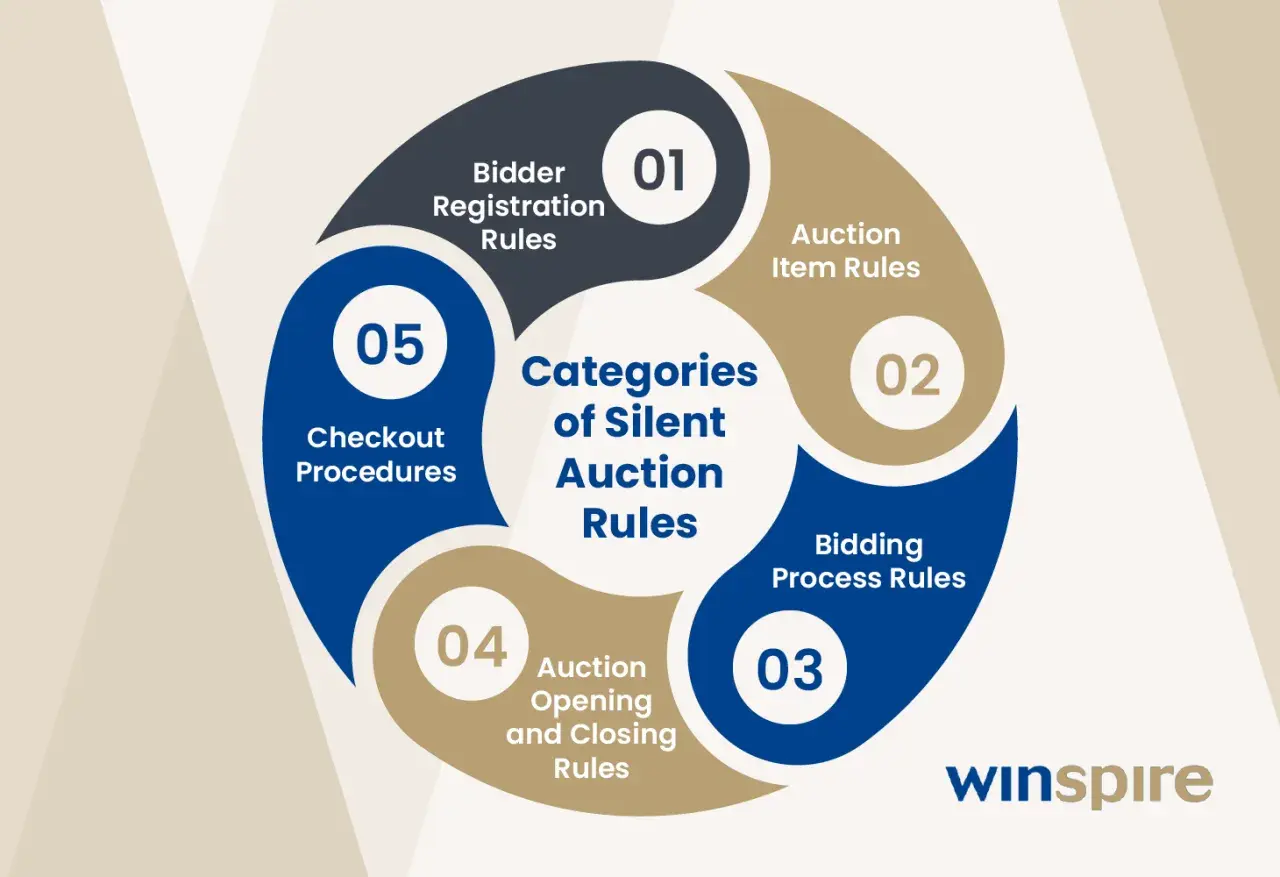
Key points to keep in mind before you bid or host one
- Silent bidding is private, not passive. Guests still compete, but they do it by writing bids down or using a phone.
- The highest valid bid at close time wins. Some platforms use a soft close, which can extend bidding if a late bid comes in.
- Pricing matters more than most hosts expect. Common starting bids land around 30-50% of fair market value, with increments near 10% of FMV.
- Digital bidding is now common. Paper bid sheets still work, but mobile bidding reduces handwriting issues and makes outbid alerts possible.
- Item quality drives revenue. Experiences, local packages, and genuinely desirable items usually outperform filler inventory.
How a silent auction works from start to finish
At its core, a silent auction is an event where items are displayed so people can inspect them before they bid. There is no auctioneer calling out numbers; instead, guests bid quietly on paper or through a digital platform. I think of it as a mix of browsing, shopping, and competition: you move at your own pace, but every bid changes the field.- Guests browse the items. Each lot usually has a title, description, starting price, and bidding rules.
- Bids are placed privately. In paper setups, bidders write their name or bidder number and the amount on a sheet. In digital setups, they bid from a phone or laptop.
- The auction stays open for a set window. Some events run for an hour; others stay open for an evening or even longer.
- The highest valid bid when bidding closes wins. If two people submit the same amount, the event's rules decide who wins. Some platforms also allow a buy-it-now price or automatic max bids.
- Winning bidders pay and collect items. Good events make checkout obvious so people do not leave confused or stuck in line.
The basic flow is simple, but the details are what keep the process fair and organized. That is why the bidding format matters so much.

Paper bid sheets, mobile bidding, and hybrid setups
The old image of a silent auction is a table full of paper bid sheets, but that is only one version of the format. Many events now use mobile bidding because it removes handwriting problems, allows remote participation, and lets guests get outbid alerts instantly. Small community events can still run well on paper, though, especially when the guest list is modest and the room is easy to manage.
| Format | How guests bid | Strengths | Limits | Best fit |
|---|---|---|---|---|
| Paper bid sheets | Write a bid on a physical sheet beside the item | Simple, low-tech, easy to understand | Handwriting issues, manual monitoring, slower checkout | Small in-person events |
| Mobile bidding | Bid from a phone or laptop, often with QR-code access | Outbid alerts, remote participation, faster recordkeeping | Needs reliable internet and a little setup | Larger galas and hybrid events |
| Hybrid setup | Guests can use either paper or digital bidding | Flexible for mixed audiences | More complex to manage | Events with both tech-friendly and traditional guests |
In practice, the best format is the one your guests will actually use without confusion. A polished paper setup can outperform a clumsy app, but a well-run mobile system usually scales better and makes checkout faster. Once that choice is clear, the next question is how to price the items so people keep bidding.
How pricing and bid rules keep the auction moving
Most frustration in silent auctions comes from bad pricing, not bad enthusiasm. If a starting bid is too high, people hesitate. If increments are too small, the auction drags. If the close time is unclear, guests feel like the rules changed mid-game. The cleanest fix is to set the numbers before the event starts and explain them everywhere they appear.
| Rule | Common range | Why it helps |
|---|---|---|
| Starting bid | 30-50% of fair market value | Keeps the item approachable and invites early bids |
| Minimum increment | About 10% of fair market value | Keeps bidding competitive without turning every increase into a tiny fight |
| Buy-it-now price | 150-200% of fair market value | Rewards decisive bidders and can cap bidding on hot items |
| Closing rule | Fixed end time or soft close | Prevents confusion about when bidding is actually over |
A soft close is useful when you want to avoid last-second bidding snipes; it gives everyone a fair chance to react. A hard close is simpler to explain, but it can feel abrupt if the room is crowded and people are still deciding. I usually prefer whichever version the team can explain in one sentence without hand-waving.
Once the math is set, the event becomes much easier to run. The next layer is understanding why the format is so attractive to nonprofits and community events in the first place.
Why silent auctions work well for community events
Silent auctions fit community fundraising because they turn passive support into active participation. Instead of simply asking guests to donate, they give people something to browse, compare, and choose. That small shift matters: it creates energy in the room and gives supporters a reason to stay engaged longer.
- They feel participatory. People enjoy competing for something they actually want.
- They pair well with other events. Galas, golf outings, school banquets, and church dinners all give the auction a natural audience.
- They can be built around donated goods. That lowers upfront cost and can improve return on investment.
- They support local impact. Community-made baskets, local services, and experiences make the fundraiser feel connected to the cause.
- They scale from small to large. A neighborhood benefit can run the same basic model as a major nonprofit gala.
When the item mix is thoughtful, the format does more than raise money. It also tells a story about the community around the cause, which is why the best auctions feel less like transactions and more like a shared effort. That strength disappears quickly, though, when the setup is sloppy.
The mistakes that quietly flatten bidding
The biggest silent auction problems are usually boring ones: unclear rules, weak items, poor signage, and a checkout process no one has rehearsed. Those issues do not just annoy volunteers; they suppress bids because guests stop trusting the flow. If I had to pick the most common failure point, it would be this: organizers assume interest will carry the event even when the mechanics are unclear.
| Mistake | What it causes | Better approach |
|---|---|---|
| Starting bids set too high | Guests hesitate and walk away | Lower the entry point so the item feels attainable |
| Too many average items | The room loses energy | Curate fewer, better lots that fit your audience |
| Unclear close time | Arguments and missed bids | Display the end time everywhere and repeat it aloud |
| Poor volunteer coverage | Invalid bids and missed questions | Assign staff to monitor tables and answer basic questions |
| Slow checkout | Long lines and frustrated winners | Separate pickup, payment, and receipt steps |
None of these problems is dramatic on its own, but together they make the event feel amateurish. Fixing them usually does more for revenue than adding another table of filler items ever will. Once the room is humming, the final phase is closing the auction cleanly.
What happens after the auction closes
Closing the auction is not the same as finishing it. After bidding ends, someone has to verify the winning bids, notify the winners, collect payment, and hand out or arrange delivery of the items. In a paper setup, that often means checking each sheet by hand. In a digital setup, the platform may notify winners automatically, which saves time and reduces mistakes.
- Verify the winner. Use the last valid bid, not the last scribble someone added after the deadline.
- Collect payment quickly. The smoother the checkout, the less likely people are to disappear before paying.
- Distribute items clearly. Big items may need pickup instructions, while physical goods may need shipping notes.
- Keep records. Good records help with event follow-up and planning the next fundraiser.
For a charity event, this final handoff matters more than people expect. A fast, fair close leaves supporters feeling good about the cause, which makes them more likely to return next time. The last thing I pay attention to is the experience from the guest's side, because that is where a simple auction either feels effortless or turns into friction.
The small details that make the format feel easy for guests
The best silent auctions are not the most complicated ones. They are the ones where every rule can be understood in a glance and every action has an obvious next step. If you are attending one, look for the close time, minimum increment, and checkout location before you bid. If you are hosting one, keep the item labels clear, the signs readable, and the staff ready to answer the same three questions all night.
In that sense, the format works because it respects people's attention. Guests get the fun of competing without the noise of a live auction, and organizers get a fundraising model that can be scaled to the size of the event. When the rules are clear and the items are worth wanting, a silent auction becomes less about bidding mechanics and more about helping a cause move forward.
