
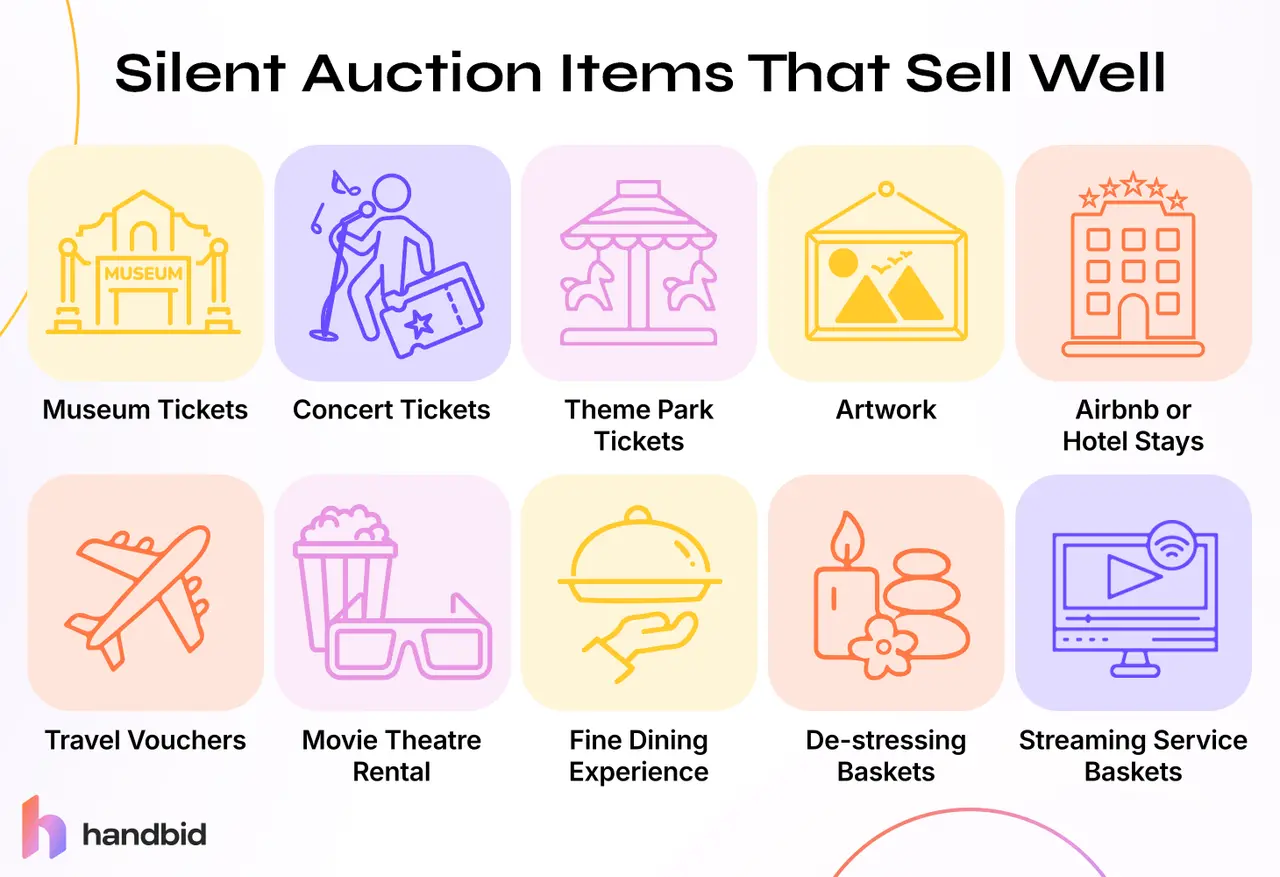
Silent auctions raise more when the item list feels deliberate: a mix of useful, desirable, and easy-to-bid-on packages that match the audience. This guide explains how to get silent auction donations by narrowing your wish list, choosing the right prospects, and making each ask easy to approve. I’ll also show how to turn smaller gifts into stronger packages so the event does not depend on a few lucky big-ticket donations.
The fastest way to secure auction items is to combine warm asks, specific requests, and early follow-up
- Start with board members, current donors, staff, and volunteers who already have local business relationships.
- Build a wish list with specific item types, target values, and backup options before sending any requests.
- Give businesses at least 6 to 8 weeks, and 60 to 90 days for travel or experience packages.
- Ask for a clear item, not “anything you can spare”; specific requests are easier to approve.
- Track every donation with the donor name, description, and fair market value so cataloging and acknowledgments are painless.
- Build themed packages from smaller gifts when premium items are harder to secure.
Build a wish list donors can actually say yes to
I never start with a blank outreach list. I start with item bands and categories, because a donor can say yes faster when the request is concrete. That is especially true for silent auctions, where the strongest catalogs usually come from a mix of practical items, experiences, and a few standout packages.
For a typical event, I like to map the catalog into three price bands: entry-level items for easy wins, mid-tier items for the bulk of the auction, and a few premium pieces for headline appeal. That mix keeps procurement realistic and gives bidders options at different budgets.
| Value band | Good asks | Why it works | Best source |
|---|---|---|---|
| $25-$75 | Gift cards, class passes, small product bundles | Easy approvals and low friction | Local businesses and supporters |
| $100-$250 | Restaurant packages, spa services, family outings | Strong bidder interest without feeling out of reach | Service providers and mid-size businesses |
| $250+ | Weekend stays, premium tickets, private experiences | Headline lots that anchor the catalog | Established partners and travel brands |
When I log each prospect, I also note the fair market value, meaning what a willing buyer would reasonably pay in the open market. That keeps the catalog cleaner later and prevents awkward mismatches between what a donor gave and how the lot is described. Once the wish list is clear, the next question is who should receive it first.

Start with warm relationships before you send cold requests
The easiest wins usually come from people who already know your mission: board members, long-time supporters, staff, volunteers, and families connected to the cause. Warm introductions matter because they lower the trust barrier before you even mention the auction.
| Outreach source | Likelihood of a yes | Best ask | Why it works |
|---|---|---|---|
| Board member introduction | High | Local business donations, services, gift cards | The donor gets a trusted introduction instead of a cold pitch. |
| Corporate donation portal | Medium to high | National brands, chain stores, experience requests | The request follows the company’s preferred process. |
| Cold email or letter | Medium to low | Niche brands with clear mission fit | It can work, but it takes more repetition and better targeting. |
| Supporter-built bundles | High | Themed baskets and smaller package fillers | They are fast to assemble and reduce pressure on outside donors. |
If a company has a donation portal, I use it. Many national brands prefer their own CSR form over a generic email because it routes the request internally and reduces back-and-forth. For smaller local businesses, a personal note from a mutual contact usually outperforms a polished template. That brings us to the ask itself, which needs to feel specific rather than vague.
Write the request like a business case
Most donation requests fail because they ask for “anything you can donate.” That sounds easy for the sender, but it makes the recipient do the work of deciding what to give. I would rather make one clear ask than force a business to guess what would help.
Say exactly what you want
Use a specific request: a gift card, a dinner certificate, a family pass, a one-hour service package, or a product bundle. Specificity is not rude; it is efficient. It also signals that you understand the donor’s business and are not mass-mailing the same note to everyone.
Read Also: Raffle Ticket Templates: Design for Flawless Fundraisers
Make the next step obvious
- Say who you are and what the event supports.
- Name the item or range of items you want.
- Explain why that item fits your audience.
- Set a response deadline.
- Offer a simple donation form or reply path.
- Thank them before and after the ask.
If you want recognition in exchange, keep that part simple too. A logo in the program, social mentions, or a sponsor sign is usually easier for a business to understand than a vague visibility promise. The stronger the request, the easier it is for someone inside the company to approve it and move on.
Time the outreach and follow-up like a campaign
Timing matters more than most teams expect. As a working rule, I give businesses at least 6 to 8 weeks, and I allow 60 to 90 days for travel, wellness retreats, or other experience-based packages. If you wait until the final month, you are usually asking people to solve your timeline problem.
The follow-up cadence matters too. I usually send the first reminder about a week after the initial request, then one more nudge later if the event is still open. That keeps the process active without becoming noisy.
For U.S. organizations, I keep the acknowledgment workflow tidy because the IRS requires a written acknowledgment for charitable contributions of $250 or more. If you provide a benefit in return, describe that benefit clearly and be precise about its fair market value. A thank-you should still read like a thank-you, not a second pitch.
Turn smaller gifts into auction packages that feel bigger
Not every donor can give a headline item, and that is fine. Smaller gifts become much more valuable when I group them into a theme that feels useful or fun. This is one of the easiest ways to stretch a modest donor base without lowering the quality of the auction.
Here are a few combinations that consistently make sense:
- A coffee shop card, a bakery certificate, and a donated mug become a neighborhood morning-out package.
- A salon service plus skin-care products becomes a self-care lot.
- Sports tickets, a parking pass, and a dining gift card turn into a game-night bundle.
- A family pass, a pizza certificate, and a toy-store card create a weekend-with-kids package.
The donor feels their piece is manageable; bidders see a complete experience. That is the real leverage point in silent auctions. You do not need every donor to provide something huge. You need enough well-matched pieces to make the final lot feel valuable and intentional.
Avoid the mistakes that make good donors hesitate
When donation requests stall, the problem is usually not the cause. It is the process. I see the same few mistakes over and over, and they are all fixable.
- Asking too late and expecting a fast turnaround.
- Using one generic template for every prospect.
- Requesting “anything” instead of a clear item.
- Ignoring the donor’s business model and asking for the wrong kind of support.
- Failing to keep a clean log of what came in, from whom, and when.
- Sending a thank-you that reads like another ask.
- Overpromising exposure that the event cannot realistically deliver.
If a business says no, I do not treat that as a dead end. I log the outcome, thank them anyway, and revisit only if the fit makes sense the next season. A disciplined no is better than a rushed yes that leads to confusion later.
What I’d do in the next 30 days to fill the auction catalog
- Days 1-3: Set your item bands, target values, and must-have categories.
- Days 4-7: Build a prospect list of 20 to 30 names, starting with warm contacts.
- Week 2: Send the first request wave with one specific ask per prospect.
- Week 3: Follow up on unanswered requests and submit any company portal forms.
- Week 4: Assemble smaller donations into themed packages, record fair market values, and issue acknowledgments.
If I were building the event from scratch, that is the sequence I would trust. It keeps the work moving, protects relationships, and gives the auction a better mix of items without relying on last-minute luck. Done well, the process becomes repeatable, which is what makes next year easier than this one.
