
Good nonprofit event management starts with a clear tradeoff: do you want the night to raise money, deepen donor relationships, or do both without exhausting your team? The best fundraising events and auctions are not the biggest ones; they are the ones that feel mission-first, easy to attend, and clean to close out. This guide walks through the decisions that matter most: choosing the right format, building a realistic budget, running the auction itself, and handling the U.S. tax details that often get overlooked.
These are the decisions that matter before the first invite goes out
- Set one primary goal before you choose a venue or auction style.
- Match the event format to your audience, your staff capacity, and your budget.
- Build the net-revenue model first so the event can survive on paper, not just in the room.
- Curate auction items for demand and clarity, not just volume.
- Handle quid pro quo disclosures, acknowledgments, and fair-market-value language correctly in the U.S.
Start with the mission, not the room layout
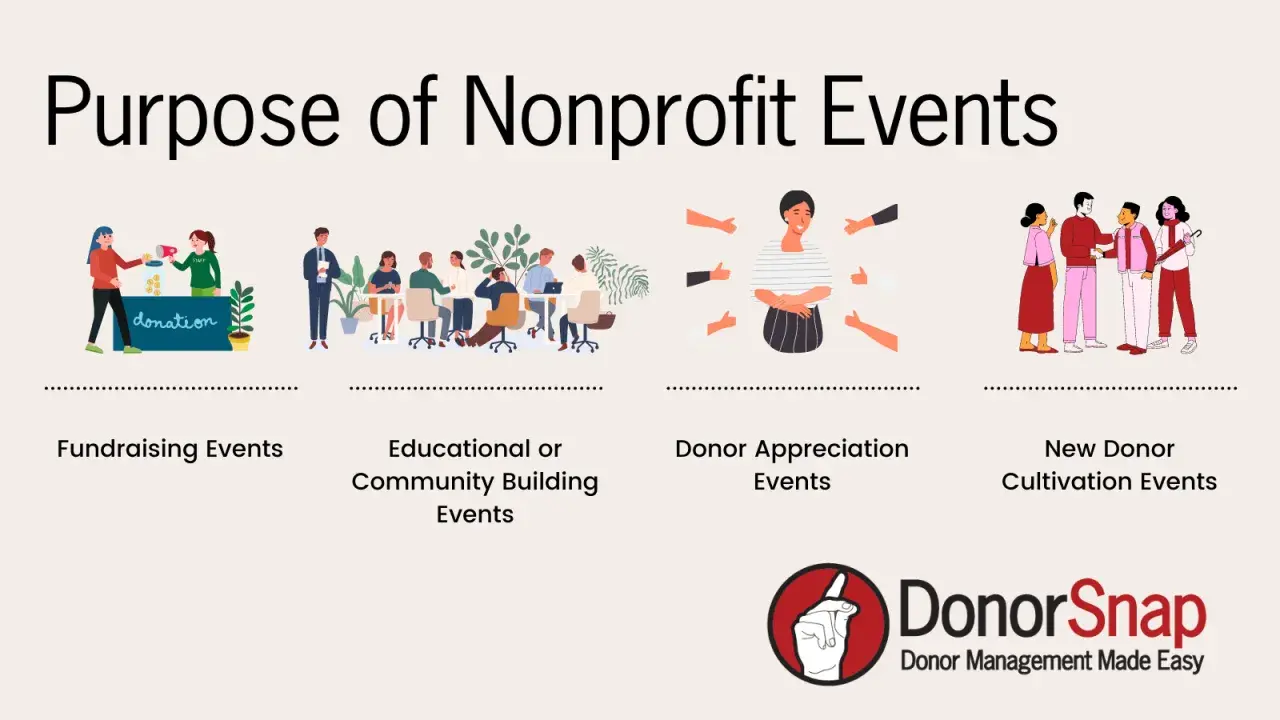
I start by asking what the event must actually do. Some events are designed to bring new people into the orbit; others are stewardship moments for major donors; others are straight revenue plays. The goal should shape everything else: ticket price, guest list, auction format, and how much production value is worth paying for.
- Acquisition events prioritize reach, easy entry, and a low-friction ask.
- Stewardship events prioritize recognition, hospitality, and donor relationships.
- Revenue-first events prioritize net margin, sponsor leverage, and strong auction mechanics.
A useful test is whether you can describe the event in one sentence without leaning on vague language like “nice evening” or “big turnout.” If the sentence is fuzzy, the plan usually will be too. Once that answer is clear, the next decision is format.

Choose the event model that fits your audience and workload
The format should fit both the audience and the team running it. I like to match the event model to the level of energy the room can realistically sustain, because no format saves a bad fit.
| Format | Best for | What it does well | Main risk |
|---|---|---|---|
| Benefit gala | Major donors, sponsors, and formal stewardship | Strong storytelling, premium feel, high perceived value | Higher production costs and more moving parts |
| Silent auction | Broad donor bases and mixed-age audiences | Steady engagement and easy add-on fundraising | Needs strong item curation and smooth checkout |
| Live auction | Warm rooms with a charismatic emcee or auctioneer | Fast revenue spikes and strong room energy | Depends heavily on pacing and audience warmth |
| Hybrid mobile auction | Teams that want in-person and remote participation | Wider reach, real-time bidding, simpler payment capture | Tech setup and guest onboarding can make or break it |
In 2026, I treat mobile bidding as the baseline for most auctions because it reduces check-out friction and keeps people engaged even after they step away from the table. That said, technology only helps when check-in is smooth, Wi-Fi is reliable, and the guest instructions are simple enough that nobody needs a tutorial at the table. When those pieces are weak, a clever format can still feel clumsy.
Once the format matches the audience, the budget has to prove the event can survive on paper before it survives in the room.
Build the fundraising math before you book anything
I want the full budget model before I sign anything. Start with likely revenue lines: sponsorships, ticket sales, auction proceeds, paddle raises, and any matching gifts. Then list every cost line: venue, catering, AV, payment processing, software, decor, printing, staff overtime, insurance, security, and shipping or delivery of auction items.
The simplest checkpoint is this: can confirmed sponsorships and ticket income cover fixed costs without counting a single winning bid? If the answer is no, the event is probably too large or too expensive for the audience.
For smaller local events, 12 to 16 weeks can be enough if the vendor list is already warm. For a gala or auction that depends on sponsorships and item procurement, 4 to 6 months is a floor, and 6 to 9 months is safer. I also leave room for a contingency line, because last-minute AV, staffing, and shipping changes are common.Once the economics are sane, the real work is making the auction items themselves easy to want and easy to win.
Run the auction like a production, not a side attraction
I prefer to think about the auction as a small broadcast, not a side table. Every step should lower friction: item discovery, bidding, reminders, payment, and pickup.
Build a catalog that feels curated
A strong catalog is tight, readable, and aspirational. Guests bid harder when they understand the story behind an item and can picture the experience clearly. Experiences, travel, and donor-supplied packages often outperform generic merchandise because they feel personal rather than transactional. If you have a live auction, reserve it for a few headline lots that can genuinely lift the room.
Use mobile bidding to reduce friction
Mobile bidding works because it shortens the distance between interest and action. People can bid from their seats, receive updates instantly, and check out without a long line. I still like a trained volunteer at each table or station, because tech should speed up generosity, not replace hospitality. Bid increments should feel meaningful but not punishing; for mid-range lots, increments around 5% to 10% of value usually keep momentum moving.
Read Also: Silent Auction Bid Sheets - Design for More Bids
Close while the energy is high
The best close is not the longest one. I would rather end with a clear countdown, one final appeal, and an easy payment flow than stretch the room with extra announcements. Post-event pickup, delivery, and receipts should be planned before the doors open, not improvised after midnight.
The auction can be polished and still be risky if the tax language is sloppy, which is why the U.S. compliance details deserve their own check.
Keep the U.S. legal and tax details clean
The IRS makes one boundary especially important: when donors receive goods or services in return, the deductible part is limited to the amount above fair market value. For quid pro quo contributions over $75, the charity must provide a written disclosure statement. And if a donor wants to deduct a charitable contribution of $250 or more, they need a written acknowledgment.
That is why auction catalogs, ticket pages, and sponsor packets should spell out fair market value clearly. If someone pays $100 for an item worth $40, the charitable portion is generally $60, not the full ticket price. Raffles and gaming can also trigger separate federal and state rules, so I do not leave those decisions to guesswork. Sponsorships deserve clean treatment too: an underwriting package is not the same as an advertising sale, and the copy should reflect that difference.
I always have development and finance review the language before anything is published. A few careful edits here can prevent messy donor conversations later. Once the event is compliant and live, the last question is whether it actually improved the organization beyond the single night.
Measure more than gross revenue
I look at more than gross revenue, because a healthy event leaves behind a stronger pipeline, not just a larger deposit. The most useful numbers are the ones that tell me whether the event created durable donor behavior or just one-night enthusiasm.
| Metric | What it tells you | What a weak number usually means |
|---|---|---|
| Net revenue | The real money left after direct costs | The format was too expensive or pricing was off |
| Cost to raise $1 | The efficiency of the event | Too much spend for too little return |
| Bidder participation rate | How engaging the auction was | The item mix or onboarding was weak |
| Sponsor renewal rate | The long-term value of the event | Sponsors did not see enough fit or follow-through |
| 30 to 90 day retention | Whether the event strengthened the donor relationship | The event created activity without connection |
The most revealing number is often not the evening total but how many people came back, gave again, or took a next step within 30 to 90 days. A room can feel lively and still fail if it produced no usable donor data or no repeatable relationships. I look for evidence that the event made the next conversation easier.
When that happens, the event becomes part of a real fundraising system instead of a one-off spectacle.
The parts that make the next auction easier to run
If I were building the next event cycle, I would keep the run-of-show, the item request template, the sponsor deck, and the post-event email sequence. Those assets do more than save time; they make the next fundraiser more consistent, which is usually what turns a one-off success into a durable program.- Send thank-yous and receipts within 48 hours.
- Debrief with staff and volunteers within one week.
- Save vendor notes on AV, catering, check-in, and payment flow.
- Keep the strongest item categories and retire the weak ones.
- Segment supporters into first-time guests, repeat bidders, sponsors, and major-donor prospects.
The strongest fundraising events are not the flashiest. They are the ones that fit the mission, respect the guest experience, and leave the team with better data than it had before.
