
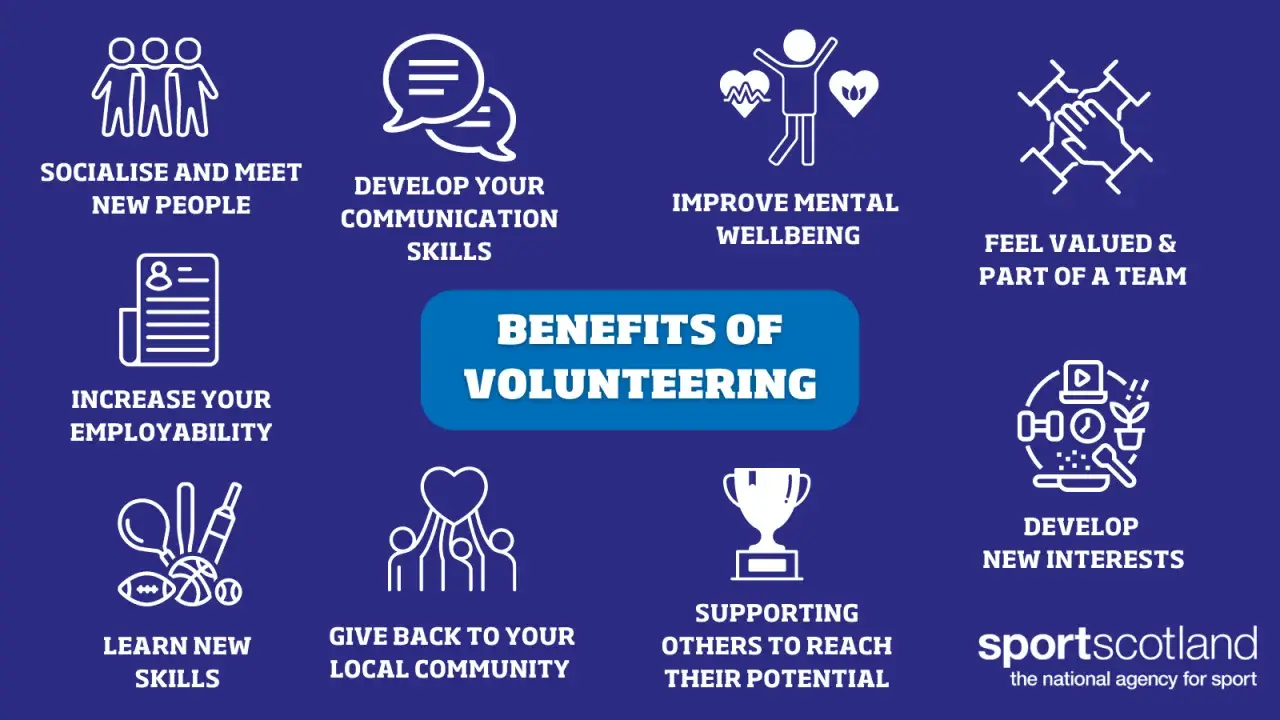
The data points to real gains for people, employers, and communities
- Formal volunteering in the United States reached 28.3% of adults in the latest national survey, with 75.7 million people participating.
- Those volunteers contributed 4.99 billion hours, worth about $167.2 billion in economic value.
- Health studies link volunteering with lower heart attack and hypertension risk, especially when the commitment is steady rather than random.
- Employment research found a 27% increase in the odds of finding work among unemployed people who volunteered.
- The strongest results usually come from roles that fit a person’s time, skills, and motivation.

The numbers behind volunteering in the United States
The headline figures are strong enough to explain why volunteering keeps showing up in community-impact conversations. According to AmeriCorps and the U.S. Census Bureau, 28.3% of Americans age 16 and older formally volunteered through an organization, 75.7 million people gave their time, and those volunteers contributed 4.99 billion hours worth more than $167.2 billion.
That is the scale story. The other story is how volunteering is changing. Average hours served per volunteer have fallen, which tells me that many people are participating in shorter bursts rather than long, open-ended commitments. Almost 1 in 5 formal volunteers also served partly or completely online, so volunteering is no longer tied only to an in-person shift at a food bank or shelter.
| Metric | Latest U.S. figure | Why it matters |
|---|---|---|
| Formal volunteer rate | 28.3% | Shows a broad rebound in civic participation. |
| Number of formal volunteers | 75.7 million | Shows scale, not just enthusiasm. |
| Total hours | 4.99 billion | Measures the actual labor being donated. |
| Economic value | $167.2 billion | Useful for grants, reporting, and public budgeting. |
| Value of one volunteer hour | $36.14 | Helps nonprofits translate service into dollars. |
| Virtual or hybrid volunteers | 18% of formal volunteers | Shows that access now matters as much as geography. |
For me, the practical takeaway is simple: volume matters, but participation style matters too. Once those base numbers are clear, the next question is whether the benefits show up in personal health as well as civic output.
What the health data actually shows
I would not describe volunteering as a magic wellness tool. It is better understood as a habit that can stack several smaller health advantages at once: more movement, more routine, more social contact, and often a stronger sense of purpose. That combination is why the research keeps pointing in the same direction.
| Health outcome | What the research suggests | What to keep in mind |
|---|---|---|
| Heart health | Moderate volunteering was associated with a 46% lower risk of heart attack compared with non-volunteers. | The effect was tied to a moderate level of service, not an all-or-nothing schedule. |
| Blood pressure | Volunteering at least 200 hours a year was linked with a 40% lower risk of hypertension in older adults. | That is a sustained commitment, not an occasional one-off event. |
| Mortality risk | People who volunteered at least 100 hours a year showed a substantially lower mortality risk in a long-term study. | This is an association, not proof that volunteering alone caused the change. |
| Psychological well-being | A broad review found many studies reporting improved well-being and fewer depressive symptoms. | The benefit is usually stronger when the role feels meaningful rather than forced. |
That pattern makes sense to me. Volunteering is socially active, lightly physical in many cases, and cognitively engaging because it asks people to solve real problems for other people. It also seems to work best when the time commitment is realistic; too little service may not change much, while too much can become exhausting instead of restorative. That leads naturally to the second big payoff: career value.
Why volunteering can help a resume more than a line item
The employment case is stronger than many people expect. In a large U.S. analysis of adults who were unemployed and interested in working, volunteering was associated with a 27% increase in the odds of being employed in the following survey year. The effect was strongest for people without a high school diploma or GED and for people living in rural areas, which tells me the pathway is not abstract at all; it is about access, exposure, and credibility.
That matters because volunteer work can demonstrate what a resume often cannot. A short stint at an event table may show reliability. A recurring role in scheduling, tutoring, mentoring, fundraising, or operations can show leadership, communication, and follow-through. In practice, employers tend to value volunteering most when it mirrors the kind of judgment and accountability the job requires.
- It gives people recent experience when paid work has been interrupted.
- It creates references and professional contacts outside a job search pipeline.
- It lets candidates show skills that are hard to prove on paper.
- It can help career changers build a bridge into a new field.
The catch is that not every volunteer role builds the same kind of evidence. A role that is mostly passive will not tell an employer much. A role with responsibility, repetition, and visible outcomes is much more persuasive. That individual gain still adds up to something larger, which is where the community case gets interesting.
Why communities gain even when the volunteer benefit is personal
The economic value of volunteering is easy to underestimate because it is scattered across thousands of ordinary acts. Independent Sector estimates the value of a volunteer hour at $36.14, which is useful not because it turns service into cash, but because it gives nonprofits and public agencies a way to communicate scale. It also helps explain why the U.S. Census Bureau and AmeriCorps put the value of formal volunteer hours at more than $167.2 billion.
That number is important for two reasons. First, it shows that volunteer labor is not a soft extra; it is real capacity that fills gaps in food distribution, tutoring, disaster response, neighborhood cleanup, youth mentoring, and local event support. Second, it helps organizations justify investment in recruitment, training, and retention. If a volunteer program is treated as disposable, the community loses far more than a few scheduled shifts.
The broader civic picture matters too. Formal volunteering is only one part of the story. Informal helping, like running errands for a neighbor or sharing tools, also rose in the latest national data. That tells me the social benefit of volunteering extends beyond nonprofit rosters and into the daily mechanics of how communities stay resilient. The final step is reading these figures carefully enough to avoid making them say more than they do.
How to read volunteering statistics without overclaiming
This is where I slow down. The strongest studies are useful, but they still have limits. Much of the evidence is associative, which means people who volunteer may already differ from non-volunteers in health, income, education, social support, or motivation. Good research can adjust for many of those factors, but it cannot remove every one of them.
There are also a few common mistakes I see whenever volunteering numbers get quoted too casually:
- Mixing formal volunteering with informal helping as if they are the same behavior.
- Assuming a one-time event has the same effect as a sustained role.
- Ignoring role fit and pretending any volunteer job will produce the same benefit.
- Overstating health outcomes without mentioning that dose and consistency matter.
- Forgetting that online volunteering may expand access, but it does not create the same physical or social experience as in-person service.
My read is that the best results come from a clear match between the person, the task, and the time commitment. A role should be useful enough to matter, specific enough to feel real, and sustainable enough that people can keep showing up. With that filter in place, the practical takeaway becomes much clearer.
What I would look for before recommending a volunteer role
If I were building a volunteer strategy for a nonprofit, school, or local initiative, I would not start with a generic request for help. I would start with a role that has a defined outcome, a predictable rhythm, and a visible human payoff. That is what turns volunteering from goodwill into impact.
- Pick roles that use a real skill, not just a warm body.
- Set a time commitment people can actually keep.
- Show volunteers where their effort went.
- Offer enough structure to reduce confusion, but enough flexibility to keep participation realistic.
The strongest volunteering story is not that service feels good, although it often does. It is that the data keeps linking service with healthier people, stronger career outcomes, and measurable community value. If I had to reduce the whole topic to one sentence, it would be this: the best volunteer programs benefit the volunteer and the community at the same time, and the numbers are already pointing in that direction.
