
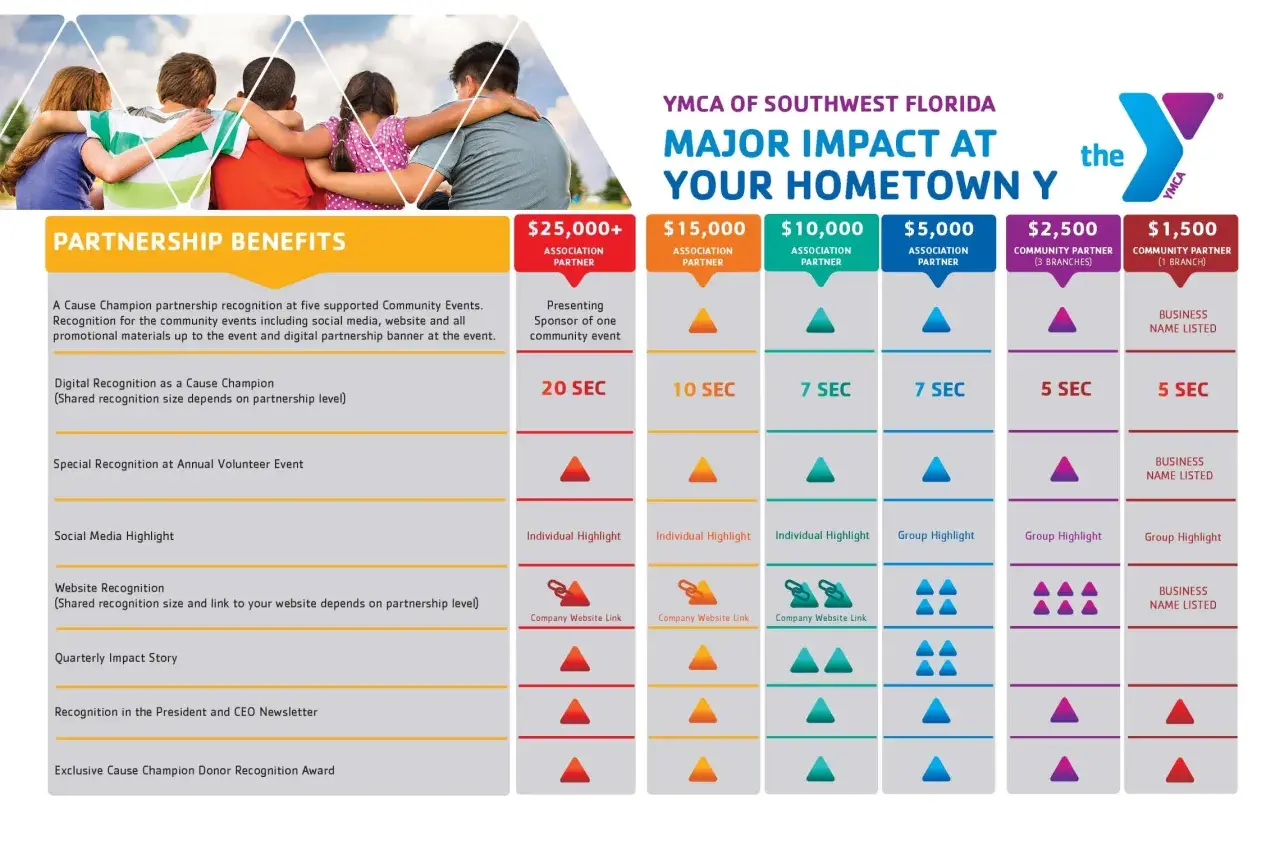
A successful YMCA fundraiser works best when it feels like a community invitation, not a hard sell. The strongest campaigns connect a specific need - youth programs, swim lessons, childcare scholarships, or wellness access - to a clear way to help, then make it easy for donors to act. In this guide, I break down which formats fit the Y best, how to plan the campaign, what to budget for, and how to keep support coming after the event is over.
What matters most before you launch a YMCA campaign
- Lead with one concrete outcome, not a vague appeal for “support.”
- Match the format to the audience: annual appeal, peer-to-peer, sponsorship event, or monthly giving.
- Budget for fees, promotion, and follow-up, not just the visible event costs.
- Keep the donation flow simple enough to finish on a phone in under a minute.
- Thank donors quickly, then show impact before you ask again.
What donors are really funding when they give to the Y
When people give to a local Y, they are usually not trying to “buy a ticket” to a fundraiser. They are helping someone else get access to something that would otherwise be out of reach: after-school care, summer camp, swim lessons, food support, healthy-living programs, or financial assistance for membership and classes. That is why the strongest appeal is almost always specific. A donor can picture a child staying in camp for a full week or a family getting help with program fees, and that picture makes the gift feel real.
The YMCA of the USA says it reaches 18 million community members annually across 2,597 Ys in 10,000 neighborhoods, which tells you how local and how broad this mission can be at the same time. In practice, fundraising usually fills the gap between what a family can afford and what it actually costs to deliver the program well. Some branches also support broader YMCA work through mission campaigns such as World Service, but the logic stays the same: money becomes access, stability, and continuity for people who need it.
I think this is where a lot of campaigns either succeed or drift. If the ask is too generic, donors feel like they are filling a budget hole. If the ask is concrete, they feel like they are removing a barrier. That distinction matters, and it shapes the format you choose next.

The formats that fit a local campaign best
I would not default to the same event every year. The right format depends on your donor base, your staff capacity, and how quickly you need cash. Some branches do best with a simple annual appeal. Others need one high-visibility event to bring in new supporters. A few can do both, but only if the workload is realistic.
| Format | Best use | Effort | Strength | Risk |
|---|---|---|---|---|
| Annual appeal | Unrestricted gifts, scholarships, program subsidies | Low to medium | Reliable, repeatable, easy to scale | Can feel flat without a strong story |
| Peer-to-peer walk, run, or challenge | Families, volunteers, youth groups, first-time donors | Medium | Brings new people into the pipeline | Needs coaching and clear fundraising pages |
| Sponsorship dinner or gala | Corporate donors, major gifts, visible community support | High | Can produce large individual commitments | Fixed costs can erase margin quickly |
| Community celebration or family night | Awareness, goodwill, smaller gifts, volunteer engagement | Low to medium | Warm, inclusive, easy to promote | Often nets less cash unless sponsorship is built in |
| Monthly giving drive | Stable unrestricted support | Low | Strong retention and predictable cash flow | Requires clear impact language and a simple sign-up flow |
If the branch is small, I usually favor an annual appeal plus recurring gifts, then add one event that matches the community’s energy. A gala may look impressive, but it is unforgiving if your sponsor base is thin. A walk or challenge is easier to launch, but it only works if participants get support before the event, not after it. The best format is the one your team can repeat without burning out.
Once the format is clear, the next job is to build the campaign around a realistic timeline and not around wishful thinking.
How I would build the campaign from idea to launch
If I were planning this for a local branch, I would start with one question: what specific gap are we trying to close? The answer determines the story, the ask, the audience, and the event format. A campaign for swim lesson scholarships should not sound or look like a capital project appeal, and a major donor dinner should not be run like a casual family event.
- Define one funding goal and one primary audience.
- Set a target using real math, not optimism. Decide what gross revenue you need, then work backward from expected costs.
- Choose one clear story or program example that shows why the money matters.
- Line up sponsors or lead donors before you go public, especially if the event has real fixed costs.
- Launch digital and offline outreach together so supporters do not have to guess how to give.
- Plan stewardship before launch, not after the event. Every donor should know when and how they will hear back.
For a small annual appeal, 6 to 8 weeks can be enough if the donor list is warm and the message is clean. A peer-to-peer challenge usually needs 10 to 12 weeks so participants have time to recruit. A gala with sponsorships is a longer game; I would plan 4 to 6 months because the quiet donor conversations matter more than the dinner itself. That kind of planning only works if the budget is honest, which is where many campaigns get shaky.
How to budget without fooling yourself
The YMCA of the USA donation page uses simple gift prompts, including amounts like $35, $50, $100, $200, $300, and $500, and that is a useful reminder that clear giving options matter. Donors respond well when the path is obvious. They also respond well when the campaign knows its own numbers, because nothing kills confidence faster than a flashy event that barely breaks even.
| Cost line | What it usually covers | Planning note |
|---|---|---|
| Online tools and processing | Donation platform, card fees, page setup | Expect a few percentage points to disappear here |
| Promotion | Email design, social assets, print pieces, postage | Can stay modest if your list is strong |
| Venue, food, and AV | Space rental, catering, sound, lighting, staging | Usually the biggest fixed cost for in-person events |
| Insurance and permits | Outdoor events, runs, alcohol service, crowd control | Check early; these costs are easy to overlook |
| Staff and volunteer support | Check-in, follow-up, fulfillment, donor care | Not always on the invoice, but always part of the cost |
As a rough planning rule, a simple digital or mail appeal can stay in the low hundreds or low thousands. A community walk or challenge often lands in the low thousands once shirts, signs, and permits are included. A seated dinner or gala can move into five figures fast if venue and catering are involved. If a campaign with $8,000 in fixed costs cannot realistically produce $20,000 to $30,000 in gross revenue, I would shrink it, simplify it, or choose a different format entirely.
Even a well-budgeted effort can underperform if the message is muddy, which brings me to the mistakes I see most often.
The mistakes that quietly lower donations
Most fundraising problems are not dramatic. They are small, repeated, and easy to miss until the final total comes in lower than expected. The good news is that most of them are fixable before launch.
- Building the event around entertainment instead of impact. People attend for fun, but they give because they understand the need.
- Making the ticket price do too much work. If your only revenue is admission, the margin is usually weak.
- Asking once and moving on. Donation asks need reminders, because attention fades quickly.
- Hiding what the money will fund. Donors want to know whether they are supporting scholarships, camp access, or operating flexibility.
- Creating a clumsy registration flow. Every extra click costs gifts, especially on mobile.
- Waiting too long to follow up. If donors hear nothing after giving, the relationship goes cold fast.
In my experience, the campaigns that perform best are the ones that stay disciplined. One ask, one audience, one story, one donation path. That sounds simple, but simplicity is often the difference between a campaign that feels credible and one that feels improvised. The last piece is stewardship, because donations are only the beginning of the relationship.
What keeps the impact going after the last gift
The strongest campaigns do not end when the money lands. They end when the donor understands what happened because of that money. I would treat stewardship as part of the campaign itself, not as an optional courtesy.
- Thank every donor within 24 to 48 hours.
- Send a short impact update within 2 to 4 weeks, even if the event was small.
- Show one concrete outcome: scholarships awarded, children served, classes funded, or families reached.
- Invite supporters into a second step, such as monthly giving, volunteering, or a sponsor role for next season.
- Keep a simple record of who gave, how they gave, and what message moved them.
If I had to choose the single most important lever, I would choose clarity: one mission, one audience, one ask, one follow-up plan. That is what turns a one-night effort into durable YMCA support, and it is usually what donors remember long after the banners come down.
