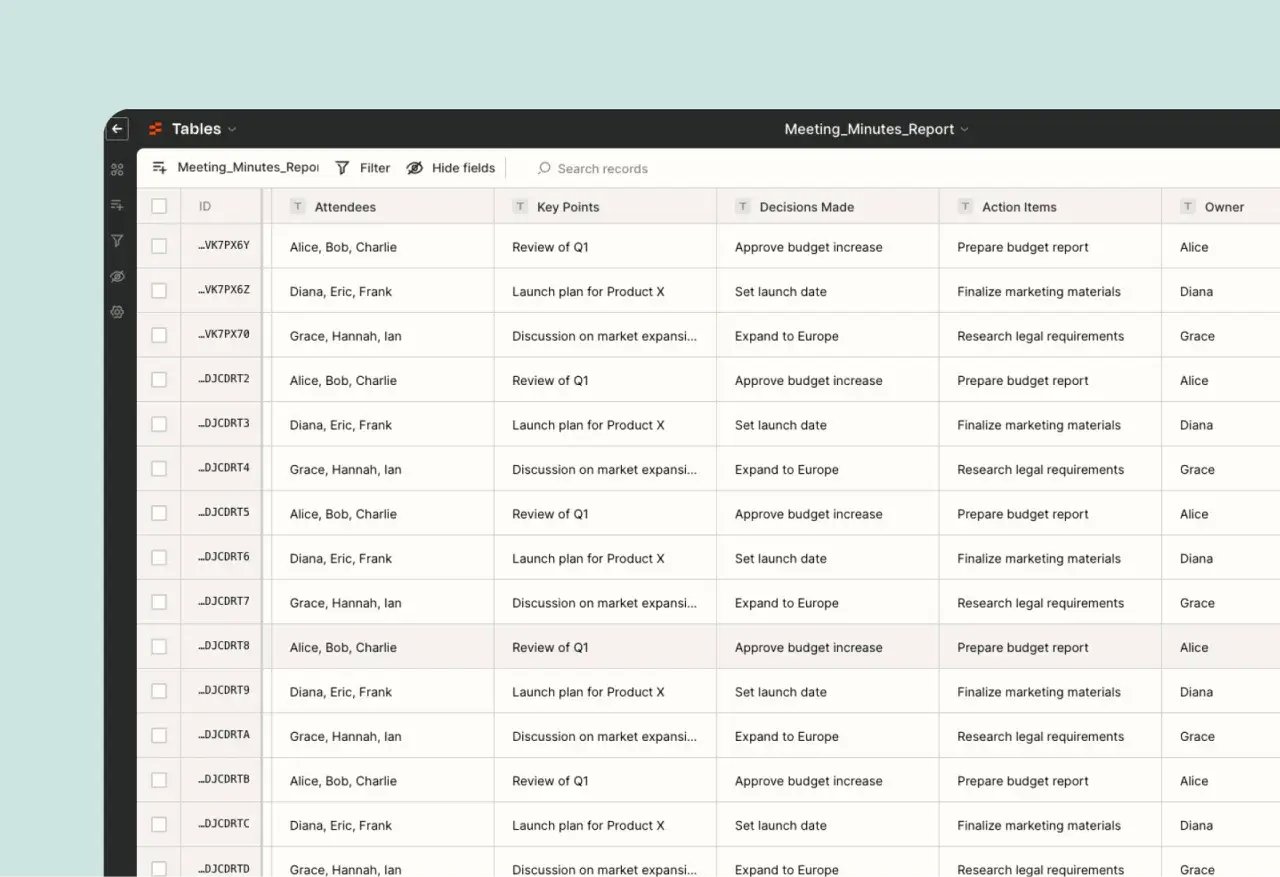
What good minutes should capture at a glance
- Meeting facts: date, time, place, attendance, and quorum.
- Formal actions: motions, seconds, vote counts, and abstentions.
- Oversight points: conflicts, approvals, and executive-session notes when relevant.
- Follow-up: owners, deadlines, and the next step after each decision.
- Clarity: a neutral tone that records outcomes without turning into a transcript.
What board minutes are meant to do
I treat minutes as a decisions log, not a diary. BoardSource describes board minutes as the permanent record of a meeting, and the IRS expects governing bodies to keep contemporaneous records of actions; together, those expectations tell you the real job of minutes in the United States. If a document cannot show who met, what was approved, and what happens next, it is too thin to carry governance weight.
That said, the right level of detail depends on the bylaws, the organization type, and any state rules that apply. A nonprofit board usually needs enough structure to support audits, Form 990 review, conflict-of-interest tracking, and later questions about why a decision was made. Once that purpose is clear, the format becomes much easier to judge, so I move next to a practical example.A sample board minutes format you can adapt
The example below is written for a mission-driven nonprofit board, but the structure works just as well for a corporate or association board. I like it because it separates the fixed facts from the decisions and leaves out chatter that does not help future readers.
| Section | Sample content | Why it matters |
|---|---|---|
| Header | Community Impact Alliance Board of Directors Meeting Minutes | Identifies the governing body and the document type. |
| Date and place | May 12, 2026, 6:00 p.m., hybrid meeting via Zoom and the Chicago office | Creates a clear time stamp. |
| Attendance | 7 of 9 voting directors present; staff guests: Executive Director and Finance Manager | Shows quorum and who participated. |
| Approval of prior minutes | Minutes from April 14 approved unanimously after one typo correction | Documents formal approval. |
| Motion record | Motion to approve the 2026 community grants budget of $185,000; seconded; passed 6-1 | Captures the actual action taken. |
| Action items | Finance Manager to revise grant timeline by May 19; Chair to confirm donor communication | Makes follow-up assignable. |
| Adjournment | Meeting adjourned at 7:28 p.m. | Marks the end of the record. |
Read Also: Board Meeting Meaning - What Nonprofits Need to Know
Example wording for the core decisions
Call to order. The meeting was called to order at 6:00 p.m. by Chair Maria Lopez. The secretary confirmed that a quorum was present.
Approval of previous minutes. The board reviewed the April 14 minutes. After correcting a misspelled program name, the minutes were approved without further changes.
Motion and vote. Director James Patel moved to approve the 2026 community grants budget of $185,000. Director Elena Brooks seconded the motion. The motion passed by a vote of 6 in favor and 1 opposed, with no abstentions.
Action items. The Finance Manager will update the grant disbursement calendar by May 19, and the Chair will confirm the public announcement language before release.
This is the level of detail I recommend: enough to reconstruct the decision, not enough to recreate the full conversation. From there, the next question is what belongs in the record and what should stay out of it.
What to include and what to leave out
Minutes become more useful when they are selective. A good record shows the path of authority, but it does not try to preserve every sentence spoken around the table.
| Include | Leave out | Reason |
|---|---|---|
| Exact motions, seconds, vote counts, and abstentions | Verbatim debate and side comments | Governance needs decisions, not a transcript. |
| Attendance, quorum, and late arrivals if they affect voting | Casual notes about who was tired or distracted | Facts matter; color commentary does not. |
| Brief summaries of reports and committee recommendations | Every slide, statistic, and anecdote from a presentation | Readers need the outcome, not the whole deck. |
| Conflict disclosures and recusals | Speculation about motives | Conflicts are recordable; mind-reading is not. |
| Closed-session references at a high level | Confidential deliberation details | Executive sessions usually need tighter handling. |
| Assigned follow-up items with owners and dates | Unassigned action phrases like “someone will handle it” | Actions should be traceable. |
When a board is mission-driven, I also like to note whether a decision supports a program, risk, fundraising, or compliance objective, because that context helps future boards understand why the vote mattered. The next step is making sure the process for drafting and approving minutes is fast enough that it actually gets done.
How to write and approve minutes without slowing the board down
The best process is boring in the right way: consistent, quick, and easy to repeat. I usually recommend a tight workflow so the secretary is not reconstructing the meeting from memory three weeks later.
- Take contemporaneous notes during the meeting and mark motions exactly as they are stated.
- Draft the minutes within 24 to 48 hours while the details are still fresh.
- Verify names, vote totals, and action items against the agenda, packet, and any resolution language.
- Circulate a clean draft to the chair or governance lead for a light factual review.
- Approve the final version at the next meeting or by the board’s written-approval process if your bylaws allow it.
- Store the approved copy with the agenda, board packet, and supporting exhibits in a secure archive.
I would not stretch the draft window much beyond 72 hours unless there is no choice. Memory fades fast, and minute-taking gets sloppy when the recorder waits too long. Once the workflow is in place, the real quality issues tend to show up as the same handful of mistakes.
Common mistakes that weaken the record
Most bad minutes are not dramatic; they are merely incomplete. That is exactly why they cause trouble later, because no one notices the gaps until a question has to be answered.
| Problem | Why it hurts | Better approach |
|---|---|---|
| No quorum recorded | It is harder to prove that the board could legally act. | State the number present and the quorum threshold if useful. |
| Motion is paraphrased too loosely | The final action becomes ambiguous. | Write the motion as clearly as possible before the vote. |
| Votes are missing or lumped together | Readers cannot tell whether the action passed cleanly. | Record yes, no, and abstention counts. |
| Action items lack owners | Follow-up slips through the cracks. | Name the person responsible and the due date. |
| Executive session details appear in full | Confidential matters can be exposed unnecessarily. | Keep the public record brief and separate any restricted notes. |
| Minutes read like personal commentary | It creates bias and invites disputes. | Stick to neutral, factual language. |
What I would keep on file after the meeting ends
For a clean governance trail, I keep the approved minutes together with the agenda, the board packet, any slide deck that informed a vote, signed resolutions, and supporting financial reports. For nonprofit boards, that archive is especially useful when staff turns over, because the history behind a grant decision, program change, or policy approval is often more valuable than the final vote itself.
- Approved minutes in their final version
- The agenda and attendance record
- Committee reports and exhibits used for decisions
- Any written consents or resolutions
- Confidential notes kept separate from the public record when required
If you want minutes that can survive scrutiny, focus on clarity, timing, and traceability. That is the combination that turns a simple record into a reliable governance tool.