
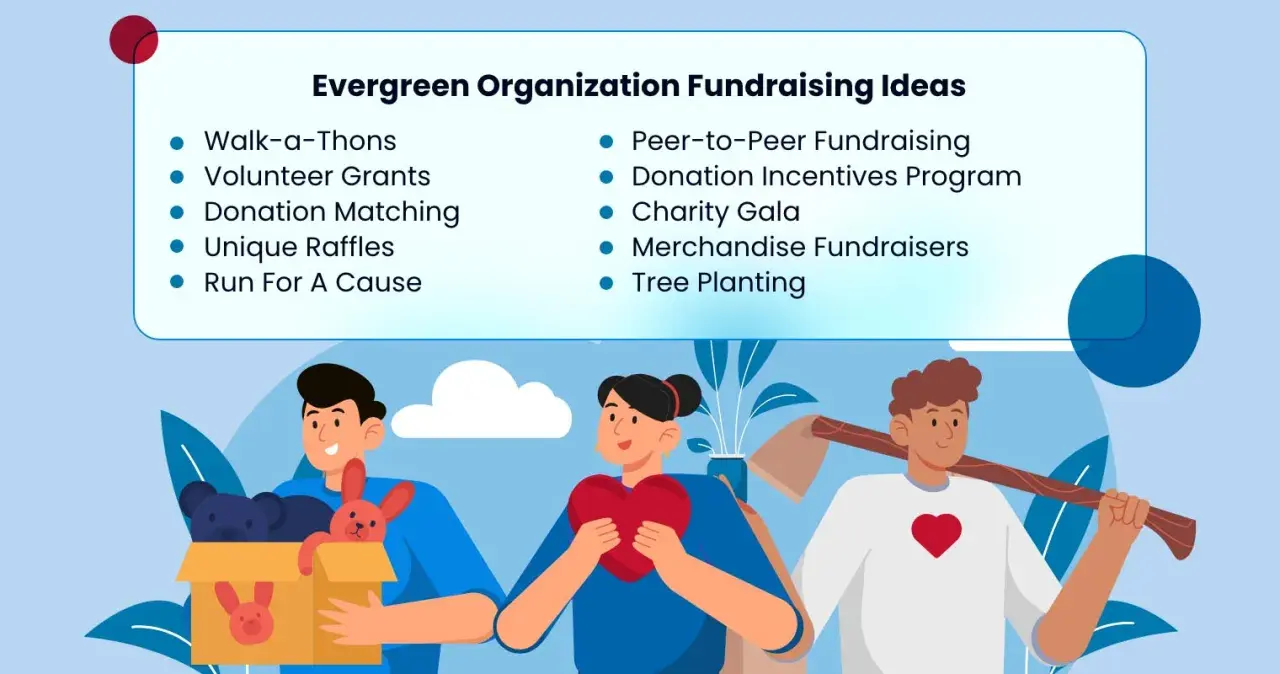
The strongest fundraiser is the one that fits the crowd, not the trend
- I separate event formats by how they raise money: tickets, sponsorships, bidding, peer-to-peer gifts, or simple donations.
- Gala dinners and live auctions work best when you can deliver a premium experience and attract higher-value donors.
- Walks, runs, and community events are easier to scale, but they usually need sponsor support and strong promotion to pay off.
- Virtual and hybrid events keep overhead lower, yet they need a sharper ask because the experience can feel thinner.
- In the United States, permits, raffle rules, alcohol service, and insurance can change an event’s economics fast.
Why format matters more than the theme
I can usually tell within a few minutes whether an event idea is really a fundraising model or just a nice evening. A black-tie dinner, a neighborhood fun run, and an online auction can all raise money for the same cause, but they behave very differently once you account for ticket prices, staffing, donor expectations, and overhead.
The theme matters less than three things: who is showing up, how they are expected to give, and how much friction the event creates. If your audience wants a social night out, a premium dinner or benefit concert can work. If your supporters are spread across a city or a school network, a peer-to-peer challenge or community campaign may be the better fit. If your strongest donors are already comfortable bidding, auction-driven formats can outperform simple ticket sales.
That is why I do not start with “What event sounds exciting?” I start with “What behavior do I need from the room?” Once you separate the business model from the theme, the menu of workable formats gets much easier to compare.

The main event formats and what each one does best
Here is how I usually group the core fundraising formats in the US. The cost ranges are planning bands, not hard rules, because venue fees, insurance, and donor access can shift them quickly.
| Format | Typical use | Rough US planning band | Main strength | Main drawback |
|---|---|---|---|---|
| Gala or benefit dinner | Major donors, sponsors, board leadership | Often $15,000+ once venue, catering, and AV are included | Strong sponsorship potential and a polished donor experience | High production load and higher financial risk if attendance is weak |
| Silent or live auction | Events with donated items and an engaged donor list | Can stay lean, but software and setup still add a few thousand dollars | Easy to pair with a gala, golf outing, or community event | Item quality matters more than item quantity |
| Walk, run, or ride | Broad community participation and peer-to-peer fundraising | Often $2,000-$10,000 for permits, shirts, timing, and logistics | Large reach and strong awareness value | Revenue depends heavily on sponsorships and participant outreach |
| Peer-to-peer challenge | Supporters who can fundraise on behalf of the cause | Usually low fixed costs if digital tools are already in place | Scales well without a huge event footprint | Requires disciplined coaching and follow-up from participants |
| Community festival or family day | Local visibility, schools, churches, neighborhood groups | Often $5,000-$25,000+ depending on entertainment, food, and permits | Creates a welcoming, broad-based entry point | Can feel busy but not profitable if sponsor coverage is weak |
| Concert, comedy night, or performance | Entertainment-first audiences | Highly variable, from lean venue rentals to expensive talent fees | Strong emotional appeal and easy storytelling | Costs can outrun revenue if the lineup is not carefully controlled |
| Virtual or hybrid event | Geographically spread supporters or lower-overhead campaigns | Often under $5,000 unless the production is highly polished | Lower fixed cost and wider reach | Needs a sharper donation ask because attention is easier to lose online |
| Golf tournament or sports outing | Corporate sponsors and relationship-driven fundraising | Usually mid to high cost because course or facility fees add up | Good sponsor inventory and a built-in hospitality feel | Works best only when the audience already likes the activity |
The pattern is simple: the more polished and expensive the format, the more it depends on sponsors and premium donors; the more casual and community-based it is, the more it depends on reach, repeat attendance, and volunteer energy.
Gala dinners and benefit nights
These work when you can offer more than a meal. I look for a clear mission story, a clean program, and enough social value that guests feel they are buying access to a meaningful evening, not just a plate of food. They are still one of the strongest options for organizations with board members, business sponsors, and a donor base that likes public recognition.
Walks, runs, and peer-to-peer challenges
These formats are less about exclusivity and more about participation. They are useful when your goal is awareness, donor acquisition, and community touchpoints, because participants often become fundraisers themselves. The catch is that they can look impressive on the surface while producing modest net revenue if sponsorships, registrations, and follow-up are not all working together.
Community festivals and family events
These are the most approachable events on the list, which is exactly why they can be powerful. They invite casual supporters who might never attend a gala, and they make it easy for local partners to contribute through booths, vendor fees, or family sponsorships. The tradeoff is margin: if food, entertainment, and permits are not carefully controlled, the event can become a visibility win rather than a cash win.
Read Also: Silent Auction Rules - Maximize Bids & Ensure Fairness
Virtual and hybrid formats
I think these are underrated when a team has limited staff or a dispersed audience. Online auctions, livestream appeals, and hybrid donor nights keep costs down and can still create urgency if the message is tight. The limitation is obvious: without a strong host, a visible goal, and frictionless giving, people drift away quickly.
From here, the obvious question is whether auctions should be treated as their own category or as a feature inside a larger fundraiser.
Where auctions outperform other fundraiser formats
Auctions are not just a gimmick. They are a revenue model built around competition, scarcity, and social proof, which is why they can do very well when the room has donors who like to bid and items that feel genuinely worth chasing.
CharityAuctions.com notes that mobile bidding can outperform paper-based bidding by a wide margin, and that matches what I see in practice: if bidding is easy, participation usually rises. The point is not the software itself; the point is lowering friction so people can act before enthusiasm fades.
| Auction type | Best fit | What makes it work | Watch-out |
|---|---|---|---|
| Silent auction | Galas, school events, community dinners | Lots of appealing items and easy mobile bidding | Too many mediocre items dilute attention |
| Live auction | Premium donor rooms and high-energy programs | A strong auctioneer, limited lots, and good pacing | Needs a crowd that is already warm and ready to spend |
| Online auction | Geographically broad supporter bases | Several days of promotion and simple checkout | Requires more marketing discipline because there is no live room energy |
| Paddle raise or fund-a-need | Mission-heavy programs with emotional storytelling | A clear funding target and a direct appeal | It is easy to over-script and lose momentum if the story drags |
| Wine pull or mystery item add-on | Events that need a simple side revenue stream | Low price, low friction, and a touch of fun | Best as an add-on, not the main attraction |
I usually recommend auctions when the organization has access to donated items, a donor list that can be warmed up in advance, and at least one person who knows how to keep the room moving. They are less attractive when the audience is price-sensitive, the items are generic, or the event relies on volunteers who are already stretched thin.
The next step is deciding which of these formats actually fits the people you want in the room, because the strongest concept can still underperform if the match is wrong.
How I choose the right event for a US nonprofit
As a practical rule, I think in three budget bands: lean under $5,000, mid-range from $5,000 to $25,000, and full-scale above $25,000. That is not a universal standard; it is just a useful way to see how quickly venue, catering, permits, security, signage, and AV can absorb your margin.
| If your priority is | Best-fit formats | Why I would pick them |
|---|---|---|
| Fast cash with a limited team | Online auction, small gala, direct appeal night | They keep fixed costs lower and are easier to repeat |
| Broad awareness and first-time participants | Walk, run, ride, festival, family event | These formats feel welcoming and spread naturally through communities |
| High sponsorship value | Gala, golf outing, benefit concert, premium auction | Corporate partners can buy visibility, hospitality, and association with the cause |
| Low overhead | Virtual event, peer-to-peer challenge, simple online auction | These options reduce venue and catering risk |
| Repeatable annual revenue | Signature gala, recurring auction, annual run, donor dinner | Consistency makes it easier to sell sponsors and train volunteers |
Before I lock in a format, I ask six questions: How many warm supporters can realistically attend? What is the likely ticket ceiling in this market? Can sponsors cover the fixed costs before registration revenue comes in? Do we have the volunteers to execute this without burnout? Are we trying to raise money, recruit donors, or do both? And does the team have the patience to follow up after the event, not just before it?
Those questions sound basic, but they separate ideas that look exciting in a meeting from ideas that can actually survive in the real world. When that test is applied honestly, the right format becomes much easier to see.
The mistakes that quietly cap revenue
The biggest mistake I see is choosing a format because it is popular elsewhere, not because it fits the organization’s actual audience. A glamorous gala can flop in a community that prefers casual events, and a fun run can disappoint in a donor base that wants a more private, premium experience.
- Overestimating attendance and underestimating the number of people who need a personal invitation.
- Depending on ticket sales alone instead of building sponsorship and add-on revenue into the model.
- Using weak auction items that look full on paper but do not create real bidding interest.
- Letting the program run too long, which lowers energy and reduces donation momentum.
- Skipping fast follow-up; I try to treat the 48 hours after the event as part of the fundraiser, not an afterthought.
- Ignoring local rules for raffles, alcohol service, insurance, or public gatherings, which can change the math quickly in the US.
Another quiet problem is emotional overreach. Teams sometimes ask guests to donate, bid, buy tables, attend, volunteer, and share the event all at once. That kind of crowding makes the ask feel heavy. The cleanest events usually have one primary revenue motion and one supporting motion, not five competing ones.
Once those mistakes are avoided, the final decision is mostly about fit, not fashion.
A practical filter I use before recommending any event
When I strip away the noise, I usually come back to three simple filters: fit, friction, and repeatability. If the format fits the audience, creates manageable friction, and can be repeated without exhausting the team, it has a real chance of becoming a reliable fundraiser instead of a one-time production.
- If you need premium revenue and already have a strong donor circle, start with a gala or an auction-led evening.
- If you need reach, visibility, and community participation, choose a walk, run, ride, or festival.
- If you need low overhead and a wide geographic footprint, use an online or hybrid model.
- If you need sponsor-friendly inventory, build around hospitality, recognition, and headline moments.
- If you need a format you can run again next year, protect simplicity over novelty.
In 2026, the safest choice is still the one that makes giving feel easy and meaningful at the same time. That is the real test behind every charity fundraiser, and it is the reason the best events keep raising money long after the lights go down.
