
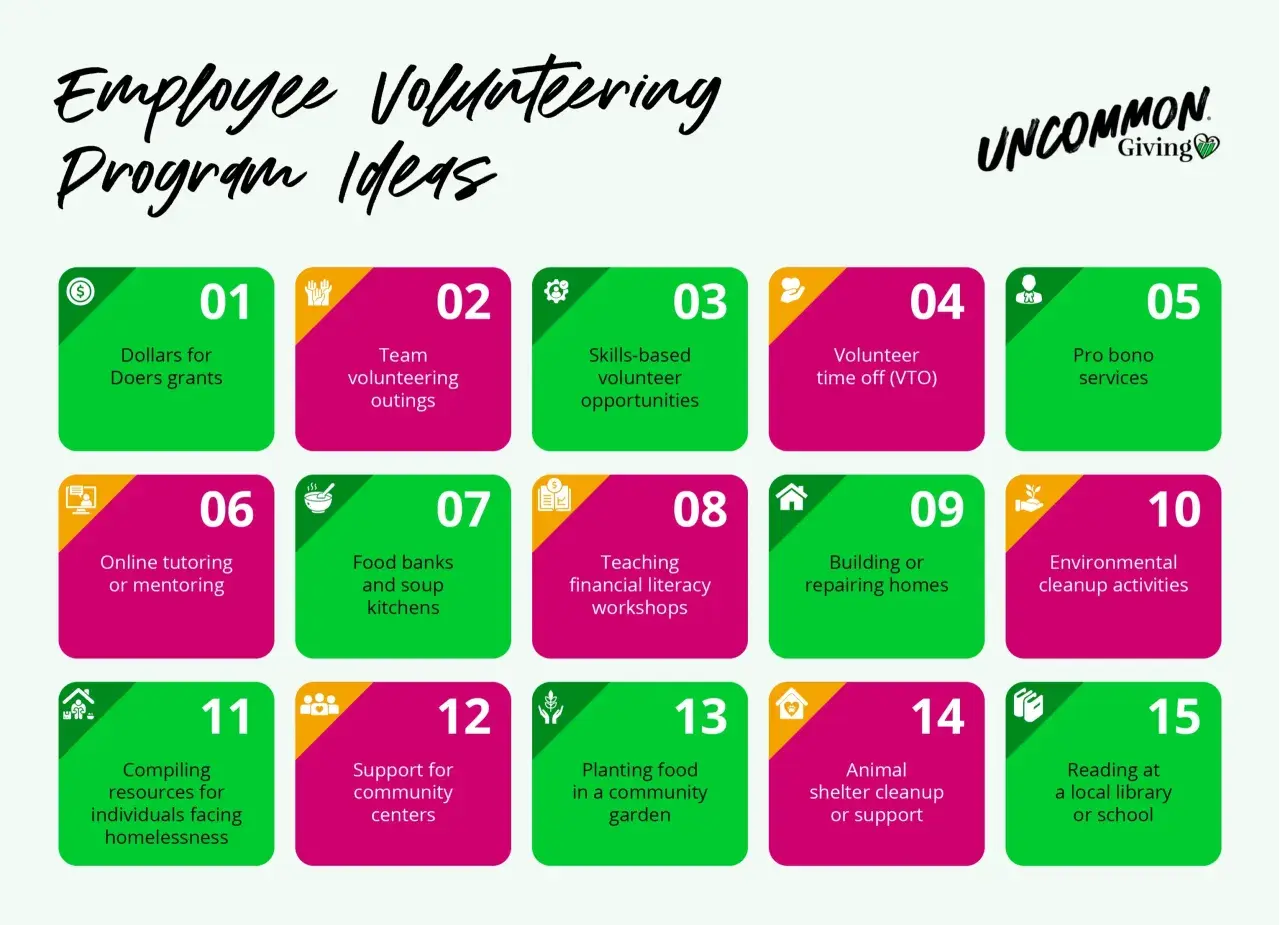
Employee volunteering works best when it is treated as a real part of workplace culture, not a one-off photo opportunity. A strong program gives staff a practical way to serve, helps nonprofits get reliable support, and gives employers a benefit that feels credible rather than decorative. In this article, I break down what these programs include, which models fit different organizations, how to make them usable for hybrid teams, and how to measure whether they are actually helping.
The essentials at a glance
- The strongest programs focus on steady, useful service rather than promotional events.
- Paid volunteer time off, team service days, and skills-based projects solve different needs, so the best choice depends on your workforce.
- The broader U.S. volunteer base has softened over time, which makes employer-supported volunteering a meaningful way to lower friction and increase participation.
- Access matters: if only office staff can join, participation drops and the program starts to feel uneven.
- The best metrics are not just hours logged, but repeat participation, nonprofit feedback, and employee engagement.
What company-sponsored volunteering really includes
At its core, this is a company-backed system that helps employees give time, skills, or labor to nonprofits and community groups. It can be as simple as a paid day to serve a local food bank or as structured as a year-round calendar of projects tied to a specific cause area. I usually separate it into three layers: the policy, the opportunities, and the support around them.
The policy is the formal permission structure, such as paid volunteer time off, a matching donation tied to volunteer hours, or a leave policy that allows community service during work hours. The opportunities are the actual things people can do, from sorting supplies to mentoring students to doing pro bono legal, design, or data work. The support is everything that makes participation realistic: scheduling, manager approval, transportation, onboarding, and clear expectations for nonprofit partners.
This matters because the broader volunteering environment in the U.S. is not automatically strong. The Bureau of Labor Statistics says the volunteer rate fell from 5.8 percent in 2012 to 4.2 percent in 2022, even though more than 11 million people still volunteer on an average day. In other words, companies are not filling an already easy-to-use system; they are helping people cross the gap between good intentions and actual participation.
Once that scope is clear, the next question is which model fits your workforce instead of forcing everyone into the same mold.
The models that make sense for different workforces
Not every program should look the same. A good model depends on how people work, what the community needs, and how much operational complexity the company can handle without exhausting its own team.
| Program model | Best for | Strength | Limitation |
|---|---|---|---|
| Paid volunteer time off | Companies that want broad participation and a simple policy | Easy to explain, easy to scale, and attractive in recruiting | Can sit unused if managers do not actively support it |
| Team service days | Groups that want a shared experience and visible community presence | Builds camaraderie and creates a memorable touchpoint | Often favors office-based teams and specific seasons |
| Skills-based volunteering | Organizations with professional expertise to share | Produces high-value support for nonprofits and feels meaningful to employees | Needs stronger scoping, partner management, and quality control |
| Employee-led volunteering | Companies that want local relevance and internal ownership | Often feels authentic because employees choose causes they care about | Can become fragmented without light coordination |
| Recurring cause partnership | Firms that want deeper, long-term community impact | Creates continuity and stronger relationships with one or a few partners | May feel too narrow if employees want more choice |
If I am advising a company that is just starting, I usually recommend a simple policy first, then a small menu of options. Too many organizations try to launch with a giant volunteer portal and dozens of choices, and the result is decision fatigue. A focused offer is often better than an impressive one nobody has time to use.
For a new program, a practical starting point is often a single paid day a year, or 8 to 16 paid hours that can be used in smaller blocks. That range is not a rule; it is a workable baseline that gives the policy enough weight to matter without turning it into an administrative burden. From there, you can add skills-based projects or team events once the basic habit is in place.
With the structure chosen, the real work becomes operational: making the program feel easy, fair, and worth the effort.

How to design a program people actually use
The biggest mistake I see is assuming that enthusiasm will carry the program on its own. It will not. Participation usually rises when the path is obvious, the approval process is light, and employees can see where their time actually goes.
- Start with one clear goal. Decide whether you are trying to increase participation, deepen community impact, improve retention, or support a specific cause. If you try to optimize all four equally, the program tends to drift.
- Choose a small number of opportunity types. One team event, one skills-based option, and one flexible self-scheduled option are often enough at the beginning.
- Make manager approval simple. If employees need a long chain of sign-offs, they will treat the program as optional paperwork rather than a benefit.
- Use real nonprofit criteria. Partners should be able to tell you what kind of help is actually useful, what training is required, and what would waste their time.
- Communicate in plain language. Employees need to know where to sign up, how much time they get, whether the hours are paid, and whether the opportunity is remote or on-site.
I also recommend being honest about the tradeoffs. Team events are great for energy, but they can be less flexible. Skills-based projects can create deeper value, but they are harder to scope. Paid time off is easy to understand, but it does nothing if the manager culture quietly discourages usage. A mature program usually combines more than one model because no single format solves every problem.
Once the policy is in place, the next challenge is access. A program that works beautifully for headquarters but poorly for everyone else will not stay credible for long.How to make it work for hybrid, field, and hourly teams
Hybrid work changed the old assumption that volunteering happens best when everyone is in one building. That model still works for some companies, but it leaves too many people out if it is the only option.
For remote teams, I look for service that can happen asynchronously or online. That can include virtual mentoring, resume reviews, translation help, digital fundraising support, research cleanup, or help with nonprofit operations. The important part is not that the activity is online; it is that it still gives a real community benefit and does not feel like a token gesture.
For hourly or shift-based staff, the policy has to be much more deliberate. A volunteer day that requires weekday office hours will not be usable if the team works evenings, weekends, or rotating shifts. In those cases, flexibility matters more than branding. Offer multiple time windows, local partner options, and enough lead time that people can plan around work and family obligations.
Three practical rules help here:
- Offer at least one option that does not require everyone to be in the same place.
- Schedule service around existing work patterns instead of assuming one calendar fits all.
- Let employees choose from a short list of vetted options rather than forcing a single flagship event.
Access is not just a fairness issue; it changes participation rates. If people cannot use the benefit, they stop trusting the benefit. That brings us to the mistakes that quietly undermine good intentions.
The mistakes that quietly kill participation
Most weak programs do not fail because the idea is bad. They fail because the execution makes participation feel awkward, narrow, or performative.
- Overbranding the program. If every volunteer event feels like a marketing campaign, employees notice. The work should be visible; the branding should not overwhelm it.
- Choosing causes without employee input. A top-down cause can still work, but people need a way to bring their own interests into the mix.
- Making participation too rare. One annual event is easy to miss. A few recurring opportunities usually generate better momentum.
- Tracking only hours. Hours matter, but they do not tell you whether the work was useful, repeatable, or meaningful to the nonprofit partner.
- Ignoring middle managers. Employees often decide whether to participate based on manager cues, not policy language.
- Asking too much of nonprofits. A partner that spends more time hosting your team than advancing its mission is not getting a fair exchange.
There is one more subtle problem: volunteer fatigue. If the same people are always asked to show up, the most engaged employees can burn out while everyone else stays passive. The fix is not louder messaging; it is a better rotation of opportunities, better timing, and a lighter administrative lift.
When those basics are in place, measurement becomes much more useful because you are measuring something real instead of trying to rescue a weak design with better reports.
How to measure impact without drowning in spreadsheets
I prefer simple measurement that tells a useful story. The goal is not to produce a dashboard nobody reads. The goal is to learn whether the program is reaching people, helping partners, and strengthening the employee experience.
| Metric | What it tells you | What to watch for |
|---|---|---|
| Participation rate | How many employees actually use the program | Low rates often signal friction, poor communication, or manager resistance |
| Repeat participation | Whether the experience felt worthwhile enough to repeat | One-time spikes can hide weak program quality |
| Volunteer hours used | Overall demand and program volume | Hours alone can reward busyness over usefulness |
| Nonprofit feedback | Whether the help was actually useful | If partners need too much hand-holding, the design needs work |
| Employee sentiment | Whether the benefit feels meaningful and accessible | Positive sentiment with low participation usually means access is still broken |
Recent SHRM benefits reporting is a useful reminder that this is still a differentiating benefit rather than a universal one: only a minority of employers offer paid time off for volunteering, and fewer than half offer community volunteer programs at all. That means a well-run program can stand out without being extravagant. It also means the bar is not perfection; it is consistency and credibility.
If I were reviewing a program every quarter, I would ask three questions: Did more people use it? Did nonprofits say the help was useful? Did employees describe the benefit as easy to access? If the answer to all three is yes, the program is probably healthy. If only one is yes, the design needs attention.
What a durable program looks like in 2026
The programs that last are usually not the loudest ones. They are the ones that feel simple from the employee side and disciplined from the company side. In practice, that means a clear paid-time policy, a small but meaningful set of volunteer options, a light approval process, and a feedback loop that changes the program when participation stalls or partners outgrow the setup.
That is the version I trust most: a program that respects employees’ time, respects nonprofits’ capacity, and does not confuse activity with impact. If a company can do those three things well, the volunteering program becomes more than a benefit. It becomes part of how the organization shows up in the community, and that is where the value really compounds.
For most teams, the smartest next step is not to add more events. It is to make the current ones easier to join, easier to repeat, and easier to recognize as real service.
