
The essentials to get right before you spend a dollar
- Start with a net revenue target, not a venue or theme.
- Choose a format that fits your audience, staff capacity, and fundraising goal.
- Build the budget backward so fixed costs are covered early.
- Treat auctions as curated revenue tools, not as a donation bin.
- Prepare receipts, disclosures, and thank-yous before tickets go on sale.
- Measure attendance, net revenue, and donor retention after the event.
Choose the format that matches your audience and goal
I start here because the format determines almost everything else: room size, staffing, pricing, sponsor appeal, and how hard the ask can be. A gala, a community dinner, a silent auction, and a live auction all look like "events," but they behave very differently once the calendar, budget, and donor list get real.
| Format | Best for | Why it works | Watch-outs |
|---|---|---|---|
| Dinner gala | A warm donor base and strong sponsor prospects | High perceived value, good stage for recognition, easy to pair with a fund-a-need appeal | Higher fixed costs and a greater need for polish |
| Silent auction | A broad community audience with mixed giving levels | Scales well, especially with mobile bidding and mid-value items | Needs careful item curation or it becomes noisy and underwhelming |
| Live auction | A smaller room with engaged major donors | Creates energy fast and can move a few high-value packages quickly | Needs an experienced auctioneer and a crowd that will stay engaged |
| Community event or walk | Family-friendly or mission-driven outreach | Low barrier to entry and strong visibility for the cause | Usually needs sponsorships or add-ons to generate meaningful net revenue |
| Hybrid or online auction | Supporters who are spread out geographically | Lowers venue cost and extends the reach of the ask | Requires disciplined promotion because the energy is easier to lose |
My rule is simple. If the audience is warm and local, I can justify a more ambitious night. If the audience is mixed, remote, or new to the cause, I keep the format lean and let the mission do the work. Once the format is fixed, the budget can be built around it instead of guessed at.
Build the budget around net revenue, not gross revenue
It is easy to get excited by ticket sales, auction bids, and sponsor promises. None of that matters if the event eats too much of the take. I want to know the breakeven point before I sign a contract, because the real question is not "How much can this raise?" but "How much will remain after the invoices clear?"
| Cost area | Planning guardrail |
|---|---|
| Venue and catering | Often the largest line item, especially for a gala, so I try to keep it under control early |
| Auction procurement | Usually 10 to 20 percent of direct event spend if items need packaging, shipping, or extra setup |
| Marketing and creative | Commonly 5 to 10 percent if the campaign is mostly digital and email-driven |
| Payment and ticketing fees | Often 2 to 5 percent, depending on platform and card volume |
| Contingency | At least 5 to 10 percent, because small overruns happen faster than people expect |
If I expect 120 guests at $150 each, gross ticket revenue is $18,000. If the event costs $8,000 and processing and platform fees add another $1,200, the starting point for fundraising is $8,800, not $18,000. I use that kind of arithmetic early, and I usually treat a 3:1 gross-to-cost ratio as a sanity check, not as a law. The next step is timing, because even a good budget collapses when the work starts too late.
Set the timeline and the workstream before the calendar fills up
For a gala or auction-heavy evening, I prefer 6 to 12 months of runway. Smaller community events can move faster, but the moment you need sponsors, donated items, or a venue with alcohol service, time disappears quickly. A short timeline is not impossible, but it leaves very little room for mistakes, and fundraising events rarely improve when rushed.
- 6 to 12 months out: set the goal, choose the chair, secure the venue, map the budget, and build the sponsor list.
- 4 to 6 months out: confirm auction donations, open ticket sales, and review permit, insurance, and accessibility needs.
- 8 to 12 weeks out: launch consistent promotion, recruit volunteers, confirm vendors, and prepare event pages and donor forms.
- 2 to 4 weeks out: print materials, rehearse the run of show, assign check-in and checkout roles, and test the payment system.
- Final week: confirm headcounts, seating, transport, emergency contacts, and any special accommodations.
I also assign one owner to every major task, because "everyone is helping" usually means nobody owns the deadline. That discipline makes it much easier to move into pricing, sponsorships, and the actual ask.
Price tickets and sponsorships so the event can win before doors open
I want sponsor revenue to cover as much fixed cost as possible before the first guest arrives. That is the simplest way to protect the margin. For many local events, I like a three-tier sponsor ladder, often something like $1,000, $2,500, and $5,000, but the exact numbers should match the size of the audience and the strength of the donor base. A sponsor should be able to understand the value instantly: logo placement, stage mention, table access, program recognition, or digital promotion.
- Keep sponsor benefits concrete and limited, so the package is easy to sell and easy to deliver.
- Price tickets with room for a meaningful ask later, not just enough to fill seats.
- Use one clear flagship sponsor if you have a donor who wants top visibility.
- Do not overload smaller sponsors with too many choices, because confusion kills momentum.
- Reserve one direct appeal, often a fund-a-need or paddle raise, so the night includes a focused mission moment, not just a social one.
I also plan the communication cadence before the first invite goes out. A save-the-date, a launch message, two or three reminders, a last-chance note, and a strong thank-you sequence usually perform better than one big announcement followed by silence. Once the sponsorship side is stable, the auction itself becomes the next lever for real revenue.
Make the auction feel curated, not cluttered
Auctions work when every item feels intentional. The best packages are easy to understand, visually appealing, and worth more to the guest than they cost the organization to secure. A weekend getaway, a chef dinner, a sports experience, or a behind-the-scenes local package usually outperforms a random pile of donated objects because the story is clearer and the perceived value is higher.
For live auctions, I usually keep the item count tight. Five to eight strong packages can create better momentum than a long, uneven list. For silent auctions, I care more about clean photos, short descriptions, and a tidy end time than about sheer volume. Mobile bidding helps, but it only works when the item copy is specific and the checkout flow is simple.
- Mix experiences, services, premium goods, and mission-linked packages.
- Set starting bids that feel realistic, not symbolic.
- Show restrictions clearly, including blackout dates and expiration dates.
- Use buy-now pricing only when the value is obvious to the buyer.
- Keep pickup or digital delivery simple so checkout does not become the slowest part of the night.
The IRS rules matter here. Buyers at a charity auction generally deduct only the amount they pay above fair market value, so I make value and bid terms visible before the auction starts. I also check state raffle rules before printing anything, because a raffle is not treated the same way everywhere. Once the bid sheet is strong, the job shifts to running the night cleanly and following up fast.
Close the loop while the room is still warm
On event night, I care about three things: guest experience, payment capture, and pace. The check-in line should move, the program should never stall, and checkout should be visible enough that nobody leaves promising to give "later." That is usually where events lose money, not in the headline moments but in the friction between them.
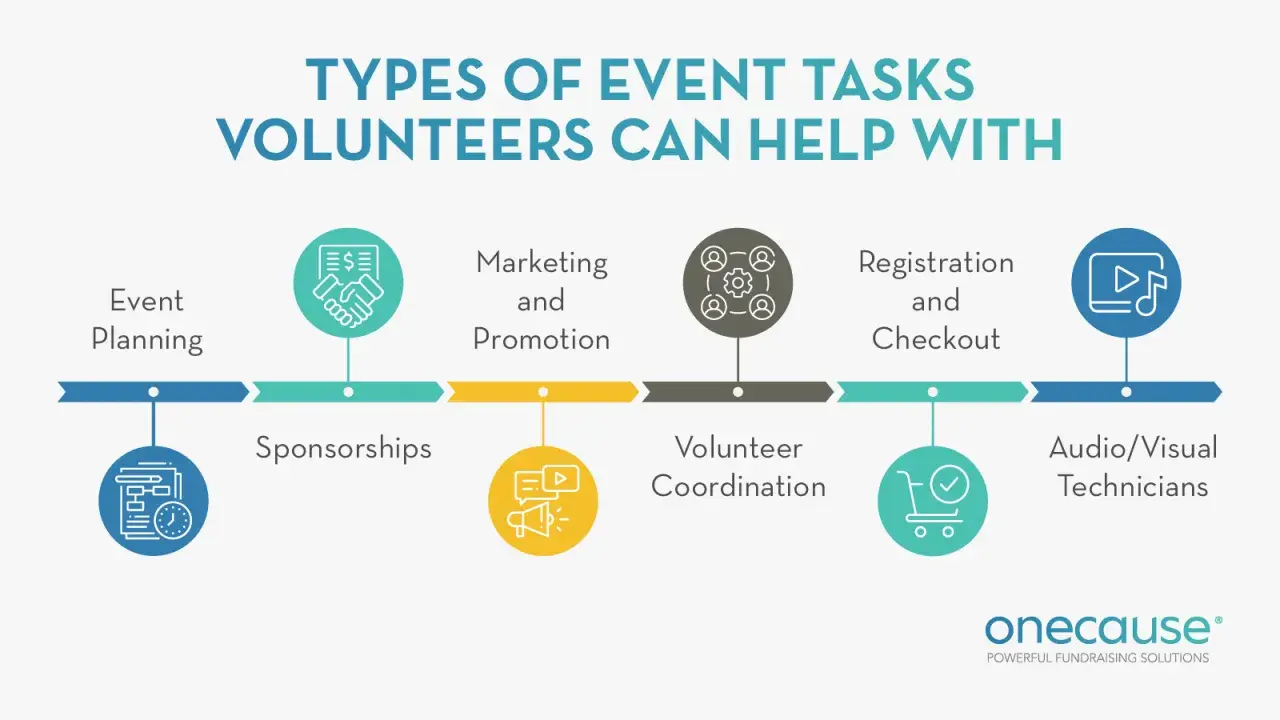
- Put a volunteer on every friction point, including parking, registration, the auction floor, and checkout.
- Test the payment system, card readers, QR codes, and backup methods before guests arrive.
- Use a run of show with timestamps so the room stays on rhythm.
- Announce the ask clearly and once or twice, not so often that the room tunes out.
- Send same-night or next-day thanks while the energy is still fresh.
- For tickets that included dinner or entertainment, separate the charitable portion from the benefit value when appropriate.
For larger gifts, I do not delay the acknowledgment. According to the IRS, contributions of $250 or more require a contemporaneous written acknowledgment, so I keep templates ready before the event instead of writing them after the fact. That also helps with quid pro quo situations, where a donor received something in return and needs the value stated clearly. When the room empties, the last step is to learn from the numbers rather than just celebrate them.
What I would keep after the room clears
After every event, I review net revenue, attendance by ticket type, sponsor conversion, auction sell-through, and donor retention. Gross receipts matter less than whether the night created a stronger donor base and a cleaner operating model for the next campaign. If the event pulled in new supporters but failed to convert them, that is useful information. If it raised less than expected but brought in new sponsors, that is useful too.
- Net raised after direct costs and processing fees.
- Percent of tickets sold at full price versus discounted or comped.
- How many sponsors renewed or upgraded.
- Which auction items moved quickly and which stalled.
- How many first-time attendees became repeat donors.
If I had to reduce the whole process to one principle, it would be this: the best fundraising event is the one that feels easy for guests and predictable for the team. When the goal, format, budget, auction mix, timeline, and follow-up all line up, the event stops being a one-night performance and becomes a repeatable tool for social good.
