
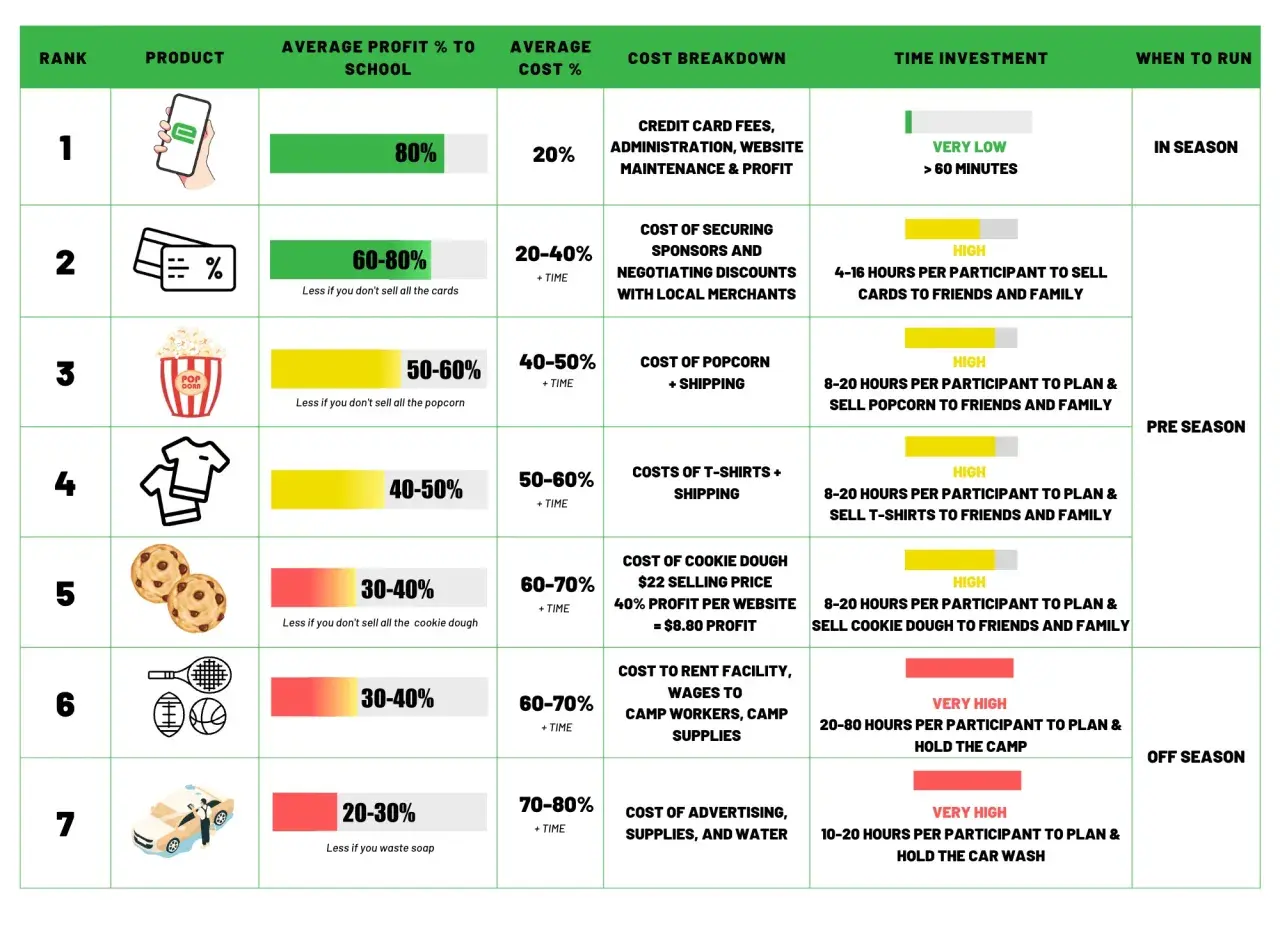
Raising money works best when the method matches the goal, the audience, and the deadline. Some campaigns need cash in 48 hours; others need a steady base of monthly donors or a local sponsor who will stay involved for years. There are good ways to raise money, but the right choice depends on how much trust you already have, how public the campaign can be, and how quickly you need results.
What matters most when you need funds quickly
- Fast cash usually comes from direct asks, crowdfunding, and peer-to-peer sharing.
- The clearest campaigns explain exactly what the money will do and why it matters now.
- Events and sponsorships work best when they are tied to a real local community.
- Grants can be valuable for nonprofits, but they are slower and more paperwork-heavy.
- Repeat giving matters because one-time donations are less stable than ongoing support.
- For U.S. nonprofit fundraising, clean receipts and transparent records are part of the job, not an afterthought.
The methods that usually work best first
In 2026, I would not start by asking, “What is the fanciest fundraising tactic?” I would start by asking, “Which method has the least friction for the people who already care?” That is usually the difference between a campaign that gets shared and one that quietly dies on the vine. Giving in the U.S. is still enormous - Giving USA reported $617.2 billion in charitable giving in 2025 - but donors are choosier than ever, so the job is to make the path to giving feel obvious and safe.
| Method | Best for | Speed | Strength | Main limitation |
|---|---|---|---|---|
| Direct donation appeal | Nonprofits, community groups, and organizers with an email list or warm network | Fast | Low friction and easy to repeat | Depends on trust and a clear ask |
| Crowdfunding | Urgent needs, personal stories, and public community campaigns | Fast to launch, variable to grow | Social sharing and visible momentum | Can stall if promotion is weak |
| Peer-to-peer fundraising | Schools, clubs, neighborhood causes, and missions with supporters who can recruit others | Medium | Expands reach through trusted people | Needs active participation from volunteers |
| Event fundraising | Local organizations that can gather people in person | Medium | Builds relationships and sponsor interest | Can be labor-heavy and margin-sensitive |
| Corporate sponsorships | Visible community projects and recurring local programs | Medium | Can unlock larger gifts and in-kind help | Requires a tailored pitch and clear benefits |
| Grants | Nonprofits with a defined program, budget, and outcomes | Slow | Can fund larger, mission-specific work | Competitive and paperwork-heavy |
| Recurring giving | Mission-driven groups that need stability | Slower start, stronger long term | Builds predictable revenue | Needs steady stewardship |
My practical rule is simple: use the channel that your audience already understands. A neighborhood cleanup may do well with a local sponsor and a small event, while a time-sensitive family emergency usually performs better with a direct appeal and a clean donation page. Once the method is clear, the next step is the part many people underestimate: the message.
The ask itself is what converts interest into money
The strongest fundraising pages are not long; they are specific. I want to know three things immediately: what happened, what the money will do, and why giving now makes a difference. If those pieces are missing, even a worthy cause can feel vague, and vague campaigns are easy to ignore.
What a useful donation ask includes
- A concrete problem. Name the situation in plain language instead of hiding behind broad mission statements.
- A visible outcome. Explain what the money will buy, fund, or protect.
- A deadline or urgency cue. People respond when they understand why the need is immediate.
- Simple giving options. Three suggested amounts usually work better than a blank form.
For many U.S. campaigns, I like to see suggested gifts such as $25, $50, and $100, with a recurring option like $10 or $25 per month. Those numbers are not magic; they simply reduce decision fatigue. The donor does not have to invent the amount, and you do not make them guess what “helpful” means.
That same logic works for sponsorships and event tickets. If the ask is tied to a benefit - a banner, a table, a ticket, or a product - spell out the value clearly. If you blur the line, the donor has to do the math themselves, and the campaign starts to feel less trustworthy. Once the offer is clean, the next question is whether the tactic fits the timeline you actually have.
Match the method to your timeline and audience
I rarely see fundraising fail because the cause is weak. I see it fail because the method and the deadline do not match. A grant strategy is sensible for a program launch in six months; it is a poor choice if the money is needed by Friday. Likewise, a big gala can work beautifully for a connected nonprofit, but it is a bad fit for a small team with no event staff.
| If you need... | Best starting point | Why it fits |
|---|---|---|
| Money in a few days | Direct appeals, crowdfunding, text/email outreach | Fastest route to people who already know the story |
| Money in 2 to 6 weeks | Peer-to-peer fundraising, small events, matching challenge | Enough time to mobilize supporters and build momentum |
| Money over several months | Grants, sponsorships, recurring giving program | Better for structured, longer-range funding needs |
| A broader public audience | Crowdfunding and shareable social content | Works when the story is easy to explain and pass along |
| A local business community | Sponsorship packages and community events | Businesses often want visibility, not just a thank-you email |
I also think about audience temperature. Warm audiences - board members, past donors, volunteers, parents, neighbors - usually convert better than strangers. Cold audiences can still help, but they need proof, social trust, or a strong reason to care. That is why a campaign that looks weak on paper can still outperform if the organizer already has a real community behind it.
Once the tactic is chosen, the back-end details matter more than most people expect. A campaign can be emotionally strong and still lose money because the admin is messy or the fees are ignored.
The US admin details that protect every dollar
Fundraising in the United States has a practical side that is easy to overlook. If you are raising for a nonprofit, receipts and records are not paperwork for later; they are part of the trust you are selling right now. The IRS requires a written acknowledgment for charitable gifts of $250 or more, and for noncash gifts above certain thresholds, additional substantiation may apply. If a donor gets something back in exchange - a ticket, meal, or merchandise - the charitable part may be only part of the payment, not the full amount.
I also pay close attention to platform fees, because “free to launch” rarely means free in practice. On GoFundMe in the U.S., the published transaction fee for individual or business fundraisers is 2.9% + $0.30 per donation. That is not a reason to avoid online fundraising; it is a reason to know your net amount before you set the target. A $25 gift does not stay $25 once processing is involved, and small campaigns feel that difference quickly.
- Track the net, not just the gross. Your goal should reflect what you actually need after fees and payouts.
- Use one clear owner for records. Confusion over who controls the bank account or receipts creates avoidable risk.
- Explain restrictions early. If money is for food, supplies, or a scholarship fund, say so plainly.
- Keep a simple donor log. Name, amount, date, and contact method are enough to start.
- Separate the donation from the benefit. If you sell a ticket or item, do not present the whole amount as a gift.
When the administration is tidy, you lose less money and you make donors more comfortable giving again. That leads to the part of fundraising I care about most: keeping the relationship alive after the first donation lands.
Turn first-time donors into repeat supporters
The Fundraising Effectiveness Project has made this point hard to ignore: donor counts and retention can weaken even when dollars appear to hold up. That is a warning sign, not a footnote. A campaign that wins one-time gifts but never brings people back is fragile, because every new push starts from zero.
Recurring giving is the cleanest answer I know. If 50 people give $10 a month, that is $500 in predictable revenue. If 100 people do it, you are suddenly looking at $1,000 a month without reopening the campaign every week. That kind of stability matters for food pantries, youth programs, mutual aid projects, and other community efforts that cannot afford the feast-or-famine cycle.
Read Also: Holiday Fundraising - Maximize Year-End Donations
What improves repeat giving
- Fast thanks. I try to acknowledge donations within 24 hours whenever possible.
- Visible progress. Donors should see what their money accomplished, not just that it was received.
- Real updates. Short, honest reports beat polished silence.
- A second ask with context. Once someone has given, invite them into monthly support, a match, or a follow-up campaign.
- Useful segmentation. Treat volunteers, first-time donors, and repeat donors differently instead of sending everyone the same message.
Matching gifts and challenge grants can help here, but only if the match is real and the deadline is visible. I have seen too many campaigns weaken because they promised urgency without proving it. People do respond to momentum, but they respond even more when they trust the organizer. That is why the next section matters: the mistakes that quietly drain results.
Common mistakes that quietly shrink results
Most fundraising losses are boring, not dramatic. They come from friction, confusion, and half-finished setup. When I review weak campaigns, the pattern is usually the same: the story is too broad, the ask is too hard, or the follow-up is nearly nonexistent.
- Asking for too much at once. If you want donations, volunteers, sponsors, and shares in the same sentence, people often do none of them.
- Leading with the organization instead of the outcome. Donors care more about the change than your internal structure.
- Hiding the target. A visible goal helps people understand progress and urgency.
- Ignoring the warm list. Social media is useful, but the people already close to you are usually more likely to convert.
- Forgetting the follow-up. The second touch is often where the money lives.
- Letting perks eat the margin. A fundraiser that looks impressive but nets very little is not actually strong.
The seven-day launch plan I would use
If I had to build a campaign from scratch this week, I would keep it small, disciplined, and easy to explain. The best money-raising plans are usually not the most elaborate ones; they are the ones that make it easy for the right people to say yes.
- Day 1: Define the exact goal, deadline, and use of funds in one paragraph.
- Day 2: Choose one primary channel and one backup channel. For example, direct email plus crowdfunding, or sponsorship outreach plus a local event.
- Day 3: Write the ask with three suggested gift amounts and one clear call to action.
- Day 4: Set up receipts, tracking, and payout handling so you are not improvising later.
- Day 5: Send the first wave to warm supporters and ask a small group to share it.
- Day 6: Post a progress update, even if the numbers are modest.
- Day 7: Review what got clicks, what got gifts, and which message produced the best response.
If you want the most reliable path, keep the story specific, the giving process simple, and the follow-up disciplined. That is still the pattern I trust most for community fundraising: clear need, low friction, and a reason to give again. When those pieces are in place, the campaign stops feeling like a plea and starts functioning like a real invitation to help.
