
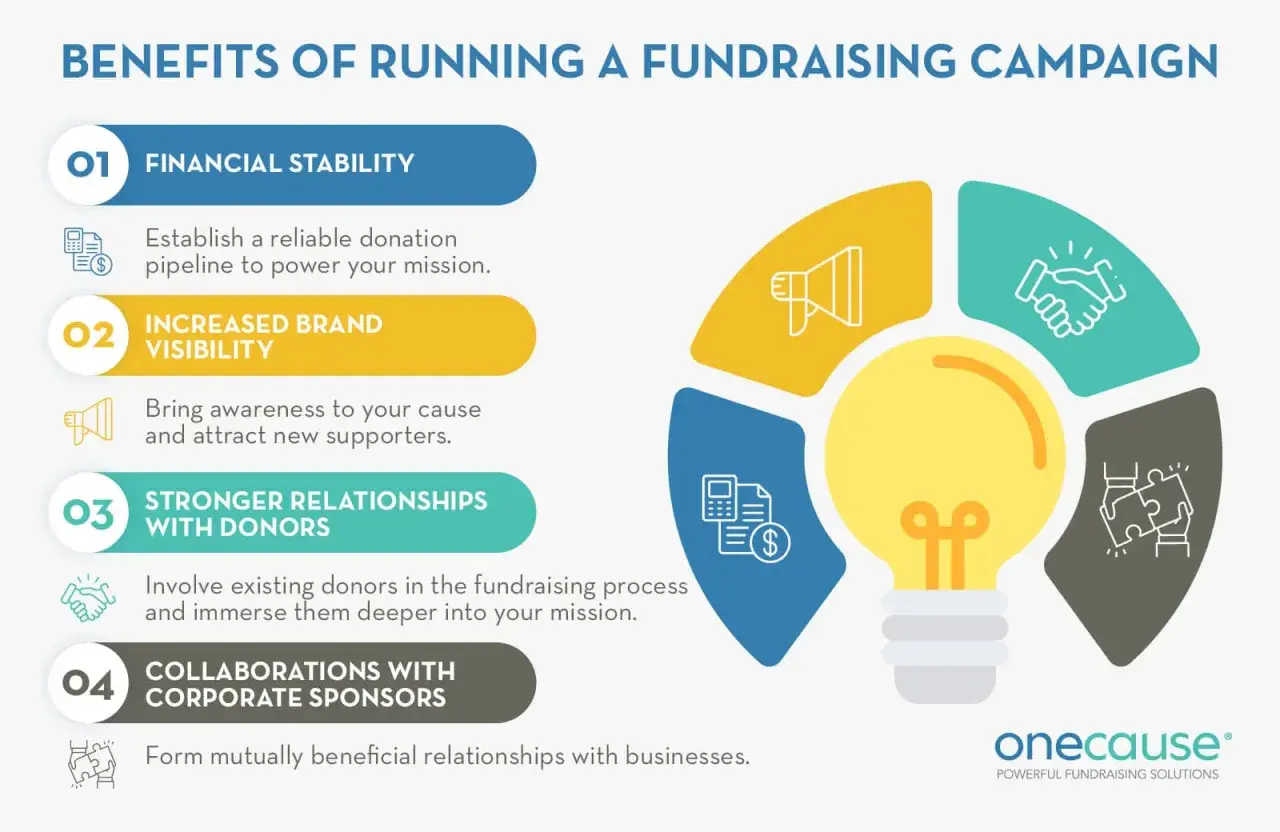
This guide breaks down the practical pieces that matter most in the United States: setting realistic targets, choosing the right revenue mix, building a calendar, tracking a few meaningful numbers, and staying compliant while you raise money with confidence.
The essentials of a nonprofit fundraising plan
- Start with the budget gap, not with tactics.
- Use a mix of individual giving, recurring gifts, major donors, grants, corporate support, and events.
- Build the calendar around donor behavior, staff capacity, and cash-flow needs.
- Keep the dashboard tight so the team can act on a few clear metrics.
- Protect trust with fast acknowledgments, accurate records, and proper registrations.
What a strong nonprofit fundraising plan actually needs
When I review fundraising plans for nonprofits, I look for four things first: a real revenue target, a clear donor strategy, a calendar that spreads the work across the year, and ownership that is visible on paper. If one of those pieces is missing, the plan tends to drift into a wish list instead of a working document.
A usable plan answers practical questions. How much money do we need, by when, and from which sources? Which donor groups are most likely to respond? Who is responsible for the ask, the follow-up, and the thank-you? And what happens if one channel underperforms?
- Revenue goal - the amount needed after confirmed income is counted.
- Case for support - the short explanation of why this work matters now.
- Audience map - the donor groups, foundations, partners, and members who will receive different asks.
- Stewardship plan - the thank-yous, impact updates, and renewal touches that keep donors engaged.
- Roles and deadlines - who owns the work, and by what date.
I also like to see the language translated into plain English. A donor should be able to understand the problem, the solution, and the reason to act without needing a tour through internal jargon. Once that structure is clear, the next task is turning it into a calendar that the team can actually execute.

Building the annual fundraising calendar without overloading December
The easiest mistake in fundraising is letting the last quarter carry too much weight. A healthier calendar spreads asks, renewals, stewardship, and prospecting across the full year so the organization is not depending on a single month to solve a twelve-month problem.
I like to build the calendar in five passes:
- Set the timing of the revenue gap - Some expenses are front-loaded, so the plan should reflect when cash is actually needed, not only the total annual budget.
- Assign a purpose to each campaign - One appeal may focus on unrestricted operating support, another on program sponsorship, another on monthly giving.
- Match the channel to the moment - A year-end email campaign, a spring donor event, and a grant cycle should not be forced into the same mold.
- Build stewardship into the calendar - Donor journey means the sequence after the gift too: thank-you, impact update, second ask, and renewal.
- Leave room for adjustment - Campaigns slip, grants arrive late, and board schedules change. A rigid calendar breaks quickly.
| Quarter | What to focus on | Why it matters |
|---|---|---|
| Q1 | Renew major donors, finalize grant submissions, confirm recurring-gift goals | Starts the year with committed support and early cash flow |
| Q2 | Spring appeal, donor upgrades, mid-year stewardship touches | Keeps momentum moving before attention shifts to summer |
| Q3 | Prospect research, cultivation calls, event planning, board outreach | Prepares the pipeline before the busiest giving season |
| Q4 | Year-end campaign, matching opportunity, tax-season messaging | Captures seasonal generosity without making the whole year depend on it |
According to AFP's Fundraising Effectiveness Project, charitable dollars rose by 5.0% in 2025 while donor counts fell by 3.6%. That tells me the calendar cannot be built around acquisition alone; the real work is keeping donors active long enough for the relationship to deepen. With the rhythm in place, the next decision is which revenue streams deserve the most attention.
Choosing the right revenue mix for your organization
There is no universal mix that works for every nonprofit, but there is a reliable principle: no organization should lean too hard on one source if it can avoid it. I would rather see a balanced plan with a few well-managed channels than a flashy strategy that depends on one gala, one grant, or one board member’s network.
| Revenue stream | Best use | Strength | Watch-out |
|---|---|---|---|
| Individual giving | Core operating support, unrestricted needs, rapid-response appeals | Flexible and often the fastest to mobilize | Requires steady communication and donor care |
| Monthly giving | Stable cash flow and donor retention | Predictable revenue over time | Takes time to build and sustain |
| Major gifts | Campaigns, transformation projects, strategic growth | High leverage with fewer donors | Relationship-intensive and slower to close |
| Grants | Programs, pilots, capacity building, defined outcomes | Can fund specific, measurable work | Often restricted and reporting-heavy |
| Corporate support | Sponsorships, in-kind help, local visibility | Can open community and employee channels | Mission fit matters more than logo size |
| Events | Community engagement and donor acquisition | Useful for visibility and relationship-building | Net revenue can disappoint if costs creep up |
| Planned giving | Long-term sustainability and legacy support | Builds future resilience | Slow cycle, not ideal for urgent cash needs |
I keep coming back to one point: the right mix depends on your organization’s size, story, and donor base. A neighborhood food pantry with a loyal local following will not build the same model as a research-based advocacy nonprofit. The important thing is not to confuse popularity with durability. A revenue source can look impressive and still be fragile if it is expensive, inconsistent, or hard to repeat.
In practice, I pay closest attention to recurring giving and donor retention. They are not glamorous, but they make every other channel easier to manage. If you can turn one-time support into repeat support, the whole plan becomes more stable. That is also where the numbers start telling you whether the plan is healthy or just busy.
Budgeting, metrics, and the numbers that keep the plan honest
A fundraising plan should be built from the budget upward. Start with total expenses, subtract confirmed income, and the remainder is the amount the fundraising team actually needs to raise. That sounds simple, but many organizations skip this step and end up setting goals based on hope instead of need.Once the target is set, I like to build a basic gift range chart, which is a mapping of how many gifts are needed at different levels to reach the goal. It is one of the easiest ways to see whether the plan is realistic. If a campaign needs five $25,000 gifts and the team knows only one prospect at that level, the problem is visible before launch.
| Planning item | What to define | Why it matters |
|---|---|---|
| Funding gap | Unmet revenue after confirmed income is counted | Prevents inflated or vague goals |
| Gift range chart | How many gifts are needed at each level | Shows whether the goal is actually reachable |
| Pipeline | Live prospects, expected gifts, and timing | Improves forecasting and keeps the team focused |
| Success metrics | Retention, recurring donors, average gift, conversion, and revenue by channel | Shows what is improving and what needs work |
I prefer a short dashboard over a crowded one. Too many metrics make it harder to decide what to do next. For most teams, the useful question is not “What can we measure?” It is “What do we need to know to make the next funding decision better?”
- Donor retention - how many donors give again.
- Recurring donor share - how much of your base gives monthly or regularly.
- Average gift - a quick way to spot whether giving is strengthening or shrinking.
- Conversion rate - how many prospects become donors after an ask.
- Pipeline coverage - whether active prospects are enough to support the target.
If those numbers are moving in the wrong direction, the answer is usually not “do more of everything.” It is to tighten the plan, focus on the strongest donors, and remove weak assumptions before they become budget problems. The next safeguard is less glamorous but just as important: compliance and stewardship.
Compliance and stewardship that prevent avoidable problems
Fundraising only works when donors trust the organization behind the ask. That trust is built through accurate communication, careful recordkeeping, and a stewardship process that makes people feel valued rather than processed.
The National Council of Nonprofits reminds organizations that fundraising is regulated at the state level, so solicitation rules and registration requirements are not optional details. I would treat that as part of the fundraising plan, not as a legal cleanup task after the campaign is already live.
- Check registration requirements early - especially if you solicit donors across multiple states.
- Send acknowledgments quickly - donors expect a thank-you soon after giving.
- Issue proper receipts - in the US, donors generally need written acknowledgment for single gifts of $250 or more.
- Handle quid pro quo gifts carefully - if a donor receives goods or services in return, the value needs to be documented.
- Respect donor preferences - some supporters want public recognition; others want privacy.
- Keep claims honest - impact statements should be clear, specific, and supportable.
Stewardship is not just politeness. It is part of revenue generation. A donor who feels seen is much more likely to give again, increase a gift, or respond when the next appeal arrives. That is why I always treat the thank-you flow, board follow-up, and impact reporting as core fundraising work rather than admin.
When the rules are clear and the relationships are cared for, the plan becomes easier to execute and much easier to trust.
What I would keep in place before the next appeal goes live
If I were reviewing this with a nonprofit team in the United States, I would keep five things on the desk: a one-page revenue map, a month-by-month calendar, a donor stewardship cadence, a simple metrics dashboard, and a contingency note for the most likely risk. That combination is usually more useful than a long document that nobody opens twice.
- One-page revenue map - shows the goal, the gap, and the expected source mix.
- Monthly calendar - keeps campaigns, grants, and donor touchpoints from colliding.
- Stewardship cadence - defines when donors hear back after giving and when they hear again.
- Board role sheet - makes it clear who introduces, asks, thanks, and follows up.
- Risk plan - lists what to do if a grant is delayed, a sponsor drops out, or an event underperforms.
The best fundraising plans are not the most elaborate ones. They are the ones that connect mission to money in a way the whole team can follow, measure, and improve. If you build around realistic targets, a balanced revenue mix, disciplined stewardship, and a calendar that protects cash flow, the plan will feel less like a guess and more like a system that can hold under pressure.
